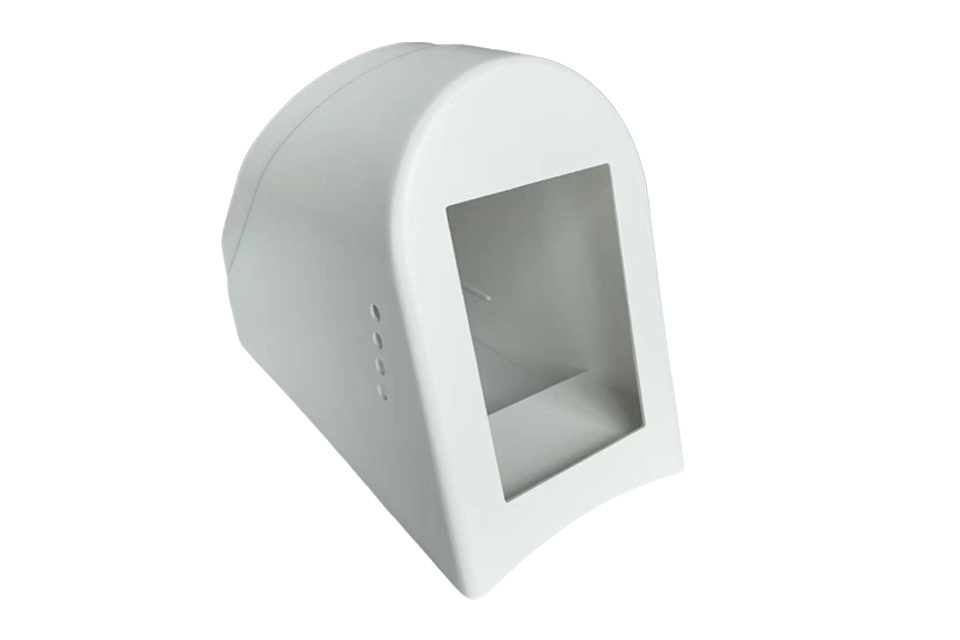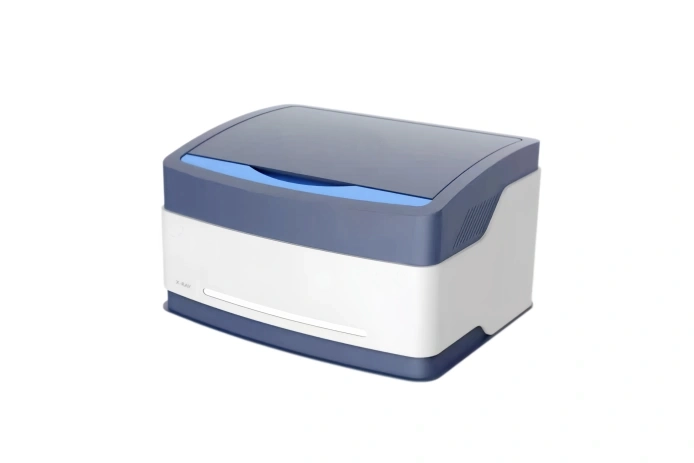
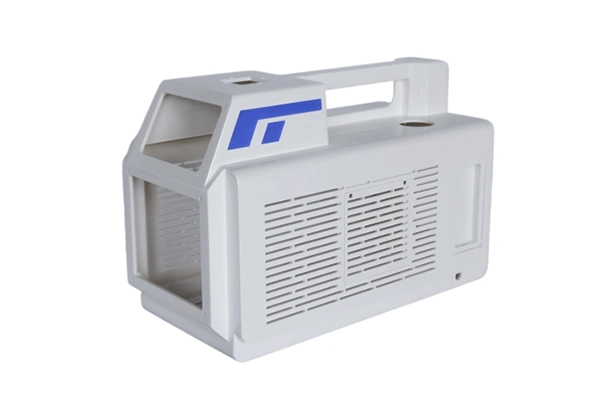
Designing a reliable portable medical device enclosure presents a unique set of conflicting engineering requirements. Healthcare professionals require devices that are exceptionally lightweight to prevent user fatigue during continuous shifts.
Simultaneously, these handheld devices must survive harsh clinical environments, including accidental drops onto hard hospital floors. Standard injection molding approaches often fail to balance these two critical factors, resulting in components that are either too heavy or dangerously brittle.
At Zhongrongda, our engineering team specializes in resolving these exact material and structural contradictions. We develop advanced manufacturing protocols that guarantee your custom housings are highly impact-resistant without adding unnecessary mass.
The Core Challenges in Custom Medical Casing Manufacturing
When clients bring us their initial device designs, we typically identify two primary areas where traditional manufacturing methods fall short.
1. The Burden of Weight in Handheld Diagnostics
A heavy diagnostic tool severely limits its usability in a fast-paced medical setting. Nurses and technicians must be able to carry and operate the equipment with a single hand.
- Designers often increase wall thickness universally to improve strength.
- This outdated approach exponentially increases the final weight of the part.
- It also extends mold cooling times, driving up your overall production costs.
2. Failing Medical Device Drop Test Standards
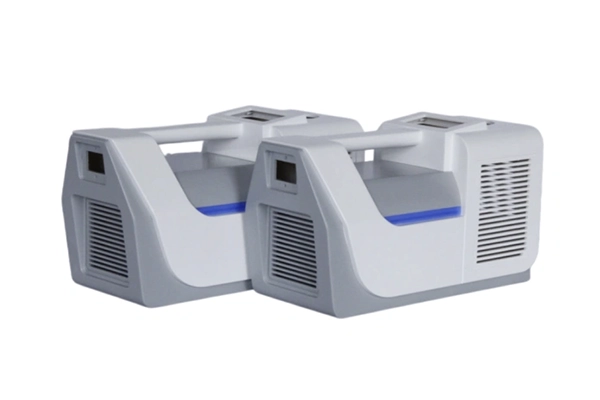
Medical hardware must comply with strict international regulatory requirements, such as the IEC 60601-1 drop test standards.
- Devices are subjected to free-fall impacts from various angles.
- Standard rigid plastics like pure Polystyrene or basic ABS often shatter upon impact.
- Internal corners and mounting bosses act as stress concentrators, initiating catastrophic cracks.
Advanced Material Selection for Impact-Resistant Medical Housing
To solve the weight-to-durability ratio, our team at Zhongrongda implements strict material selection matrices. We move beyond basic commodity resins to utilize highly specialized engineering polymers.
Utilizing PC/ABS Medical Grade Alloys
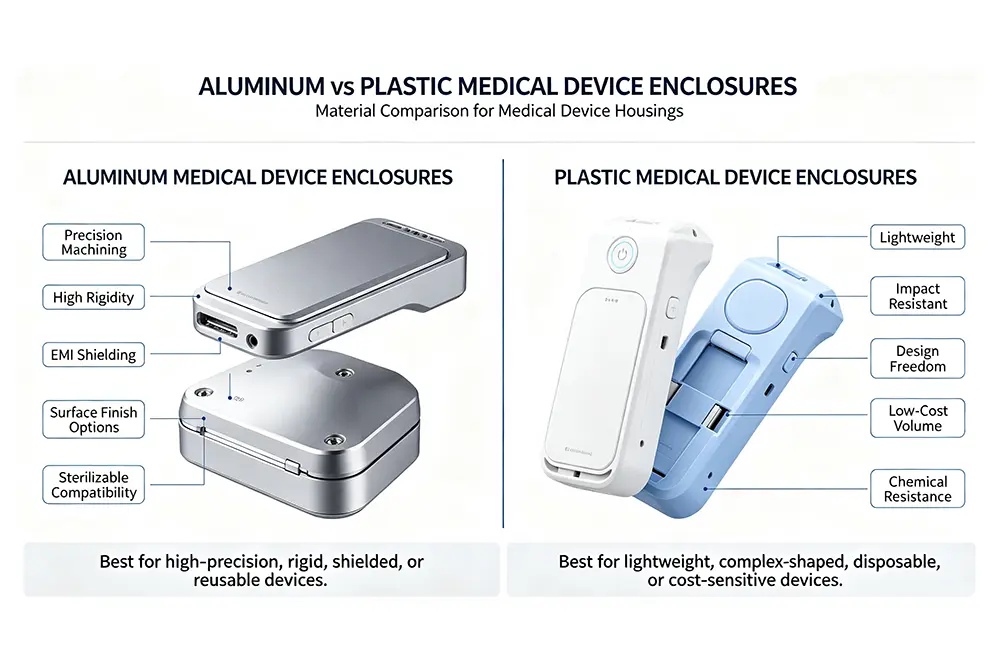
Polycarbonate (PC) offers phenomenal impact resistance but is susceptible to chemical stress cracking from hospital disinfectants. ABS is easier to mold and lighter, but lacks extreme toughness.
We frequently specify medical-grade PC/ABS blends for our projects. This alloy provides the perfect equilibrium. It absorbs kinetic energy efficiently during a fall while maintaining the chemical resistance necessary for sterile environments.
Implementing TPU Overmolding for Shock Absorption
When a device requires extreme ruggedness, a single rigid shell is not enough. We utilize advanced two-shot injection molding to apply a secondary protective layer.
- We mold the primary rigid shell using lightweight medical equipment plastics.
- We then overmold a soft Thermoplastic Polyurethane (TPU) bumper directly onto the exterior grip areas.
- This elastomer layer acts as a built-in shock absorber, dispersing kinetic energy away from sensitive internal electronics.
Optimizing Healthcare Equipment Plastic Injection Molding
Material selection is only half the solution. The physical geometry of the part dictates how stress travels through the enclosure during an impact event.
Strategic Wall Thickness and Honeycomb Ribbing
Instead of relying on thick, heavy outer walls for strength, our engineers optimize the internal architecture of the enclosure.
We maintain a highly controlled, thin nominal wall thickness (typically between 1.8mm and 2.5mm) across the entire outer shell. To provide the necessary structural rigidity, we design complex honeycomb ribbing patterns on the internal surfaces.
This approach maximizes torsional stiffness and impact deflection while drastically reducing the total volume of plastic required.
Eliminating Sharp Internal Geometry
Sharp corners are the enemy of impact resistance. During a drop test, mechanical stress rushes to sharp angles, causing the plastic to yield and fracture instantly.
- Our design team audits your CAD files to ensure generous radiuses are applied to all internal corners.
- We taper the base of internal screw bosses to distribute assembly loads over a wider surface area.
- These minor geometric adjustments mean the difference between passing and failing regulatory certifications.
Tooling Adjustments for Superior Structural Integrity
Even with the right material and design, poor injection molding execution will create invisible internal flaws that compromise the final product.
Managing Weld Lines for Maximum Strength
When molten plastic flows around an obstacle (like a button hole or a screen cutout) and meets on the other side, it creates a weld line. This boundary is inherently weaker than the surrounding solid plastic.
Using advanced Moldflow simulation software, our tooling engineers predict exactly where these weld lines will form. We then strategically adjust gate locations and injection speeds to force these weak points into low-stress areas of the portable medical device enclosure.
Uniform Cooling to Prevent Internal Stress
If an enclosure cools unevenly inside the mold, it develops severe residual internal stress. A stressed part looks perfect visually but will shatter immediately when dropped.
- We design conformal cooling channels that closely follow the complex contours of your part.
- This ensures the plastic freezes at the exact same rate globally.
- The result is a dimensionally stable, stress-free component ready for extreme real-world use.
Rapid Prototyping and Production Validation
Before cutting expensive multi-cavity steel molds, we strongly advocate for physical validation of the structural design.
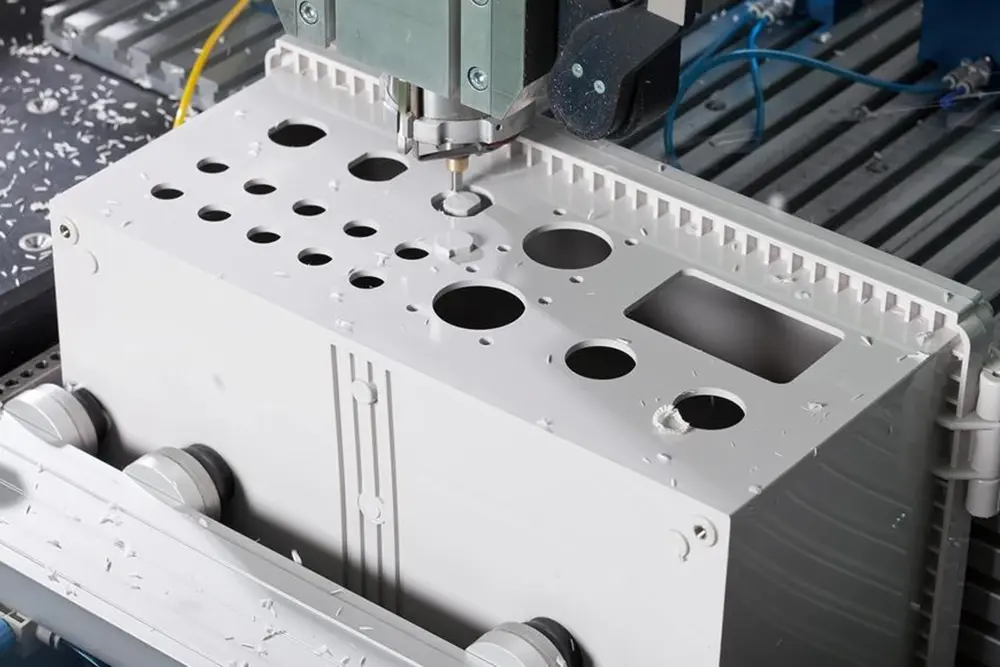
We utilize precision 5-axis CNC machining to mill functional prototypes from solid blocks of production-grade plastics. This allows your engineering team to assemble the internal electronics and conduct preliminary drop testing.
Once the design is validated mechanically, we transition seamlessly into custom medical casing manufacturing, applying strict quality control protocols to ensure every batch meets your exact specifications.
Partner With Zhongrongda for Your Next Medical Project
Designing a robust, lightweight diagnostic housing does not have to be an iterative trial-and-error process. By combining advanced polymer science with optimized tooling structures, we eliminate drop-test failures before manufacturing begins.
If your team is struggling to balance weight constraints with durability requirements, our engineers are ready to assist. Send us your CAD models for a comprehensive Design for Manufacturability (DFM) review.
Ready to manufacture a superior portable medical device enclosure? Contact us today: Email: info@zrdmfg.com Phone: +86 13972955806