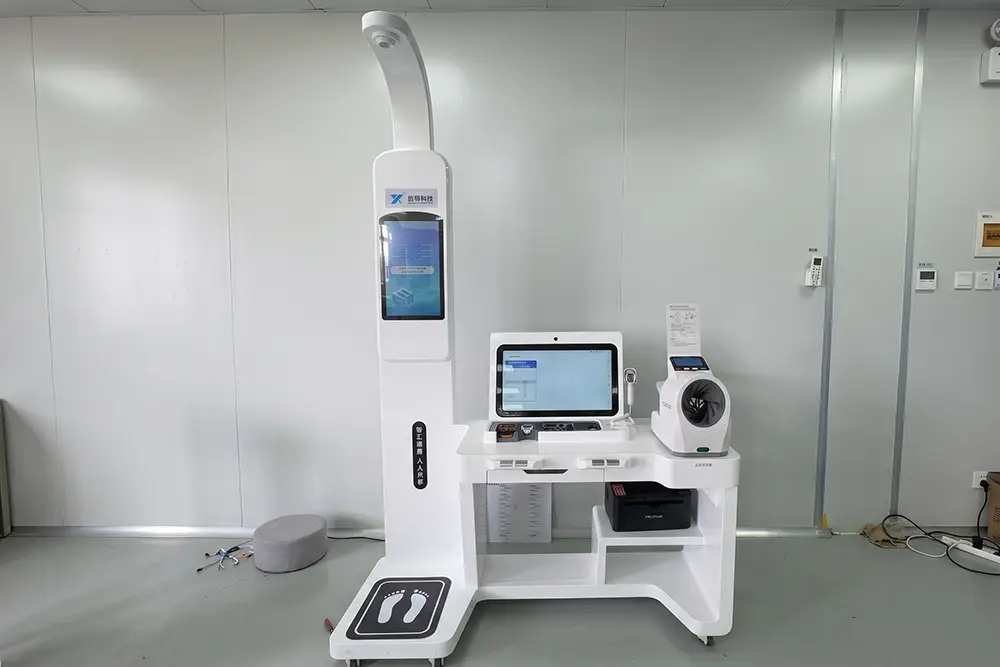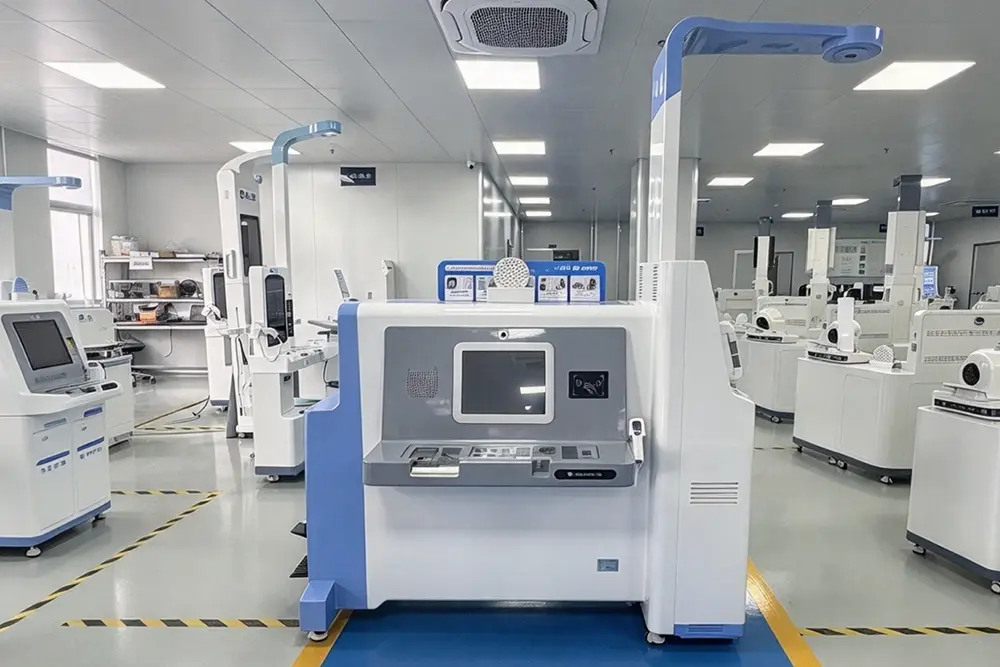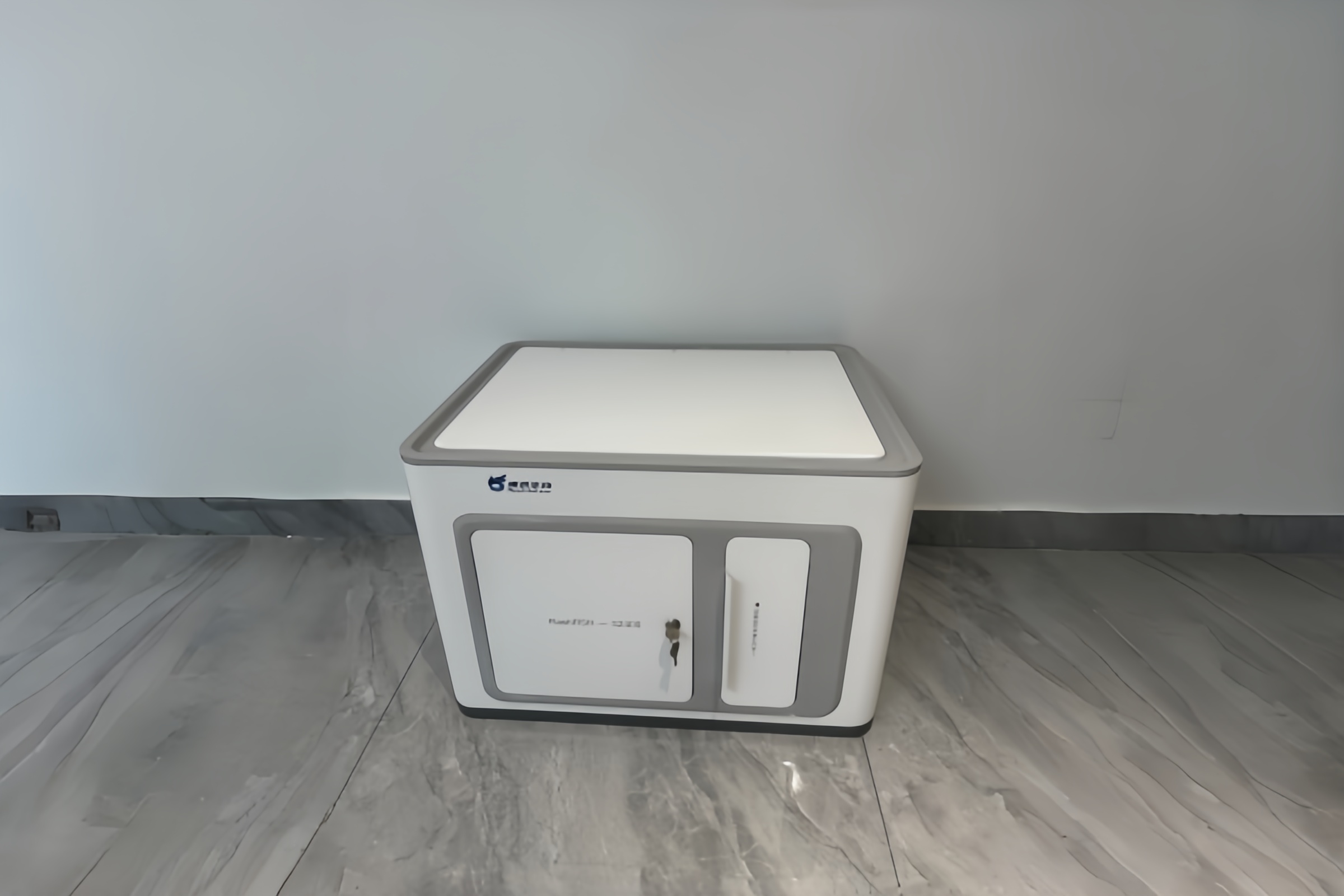
Executing precision Biological Detection Instrument Enclosure Manufacturing requires mitigating severe material deformation while ensuring absolute laboratory-grade sealing. At Zhongrongda, our engineering team recently manufactured the FlashFISH‑S2400 integrated chassis.
This specific project demanded strict environmental protection for internal biological sensors alongside a highly durable, anti-fouling exterior. The final physical dimensions of this unit measure exactly 65cm in length, 48cm in width, and 47cm in height.
Balancing these large flat dimensions with integrated rounded corners and a complex double-layer door structure creates significant manufacturing bottlenecks. Below, our team details the specific structural problems encountered and the exact fabrication processes we implemented to resolve them. You can observe the final assembly and surface finish in the reference file named IMG_4181.jpg.
Overcoming Deformation in Integrated Sheet Metal Rounded Corners
The primary structural foundation of this 65cm long chassis relies on 6063-T5 aluminum alloy sheet metal paired with thickened cold-rolled steel. This ensures maximum rigidity in harsh laboratory environments.
The core engineering problem is achieving the integrated large rounded corners on all four sides of the chassis. Forming these large-radius curves without causing the massive flat top and bottom panels to warp is notoriously difficult.
Standard single-hit press brake operations cause uneven stress distribution, resulting in severe material springback and structural twisting.
Implementing CNC Angle Compensation for Flatness
To eliminate longitudinal warping and springback, our team bypassed standard manual bending. We deployed advanced CNC press brakes equipped with automated crowning systems.
Before processing the aluminum, our engineers calculated the exact springback coefficient specific to the large-radius geometry. We programmed custom, multi-stage angle compensations into the CNC controller.
- This process neutralizes the uneven stress caused by the curved corners.
- It ensures the large flat top and bottom surfaces remain completely planar.
- It guarantees strict symmetry across all four sides of the laboratory equipment chassis assembly.
If your current fabrication partner struggles with panel distortion on large assemblies, our engineering team can audit your CAD models to optimize the flat patterns for precise forming.
Precision Fabrication of the Double-Layer Recessed Door Frame
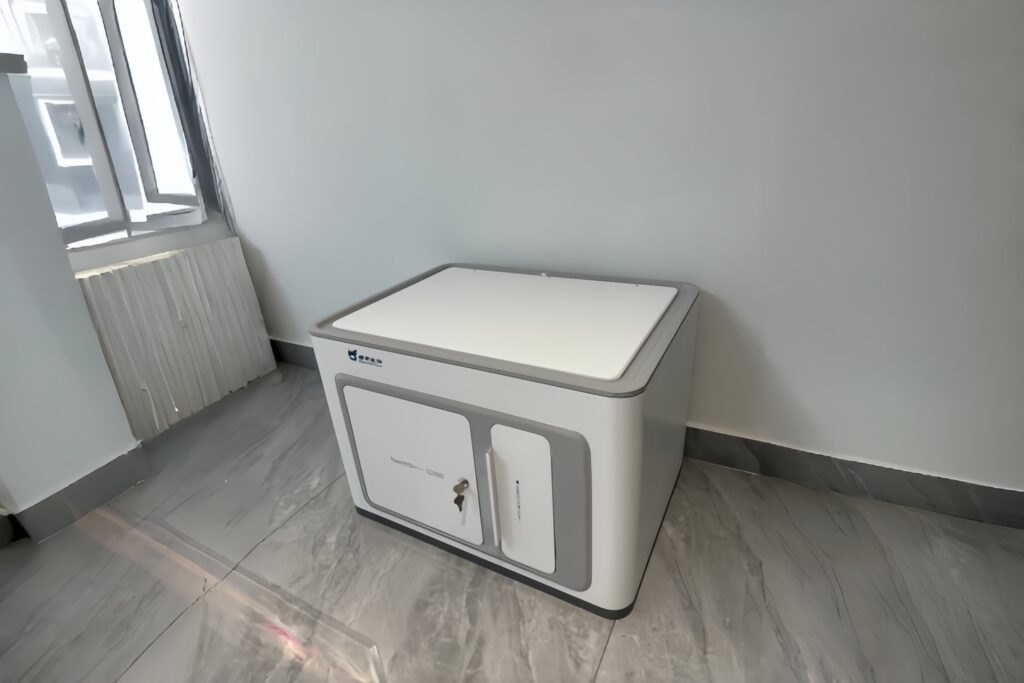
The front of the FlashFISH-S2400 unit features a complex double-layer recessed door frame. This design protects the internal components but presents extreme difficulties during fabrication.
The primary manufacturing challenge is maintaining absolute flatness across the nested sheet metal layers. Any distortion during the bending or welding phase will cause the inner and outer frames to misalign, creating uneven gaps.
Uneven gaps prevent the front door from sealing correctly, which immediately fails the strict dustproof and light-shielding requirements necessary for biological detection.
Seamless Laser Welding and Assembly
Our engineers utilized continuous fiber laser welding to assemble the recessed frame. We locked the pre-bent panels into heavy, custom-machined heat-sinking fixtures to absorb excess thermal energy.
This laser welding process created deep penetration with a minimal heat-affected zone, completely eliminating thermal warping on the door frame. Post-welding, we ground the seams flush to create a perfectly flat mating surface.
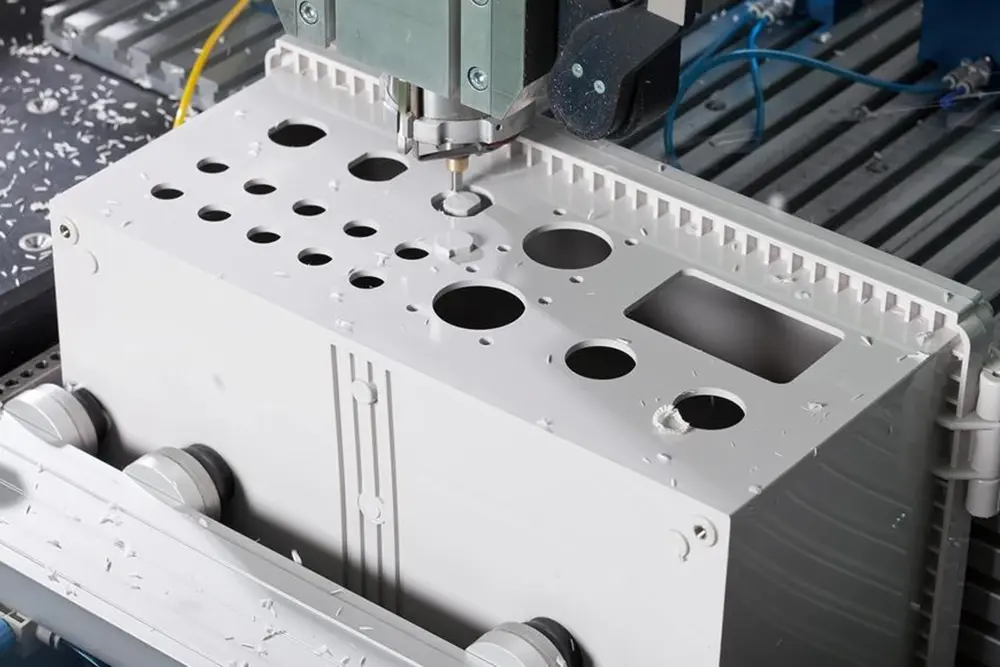
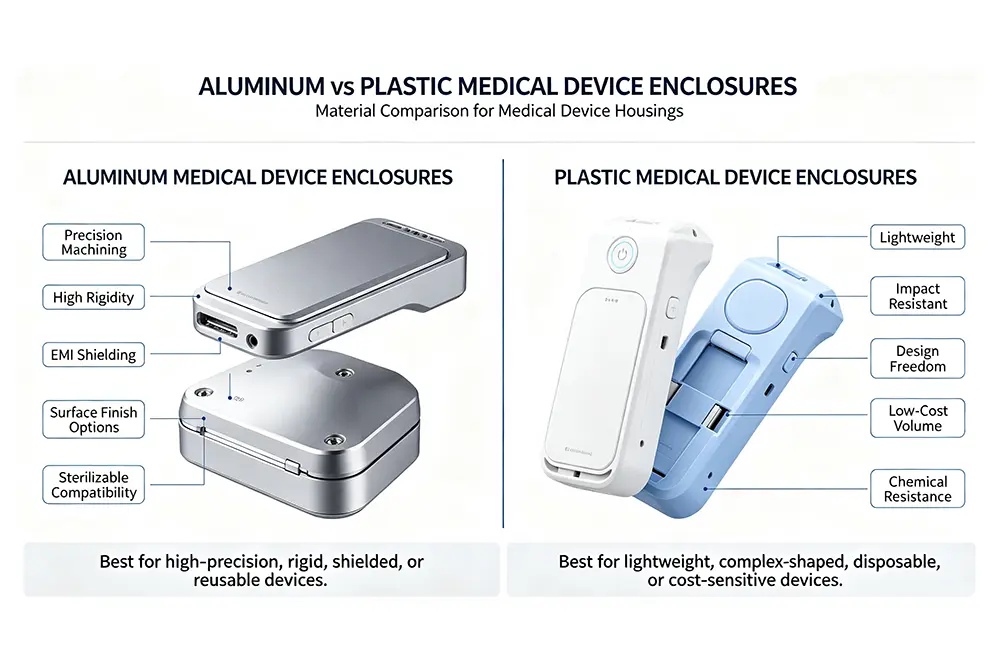
While our team fabricates the robust exterior using 6063-T5 aluminum, the internal sample processing zones require entirely different material properties. For the internal medical-grade components of this device, our team strictly focused on plastic shells and CNC Machining plastic processing rather than metal fabrication to prevent cross-contamination.
We validated the integration of these internal plastic components and the outer metal shell early in the product lifecycle utilizing advanced Rapid Prototyping techniques, confirming all tolerances before full-scale production.
Ensuring Equipment Compartment Sealing
To guarantee the door operates smoothly and seals perfectly, we performed all functional cutouts after the laser welding phase.
We clamped the welded chassis into a 5-axis CNC mill to precisely interpolate the lock holes, handle mounts, and top installation points. This ensures strict coaxiality and positional tolerance.
By machining these holes post-assembly, we guarantee the door locks engage perfectly, compressing the internal seals evenly to achieve absolute light-shielding and dustproof performance. This strict tolerance matching is a standard baseline for every Medical Device Enclosure we manufacture at Zhongrongda.
Executing Medical Grade Dual-Color Powder Coating
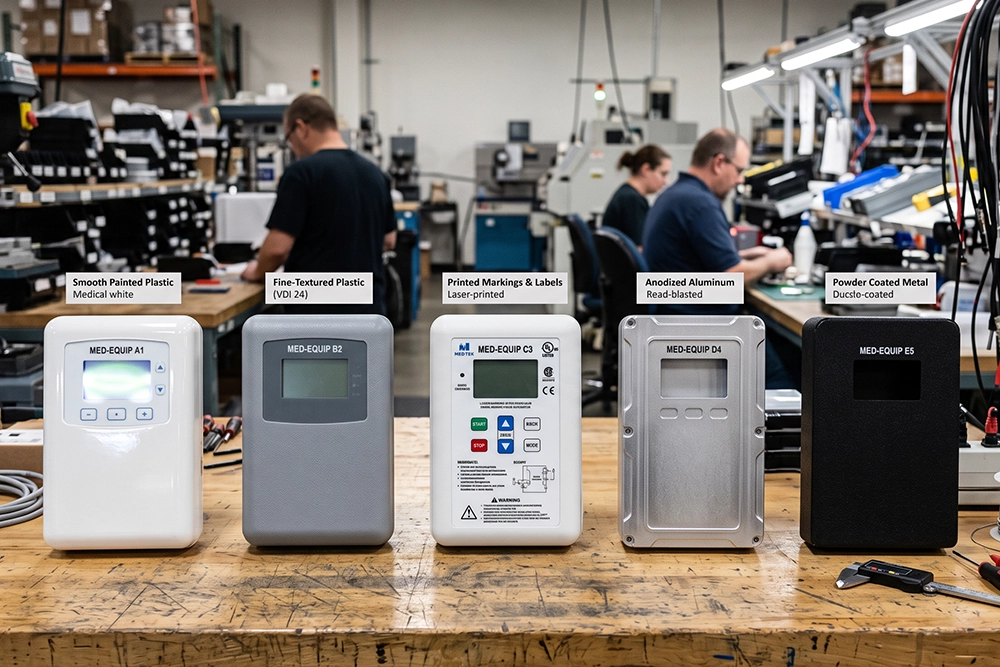
A premium laboratory environment demands an exterior finish that communicates sterility, resists chemical spills, and prevents fingerprint accumulation. This project specified a dual-color finish: matte white for the main body and matte gray for the recessed doors and top decorative frame.
Applying matte finishes to large, flat horizontal surfaces is highly difficult. Matte coatings easily reveal dust particles, “orange peel” textures, and color shifting if the baking process is uneven.
Furthermore, maintaining a perfectly crisp boundary line between the white and gray sections requires immense precision during the masking phase.
Eliminating Contamination and Managing Boundaries
To ensure a flawless laboratory-grade finish, our team implemented a strict chemical degreasing protocol prior to coating. Inside our climate-controlled spray booths, we optimized the powder flow rate and electrostatic voltage.
- This ensured the matte powder distributed uniformly without clumping on the large 65x48cm panels.
- We utilized a stepped infrared baking process to cure the coating evenly.
- This thermal control prevents the matte finish from developing glossy spots or color deviations.
For the dual-color separation, we utilized specialized high-temperature masking tapes. We cured the base white color fully before masking and applying the matte gray finish.
When designing the top decorative frame, we integrated CNC milled aluminum alloy profiles. To ensure the separate gray aluminum profile mated perfectly with the white chassis without scratching the fresh paint, we researched specific ABS plastic properties and applications to CNC machine custom, soft-touch mounting clips.
This exact process guarantees a razor-sharp, orderly color boundary with zero color mixing. We apply these exact strict cosmetic defect controls to our Beauty Device Enclosures, guaranteeing your products meet the highest visual standards in any clinical setting.
Frequently Asked Questions (FAQs)
Q1: What materials are used in Biological Detection Instrument Enclosure Manufacturing?
We construct the main robust chassis using 6063-T5 aluminum alloy sheet metal and thickened cold-rolled steel. For internal sample processing areas, we strictly focus on CNC plastic processing to prevent chemical contamination.
Q2: How do you prevent deformation when bending integrated large rounded corners?
We avoid manual bending and utilize advanced CNC press brakes with automated crowning systems. By calculating the exact springback coefficient, we apply custom angle compensations to keep the massive flat panels perfectly planar.
Q3: What makes the double-layer recessed door frame difficult to manufacture?
Nesting two layers of sheet metal requires perfect flatness. If the metal warps during welding, the gaps become uneven, and the door will fail to seal. We solve this using heat-sinking fixtures and continuous fiber laser welding.
Q4: How do you ensure the door is entirely dustproof and light-proof?
After laser welding, we use 5-axis CNC machining to cut the lock and handle holes. This guarantees perfect positional tolerance, ensuring the door compresses evenly against the internal gaskets for absolute laboratory-grade sealing.
Q5: How do you achieve a defect-free dual-color matte powder coating?
We process the matte white and matte gray powders in climate-controlled booths to prevent dust inclusion. We also use a stepped infrared baking process that cures the paint evenly, preventing “orange peel” on large flat surfaces.
Q6: What are the exact dimensions of this biological detection instrument chassis?
The physical dimensions for this specific FlashFISH-S2400 integrated enclosure are strictly manufactured to 65cm in length, 48cm in width, and 47cm in height.
Q7: How do you maintain a sharp line between the white and gray paint?
We utilize a multi-step baking process with specialized high-temperature, residue-free masking tape. The white base is fully cured before the gray is applied, ensuring a crisp boundary with zero color bleeding.
Q8: Why do you machine the lock and handle holes after welding?
Punching holes before bending or welding causes the metal around the hole to stretch and deform. Machining post-assembly ensures strict coaxiality and prevents the lock mechanism from binding during operation.
Q9: How do you handle internal medical-grade components?
While the exterior is high-strength aluminum and steel, we utilize CNC plastic processing for the internal components. This ensures biological samples do not interact with bare metal, eliminating the risk of sensor interference.
Q10: Can this matte surface finish withstand laboratory cleaning agents?
Yes. The medical-grade electrostatic powder coating we apply is eco-friendly, anti-fingerprint, and highly resistant to chemical stains. It withstands the rigorous wiping and sterilizing protocols required in testing laboratories.
Contact Zhongrongda
Are asymmetrical door gaps or uneven surface coatings delaying your biological detection equipment production? Our engineering team specializes in resolving complex recessed frame tolerances and flawless dual-color surface treatments. Partner with Zhongrongda for exact, laboratory-grade manufacturing execution.
Email: info@zrdmfg.com
Phone: +86 13972955806