Custom Medical Device Enclosures From Prototype to Production
We help medical equipment manufacturers develop production-ready enclosures through DFM review, prototyping, vacuum forming, molding, CNC trimming, finishing and assembly.
Core Manufacturing Capabilities for Medical Enclosures
We support custom medical equipment enclosure projects from design review and prototype validation through forming, precision trimming, surface finishing and assembly. Each process is selected around the enclosure size, geometry, interfaces, quantity and required finish.
Depending on the project, these capabilities can be used individually or combined into a coordinated manufacturing route from prototype to repeat production.
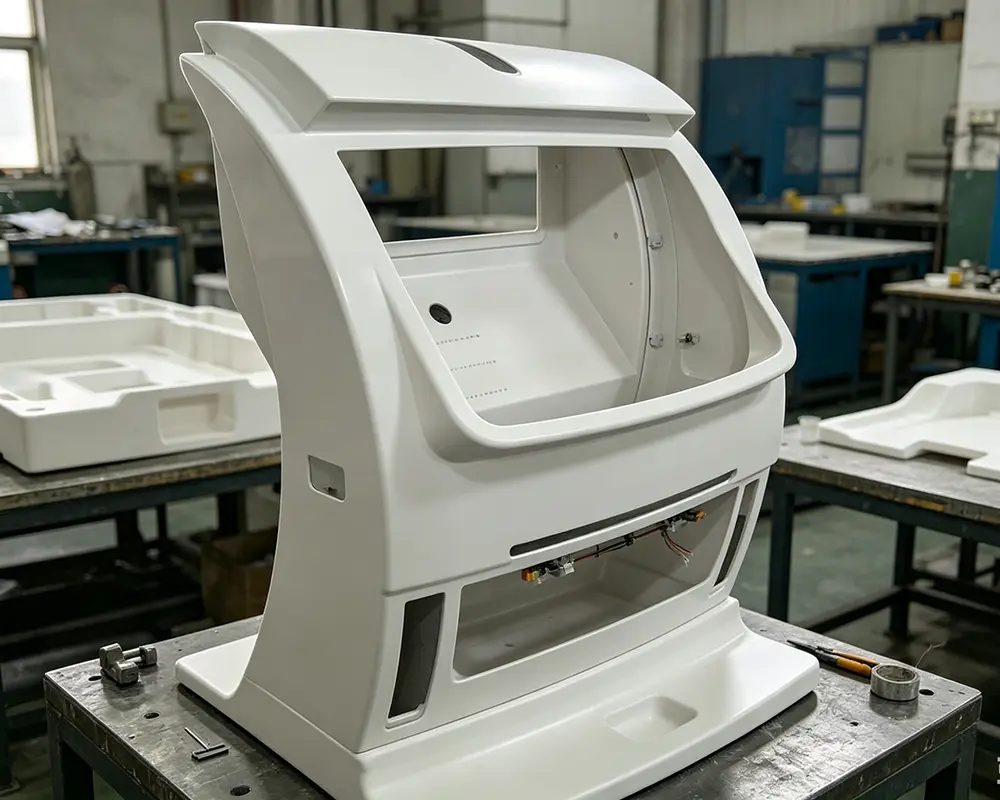
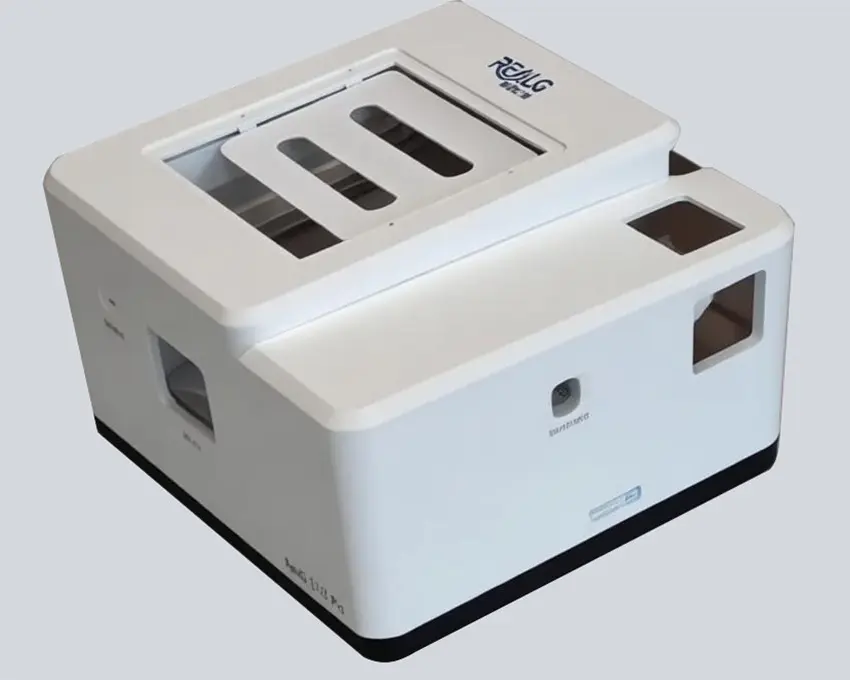
Custom housings for diagnostic, imaging, monitoring and testing equipment. We work around displays, sensors, electronics, cable paths, ventilation and service panels.
We produce custom medical housings with excellent surface finish, durability, and accuracy for demanding applications.
Mobile equipment housings developed around displays, handles, wheels, battery compartments, cable management and the service requirements of a medical cart or workstation.
Custom housings for laser, IPL, HIFU, skin analysis and other aesthetic equipment. We consider display and control interfaces, handpiece storage, cable routing, access panels and the finished appearance of the product.
Enclosures for pathology, sample preparation, analytical and laboratory systems. The design is reviewed around access panels, connectors, internal mechanisms and the specified operating environment.
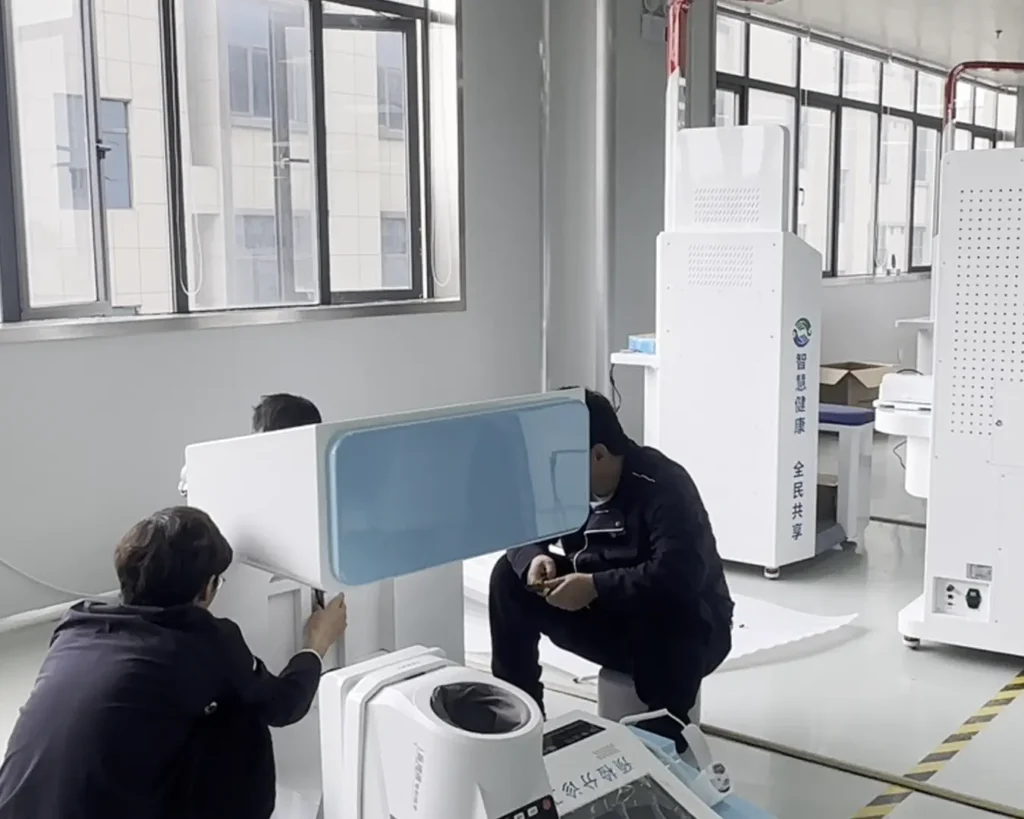
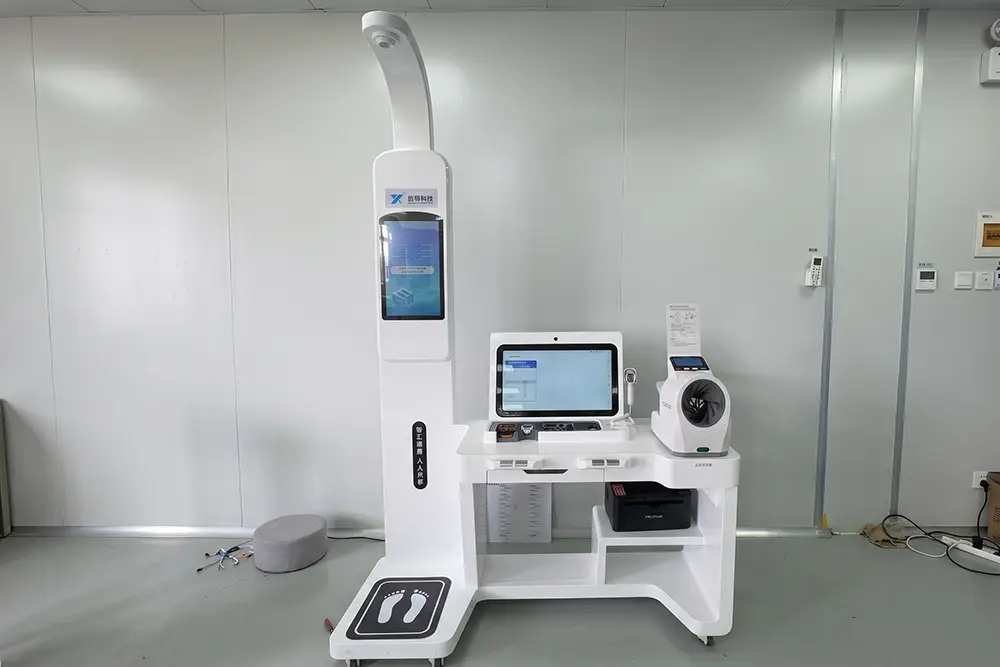
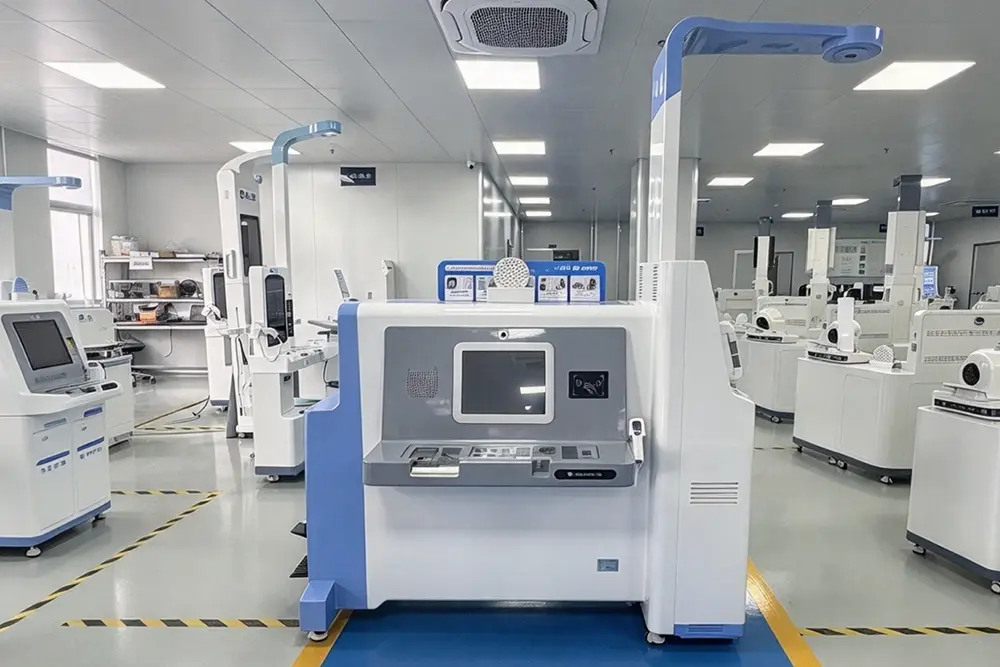
Large-format housings for health kiosks, automated diagnostic stations and other medical equipment. Panel size, structural support, transport, installation and service access are considered together.
We Solve Enclosure Problems Before They Reach Production
A medical equipment housing has to fit the internal system, provide access where needed and maintain a consistent appearance after production. Our engineering review focuses on the details that affect assembly, cost, schedule and repeatability.


Complex Internal Interfaces
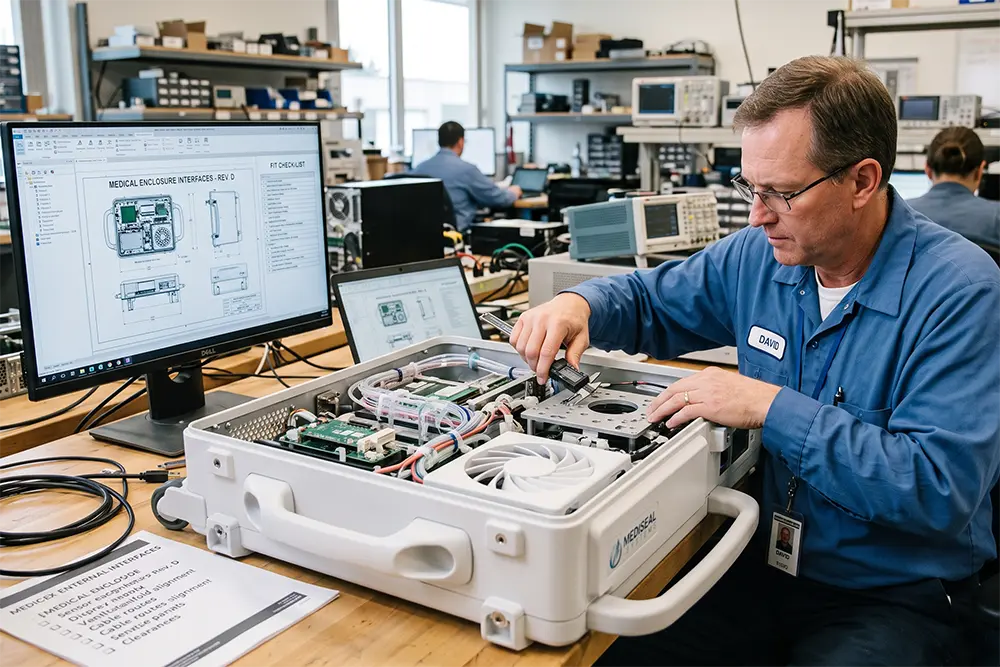
Mounting points, display openings, ventilation, cable routes, service panels and clearances can all affect the enclosure design. We review these interfaces against the available drawings, internal frame data or approved reference parts.
A Manufacturing Route Matched to Your Enclosure Project


CNC Plastic Prototyping
Fast, tool-free prototypes for checking appearance, openings, component fit and assembly.
Best for: Design validation and small quantities


Thick-Sheet Vacuum Forming
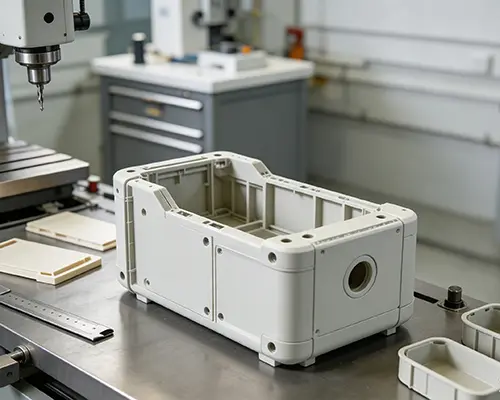
A cost-effective process for producing large medical equipment panels and enclosures.
Best for: Large enclosures and low-to-medium volumes


Injection Molding
Stable and repeatable production for finalized enclosure designs with higher volume requirements.
Best for: Production tooling and repeat orders


CNC Trimming
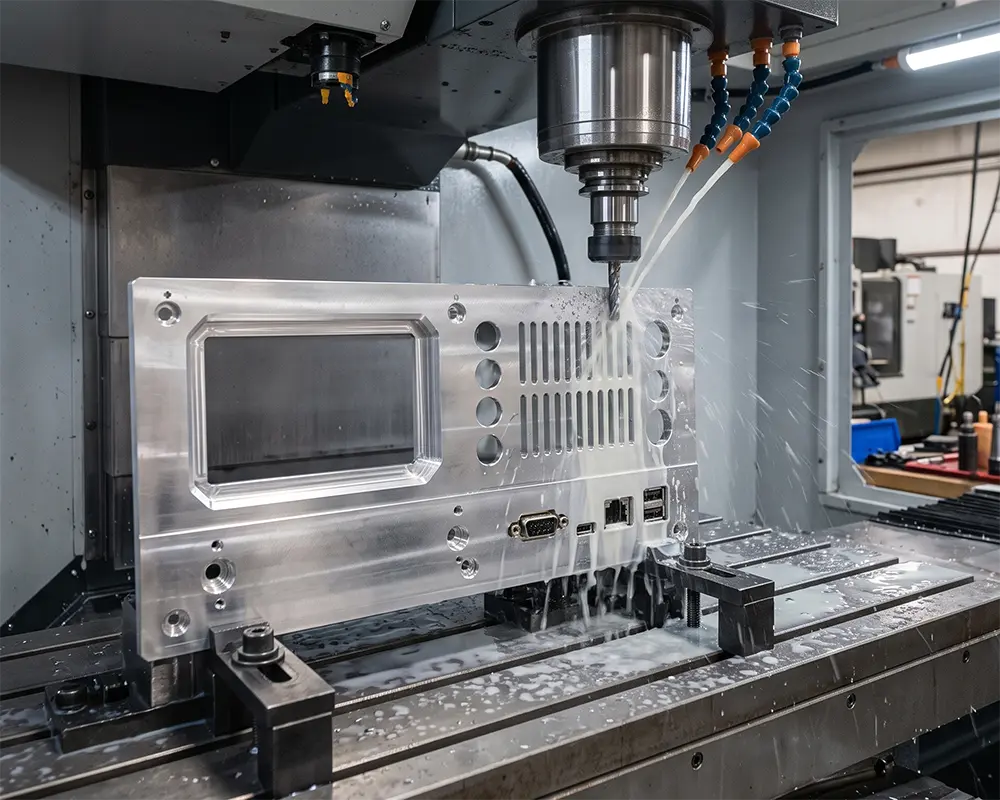
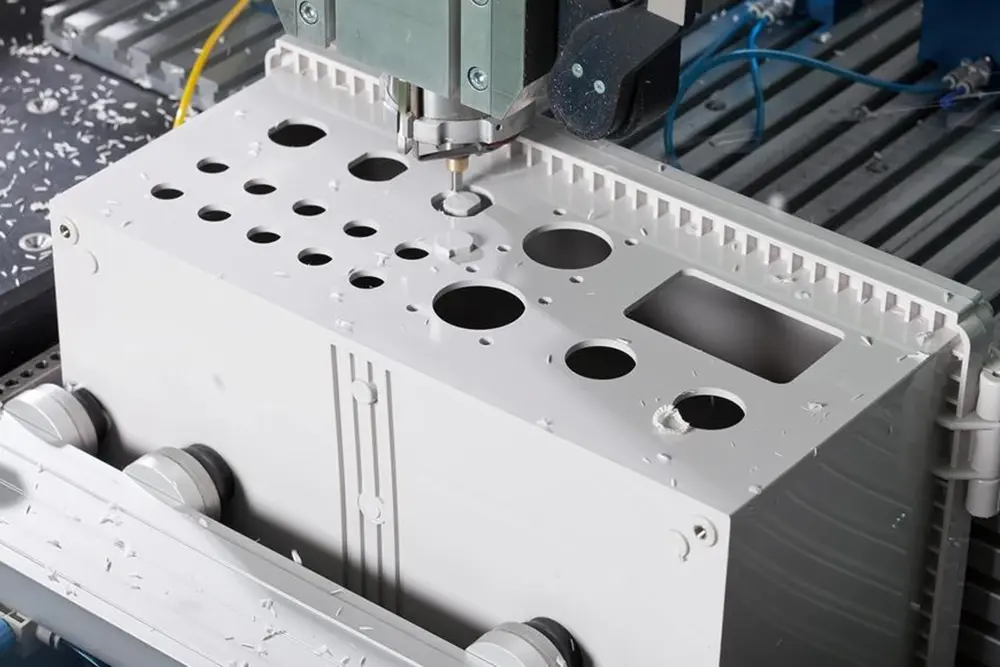
Precision machining of screen openings, vents, connectors and mounting features after forming.
Best for: Accurate openings and assembly interfaces


Surface Finishing
Painting, texturing and printing completed according to approved appearance requirements.
Best for: Finished medical equipment housings


Enclosure Assembly
Installation of inserts, panels and enclosure components before final inspection and delivery.
Best for: Ready-to-assemble or completed housings
From Medical Equipment Requirements to Production Delivery
Every project follows a practical route based on design maturity, enclosure size, material, quantity and manufacturing requirements.
Requirements and NDA
We confirm the equipment type, dimensions, quantity, target market and available design files. An NDA can be reviewed before confidential information is exchanged.
DFM Review and Quotation
Our team reviews materials, part structure, mounting points, openings and finishing requirements, then provides process recommendations, project assumptions and a quotation.
Prototype Validation
A prototype is produced to verify appearance, component fit, openings, mounting interfaces, panel gaps and service access before production.
Tooling and Pilot Run
After design approval, we prepare the required tooling and fixtures. Pilot samples are inspected to confirm quality and repeatability.
Production and Finishing
Enclosure parts are formed or molded, CNC trimmed and completed with the agreed coating, texture, printing and assembly operations.
Inspection and Delivery
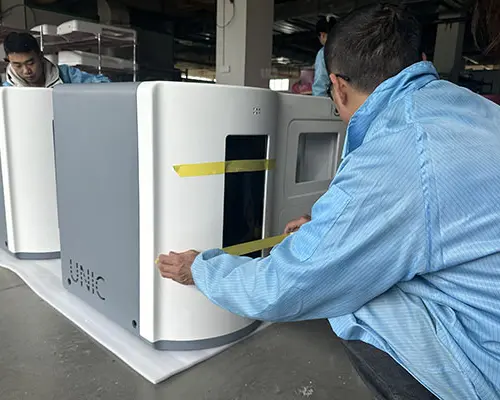
Finished enclosures are inspected against approved drawings or samples, securely packaged and prepared for delivery.
Why Medical Equipment Manufacturers Work With ZRD
Direct Engineering Communication
Questions about drawings, interfaces and manufacturing risks are handled within the project workflow instead of being separated from production.
Enclosure-Focused Project Support
The project is reviewed as a complete enclosure system around the internal equipment, rather than as a collection of unrelated machined parts.
Multiple Processes Under One Workflow
Prototype manufacturing, forming, molding, CNC trimming, finishing and assembly can be coordinated through one project team when included in the agreed scope.
Support for Large and Complex Housings
We work on panel sets and housings where size, curved surfaces, openings and internal structures have to be considered together.
Prototype-to-Production Continuity
Design decisions and approved samples from the development stage can be carried into tooling, pilot production and inspection planning.
Confidential Project Handling
A mutual or customer-provided NDA can be reviewed before detailed drawings are exchanged. Permission to publish project images and product information should be agreed separately.
Experience
Lead Time
Equipment
Engineering Certifications & Quality Standards (ISO 9001/ISO 13485)
Every enclosure project runs through incoming material checks,criticaldimension and opening verification, surface inspection, and trial assemblybefore delivery. Inspection scope and documentation follow your drawings,specifications, and approved samples.
Zhongrongda’s quality system is aligned with ISO 9001, and our manufacturingfor the medical sector follows the discipline required by ISO 13485workflows.
Material traceability (MTR) is supported on request for medicaland laboratory projects.
Upload 3D and 2D drawings, and we will provide a free process evaluation and quotation within 48 hours.
Frequently Asked Questions About Custom Medical Device Enclosures
FAQ
What information do you need to quote a custom medical enclosure?
Answer:
Please send the available 3D and 2D drawings, overall dimensions, expected quantity, preferred material or process, surface requirements and current project stage. If the design is incomplete, send the internal layout and explain which parts still need to be defined.
Can you review our enclosure design before manufacturing?
Answer:
Yes. We can review customer-provided designs for manufacturability, part separation, machining or forming access, assembly interfaces and process selection. The exact engineering scope is confirmed after reviewing the available files.
Which process is suitable for a large, low-volume medical enclosure?
Answer:
Large, low-volume housings are often evaluated for CNC plastic prototyping or thick-sheet vacuum forming. The decision depends on size, geometry, quantity, surface requirements and the expected number of design changes.
Can you produce a prototype before tooling?
Answer:
Yes. A prototype can be used to check the exterior form, component fit, openings and assembly before the project moves into production tooling. The prototype approach depends on the design, material and required quantity.
Can you manufacture the enclosure around our existing internal frame?
Answer:
Yes, provided that we receive accurate frame data and clearly defined interface requirements. Trial fitting may be completed against a supplied frame, approved sample, fixture or agreed digital reference, depending on the project.
Can you match a specified color and surface texture?
Answer:
Color and texture can be developed against a reference, color code or approved sample. The acceptance method, viewing conditions and permitted variation should be agreed before production.
Can you provide assembly and supporting metal components?
Answer:
Supporting metal frames, mounting plates, fixtures and precision components can be evaluated as part of the enclosure project. The exact supply scope depends on the drawings, material, quantity and assembly
What inspection documents can you provide?
Answer:
Available documents depend on the project and may include dimensional inspection records, material documentation, first-article records and final inspection records. List all required documents in the request for quotation.
How do you protect confidential medical equipment information?
Answer:
A mutual or customer-provided NDA can be reviewed before detailed drawings are exchanged. Access to project files and permission to publish project images should be agreed separately.
How long does a custom medical enclosure project take
Answer:
Timing depends on design maturity, enclosure size, prototype requirements, tooling, finishing and quantity. We provide a project-specific schedule after the drawings and required process have been reviewed.
Selected Medical Device Enclosure Projects
Our published medical enclosure projects show how equipment structure, access panels, visible surfaces, manufacturing route and assembly requirements can be considered together. The appropriate process for a diagnostic project is confirmed from its own drawings and requirements.
An eye-wave analyzer trolley must combine a professional medical appearance with practical serviceability and stable mobility. The enclosure protects the
Introduction A beauty or therapy machine trolley must do more than carry equipment. It needs a rigid vertical enclosure, protected
Introduction A desktop herbal steam and therapy device needs a housing that protects heaters and controls while remaining easy to