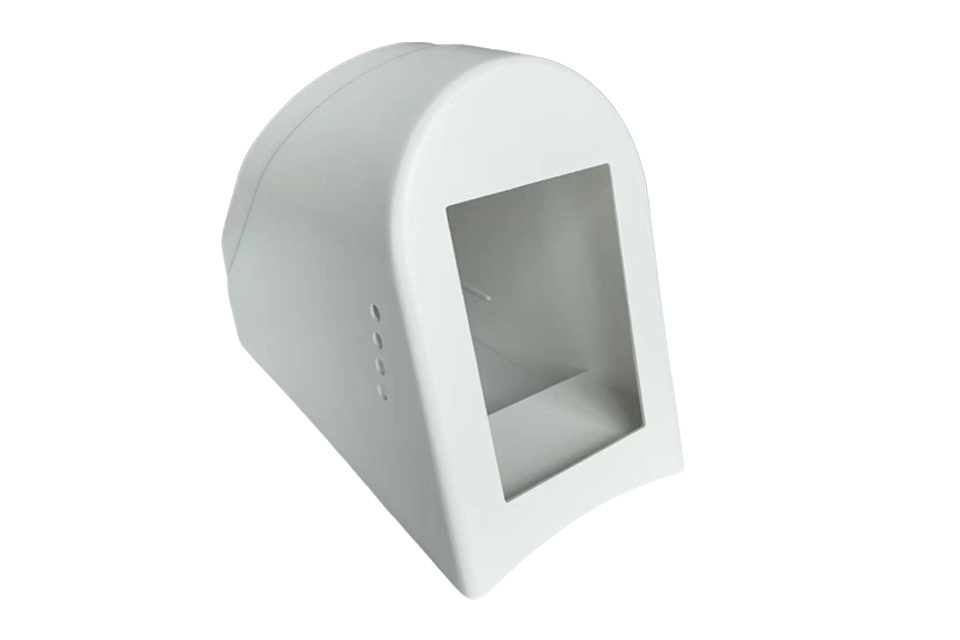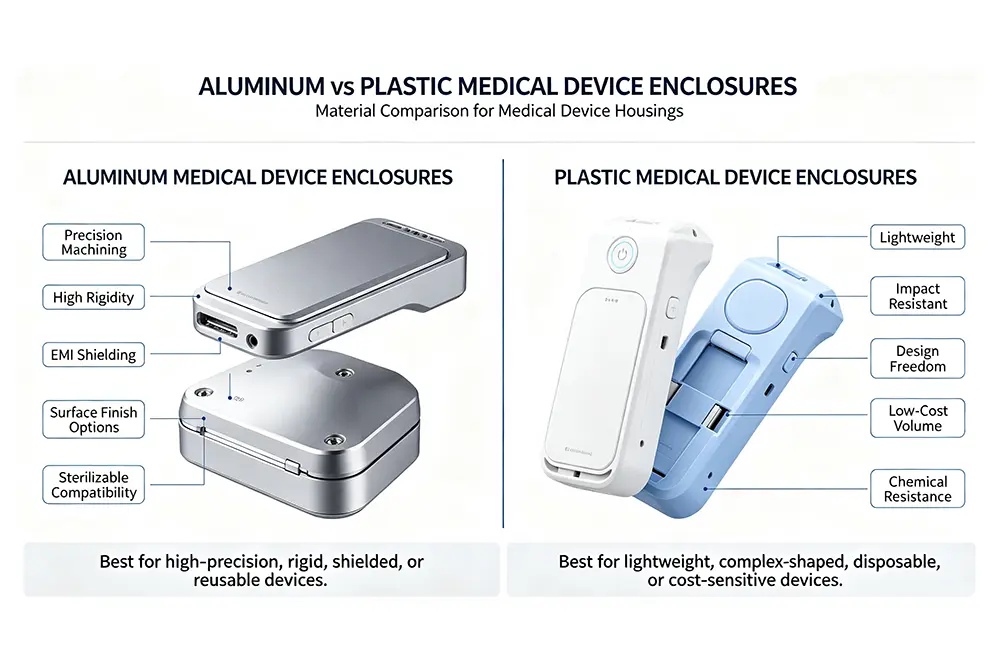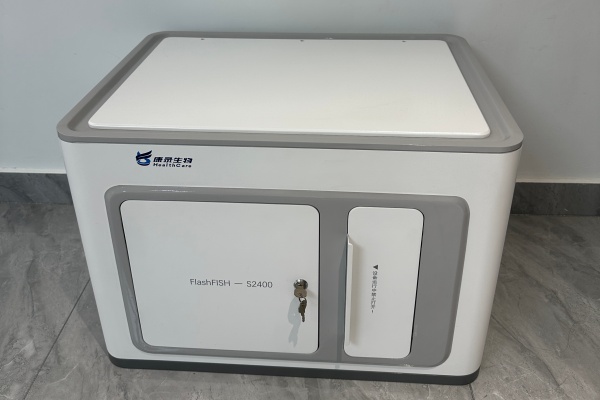
When the customer approached our engineering team at Zhongrongda, they were facing multiple manufacturing challenges with a new laboratory diagnostic instrument.
The project involved a highly integrated medical device enclosure measuring 650 mm × 480 mm × 470 mm. The enclosure required a seamless rounded-corner structure, precise dual-layer door frame geometry, strict cosmetic appearance standards, and reliable protection for sensitive biological testing equipment.
The customer needed a supplier capable of combining sheet metal fabrication, precision machining, finishing, and assembly into a single manufacturing solution.
After reviewing the design, our team identified five major engineering challenges that would determine the success of the project.
Medical Device Enclosure Project Overview
The FlashFISH-S2400 is an integrated biological detection instrument designed for laboratory and medical testing environments.
The enclosure had to provide:
- Structural rigidity
- Corrosion resistance
- Easy cleaning and disinfection
- Dust protection
- Precise equipment integration
- Consistent cosmetic appearance
The final product utilized:
Main Structure
- 6063-T5 Aluminum Alloy
- Reinforced Cold-Rolled Steel
Decorative Components
- Aluminum Alloy Extrusion Profiles
Surface Finish
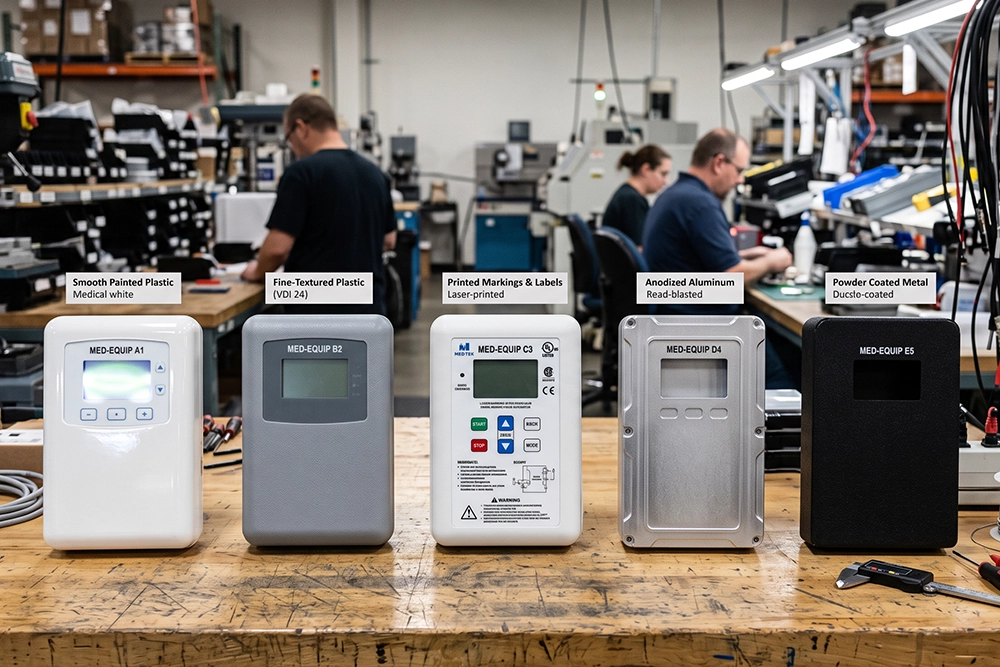
- Matte White Electrostatic Powder Coating
- Matte Gray Electrostatic Powder Coating
The enclosure dimensions were:
- Length: 650 mm
- Width: 480 mm
- Height: 470 mm
Challenge 1: Rounded-Corner Integrated Enclosure Forming
Why Rounded Medical Device Enclosures Are Difficult to Manufacture
The enclosure design required large-radius corner bends on all four sides.
Many manufacturers experience:
- Springback deformation
- Radius inconsistency
- Corner asymmetry
- Surface waviness
These defects become highly visible after powder coating.
Zhongrongda Engineering Solution
Our engineering team conducted two rounds of forming validation before releasing production.
Key process parameters included:
- Bend angle tolerance: ±0.3°
- Radius tolerance: ±0.5 mm
Dedicated forming fixtures were developed to maintain consistency throughout production.
Results:
- Radius consistency improved from 92% to 99.4%
- Dimensional deviation reduced by 78%
Challenge 2: Double-Recessed Door Frame Structure
H3 Why Multi-Layer Door Frames Create Assembly Risks
The enclosure incorporated a dual-layer recessed door frame design.
This feature improved aesthetics and light isolation but significantly increased manufacturing complexity.
Common industry problems include:
- Uneven gaps
- Door warpage
- Misalignment
- Poor sealing performance
Zhongrongda Engineering Solution
Our team combined:
- Laser cutting
- CNC bending
- Precision fixture assembly
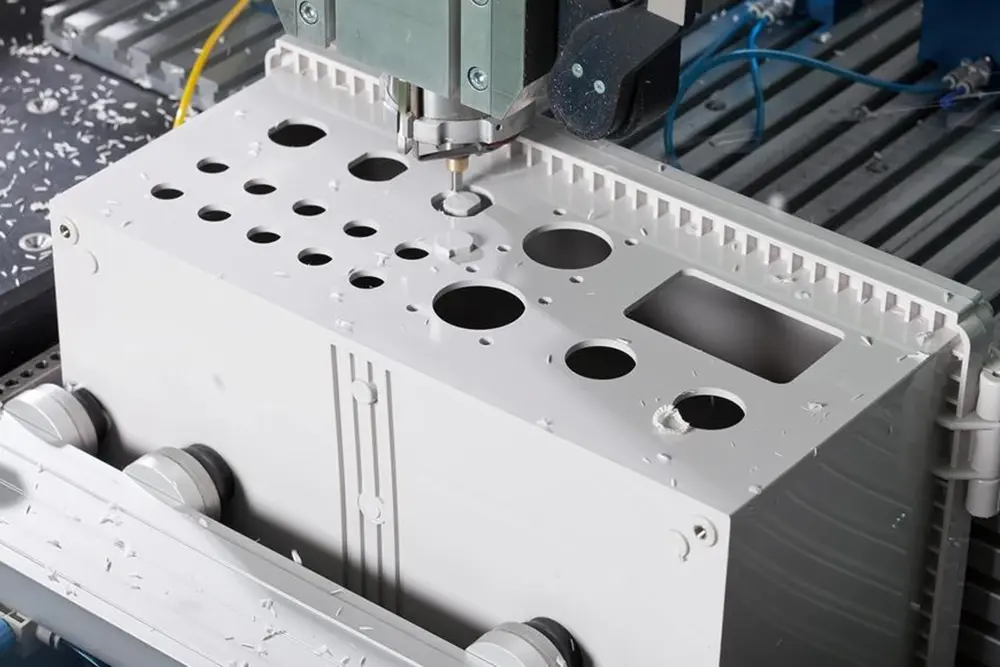
- CNC Machining
Critical control parameters included:
- Gap tolerance: ±0.2 mm
- Frame flatness: ≤0.3 mm
After optimization:
- Door alignment accuracy reached 99.5%
- Seal performance passed customer validation requirements
Challenge 3: Dual-Color Powder Coating with Consistent Matte Texture
Why White and Gray Medical Coatings Are Difficult
The customer required:
- Matte white housing
- Matte gray trim
- Clean color boundaries
- Uniform texture
Many suppliers struggle with:
- Color bleeding
- Uneven gloss levels
- Visible masking lines
Zhongrongda Engineering Solution
We implemented a multi-stage finishing process:
- Surface preparation
- Precision masking
- White coating application
- Gray coating application
- Controlled curing
Process parameters:
- Coating thickness: 70–90 μm
- Curing temperature: 190°C
- Curing duration: 18 minutes
Results:
- Boundary deviation <0.3 mm
- Coating adhesion Grade 0
- Appearance pass rate: 99.2%
Challenge 4: Precision Integration of Door Locks and Access Panels
The instrument required secure storage and light protection for sensitive testing processes.
The door lock and enclosure structure had to function as a unified system.
Common failures include:
- Lock misalignment
- Poor sealing
- Difficult operation
Our team developed precision locating features and controlled assembly tolerances.
Measured results:
- Lock engagement accuracy: ±0.1 mm
- Door opening force consistency: >98%
The final enclosure provided reliable protection while maintaining smooth operation.
Challenge 5: Maintaining Flatness Across Large Sheet Metal Surfaces
Large flat panels are highly susceptible to distortion during:
- Welding
- Bending
- Powder coating
The enclosure required exceptional flatness to preserve its premium appearance.
Our solution included:
- Controlled welding sequence
- Laser welding technology
- Intermediate inspection checkpoints
Parameters:
- Flatness control: ≤0.5 mm/m
- Welding distortion reduction: 72%
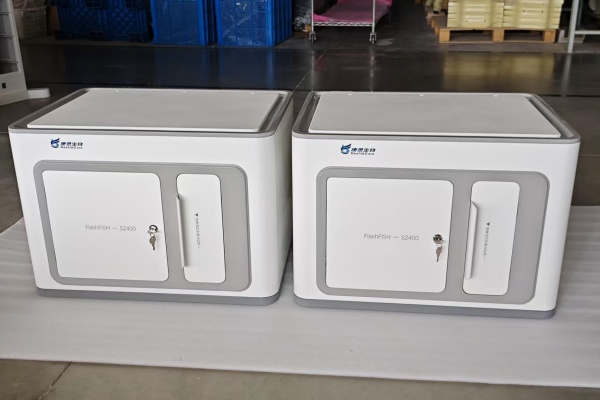
The final enclosure achieved excellent visual consistency.
Manufacturing Process
The complete workflow included:
- DFM review
- Engineering validation
- Laser cutting
- CNC bending
- Laser welding
- CNC Machining
- Surface preparation
- Powder coating
- Assembly
- Quality inspection
Customers developing new products often combine:
to reduce development risk and accelerate commercialization.
For engineers evaluating material options, MatWeb Material Property Database remains one of the most widely referenced engineering resources.
Quality Control Process
Every enclosure underwent:
Incoming Material Inspection
Verification of:
- Material certification
- Thickness
- Surface quality
In-Process Inspection
Verification of:
- Bending accuracy
- Welding quality
- Machining tolerances
Final Inspection
Verification of:
- Appearance
- Assembly
- Functional performance
Inspection results:
- 100% visual inspection
- 100% assembly verification
- ISO 9001:2015 quality management compliance
Project Results
Final project metrics:
- Prototype lead time: 4 weeks
- Assembly pass rate: 100%
- Hole position accuracy: ±0.05 mm
- Surface finish approval rate: 99.2%
- Manufacturing yield: 99.5%
The customer completed system integration without requiring any enclosure modifications.
Conclusion
The FlashFISH-S2400 project demonstrates how successful medical enclosure manufacturing depends on solving real engineering challenges rather than simply producing sheet metal components.
By controlling rounded-corner forming, recessed door frame geometry, dual-color finishing, precision assembly, and flatness management, our engineering team delivered a production-ready medical device enclosure capable of supporting demanding laboratory applications.
For companies developing next-generation medical instruments, early collaboration with experienced enclosure engineers can significantly reduce risk, shorten development cycles, and improve product reliability.
FAQ
What is a medical device enclosure?
A medical device enclosure is a protective housing designed to integrate and protect medical electronics, diagnostic systems, and laboratory equipment while ensuring safety, durability, and ease of maintenance.
What materials are used for medical device enclosures?
Common materials include aluminum alloys, stainless steel, and cold-rolled steel due to their strength, corrosion resistance, and compatibility with medical environments.
Why are rounded-corner medical enclosures difficult to manufacture?
Large-radius bends are prone to springback and deformation. Achieving consistent geometry requires specialized tooling and forming strategies.
What tolerance can Zhongrongda achieve?
For medical enclosure projects, we commonly maintain dimensional tolerances between ±0.05 mm and ±0.3 mm depending on the feature and process.
Can Zhongrongda support prototype projects?
Yes. We provide Rapid Prototyping services for medical equipment manufacturers before low-volume production.
What surface finishes are available?
Options include powder coating, anodizing, painting, texture coating, and custom medical-grade finishes.
How long does production take?
Prototype projects typically require 3–5 weeks depending on complexity.
Does Zhongrongda provide CNC machining?
Yes. Our CNC Machining services support enclosure frames, access panels, mounting features, and precision mechanical components.
What industries use medical device enclosures?
Medical device enclosures are widely used in laboratory systems, diagnostic instruments, imaging systems, and healthcare automation equipment.
How can I request a quotation?
Send us your drawings, CAD files, quantities, and target lead times for engineering review and quotation.
Request a Quote
Looking for a reliable partner for custom medical device enclosure manufacturing?
Our engineering team can support:
- Medical Device Enclosures
- Laboratory Equipment Housings
- Rapid Prototyping
- CNC Machining
- Low-Volume Production
Email: info@zrdmfg.com
Phone: +86 13972955806
Send us your drawings today and receive engineering feedback and a quotation within 24 hours.