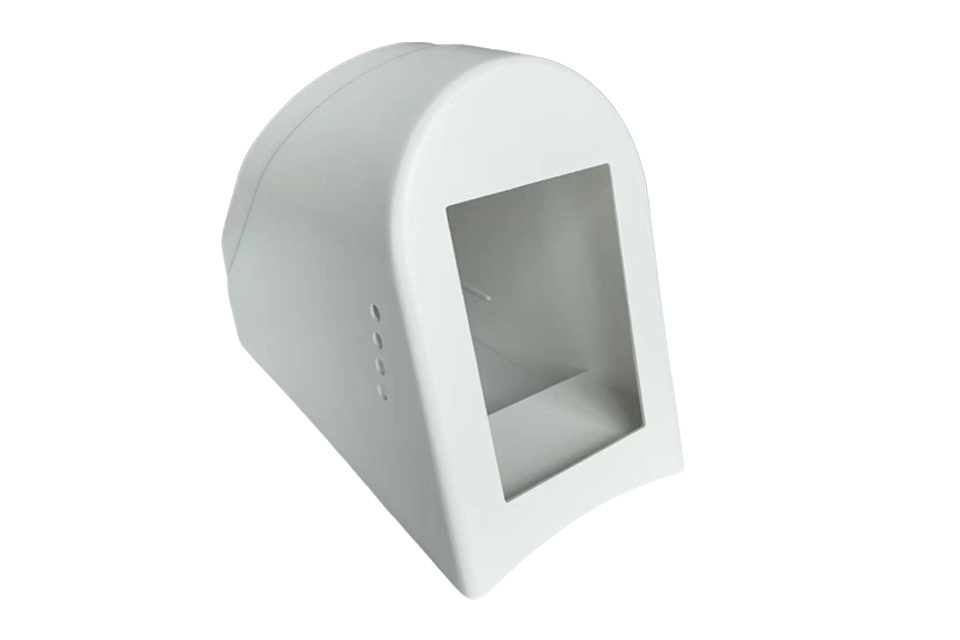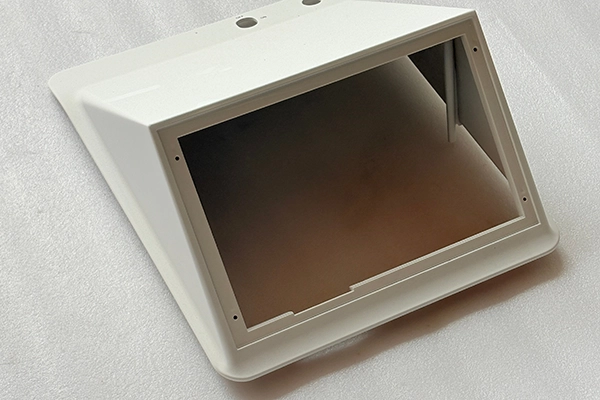
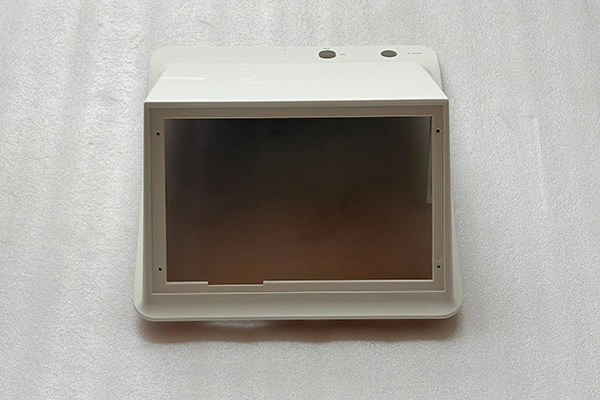
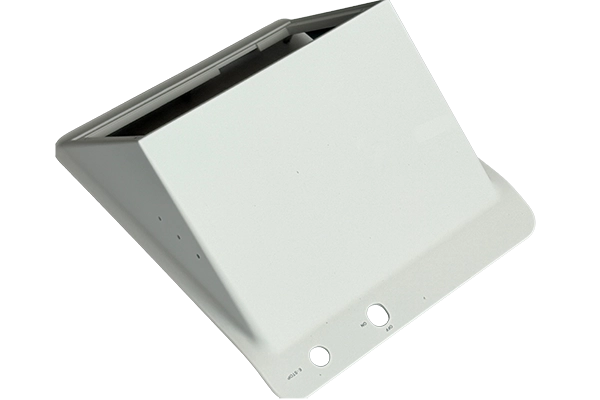
When manufacturing a Medical Device Enclosure Panel, dimensional stability and appearance quality often become the biggest challenges. At Zhongrongda, we recently produced a custom ABS injection molded enclosure panel measuring 295mm × 350mm × 140mm for a medical device application.
The part included a large display window, multiple button openings, mounting holes, and a wide-frame structure. During development, our team focused on solving deformation, dimensional variation, surface defects, and structural strength issues while maintaining efficient mass production.
For projects that require enclosure development before tooling investment, we often combine Rapid Prototyping services with production validation to reduce development risks.
Understanding the Medical Device Enclosure Panel Structure
The component was manufactured using a one-piece ABS injection molding process.
Key structural features included:
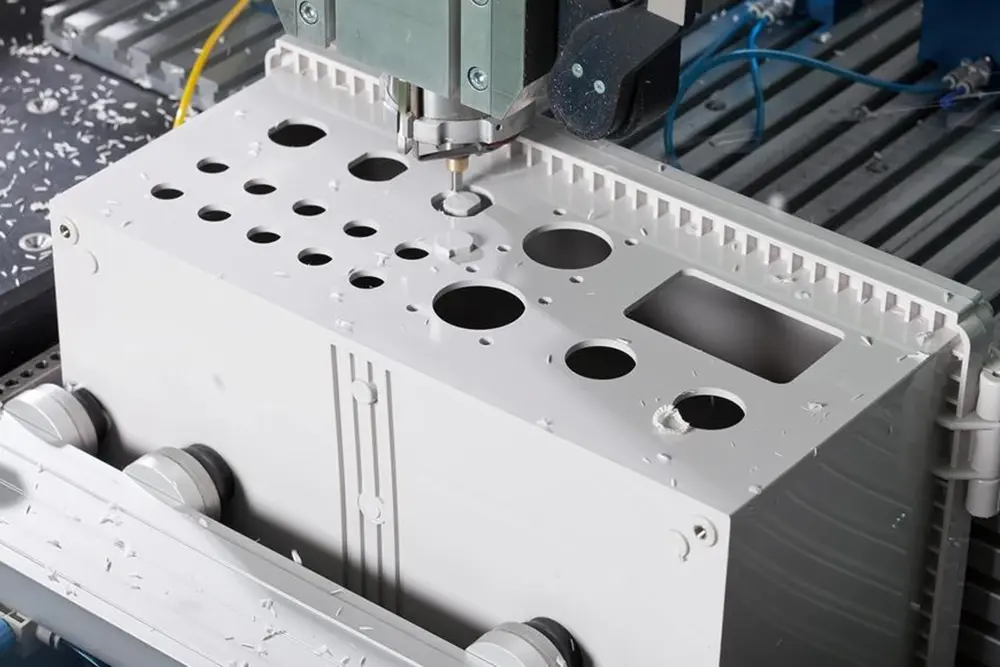
- Large screen window opening
- Multiple button positions
- Mounting screw holes
- Open-frame enclosure design
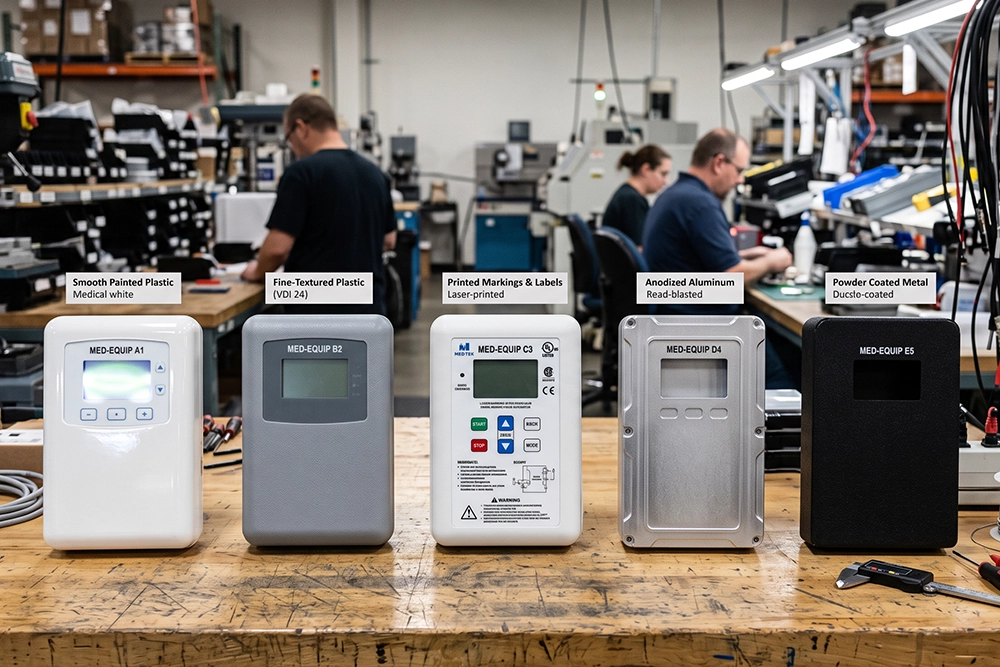
- Matte surface finish
Product dimensions:
- Length: 295mm
- Width: 350mm
- Height: 140mm
Because of the large flat surfaces and thin-wall geometry, the enclosure required careful engineering throughout mold design and process development.
Medical Device Enclosure Panel Challenge #1: Large Thin-Wall Structure Warpage
Large ABS panels commonly experience deformation during cooling.
In this project, the enclosure contained:
- Wide flat surfaces
- Thin wall sections
- Open-frame geometry
These characteristics increased the risk of:
- Warpage
- Surface sinking
- Uneven shrinkage
- Assembly interference
Even minor deformation could affect display installation and create inconsistent gaps around the screen.
How We Controlled ABS Injection Molded Medical Enclosure Warpage
Our team optimized several critical factors:
- Mold cooling channel layout
- Gate location distribution
- Material flow balance
- Holding pressure parameters
- Cooling cycle consistency
We used mold flow analysis and multiple trial runs to verify shrinkage behavior before mass production.
The final solution significantly improved panel flatness and ensured stable screen installation.
For projects requiring metal support structures or integrated components, our CNC CNC MachiningMachining capabilities are frequently used alongside molded enclosure production.
Medical Device Enclosure Panel Challenge #2: Screen Window and Hole Position Accuracy
The display window was one of the most critical features.
The customer required:
- Precise window dimensions
- Consistent corner geometry
- Accurate screw hole positioning
- Reliable alignment with the display assembly
ABS shrinkage can vary across large parts, causing dimensional deviations if not properly controlled.
How We Maintained High Dimensional Accuracy
At Zhongrongda, we focused on three key areas:
Mold Core Precision
We machined critical cavity features with tight tolerances to minimize dimensional variation.
Balanced Material Flow
The gating system was designed to ensure uniform filling around the screen opening.
Inspection Verification
Each production batch underwent dimensional verification using:
- CMM inspection
- Vision measurement systems
- Height gauges
- Micrometers
These inspections ensured the screen window and mounting holes remained within customer specifications.
This process is similar to the quality controls used for our Medical Device Enclosure manufacturing projects where assembly precision directly affects final device performance.
Medical Device Enclosure Panel Challenge #3: Surface Defects on Large Flat Areas
Large cosmetic surfaces are particularly vulnerable to visual defects.
Common problems include:
- Flow marks
- Weld lines
- Sink marks
- Short shots
- Flash formation
The matte finish requirement increased the visibility of molding inconsistencies.
How We Improved Surface Appearance
Our team adjusted:
- Melt temperature
- Mold temperature
- Injection speed
- Packing pressure
- Venting efficiency
Several mold modifications were also implemented during trial production.
As a result, we achieved a consistent matte surface appearance while reducing visible molding defects across the large panel area.
Medical Device Enclosure Panel Challenge #4: Complex Runner and Venting Design
The enclosure contained multiple corners, openings, and varying wall sections.
Material had to flow simultaneously through:
- Large flat regions
- Screen window perimeter
- Mounting features
- Button openings
Poor runner design could create:
- Air traps
- Burn marks
- Incomplete filling
- Gas defects
Our Mold Design Solution
We developed a balanced runner system that improved filling efficiency across the entire enclosure.
Additional venting locations were added around:
- Corner sections
- Window edges
- Deep cavity features
These modifications reduced trapped gas and improved overall molding consistency during volume production.
Medical Device Enclosure Panel Challenge #5: Balancing Strength and Wall Thickness
The button area and screen frame experienced higher stress concentrations during assembly and use.
Several risks needed to be balanced:
- Thin walls causing cracking
- Thick walls causing sink marks
- Uneven stress distribution
- Long-term structural instability
How We Optimized Structural Performance
Our engineering team adjusted:
- Rib placement
- Corner transitions
- Wall thickness distribution
- Reinforcement geometry
The final design improved structural rigidity while minimizing cosmetic defects.
For consumer aesthetics combined with functional enclosure engineering, many of the same design principles are also applied in our Beauty Device Enclosures projects.
Material Selection for ABS Medical Device Enclosure Panels
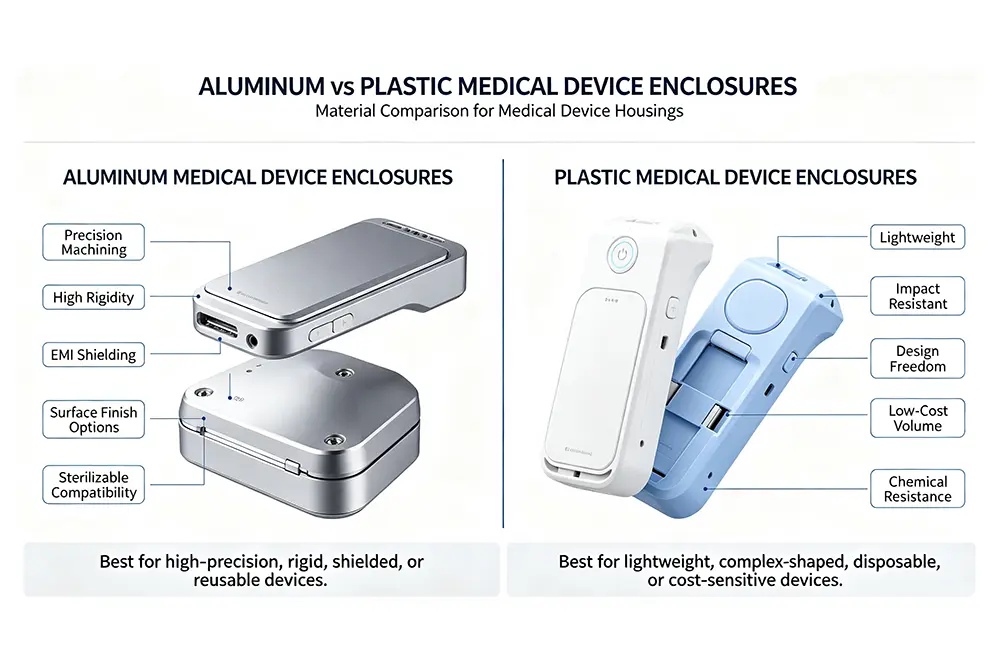
ABS remains a common choice for medical device housings because of its balance between processability and mechanical performance.
Key advantages include:
- Good impact resistance
- Stable dimensional performance
- Excellent surface finish capability
- Cost-effective production
- Compatibility with secondary finishing processes
For additional material information, engineers can review ABS Plastic Properties and Applications from material science resources before selecting a resin grade.
Quality Control Process for Medical Device Enclosure Manufacturing
Before shipment, every production batch undergoes inspection procedures including:
- CMM measurement
- Visual appearance inspection
- Hole position verification
- Flatness verification
- Assembly testing
Our inspection team verifies critical dimensions to ensure production consistency throughout the manufacturing cycle.
Conclusion
This 295mm × 350mm × 140mm Medical Device Enclosure Panel project demonstrates how successful ABS injection molding depends on detailed engineering rather than simply producing a plastic part.
By addressing warpage, dimensional accuracy, surface quality, venting design, and structural optimization, our team delivered a production-ready enclosure capable of meeting demanding medical equipment assembly requirements.
If you are currently evaluating a medical enclosure project, early engineering review can often identify molding risks before tooling is built, reducing both development time and production costs.
4. FAQ
1. What is a Medical Device Enclosure Panel?
A Medical Device Enclosure Panel is the external housing component that protects internal electronics, displays, and controls. It often includes screen openings, button positions, mounting features, and structural support elements.
2. Why is ABS commonly used for medical device enclosures?
ABS offers good impact resistance, dimensional stability, and excellent surface finish characteristics. It also supports efficient injection molding for both prototype and production quantities.
3. How do you prevent warpage in a large Medical Device Enclosure Panel?
We optimize mold cooling, gate placement, material flow balance, and process parameters. Proper mold design and validation trials help minimize shrinkage-related deformation.
4. What dimensions can be manufactured for custom medical enclosures?
We manufacture both small and large enclosure components. This project measured 295mm × 350mm × 140mm, but larger custom dimensions can also be supported depending on design requirements.
5. How accurate are screen window openings in ABS injection molded enclosures?
Dimensional accuracy depends on mold design and process control. Critical screen openings and mounting holes are verified using CMM and precision inspection equipment.
6. What causes sink marks in ABS medical device housings?
Sink marks are typically caused by excessive wall thickness, insufficient packing pressure, or uneven cooling. Design optimization helps reduce these risks.
7. Can prototypes be produced before injection mold manufacturing?
Yes. We frequently use rapid prototyping methods to evaluate fit, assembly, and appearance before committing to production tooling.
8. How do you control surface quality on large enclosure panels?
We optimize mold temperature, injection parameters, venting design, and tool surface conditions to reduce weld lines, flow marks, and other cosmetic defects.
9. What inspections are performed on medical device enclosure parts?
Typical inspections include dimensional verification, flatness checks, visual inspection, hole position measurement, and assembly validation.
10. Can Medical Device Enclosure Panels include secondary machining?
Yes. CNC machining can be used for post-processing, tight-tolerance features, assembly modifications, and engineering changes after molding.
5. Contact Zhongrongda
Need a Custom Medical Device Enclosure Panel?
Whether you need prototype validation, tooling development, or production manufacturing, our engineering team can review your design and provide manufacturability recommendations before production begins.
Request a Project Review Today
Email: info@zrdmfg.com
Phone: +86 13972955806
Send your 2D drawings, 3D CAD files, or enclosure requirements, and our team will provide technical feedback, manufacturing recommendations, and a production quotation.