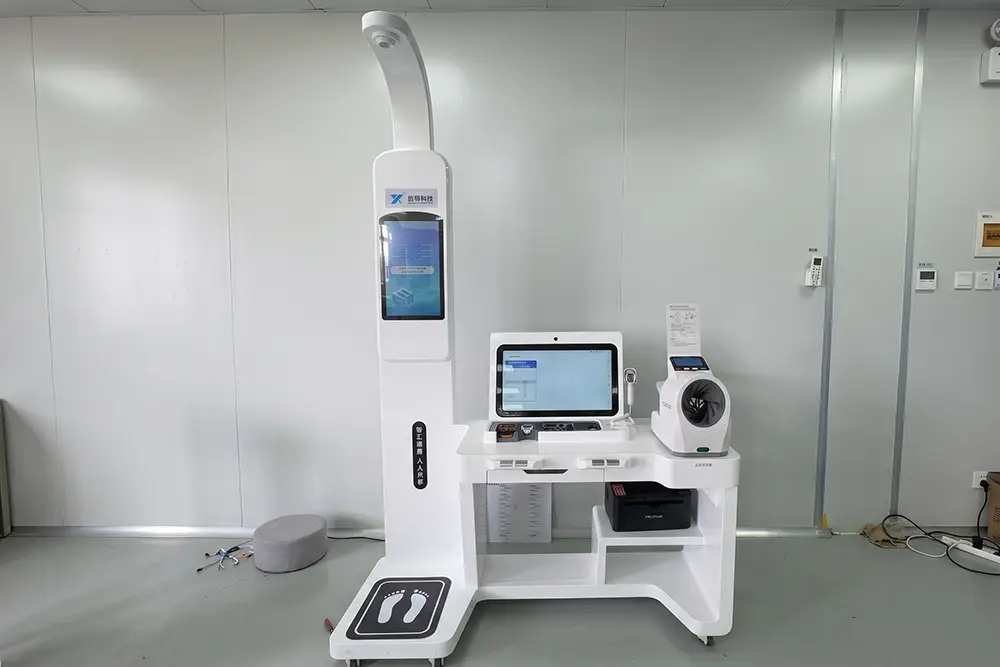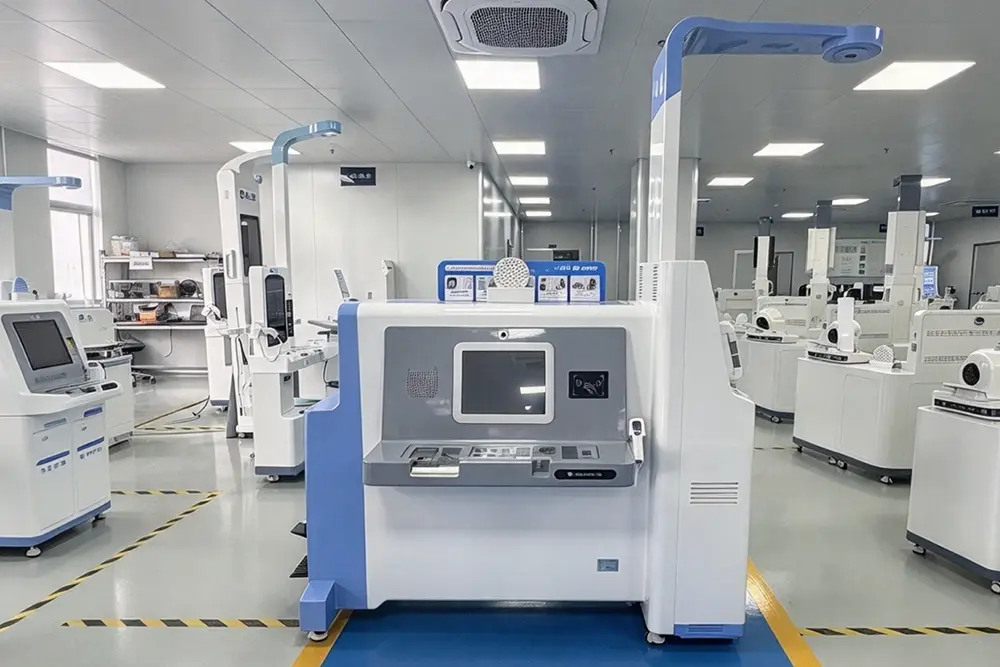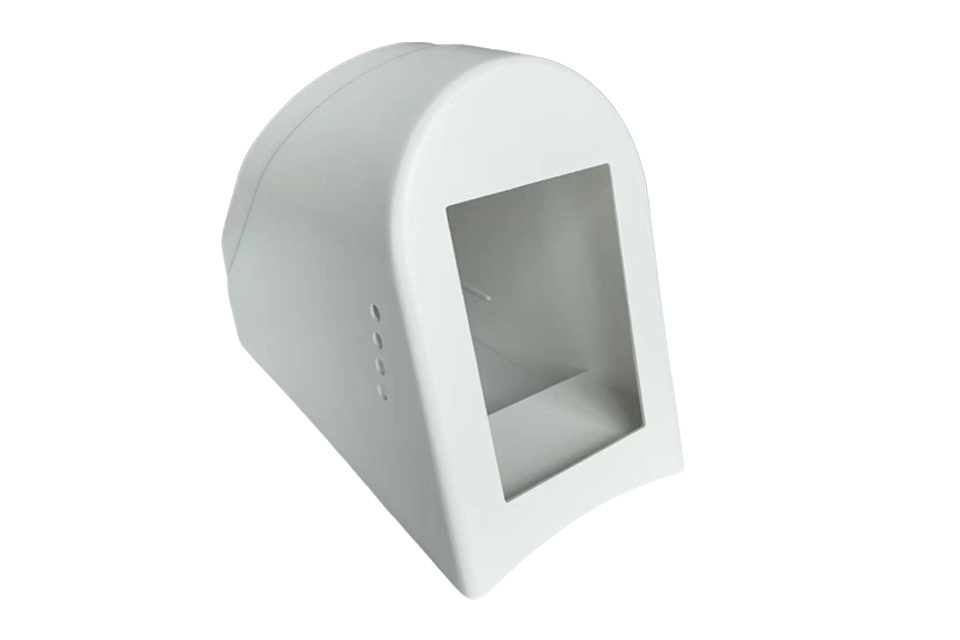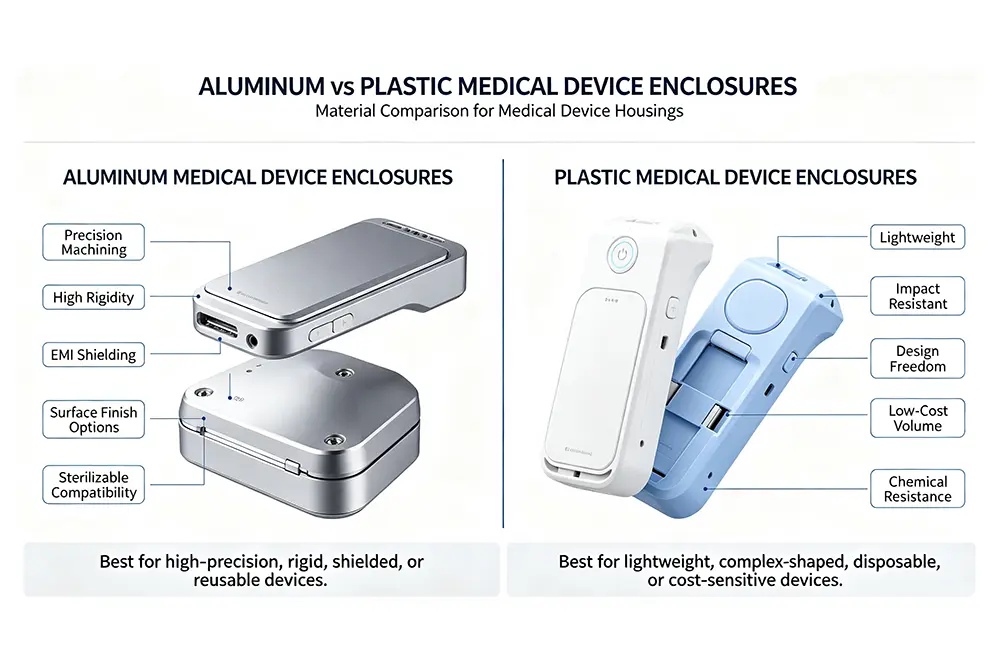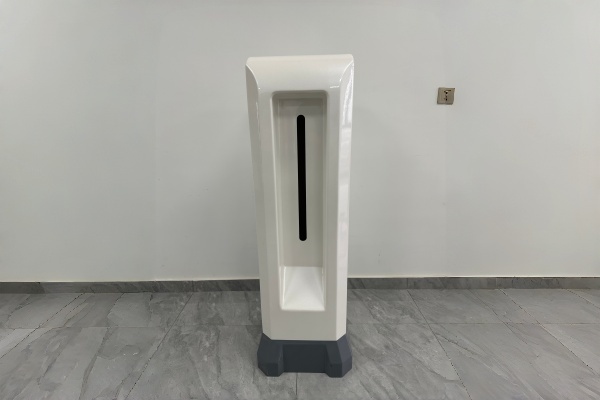
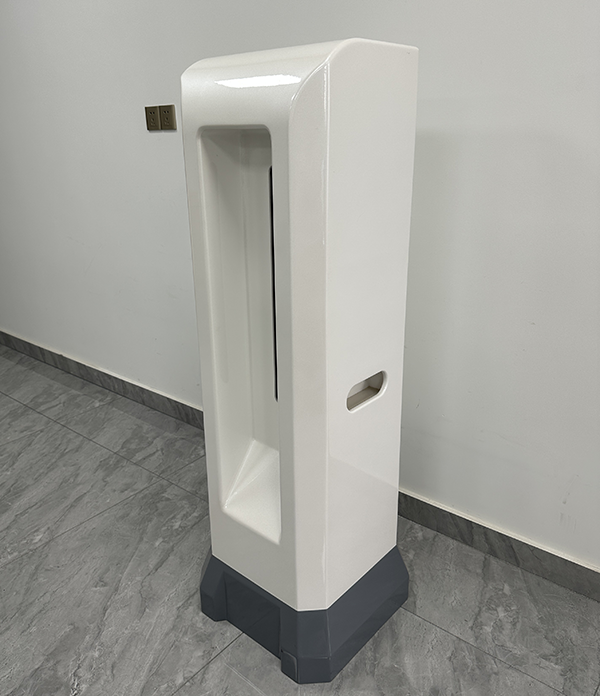
At Zhongrongda, executing precise Medical Beauty Device Enclosure Manufacturing requires overcoming severe structural and cosmetic challenges. We recently engineered a vertical high-end medical beauty physiotherapy instrument enclosure that pushed the limits of sheet metal forming and surface finishing.
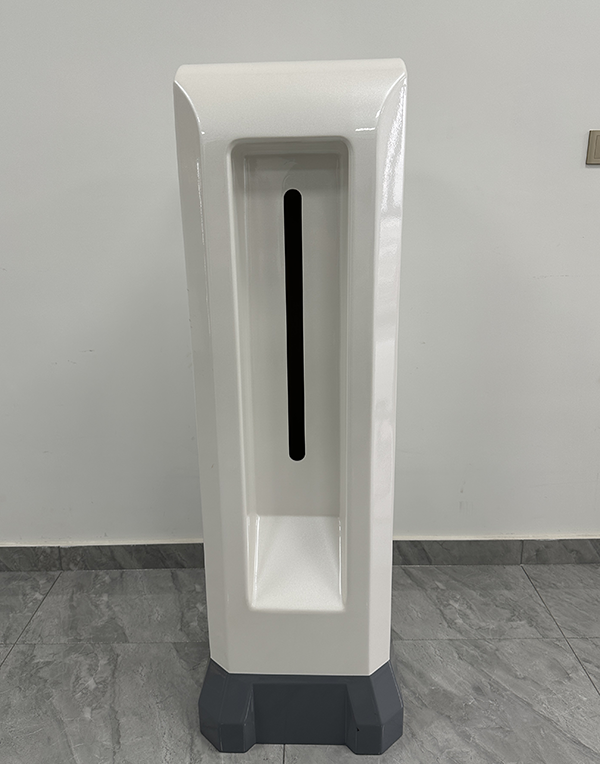
This specific project required massive, exact physical dimensions to house complex internal mechanisms. The final integrated equipment shell measures exactly 66cm in length, 95cm in width, and 220cm in height.
Balancing these large dimensions with an elegant, waist-narrowing aesthetic creates significant manufacturing bottlenecks. Below, our team outlines the specific engineering problems encountered and the exact fabrication processes we implemented to resolve them.
Overcoming Deep Cavity Forming Constraints
The primary structural design relies on 6063-T5 aluminum alloy sheet metal and thickened cold-rolled steel. This material choice guarantees high strength and corrosion resistance.
However, the design features a massive, deep concave cavity on the front panel. Forming this deep cavity using standard press brakes results in severe material springback and structural deformation.
To solve this problem, our engineers abandoned single-hit bending. We implemented a multi-stage CNC bending process with custom-ground upper tooling to accommodate the severe inner radius.
By calculating the exact K-factor of the 6063-T5 aluminum, we adjusted the bending sequence to allow the material to stretch into the deep cavity without tearing.
Are your current equipment housings suffering from dimensional warping during the forming process? Send our engineering team your CAD models for a thorough structural audit.
Achieving Seamless Integration via Laser Welding
The deep cavity and the massive large-angle, three-dimensional waist-narrowing shape cannot be formed from a single sheet. The enclosure required multiple formed panels to be joined precisely.
Standard TIG welding leaves visible seams and introduces excessive heat, causing the large flat side panels to warp. We solved this by utilizing continuous fiber laser welding.
Our team clamped the formed panels into custom rigid heat-sinking fixtures. The concentrated laser beam allowed us to achieve deep penetration welding with minimal heat-affected zones.
Post-welding, we ground the seams flush. This seamless overall molding eliminates joint gaps, creating a unibody appearance critical for Beauty Device Enclosures.
Precision Machining for Functional Slots
The front face of the enclosure features a very long, narrow vertical slot designed for specific functional access. Processing this slot directly into the thick metal introduces severe straightness deviations.
Furthermore, mechanical punching leaves sharp burrs that are extremely difficult to clear inside a deep, narrow cavity.
CNC Milling the Plastic Interfaces
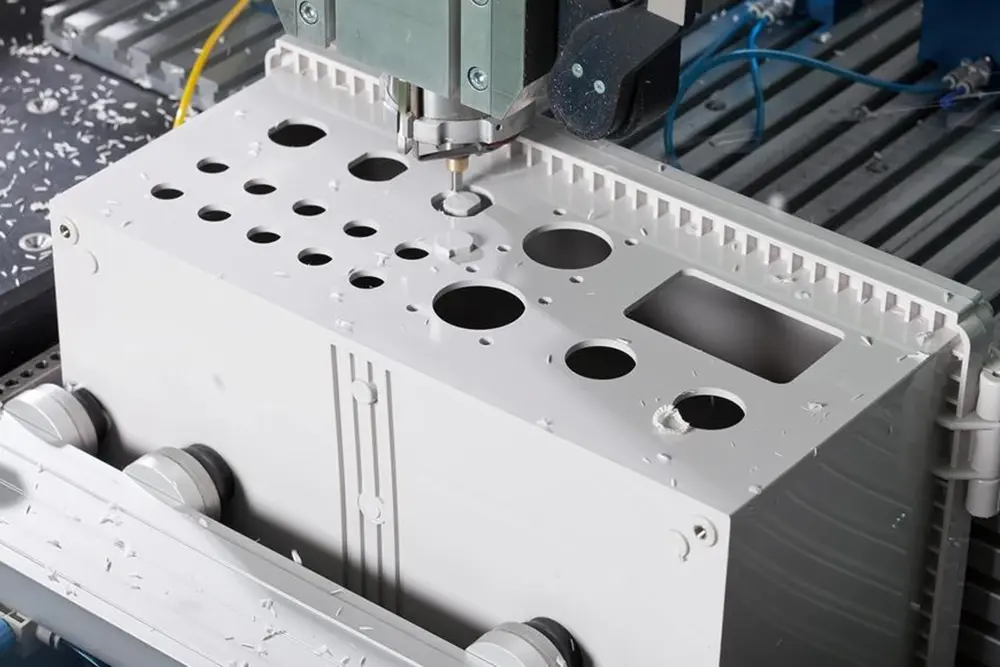
To ensure absolute straightness and a medical-grade tactile feel, our team utilized simultaneous 5-axis CNC Machining.
We laser-cut an oversized rough slot in the sheet metal face. We then CNC milled precise, high-strength plastic inserts that perfectly match the slot’s dimensions.
This approach allowed us to achieve strict symmetry and eliminate all sharp metal edges. By machining these critical interfaces separately, we guarantee the functional long slot remains perfectly straight across the entire 220cm height of the machine.
Surface Treatment and Base Assembly Protocols
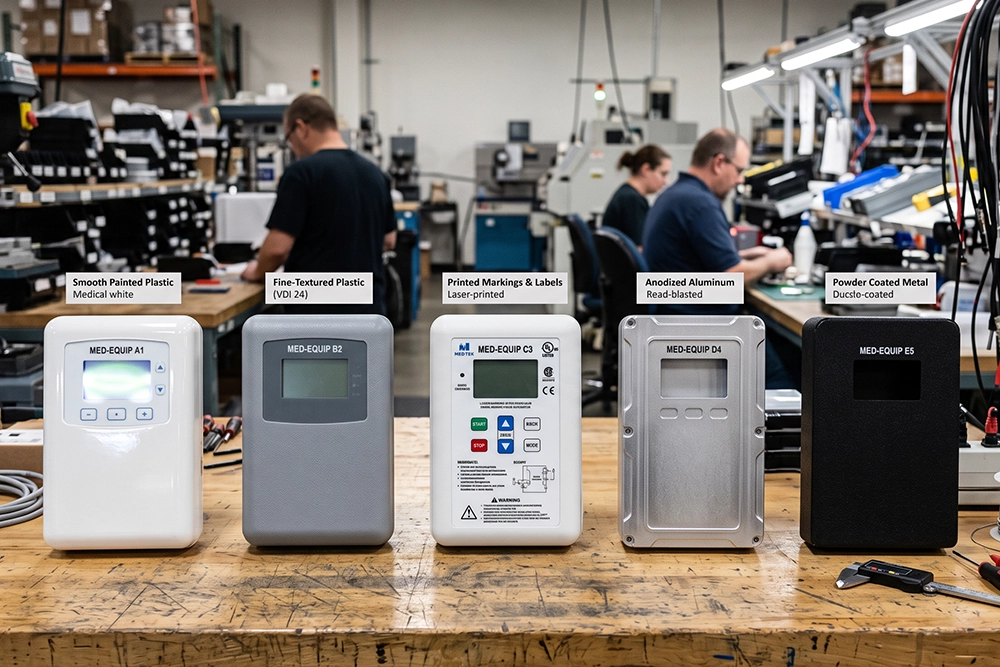
A high-end physiotherapy instrument demands an exterior finish that communicates sterility and luxury. We specified a pearlescent white high-gloss baking paint and electrostatic powder coating.
Applying high-gloss pearlescent finishes to vertical, tall, and curved surfaces is notoriously difficult. The paint is highly susceptible to color differences, sagging (runs), and dust particle inclusion.
Perfecting the High-gloss Pearlescent Coating
The primary problem is maintaining an even film thickness across the asymmetrical waist-narrowing curves.
Our team implemented a multi-layer sanding protocol prior to any paint application. We utilized progressively finer orbital sanders to ensure all edges were round, smooth, and free of burrs.
Inside our climate-controlled downdraft spray booths, we applied the pearlescent base coat using automated robotic arms. This ensured a consistent spray angle and distance, eliminating the color-shift common in manual pearlescent application.
We then applied a high-solids clear coat and baked it using a stepped infrared curing process. This prevents the heavy clear coat from sagging on the vertical 220cm panels, resulting in a flawless, medical-grade texture that is highly resistant to stains.
Struggling with uneven coating or dust inclusions on large curved surfaces? Contact us to discuss our cleanroom coating capabilities for your next product launch.
Integrating the Custom ABS Equipment Base
The massive 220cm structure requires an incredibly stable foundation. We designed the bottom base utilizing a combination of high-strength ABS engineering plastic and integrated sheet metal framework.
During the Rapid Prototyping phase, we identified that the transition between the painted sheet metal body and the ABS base required strict tolerance control to avoid visible assembly gaps.
By analyzing specific ABS plastic properties and applications, we engineered the base mold with targeted shrinkage compensations.
We milled interlocking registration tabs on both the sheet metal chassis and the ABS base. During final assembly, these features force the components into perfect alignment.
This creates an extremely stable, heavy-duty foundation that perfectly supports the upper structure. This exact tolerance matching is a standard requirement for every Medical Device Enclosure we manufacture at Zhongrongda.
Frequently Asked Questions (FAQs)
Q1: What materials are used in Medical Beauty Device Enclosure Manufacturing?
Our team primarily utilizes 6063-T5 aluminum alloy and thickened cold-rolled steel for the main body due to their high strength. We integrate high-strength ABS engineering plastics for stable, impact-resistant bases.
Q2: How do you prevent sheet metal deformation when forming a deep cavity?
We avoid single-hit bending. Instead, we use multi-stage CNC bending with custom tooling. We precisely calculate the material’s K-factor to manage stretching and prevent the aluminum from tearing or springing back.
Q3: Why use laser welding for vertical physiotherapy equipment shells?
Laser welding provides deep penetration with a very small heat-affected zone. This prevents the large, flat side panels of the 220cm tall enclosure from warping while allowing us to grind the seams completely flush for a unibody look.
Q4: How do you machine long, narrow functional slots without burrs?
We laser-cut a rough opening in the metal and then utilize 5-axis CNC machining to mill precise plastic inserts. This guarantees strict straightness, perfect symmetry, and completely eliminates sharp metal burrs in the narrow slot.
Q5: What causes sagging when applying a high-gloss pearlescent coating?
Sagging occurs when heavy clear coats are applied unevenly to tall vertical surfaces. We solve this by using robotic spray arms for consistent film thickness and a stepped infrared baking process to cure the paint before gravity causes it to run.
Q6: How do you match the curvature of the waist-narrowing shape perfectly?
We ensure the large-angle, 3D waist-narrowing shape is symmetrical by controlling the CNC bending tolerances to within 0.1mm. We use custom checking fixtures to verify both sides match perfectly before welding.
Q7: What are the exact dimensions of this specific medical beauty enclosure?
The physical dimensions for this integrated physiotherapy equipment shell are strictly manufactured to 66cm in length, 95cm in width, and 220cm in height.
Q8: How do you ensure the ABS base fits perfectly with the metal body?
We account for specific plastic shrinkage rates during mold design. We also machine interlocking registration tabs into both the custom ABS equipment base and the sheet metal frame to force perfect alignment during assembly.
Q9: How do you handle color differences in pearlescent paint?
Color shift in pearlescent paint is caused by inconsistent spray angles. We eliminate this by using automated electrostatic spraying inside climate-controlled booths, ensuring the metallic flakes lay flat and reflect light evenly.
Q10: Why is multi-layer polishing necessary before painting?
Even minor surface defects will be magnified by a high-gloss clear coat. We use multi-layer mechanical sanding to remove all micro-scratches from the sheet metal and weld seams, ensuring a perfectly smooth substrate for the medical-grade paint.
Contact Zhongrongda
Are manufacturing defects and poor surface finishes delaying your medical beauty equipment production? Our engineering team specializes in solving complex deep cavity forming and large-scale high-gloss coating challenges. Partner with Zhongrongda for flawless execution.
Email: info@zrdmfg.com
Phone: +86 13972955806