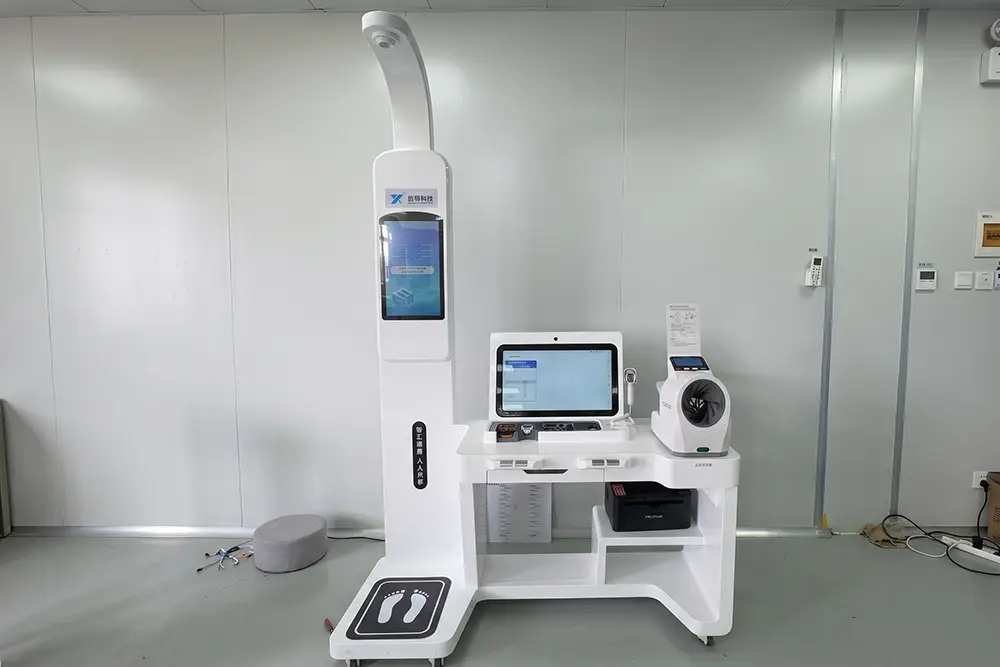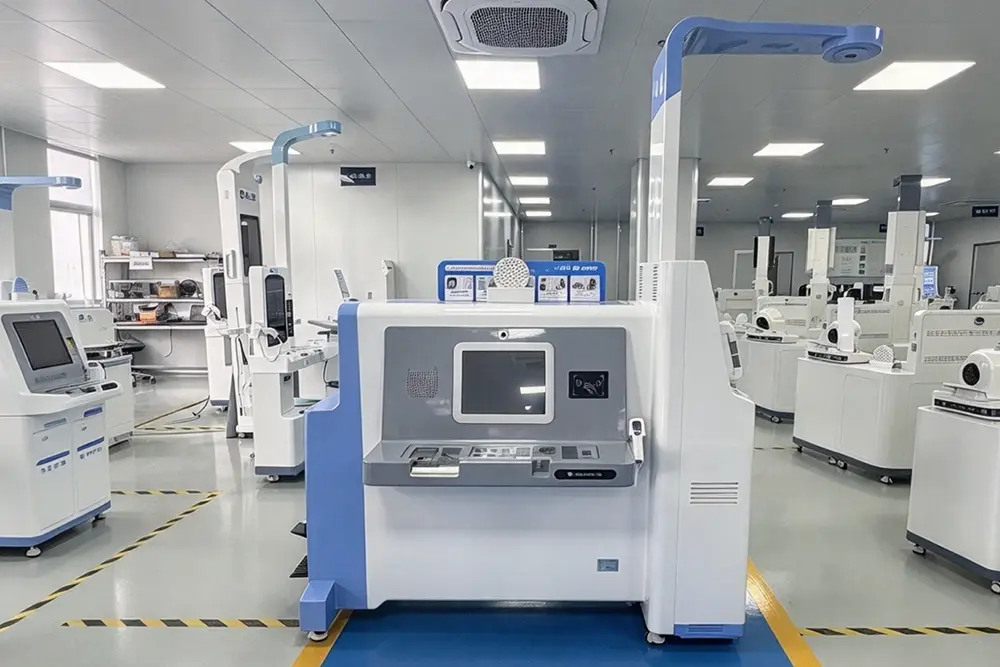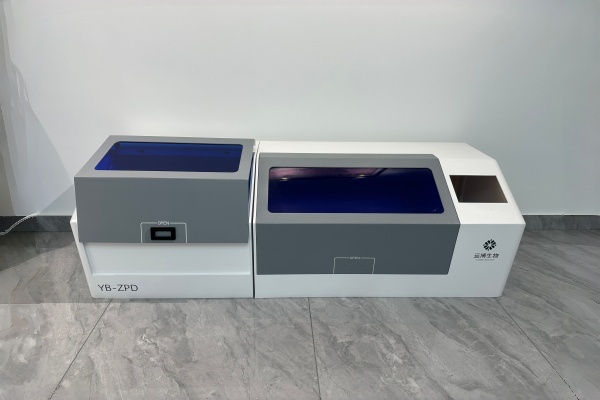
Executing flawless Pathology Analysis Instrument Enclosure Manufacturing requires mitigating severe tolerance stacking across multiple structural components. At Zhongrongda, our engineering team recently fabricated the YB‑ZPD Biological Detection / Pathology Analysis Instrument Split Enclosure.
This specific project demanded strict environmental protection for internal laboratory sensors while maintaining a massive, continuous horizontal profile. The final physical dimensions of this integrated unit measure exactly 164cm in length, 62cm in width, and 50cm in height.
Balancing these large dimensions with a precision clamshell mechanism and light-sensitive internal requirements creates significant manufacturing bottlenecks. Below, our team details the specific structural problems encountered and the exact fabrication processes we implemented to resolve them. You can observe the final assembly and surface finish in the reference file named IMG_4174.jpg.
Overcoming Split-Case Sheet Metal Splicing Deflections
The structural foundation of this 164cm long chassis relies on a left-and-right split configuration. We utilize 6063-T5 aluminum alloy sheet metal paired with thickened cold-rolled steel.
This material selection provides essential rigidity and corrosion resistance for harsh laboratory environments. The core engineering problem is achieving a perfectly uniform gap between the two separate chassis halves during final assembly.
When bending large, asymmetrical metal panels with beveled edges, the material inevitably experiences springback. A deviation of even 0.5mm on the beveled edge will cause the two halves of the split-case design to misalign, ruining the flat exterior required for medical lab equipment chassis.
Executing Consistent Beveled Edge CNC Bending
To solve this springback issue, our team completely bypassed standard single-hit press brake operations. We deployed advanced CNC press brakes equipped with laser angle measurement systems.
- We calculated the exact K-factor and springback coefficient for the 6063-T5 aluminum.
- We programmed custom, multi-stage angle compensations into the CNC controller.
- This allowed our tooling to apply varied pressure across the beveled edges, neutralizing structural tension.
This process guarantees the beveled corner angles on both the left and right units are perfectly identical. If your current fabrication partner struggles with panel misalignment, our engineering team can audit your flat patterns to optimize them for precise split-case assembly.
Clamshell Cabin Light Shielding and Assembly
The upper section of the YB-ZPD unit features a flip-cover clamshell cabin structure. This cabin must open smoothly for operator access but close with absolute tightness.
Pathology analysis requires strict light shielding and dust-proof sealing. The primary manufacturing challenge is preventing light leakage between the sheet metal flip-cover and the main chassis body.
Standard spot welding introduces heat distortion that warps the frame of the clamshell door. A warped door will never sit flat against the sealing gaskets, immediately failing laboratory light-leakage tests.
Seamless Laser Welding for Cabin Sealing
Our engineers utilized continuous fiber laser welding to assemble the clamshell frame. We locked the pre-bent aluminum panels into heavy, custom-machined heat-sinking fixtures.
- The highly focused laser beam created deep penetration welds with a minimal heat-affected zone.
- This completely eliminated thermal warping on the flip-cover.
- Post-welding, we ground the seams flush to create a perfectly flat mating surface.
This meticulous approach ensures the flip-cover mates flawlessly with the main chassis. This exact level of sealing and tolerance control is a foundational requirement for any Medical Device Enclosure we produce at Zhongrongda.
CNC Machining the Anti-Blue Light Acrylic Window
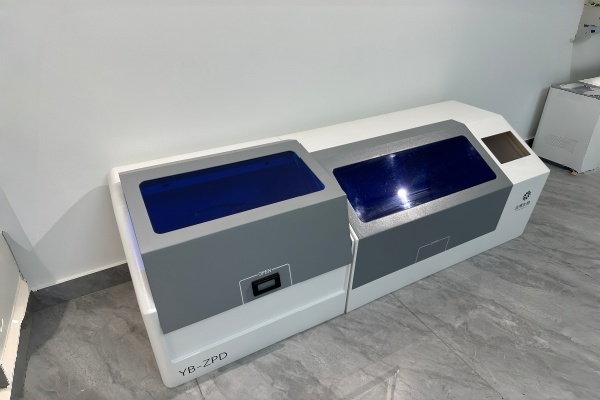
The flip-cover integrates a large observation window. To protect the internal biological samples, we specified a high-transparency, anti-blue light dark blue acrylic (PMMA) board.
The main problem is cutting a perfectly square window into the acrylic and milling the associated switch button and display screen holes without causing edge chipping or micro-cracking in the plastic.
Punching or standard laser cutting melts the acrylic edges, causing structural weakness and optical distortion that compromises the clamshell cabin light shielding.
5-Axis Milling for Plastic Optical Components
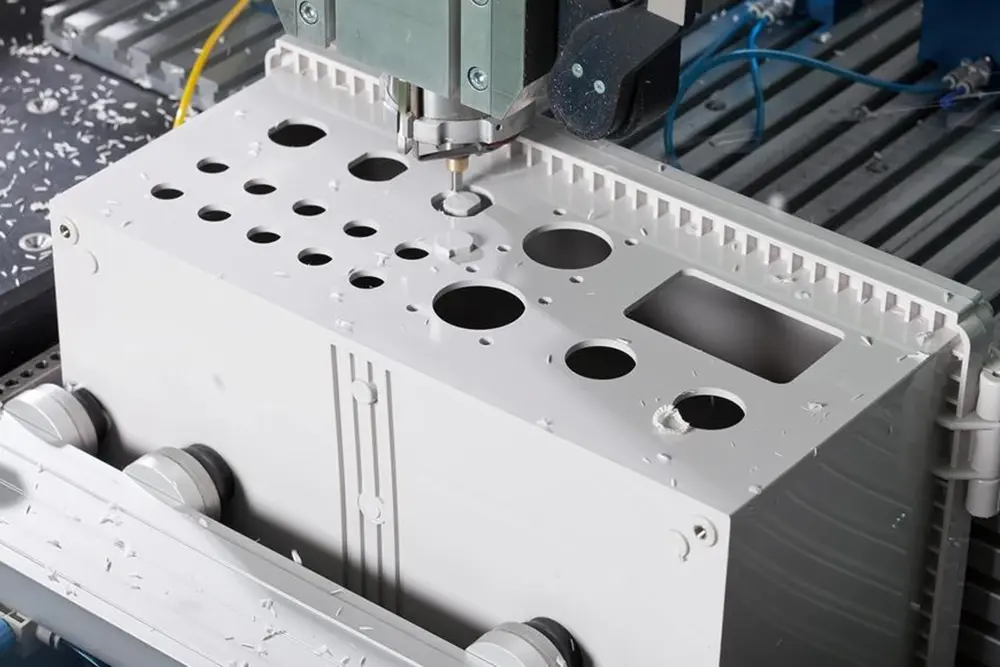
At Zhongrongda, we focus our internal precision work heavily on plastic processing to avoid metal contamination near sensitive sensors. We utilized simultaneous 5-axis CNC Machining to mill the dark blue acrylic.
We clamped the acrylic into a custom vacuum fixture to eliminate vibration. By optimizing spindle speeds and utilizing single-flute end mills, we rapidly cleared plastic chips without generating melting heat.
- This process entirely eliminated edge chipping on the right-angled cutouts.
- It guaranteed absolute dimensional accuracy for the button and display interfaces.
- The acrylic panel perfectly matches the CNC-cut sheet metal frame for a zero-gap fit.
We validated the fitment of these critical plastic components early in the product lifecycle utilizing advanced Rapid Prototyping techniques, confirming all optical tolerances before full-scale production.
Executing Dual-Color Matte Powder Coating
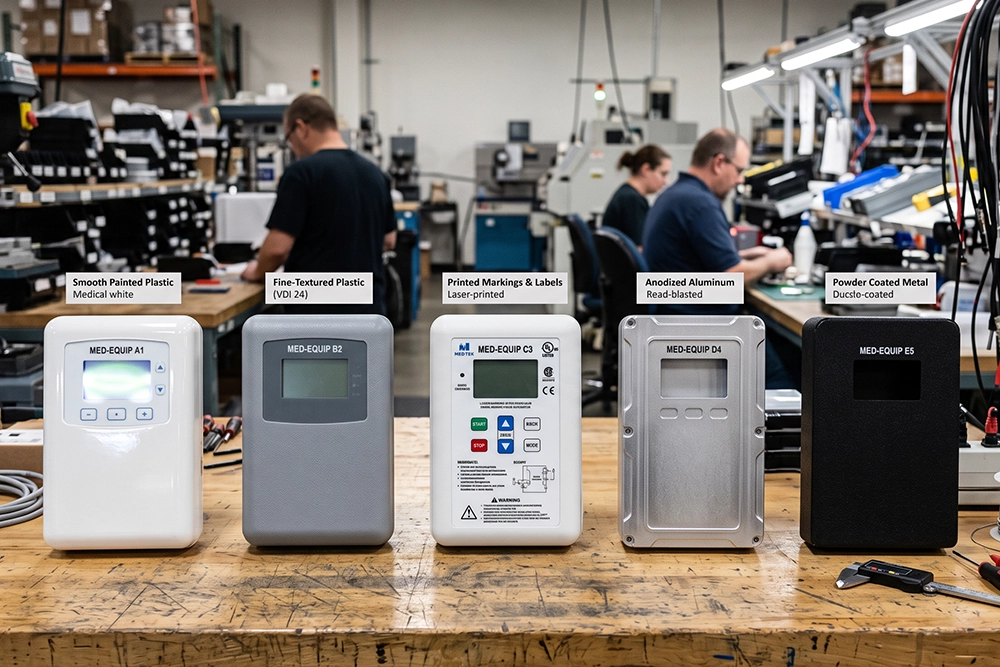
A premium laboratory environment demands an exterior finish that communicates sterility and is easy to clean. This project specified a dual-color finish: matte white for the lower body and matte gray for the upper clamshell sections.
Applying matte electrostatic powder coating to large, flat horizontal surfaces is highly difficult. Matte finishes easily reveal dust particles, “orange peel” textures, and color shifting if the baking process is uneven.
Furthermore, maintaining a perfectly crisp boundary line between the white and gray sections requires immense precision during the masking phase.
Eliminating Contamination on Large Flat Surfaces
To ensure a flawless laboratory-grade finish, our team implemented a strict chemical degreasing protocol prior to coating. Inside our climate-controlled spray booths, we optimized the powder flow rate.
- This ensured the matte powder distributed uniformly without clumping.
- We utilized a stepped infrared baking process to cure the coating evenly.
- This thermal control prevents the matte finish from developing glossy spots or color deviations.
For the dual-color separation, we utilized specialized high-temperature masking tapes. We cured the base white color fully before masking and applying the matte gray finish.
By analyzing specific ABS plastic properties and applications, we also ensured that any internal plastic brackets were masked or installed post-baking to avoid heat degradation. This ensures a razor-sharp color boundary. We apply these exact strict cosmetic defect controls to our Beauty Device Enclosures, guaranteeing your products meet the highest visual standards.
Frequently Asked Questions (FAQs)
Q1: What materials are used in Pathology Analysis Instrument Enclosure Manufacturing?
We construct the main chassis using 6063-T5 aluminum alloy sheet metal and thickened cold-rolled steel for maximum stability. For the observation windows, we use high-transparency anti-blue light dark blue acrylic (PMMA).
Q2: How do you prevent the split-case sheet metal splicing from having gaps?
We use advanced CNC press brakes with laser angle compensation to neutralize material springback during the bending of beveled edges. This ensures the left and right halves align perfectly with uniform assembly gaps.
Q3: How do you ensure the clamshell cabin is entirely light-proof?
We prevent the flip-cover frame from warping by using continuous fiber laser welding locked in heat-sinking fixtures. The perfectly flat frame then compresses evenly against the chassis gaskets, eliminating all light leakage.
Q4: Why do you use CNC machining for the anti-blue light acrylic window?
Standard cutting methods melt or crack the acrylic. We use 5-axis CNC machining with specific plastic-cutting end mills to create perfect, chip-free right angles for the window, buttons, and display screens.
Q5: How do you achieve a defect-free dual-color matte powder coating?
We process the matte white and matte gray powders in climate-controlled booths to prevent dust inclusion. We also use a stepped infrared baking process that cures the paint evenly, preventing “orange peel” on large flat surfaces.
Q6: What are the exact dimensions of this biological detection instrument chassis?
The physical dimensions for this specific YB-ZPD split-case enclosure are strictly manufactured to 164cm in length, 62cm in width, and 50cm in height.
Q7: How do you maintain a sharp line between the white and gray paint?
We utilize a multi-step baking process with specialized high-temperature, residue-free masking tape. The white base is fully cured before the gray is applied, ensuring a crisp boundary with zero color bleeding.
Q8: Why is 6063-T5 aluminum chosen for laboratory medical equipment?
6063-T5 aluminum provides an excellent strength-to-weight ratio and natural corrosion resistance. When paired with our matte powder coating, it withstands the harsh chemical wipe-downs required in medical pathology labs.
Q9: How do you handle tolerance stacking in a 164cm long split-chassis?
We control tolerances early by laser cutting flat patterns to ±0.05mm accuracy. We also mill interlocking registration tabs into the internal frame, forcing the massive left and right units into perfect alignment during final assembly.
Q10: Are the internal mounting brackets also made of metal?
While the external structural shell is metal, we often utilize precision CNC plastic processing for sensitive internal sensor mounts. This eliminates the risk of metallic dust or electrical interference near the biological detection units.
Contact Zhongrongda
Are asymmetrical assembly gaps or light-leakage issues delaying your laboratory equipment launch? Our engineering team specializes in solving complex split-case tolerances and flawless dual-color matte surface treatments. Partner with Zhongrongda for exact, medical-grade manufacturing execution.
Email: info@zrdmfg.com
Phone: +86 13972955806