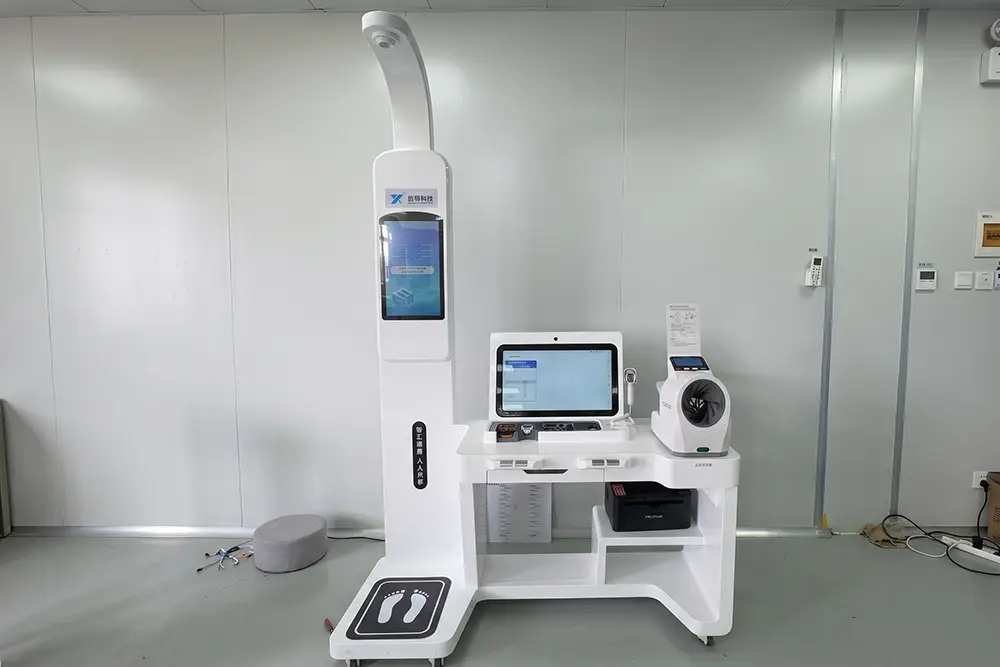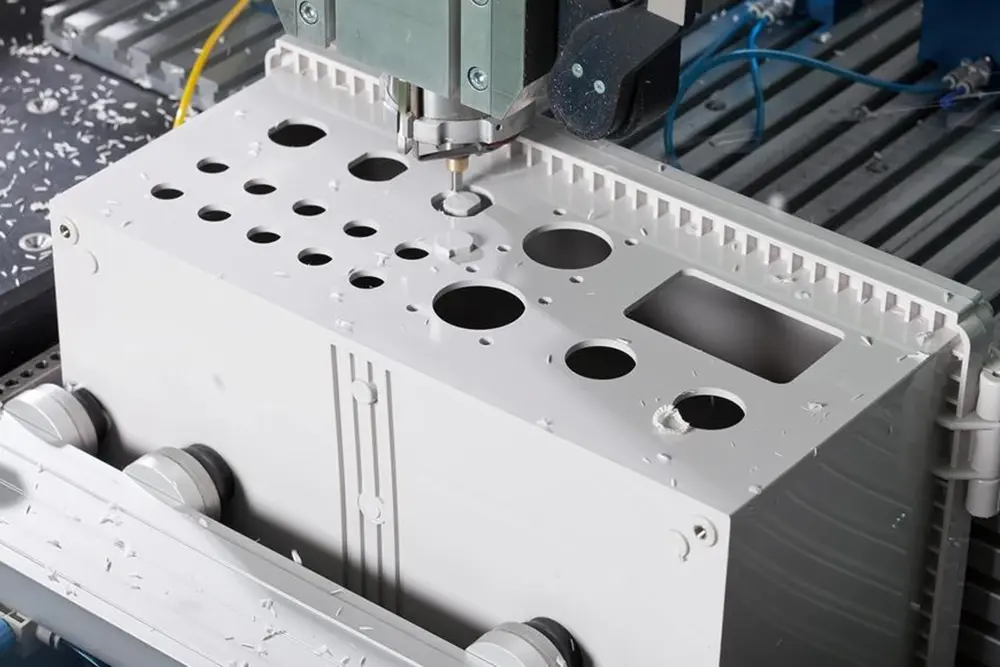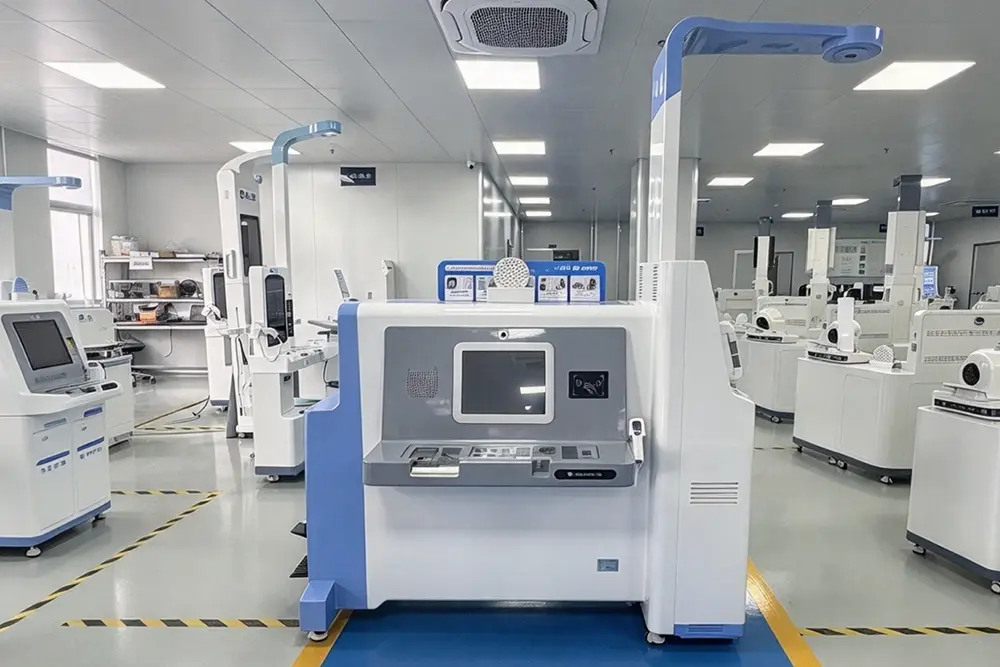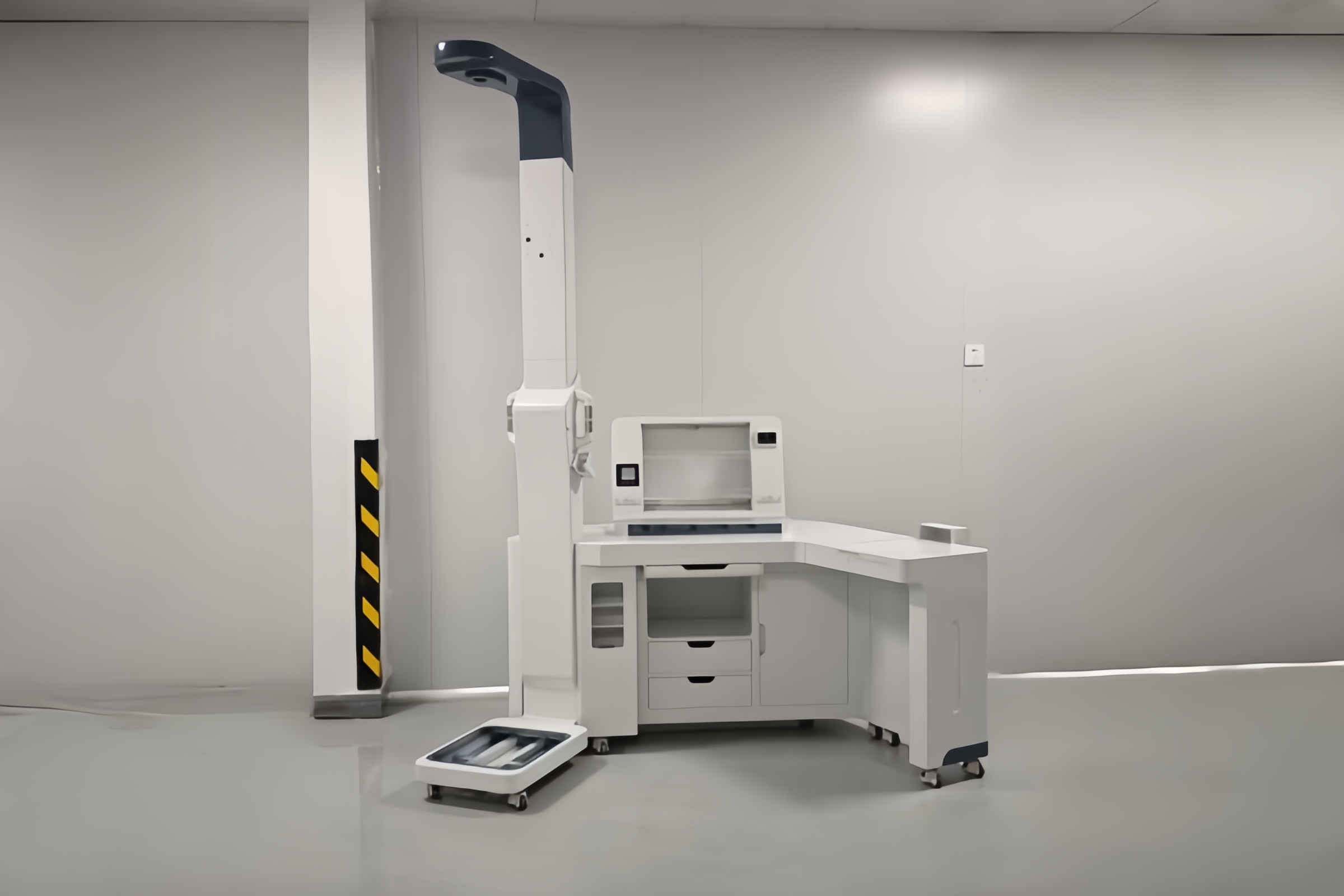
Developing a reliable health checkup kiosk enclosure requires strict adherence to dimensional accuracy and material performance standards. At Zhongrongda, our team approaches this specific equipment housing as a complex integration of multiple fabrication methodologies. We engineer this specialized enclosure using a composite process involving rapid prototyping splicing, vacuum forming, and precision injection molding.
This multi-process approach provides a comprehensive housing solution that balances structural rigidity, aesthetic surface quality, and high-frequency functional integration. By optimizing our manufacturing techniques, we ensure the final product meets the stringent cleanliness and durability requirements of clinical environments.
To accommodate the complex internal modules of the self-service terminal, our engineering team adheres to exact physical specifications. The final dimensions for this specific medical unit are established as Length: 1922mm, Width: 1056mm, and Height: 2335mm.
Core Manufacturing Processes for the Health Checkup Kiosk Enclosure
Main Structure Splicing and Framework Setup
Our team utilizes a specific splicing methodology to construct the primary load-bearing framework of the equipment. We select high-strength SPCC cold-rolled steel plates as the foundational material for the internal chassis.
- We process the SPCC plates using industrial laser cutting systems to achieve clean, precise initial geometries.
- The components undergo targeted bending and routing to form the required structural channels.
- We finalize the frame assembly through a combination of industrial adhesive bonding and mechanical splicing.
This specific framework strategy allows us to rapidly construct the main body while maintaining the flexibility to adapt to varying internal module layouts. It significantly compresses the development and delivery cycle without compromising the structural integrity required to support heavy medical diagnostic components. If you are developing a new clinical system, our framework strategies can accelerate your physical deployment schedule.
Curved Exterior Vacuum Forming Process
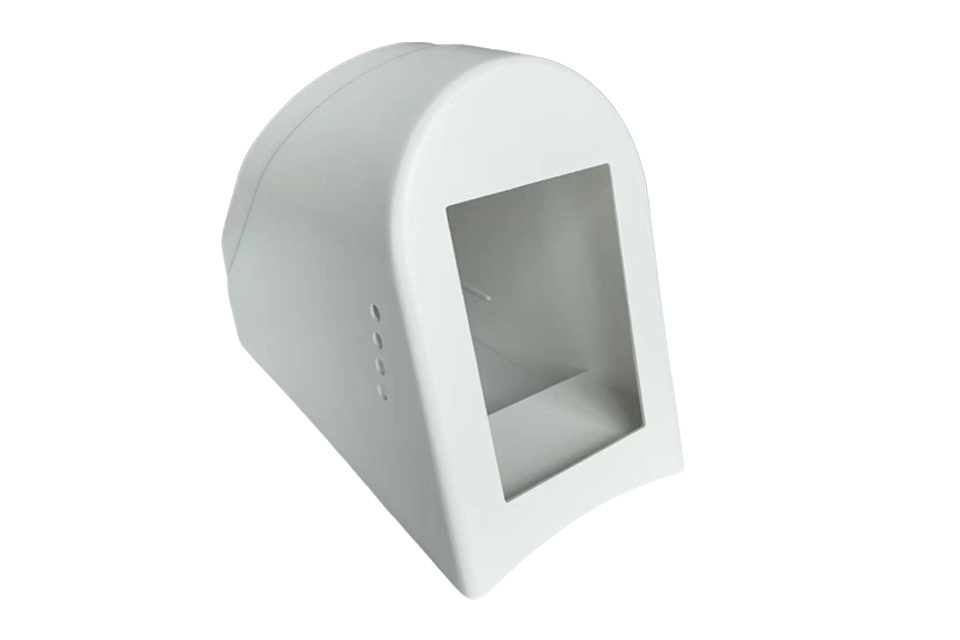
For the exterior surfaces requiring organic shapes and seamless transitions, we implement a specialized vacuum forming process. We select medical-grade ABS thick sheets specifically for their impact resistance and optimal formability. To understand the thermal characteristics of this material, you can review detailed ABS plastic properties and applications.
- We utilize these ABS sheets to fabricate the curved armrests, top light bar covers, and primary operation panel housings.
- The vacuum forming process creates a fluid, integrated appearance across the outer shell.
- This method produces smooth, low-porosity surfaces that are exceptionally easy to clean and sanitize.
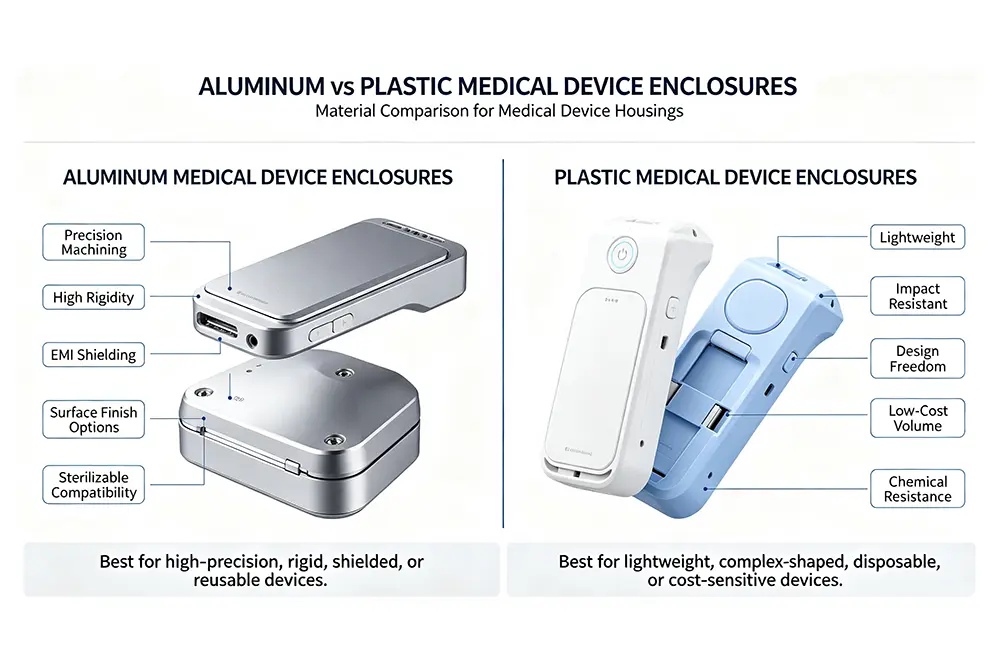
Our heavy focus on plastic shells ensures that the exterior meets the strict hygiene protocols of clinical facilities. We specialize in configuring these polymer materials to resist chemical degradation from standard hospital-grade disinfectants. Learn more about our specific capabilities in specialized Medical Device Enclosure fabrication.
Precision Functional Parts Injection Molding
The functional interface components of the terminal demand exceptional dimensional consistency to withstand high-frequency patient interaction. We deploy precision injection molding to manufacture these critical interaction points.
- We select food-grade ABS for all key buttons, interface panels, and internal fastening buckles.
- Our tooling engineers design custom molds with optimized cooling channels to prevent part warpage.
- This process yields components with superior dimensional accuracy and high-volume consistency.
By utilizing food-grade polymers for user touchpoints, we eliminate the risk of toxic off-gassing and ensure patient safety. The high-tolerance injection molded parts interface perfectly with the larger vacuum-formed panels, ensuring reliable performance in continuous-use environments.
Engineering Challenges and Custom Assembly Solutions
Controlling Assembly Tolerance and Structural Strength
The most significant engineering challenge in multi-process manufacturing is maintaining tight assembly clearances across disparate materials. The splicing joints of the main framework dictate the overall dimensional stability of the final unit.
- We implement high-precision CNC Machining to process the critical mounting points and joint interfaces.
- Our engineers utilize custom positioning fixtures during the final assembly phase.
- This rigorous control protocol ensures that the splicing seam alignment error remains strictly $\le \pm0.2mm$.
To prevent long-term loosening or deformation, we engineer specific stiffening ribs into the chassis architecture. We calculate the stress distribution across the SPCC frame and strategically weld reinforcing plates at high-load junctions. This prevents chassis flex when heavy diagnostic equipment is mounted within the upper enclosure sections.
Dimensional Matching Across Multiple Fabrication Processes
Integrating components produced via prototyping, vacuum forming, and injection molding introduces complex tolerance stack-up issues. Each manufacturing method and material type exhibits distinct cooling shrinkage rates and forming deviations.
- Our engineering team conducts comprehensive Design for Manufacturing (DFM) optimization during the initial CAD phase.
- We calculate specific shrink rates for the ABS panels versus the steel framework.
- We execute synchronous development of all fixtures and molds to guarantee dimensional harmony.
This proactive engineering approach ensures that all disparate components assemble seamlessly on the production floor. By resolving interference issues digitally before cutting physical material, we eliminate misalignments, panel gaps, and edge warping. You can explore our digital verification approach within our Rapid Prototyping service guidelines.
Achieving Uniform Surface Treatment on Diverse Materials
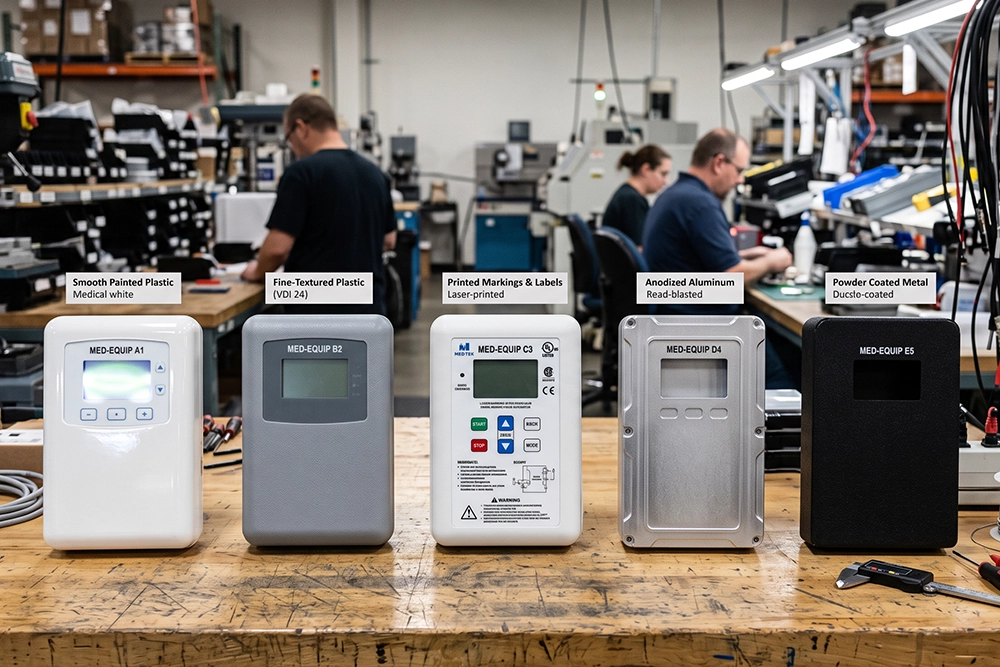
Creating a cohesive aesthetic across steel, vacuum-formed thick ABS, and injection-molded ABS requires highly specialized finishing techniques. Standard painting protocols often result in unacceptable color variations and texture discrepancies between different substrate materials.
- We formulate a custom pre-treatment chemical wash specific to each material type to ensure optimal paint adhesion.
- Our finishing technicians apply a unified, medical-grade, environmentally friendly coating system across the entire assembly.
- We utilize climate-controlled spray booths to maintain consistent curing temperatures and humidity.
This strict finishing protocol guarantees that the entire machine presents a uniform color profile and a consistent tactile texture. The final finish passes rigorous medical device visual acceptance standards, ensuring an premium presentation. We utilize similar high-end finishing controls for our specialized Beauty Device Enclosures to guarantee exceptional cosmetic quality.
Frequently Asked Questions (FAQ)
- What is the standard lead time for a custom health checkup kiosk enclosure?
Our engineering team typically completes the initial framework and panel fabrication within 4 to 6 weeks. Complex structural testing and multi-process integration may require additional time depending on specific client requirements. - How do you ensure the health checkup kiosk enclosure parts fit together accurately?
We utilize advanced DFM analysis and precision plastic CNC machining services to control tolerances. We maintain a strict alignment error margin of $\le \pm0.2mm$ across all major structural splicing joints. - What materials are used in the medical device housing fabrication?
We utilize an SPCC cold-rolled steel framework for the main structure. We combine this with medical-grade ABS for vacuum-formed exterior panels and food-grade ABS for injection-molded functional components. - Can the vacuum formed medical covers withstand hospital cleaning agents?
Yes, our engineering team selects specific medical-grade ABS materials that offer high chemical resistance. The custom medical-grade surface coatings further protect the panels from degradation caused by standard clinical disinfectants. - Why use rapid prototyping splicing for the main structure?
This specific structural approach allows our team to rapidly assemble the primary load-bearing chassis. It provides the necessary rigidity while offering the flexibility to adjust internal mounting points for various medical modules. - How do you prevent color mismatch in medical enclosure surface treatment?
We develop specific pre-treatment processes for the metal, thick sheet ABS, and injection-molded ABS components. We then apply a unified, medical-grade eco-friendly paint system in a controlled environment to ensure zero color variance. - Are ABS injection molded parts durable enough for patient touchpoints?
Absolutely. We engineer specific wall thicknesses and utilize food-grade ABS to ensure buttons, handles, and interface panels withstand high-frequency, continuous physical interaction. - Do you provide DFM optimization for plastic CNC machining services?
Yes, our team conducts comprehensive Design for Manufacturing analysis before any physical production begins. We calculate material shrinkage and adjust mold designs to ensure perfect dimensional matching. - What are the exact dimensions of this specific health checkup kiosk enclosure?
This particular medical enclosure is engineered to exact specifications. The final assembled dimensions are Length: 1922mm, Width: 1056mm, and Height: 2335mm. - Can you customize the internal layout of the medical device housing fabrication?
Yes, our structural splicing framework is inherently adaptable. We can easily modify the internal CAD architecture and reposition CNC machined mounting brackets to secure your specific diagnostic hardware.
Bottom CTA
Ready to resolve your medical equipment assembly tolerances and surface finishing challenges? Our engineering team at Zhongrongda is prepared to review your CAD files and provide a detailed DFM analysis for your next project.
Contact us today to discuss your enclosure specifications:
- Email: info@zrdmfg.com
- Phone: +86 13972955806