Introduction
When developing a new product, one of the most common questions engineers, product designers, and purchasing managers ask is: Rapid Prototyping vs 3D Printing—which manufacturing solution is the right choice?
At Zhongrongda, we have worked with customers across medical devices, beauty equipment, industrial automation, robotics, and laboratory instruments for more than a decade. During product development, choosing the right prototyping method can significantly impact project timelines, development costs, testing accuracy, and eventual production success.
Many people mistakenly assume that rapid prototyping and 3D printing are the same thing. In reality, 3D printing is only one manufacturing technology within the broader rapid prototyping category. Depending on the product requirements, rapid prototyping may involve CNC machining, vacuum casting, sheet metal fabrication, silicone molding, or additive manufacturing technologies.
Our engineering team regularly helps customers evaluate manufacturing methods based on material performance, dimensional accuracy, assembly requirements, appearance expectations, and production scalability. This guide explains the differences between rapid prototyping and 3D printing and helps you determine the best option for your next product development project.
Understanding Rapid Prototyping
Rapid prototyping refers to a collection of manufacturing technologies used to quickly produce functional or visual prototypes for design validation, engineering testing, and market evaluation.
At Zhongrongda, our Rapid Prototyping capabilities include:
- CNC Machining
- 3D Printing
- Vacuum Casting
- Silicone Molding
- Sheet Metal Fabrication
- Low Volume Manufacturing
The primary goal of rapid prototyping is to shorten product development cycles while reducing risk before mass production begins.
Advantages of Rapid Prototyping
- Fast design validation
- Real-world functional testing
- Improved product quality
- Reduced development cost
- Faster time-to-market
- Production process verification
Rapid prototyping allows engineers to identify design flaws early, preventing costly tooling modifications later in production.
What Is 3D Printing?
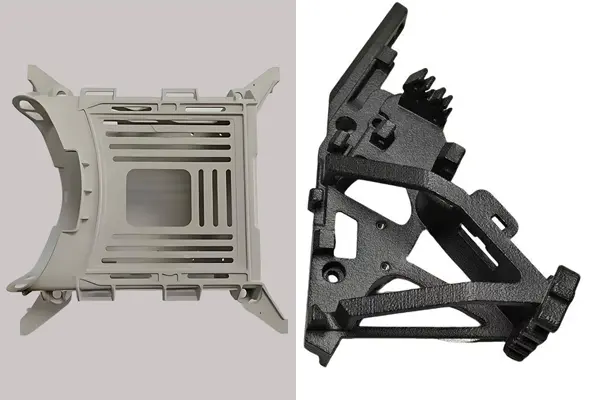
3D printing, also known as additive manufacturing, creates parts layer by layer directly from a digital CAD model.
Common 3D printing technologies include:
- FDM (Fused Deposition Modeling)
- SLA (Stereolithography)
- SLS (Selective Laser Sintering)
- MJF (Multi Jet Fusion)
Unlike subtractive manufacturing processes such as CNC Machining, 3D printing builds material rather than removing it.
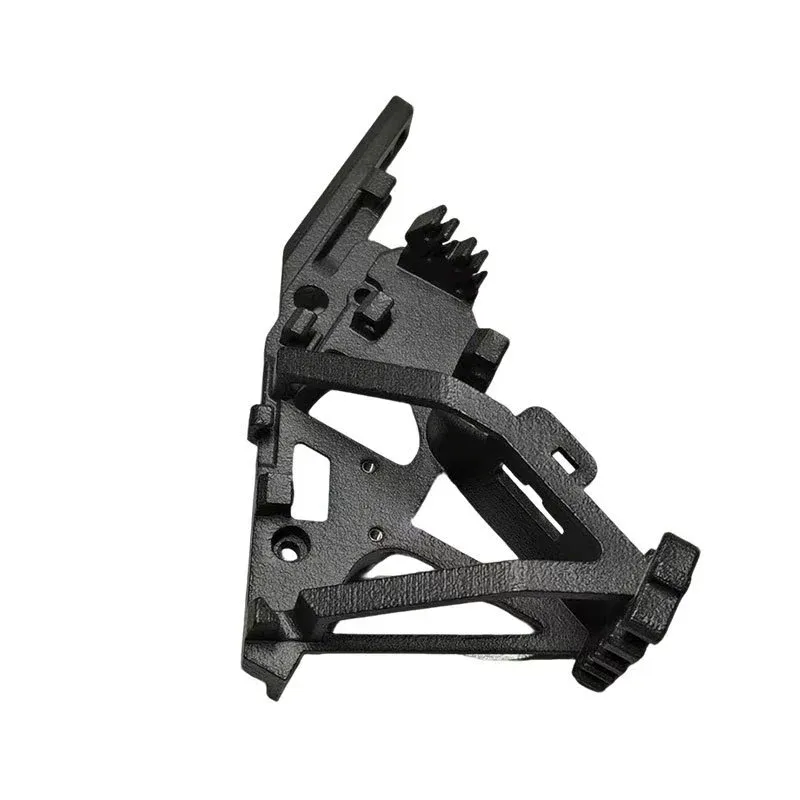
This technology is widely used for:
- Concept models
- Design verification
- Ergonomic testing
- Medical prototypes
- Complex geometries
- Customized components
Rapid Prototyping vs 3D Printing: Key Differences
| Comparison Factor | Rapid Prototyping | 3D Printing |
|---|---|---|
| Definition | Manufacturing strategy | Manufacturing technology |
| Process Options | Multiple technologies | Additive manufacturing only |
| Material Choices | Metals, plastics, composites | Limited printable materials |
| Dimensional Accuracy | Very high (especially CNC) | Moderate to high |
| Surface Finish | Excellent | Often requires post-processing |
| Mechanical Strength | Production-grade possible | Depends on printing process |
| Lead Time | Fast | Very fast |
| Cost Efficiency | Flexible | Excellent for small quantities |
| Scalability | Prototype to production | Primarily prototyping |
| Production Readiness | High | Limited |
Material Comparison
Material selection often determines which process is more suitable.
Materials Available for Rapid Prototyping
At Zhongrongda, our rapid prototyping services support:
- Aluminum
- Stainless Steel
- Brass
- Copper
- Titanium
- ABS
- PC
- POM
- Nylon
- PMMA
These materials allow prototypes to closely replicate final production parts.
Related Internal Link:
CNC Machining Material
Materials Available for 3D Printing
Common materials include:
- PLA
- ABS
- PETG
- Resin
- Nylon Powder
- TPU
While suitable for concept validation, some printed materials may not fully represent production performance.
Accuracy and Surface Finish Comparison
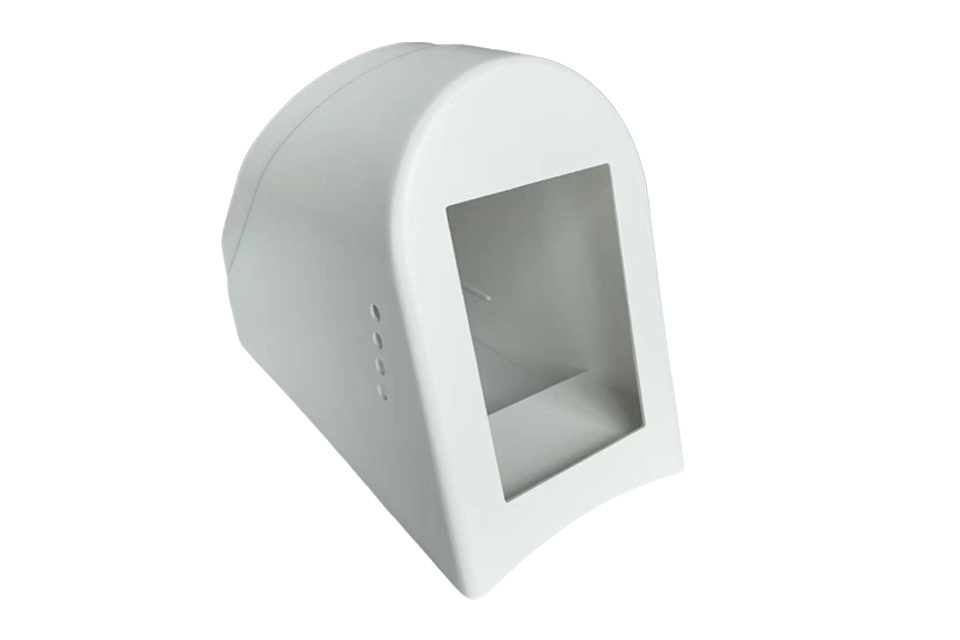
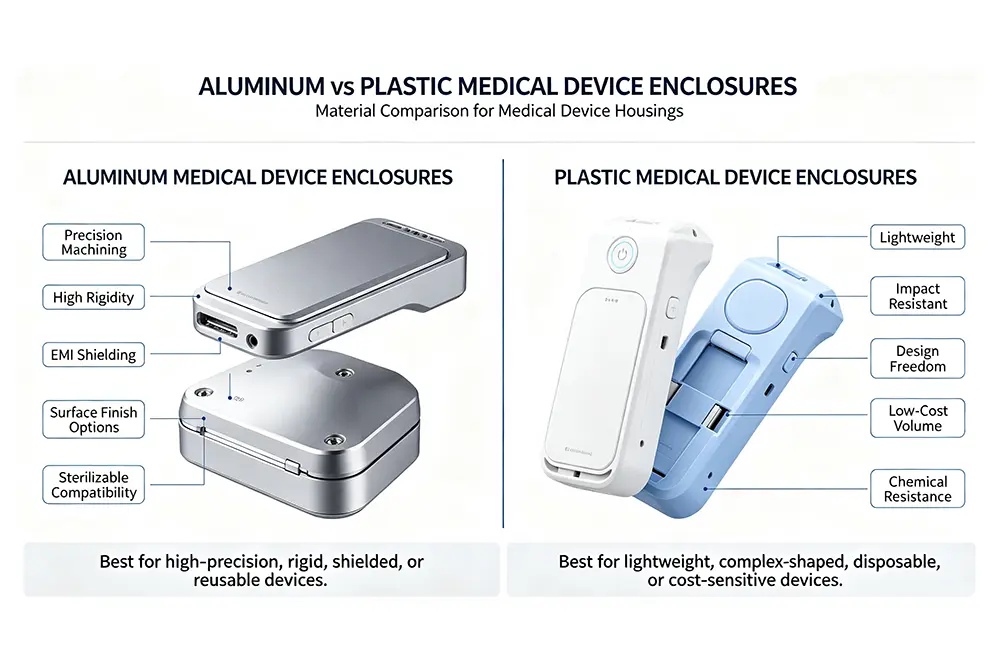
For industries such as Medical Device Enclosure, robotics, and industrial equipment manufacturing, dimensional accuracy is critical.
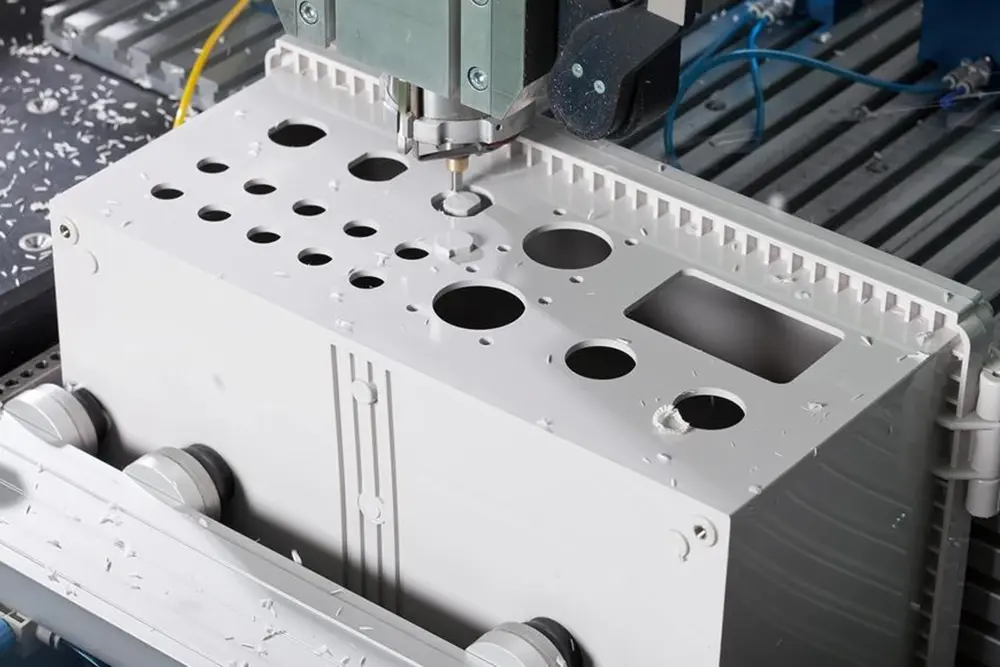
CNC-Based Rapid Prototyping
Typical tolerances:
±0.01mm to ±0.05mm
Benefits:
- Production-grade precision
- Excellent surface quality
- Tight assembly fit
- Reliable testing data
3D Printing
Typical tolerances:
±0.1mm to ±0.3mm
Challenges:
- Layer lines
- Surface roughness
- Shrinkage variation
- Limited precision for mating components
For engineering validation and functional testing, CNC-based rapid prototyping generally provides more reliable results.
Cost Comparison
Cost depends on design complexity, quantity, and material requirements.
When 3D Printing Is More Cost Effective
- One-off concept models
- Early-stage design evaluation
- Complex organic geometries
- Quick visual prototypes
When Rapid Prototyping Is More Cost Effective
- Functional testing
- Assembly verification
- Low-volume production
- Customer demonstrations
- Regulatory submissions
Our engineering team frequently recommends CNC rapid prototyping for customers preparing products for certification or pilot production.
Industry Applications
Medical Devices
For Medical Device Enclosure projects, customers typically require:
- Biocompatible materials
- High dimensional accuracy
- Functional assembly testing
- Regulatory documentation
Rapid prototyping using CNC machining often delivers the best balance of precision and reliability.
Related Internal Link:
Medical Device Enclosure
Beauty Devices
Beauty equipment manufacturers often prioritize:
- Cosmetic appearance
- Surface quality
- Assembly accuracy
- User ergonomics
Rapid prototyping enables manufacturers to validate both aesthetics and functionality before investing in tooling.
Related Internal Link:
Beauty Device Enclosures
Automation and Robotics
Robotics companies require:
- Durable components
- Tight tolerances
- Mechanical performance testing
Rapid prototyping using CNC machining provides production-like parts suitable for rigorous evaluation.
Related Internal Link:
Automation & Robotics
How Zhongrongda Helps Customers Choose
At Zhongrongda, we do not recommend a manufacturing process based solely on cost.
Our engineering team evaluates:
- Product function
- Material requirements
- Assembly needs
- Surface finish expectations
- Production plans
- Budget targets
- Lead time requirements
We often combine multiple technologies during product development.
For example:
Stage 1:
3D printing for concept validation
Stage 2:
CNC rapid prototyping for functional testing
Stage 3:
Small batch manufacturing for market launch
This approach reduces development risk while accelerating commercialization.
When Should You Choose Rapid Prototyping?
Choose rapid prototyping if you need:
- Functional testing
- Production-grade materials
- Tight tolerances
- Superior surface finish
- Mechanical validation
- Low-volume manufacturing
Rapid prototyping is particularly suitable for medical devices, industrial equipment, and robotics products.
When Should You Choose 3D Printing?
Choose 3D printing if you need:
- Concept verification
- Extremely fast turnaround
- Complex geometry evaluation
- Lightweight design studies
- Low-cost visual models
3D printing remains one of the fastest ways to transform a CAD design into a physical model.
Conclusion
The debate between Rapid Prototyping vs 3D Printing is not about determining a single winner. Instead, the right choice depends on your product requirements, performance expectations, budget, and development stage.
3D printing is ideal for early concept validation and design exploration. Rapid prototyping offers broader manufacturing options, superior material choices, tighter tolerances, and production-ready functionality.
At Zhongrongda, our engineering team helps customers select the most efficient manufacturing strategy based on real-world product requirements. Whether you need a single prototype, engineering validation units, or low-volume production parts, we provide tailored solutions that reduce risk and accelerate product development.
Related Internal Links:
- Rapid Prototyping
- CNC Machining
- Medical & Laboratory Equipment
- Application
- About Us
- Contact
FAQ
1. Is rapid prototyping the same as 3D printing?
No. Rapid prototyping is a broader manufacturing strategy that includes CNC machining, 3D printing, vacuum casting, and other processes.
2. Which is more accurate, CNC machining or 3D printing?
CNC machining generally provides tighter tolerances and better dimensional consistency.
3. Can rapid prototyping use metal materials?
Yes. Aluminum, stainless steel, titanium, brass, and copper are commonly used.
4. What industries benefit most from rapid prototyping?
Medical devices, robotics, aerospace, industrial equipment, and consumer electronics.
5. Is 3D printing suitable for functional testing?
It depends on the material and testing requirements. Some applications require CNC-machined prototypes.
6. What is the typical lead time for rapid prototyping?
Most projects can be completed within 3-10 business days.
7. Does Zhongrongda provide NDA protection?
Yes. We routinely sign NDA agreements before reviewing customer drawings.
8. Can rapid prototyping support small batch manufacturing?
Yes. Many customers transition directly from prototypes to low-volume production.
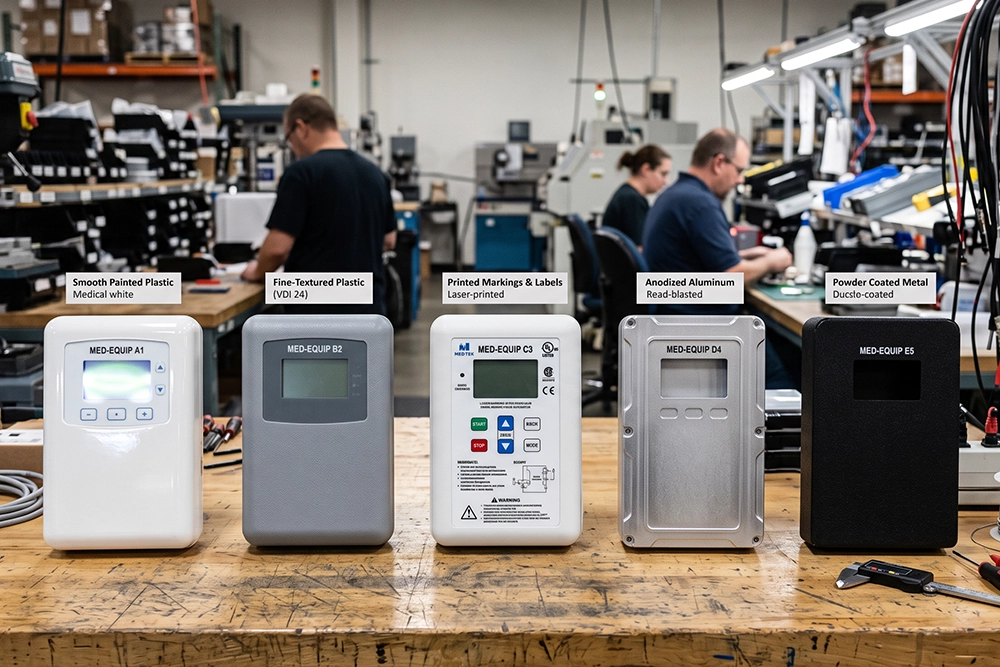
9. What surface finishes are available?
Anodizing, painting, powder coating, sandblasting, polishing, laser engraving, and more.
10. How do I choose between rapid prototyping and 3D printing?
Our engineering team evaluates your design requirements and recommends the most suitable manufacturing process.
CTA
Need a reliable CNC machining partner for your next project?
Upload your drawings today and our engineering team will provide a free DFM review and quotation within 24 hours.
Whether you need rapid prototyping, medical device enclosures, beauty device housings, or small batch manufacturing, Zhongrongda is ready to support your project from concept to production.