When product designers and mechanical engineers compare 3 axis vs 5 axis CNC machining, the biggest question is not simply which machine is more advanced, but which machining method is the right fit for the part requirements. At Zhongrongda, our engineering team has worked with medical equipment manufacturers, beauty device companies, robotics developers, and industrial equipment suppliers to manufacture precision components ranging from simple mechanical parts to complex multi-surface housings.
Through years of CNC manufacturing experience, we have found that choosing between 3-axis and 5-axis machining depends on several factors, including part geometry, tolerance requirements, production volume, surface quality, and overall project cost.
In this guide, we will explain the practical differences between 3-axis and 5-axis CNC machining from a manufacturer’s perspective and share how we evaluate the best machining solution for our customers.
What Is the Difference Between 3 Axis and 5 Axis CNC Machining?
The main difference between 3-axis and 5-axis CNC machining is the number of directions in which the cutting tool or workpiece can move during machining.
A traditional 3-axis CNC machine operates along three linear axes:
- X-axis: Left and right movement
- Y-axis: Front and back movement
- Z-axis: Up and down movement
This means the cutting tool approaches the workpiece from one fixed direction at a time. If multiple sides need machining, operators usually need to reposition the part manually.
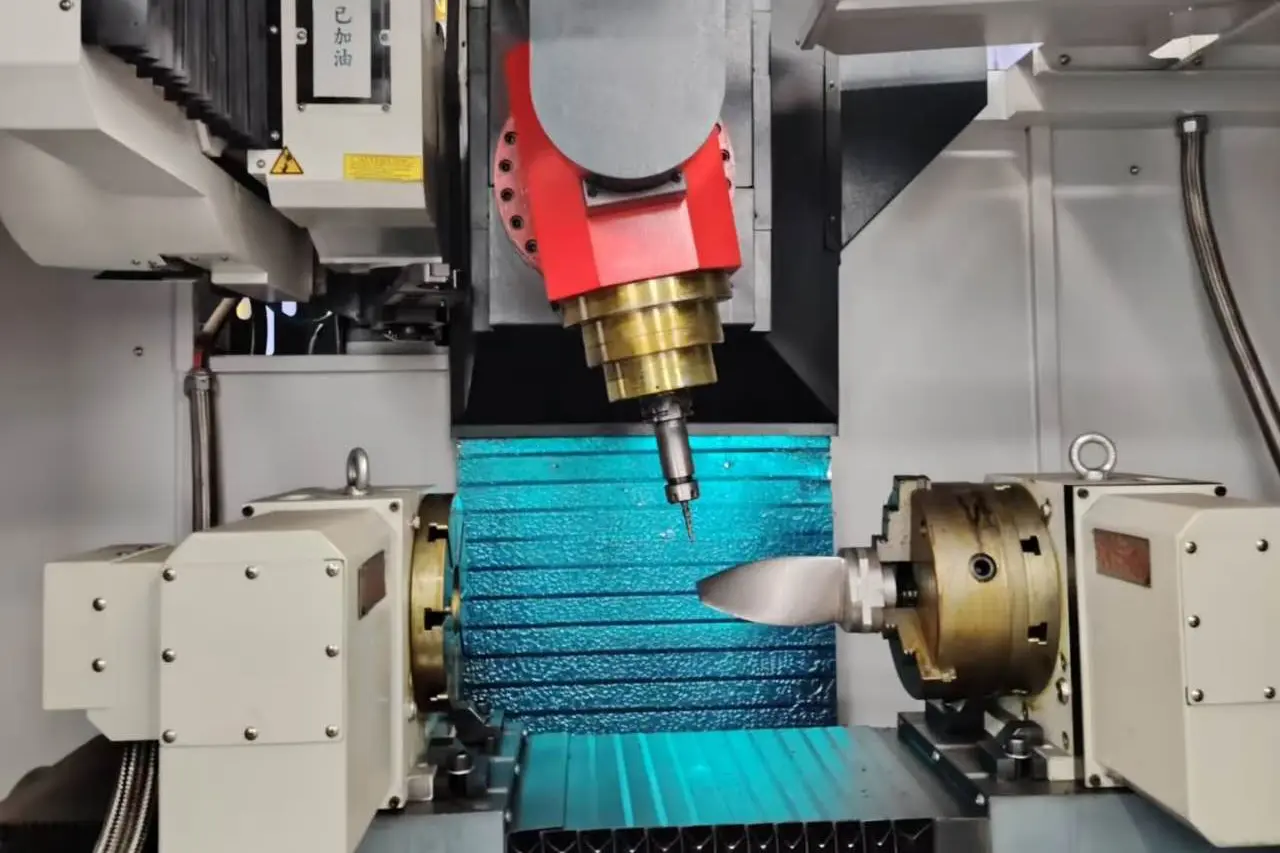
A 5-axis CNC machine adds two rotational axes, allowing the cutting tool to approach the workpiece from multiple angles during a single setup.
At Zhongrongda, we commonly use 5-axis machining when customers require:
- Complex curved surfaces
- Multi-angle features
- Reduced machining marks
- Higher positional accuracy
- Fewer fixture changes
However, 5-axis machining is not automatically the best choice for every project. For many components, a properly planned 3-axis machining process can achieve the required quality at a lower manufacturing cost.
3 Axis CNC Machining: How It Works and When to Use It
Understanding 3 Axis CNC Machining
3-axis CNC machining is one of the most widely used manufacturing processes because of its reliability, flexibility, and cost efficiency.
During a typical 3-axis machining process, the workpiece is fixed onto the machine table while the cutting tool moves along three linear directions.
Our engineering team often selects 3-axis CNC machining for components with:
- Flat surfaces
- Vertical walls
- Simple pockets
- Drilling operations
- Standard mechanical structures
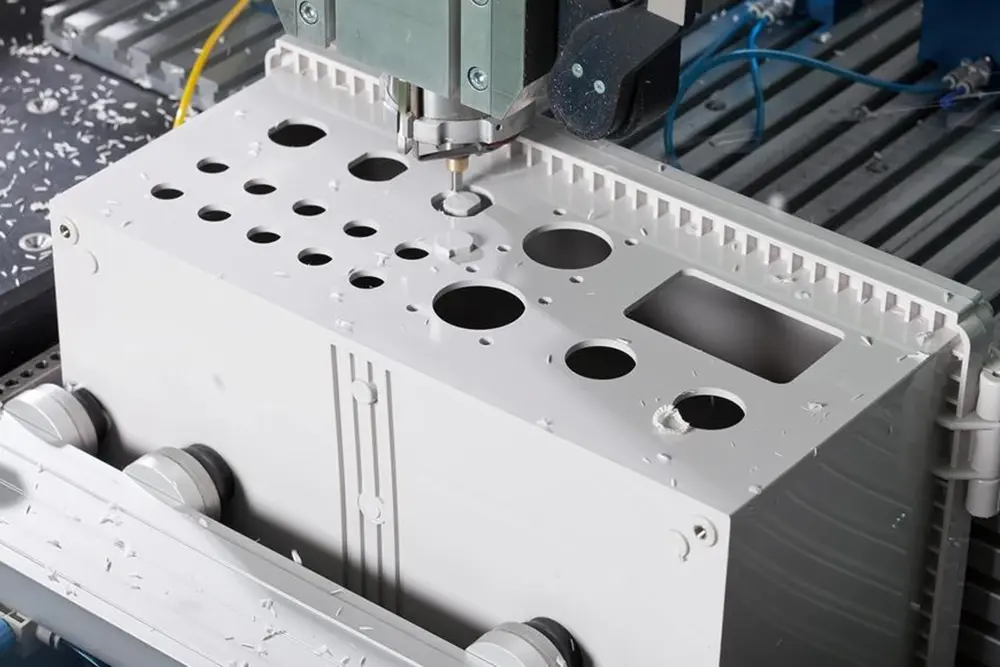
For example, when manufacturing aluminum brackets, fixture components, and simple equipment panels, 3-axis machining can provide excellent dimensional accuracy without unnecessary machining complexity.
For customers requiring prototypes or small batch manufacturing, 3-axis CNC machining is often an economical solution because programming, setup, and operation time are lower compared with advanced multi-axis machining.
Advantages of 3 Axis CNC Machining
1. Lower Manufacturing Cost
The biggest advantage of 3-axis machining is cost control.
Because the machine structure is simpler and programming requirements are lower, production costs are generally more competitive.
For startups and product developers entering the prototype stage, this makes 3-axis machining a practical choice.
At Zhongrongda, we frequently recommend 3-axis machining during early product validation because it allows customers to test designs quickly before moving into higher-volume production.
Related service: CNC Machining
2. Faster Programming and Setup
3-axis CNC programs are easier to prepare compared with complex 5-axis tool paths.
For standard parts, our engineers can quickly optimize:
- Cutting parameters
- Tool selection
- Machining sequence
- Fixture positioning
This helps reduce prototype lead times and allows faster design iteration.
For companies developing new products, especially in industries such as medical equipment and robotics, rapid design feedback is critical.
Related service: Rapid Prototyping
3. Suitable for Many Industrial Applications
Although 3-axis machines are considered traditional technology, they remain highly capable for many manufacturing applications.
Typical 3-axis CNC machining applications include:
- Mechanical components
- Equipment brackets
- Housing prototypes
- Assembly fixtures
- Functional prototypes
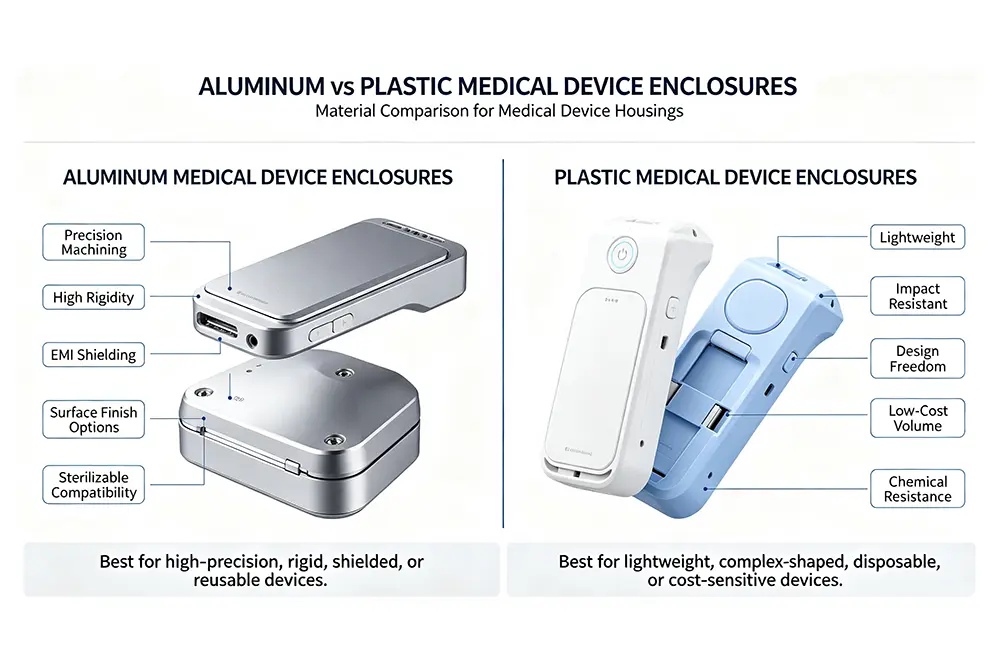
For example, when producing a medical equipment enclosure prototype with simple geometric structures, a well-designed 3-axis process can achieve accurate results without increasing unnecessary machining costs.
Related application: Medical & Laboratory Equipment
5 Axis CNC Machining: Advanced Capability for Complex Components
Understanding 5 Axis CNC Machining
5-axis CNC machining represents a more advanced machining approach where the cutting tool can move simultaneously along five different axes.
In addition to X, Y, and Z linear movement, two additional rotational movements allow the tool to reach difficult areas from different angles.
This capability provides significant advantages when manufacturing complex components.
At Zhongrongda, our engineering team uses 5-axis CNC machining for projects where traditional machining methods would require multiple setups or create accuracy challenges.
Typical examples include:
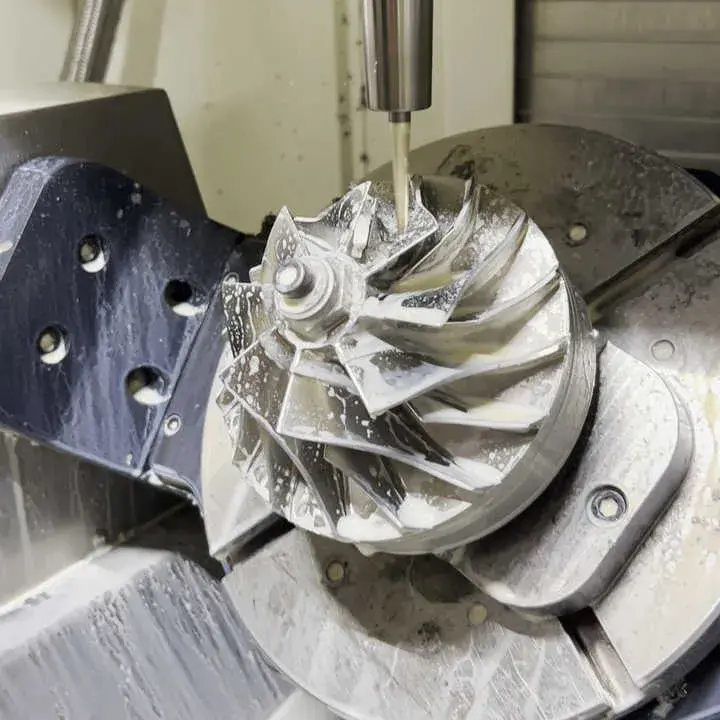
- Complex curved parts
- Precision mechanical components
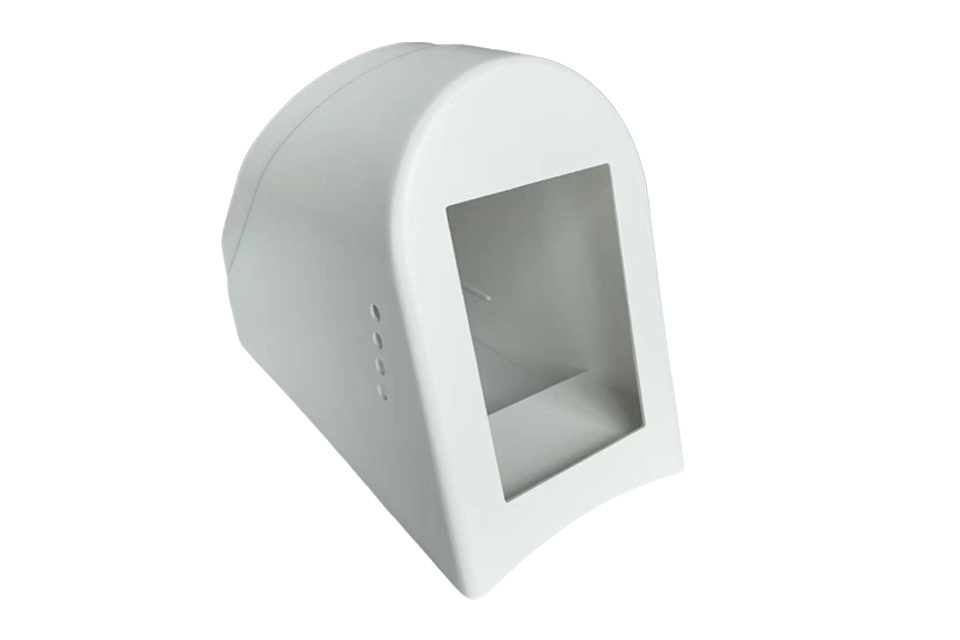
- Multi-sided housings
- High-performance industrial parts
Advantages of 5 Axis CNC Machining
1. Machining Complex Geometries in One Setup
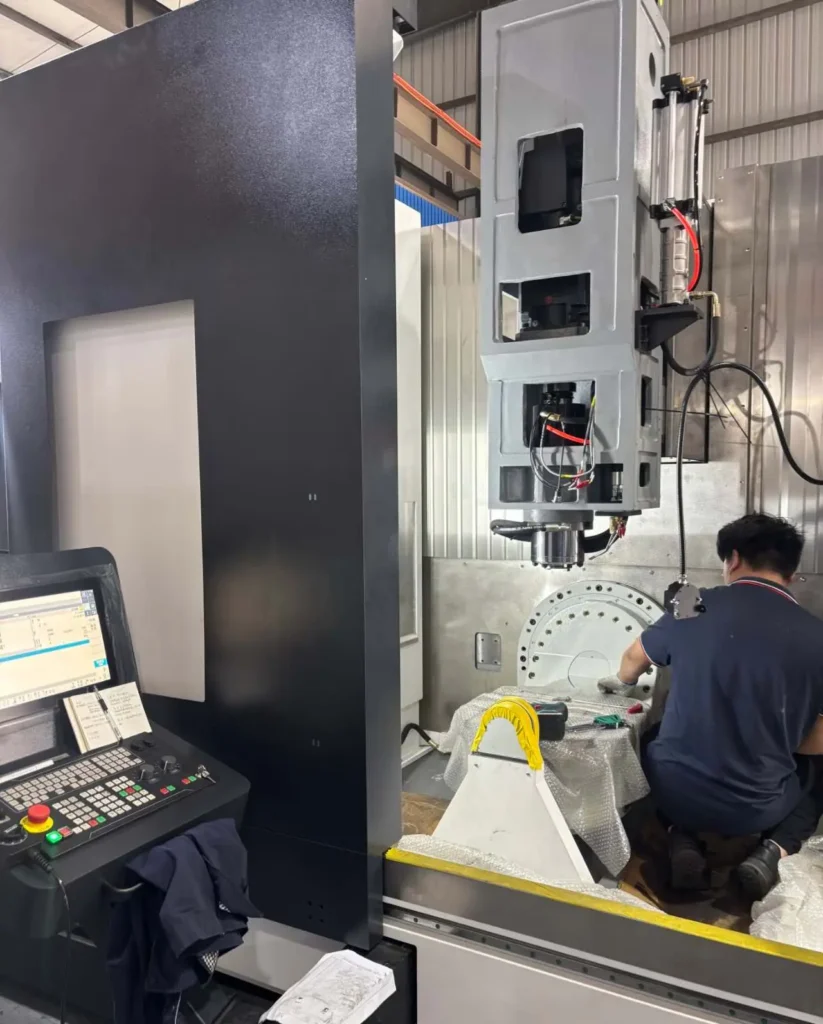
The biggest benefit of 5-axis CNC machining is the ability to complete multiple surfaces without repeatedly repositioning the workpiece.
Every time a part is removed and repositioned, there is a possibility of:
- Alignment errors
- Increased setup time
- Additional inspection requirements
By reducing setups, 5-axis machining improves consistency and overall accuracy.
For complex product housings and precision components, this capability can significantly improve manufacturing efficiency.
2. Better Surface Finish Quality
Because the cutting tool can maintain an optimized angle against the workpiece surface, 5-axis machining can produce smoother finishes.
This is especially important for:
- Visible product housings
- Consumer devices
- Medical equipment covers
- Beauty equipment shells
For customers requiring premium appearance and tight surface requirements, 5-axis machining provides greater flexibility.
Related service: Beauty Device Enclosures
3 Axis vs 5 Axis CNC Machining: Detailed Comparison
When customers ask our engineering team whether they should choose 3-axis or 5-axis CNC machining, we usually evaluate the project based on part complexity, accuracy requirements, production quantity, and budget.
The following comparison summarizes the practical differences from a manufacturing perspective.
| Comparison Factor | 3 Axis CNC Machining | 5 Axis CNC Machining |
|---|---|---|
| Machine Movement | X, Y, Z three linear axes | X, Y, Z plus two rotational axes |
| Part Complexity | Suitable for simple and medium-complex parts | Ideal for complex geometries and multi-angle surfaces |
| Setup Time | Requires more manual repositioning | Fewer setups required |
| Programming Difficulty | Easier programming | More advanced CAM programming required |
| Manufacturing Cost | Lower cost | Higher machining cost |
| Surface Finish | Good for standard surfaces | Better for curved and visible surfaces |
| Accuracy | High accuracy for standard parts | Higher consistency on complex parts |
| Production Efficiency | Effective for simple designs | More efficient for complicated components |
| Best Application | Prototypes, brackets, flat components | Aerospace, medical, robotics, complex housings |
3 Axis vs 5 Axis CNC Machining: Which One Provides Better Accuracy?
A common misunderstanding among buyers is that 5-axis CNC machining always provides higher accuracy than 3-axis machining.
In reality, accuracy depends on several factors:
- Machine quality
- Material stability
- Tool selection
- Fixture design
- Programming optimization
- Inspection process
A well-designed 3-axis CNC process can achieve excellent precision for many applications.
At Zhongrongda, our quality control process includes coordinate measurement machines (CMM), optical inspection equipment, height gauges, and micrometers to verify critical dimensions before shipment.
For standard machined components, our typical machining tolerance can reach:
- Metal parts: ±0.01mm
- Plastic parts: ±0.02mm
However, when a component requires multiple machining directions, 5-axis machining can provide better positional accuracy because it reduces the number of times the workpiece needs to be clamped and repositioned.
This advantage becomes especially important for:
- Complex medical equipment structures
- Precision robotics components
- Industrial automation parts
Related application: Automation & Robotics
Cost Difference Between 3 Axis and 5 Axis CNC Machining
Cost is one of the most important considerations for purchasing managers.
Generally, 5-axis CNC machining has a higher hourly machining cost because:
- Equipment investment is higher
- Programming requires more expertise
- Operators need advanced technical skills
- Machine maintenance costs are higher
However, the total project cost is not always higher.
For complex parts, 5-axis machining can actually reduce total manufacturing costs because it minimizes:
- Multiple setups
- Manual repositioning
- Additional fixtures
- Secondary machining operations
For example, if a housing requires machining on five different surfaces, a 3-axis process may require several fixture changes. Although the machine rate is lower, additional labor and setup time can increase the final cost.
Our engineering team always evaluates the complete manufacturing process instead of selecting a machining method based only on machine price.
How Zhongrongda Chooses Between 3 Axis and 5 Axis CNC Machining
At Zhongrongda, we do not simply recommend advanced machining technology because it is more expensive. Our goal is to provide the most efficient manufacturing solution based on the customer’s actual product requirements.
Our engineering evaluation usually considers the following factors:
1. Part Geometry
The first question we ask is:
“Can the part be manufactured efficiently with standard three-axis movement?”
If the component has:
- Flat surfaces
- Simple holes
- Regular pockets
- Vertical walls
3-axis machining is usually sufficient.
If the design includes:
- Deep cavities
- Angled surfaces
- Complex curves
- Multiple machining directions
we evaluate whether 5-axis machining can improve production efficiency.
2. Surface Appearance Requirements
For visible product housings, appearance quality is often as important as dimensional accuracy.
Products such as:
- Medical device enclosures
- Beauty equipment housings
- Smart device covers
often require:
- Smooth surface transitions
- Reduced tool marks
- Better visual consistency
In these cases, 5-axis machining can provide advantages by maintaining better tool orientation.
Related service: Medical Device Enclosure
3. Production Volume and Development Stage
Different product stages require different manufacturing strategies.
Prototype Development
During early product development, customers usually need:
- Fast turnaround
- Design validation
- Functional testing
3-axis machining is often an efficient choice.
Our Rapid Prototyping service helps product designers quickly verify mechanical structures before moving into production.
Small Batch Manufacturing
For low-volume production, the best solution depends on part complexity.
Simple components may continue using 3-axis machining.
Complex products may benefit from 5-axis machining because fewer setups improve consistency and reduce labor requirements.
Related service: Small Batch Manufacturing
Real Manufacturing Example: Selecting the Right CNC Process for Product Housings
During our CNC machining projects, we often receive inquiries from medical and beauty device companies that require customized product housings.
Many of these parts have:
- Large external surfaces
- Multiple mounting positions
- Internal structural features
- Appearance requirements
Our engineering team first reviews the 3D model and evaluates:
- Machining accessibility
- Required tolerances
- Surface finish expectations
- Production quantity
For simple enclosure prototypes, we may recommend a 3-axis CNC process combined with proper fixture design.
For more complex housings requiring multiple angled features, a 5-axis machining strategy can reduce setup operations and improve consistency.
This engineering evaluation allows customers to achieve the required quality without unnecessary manufacturing costs.
How to Choose the Right CNC Machining Partner
Selecting the correct CNC machining supplier is not only about equipment capability.
A reliable manufacturing partner should provide:
Engineering Support
Experienced engineers should help optimize:
- Part design
- Material selection
- Machining strategy
- Production process
Quality Control Capability
Before shipment, manufacturers should verify:
- Critical dimensions
- Surface quality
- Assembly requirements
At Zhongrongda, we provide inspection support using professional measuring equipment and complete quality verification procedures.
Production Flexibility
Modern product development requires suppliers who can support different stages:
- Prototype production
- Design modification
- Small batch manufacturing
- Final production support
Our team provides a complete manufacturing process from initial prototype development to production delivery.
Related services:
CNC Machining
Rapid Prototyping
Conclusion: 3 Axis vs 5 Axis CNC Machining — Which Is Better?
There is no universal answer to whether 3-axis or 5-axis CNC machining is better.
The correct choice depends on:
- Part complexity
- Required accuracy
- Surface finish
- Production quantity
- Manufacturing budget
3-axis CNC machining remains an excellent solution for many standard components because it offers reliable quality and cost efficiency.
5-axis CNC machining provides greater flexibility for complex parts that require multiple machining angles, reduced setups, and premium surface quality.
At Zhongrongda, our engineering team combines CNC manufacturing experience, process optimization, and quality control expertise to help customers select the most suitable machining solution.
Whether you are developing a medical device prototype, beauty equipment housing, robotics component, or industrial product, we can support your project from concept validation to small batch production.
Contact our engineering team today to discuss your CNC machining requirements.
Frequently Asked Questions (FAQ)
1. Is 5-axis CNC machining better than 3-axis CNC machining?
Not always. 5-axis CNC machining is better for complex parts requiring multiple machining angles, while 3-axis CNC machining is often more cost-effective for simpler components.
2. Is 5-axis CNC machining more expensive?
Yes, the machine cost and programming requirements are higher. However, for complex parts, 5-axis machining can reduce total production costs by reducing setups and manual operations.
3. What industries use 5-axis CNC machining?
5-axis CNC machining is commonly used in industries requiring complex and precise components, including medical equipment, robotics, aerospace, and industrial automation.
4. Can 3-axis CNC machining produce prototypes?
Yes. 3-axis CNC machining is widely used for rapid prototypes, functional testing parts, and small batch production.
5. How does Zhongrongda select the right CNC machining process?
Our engineering team reviews part geometry, tolerance requirements, material, surface finish, and production quantity before recommending the most efficient machining solution.
Recommended Images for SEO Optimization
Image 1
Image File Name:
3-axis-vs-5-axis-cnc-machining-comparison.jpg
ALT Text:
3 axis vs 5 axis CNC machining comparison showing different machining movements
Image Description:
Technical comparison image showing how 3-axis CNC machines move along X, Y, Z axes while 5-axis CNC machines add rotational movement for complex parts.