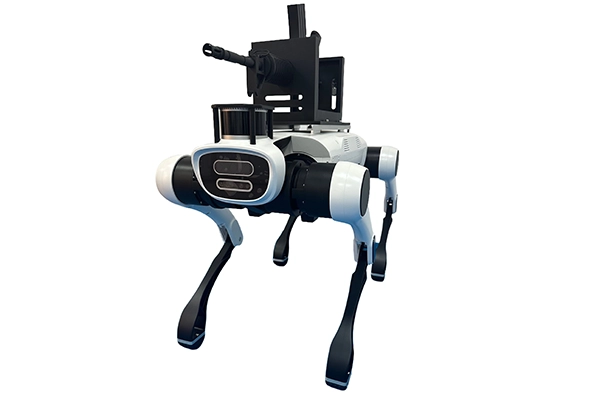
Developing a reliable custom military robot dog prototype requires precise engineering to balance heavy payload capacity with agile, quadruped mobility. At Zhongrongda, we specialize in translating complex mechanical designs into high-fidelity structural models.
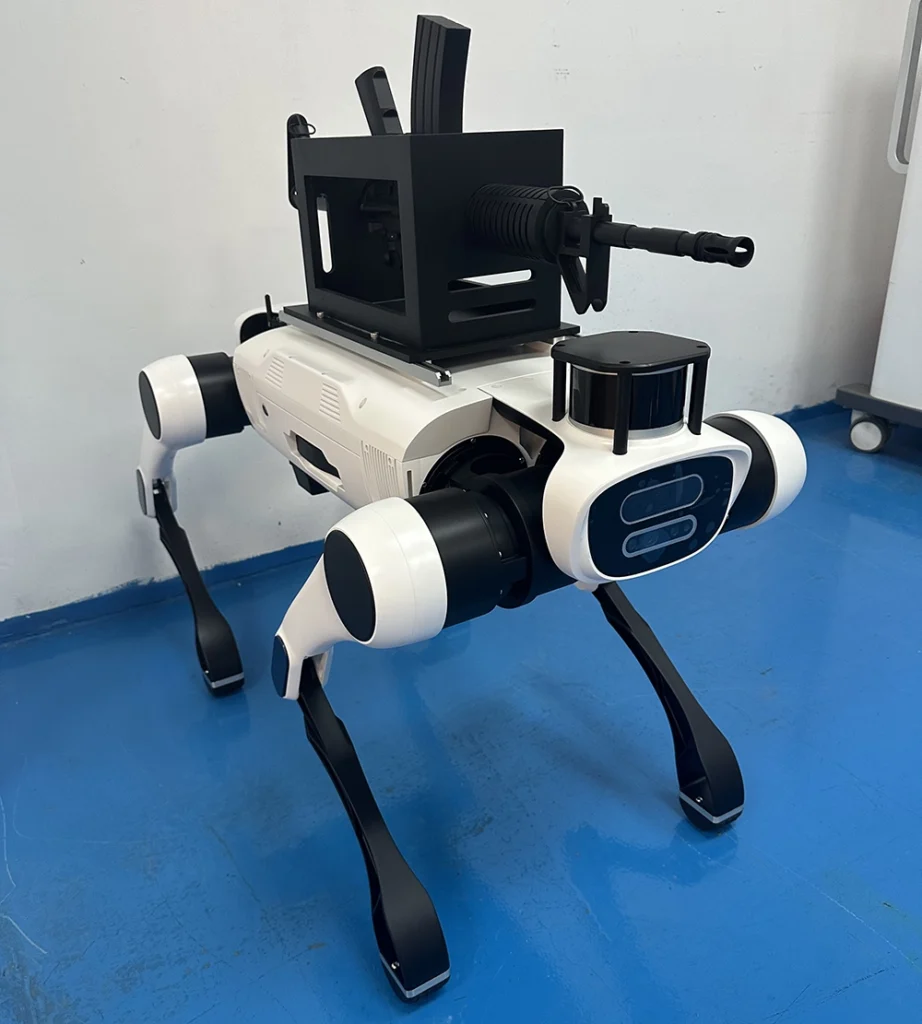
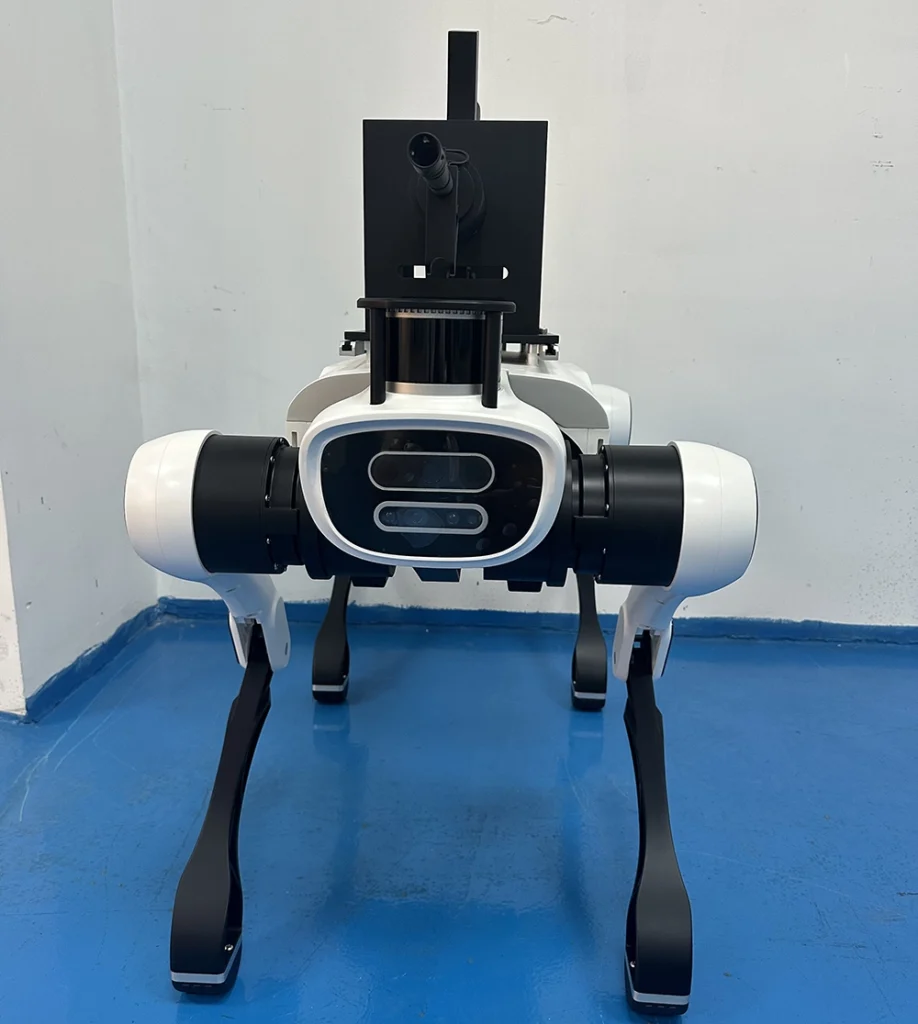
The images above showcase a recent rapid prototyping project: a structural and spatial verification model for a quadruped tactical robot. It is important to note that this is a conceptual structural prototype, not a fully functional combat unit.
This model is utilized by defense engineers to test spatial layouts, sensor alignment, and weapon payload mounting before investing in expensive mass-production tooling. In this article, we detail the specific manufacturing processes used to bring this patrol robot to life.
Applications for the Custom Military Robot Dog Prototype
Modern defense contractors are increasingly turning to unmanned ground vehicles (UGVs) to keep human operators out of harm’s way.
These robotic units are deployed in highly hazardous environments. They navigate rough terrain, climb stairs, and access areas traditional wheeled vehicles cannot reach.
The primary applications for this specific design include:
- Perimeter Patrol: Autonomous navigation around military bases or secure industrial facilities.
- Tactical Reconnaissance: Utilizing the front-mounted sensor array to stream live video in hostile zones.
- Payload Delivery: Carrying tactical gear, defensive mock-weaponry, or communication relays into the field.
Specifications of the Tactical Patrol Robot Casing
To accurately test center-of-gravity and motor torque requirements, a prototype must accurately reflect the final product’s dimensions.
Based on standard tactical requirements, this prototype features the following approximate spatial dimensions:
- Total Length: 850mm (excluding the extended barrel of the payload).
- Total Width: 450mm (stance width from outer joint to outer joint).
- Total Height: 650mm (ground to the top of the upper payload box).
- Chassis Clearance: Designed to maintain a 200mm ground clearance during standard walking gaits.
The Role of Rapid Prototyping Defense Equipment
Before finalizing the internal electronics and battery configurations, physical validation is absolutely mandatory.
We utilize rapid prototyping defense equipment techniques to identify structural flaws early. This physical model allows engineers to physically manipulate the joints and verify that the leg articulation does not collide with the main chassis.
Furthermore, it allows the design team to verify the assembly tolerances of the complex weapon mount situated on the robot’s upper spine. Catching interference issues at the prototype stage saves tens of thousands of dollars in tooling modifications.
Core Manufacturing Processes at Zhongrongda
To achieve the striking black-and-white aesthetic and structural integrity shown in the photos, our team combined several advanced manufacturing technologies.
Robotics Plastic Enclosure Fabrication for the Main Chassis
The white outer shell of the robot requires a flawless cosmetic finish while remaining lightweight.
For the robotics plastic enclosure fabrication, we utilized industrial-grade SLA (Stereolithography) 3D printing. We selected a high-toughness, ABS-like photopolymer resin.
This process allows us to create the complex, sweeping curves of the main body and the intricate front sensor bezel in a single seamless piece. After printing, the parts undergo extensive hand-polishing and are painted with a matte white UV-resistant coating to achieve a commercial-grade finish.
CNC Machining Robotic Joints for Structural Integrity
While the cosmetic shell can be printed, the load-bearing components must be milled from solid metal to prevent catastrophic failure under weight.
The black leg struts and the primary shoulder joints are manufactured utilizing 5-axis CNC machining robotic joints. We mill these critical components from blocks of aerospace-grade 7075 Aluminum.
This aluminum alloy provides an exceptional strength-to-weight ratio. The metal parts are subsequently treated with a Type III hard black anodized finish, providing extreme wear resistance for the moving joints.
Overcoming Challenges in Quadruped Robot Housing Manufacturing
Fabricating this specific prototype presented our engineering team with several unique manufacturing challenges.
1. Integrating the Top Weapon Payload Box
The black mounting box situated on the robot’s back is designed to hold a tactical payload. This structure creates a high center of gravity.
- We manufactured the payload box using CNC-machined POM (Delrin) plates.
- This material is highly impact-resistant and significantly lighter than steel.
- We utilized heavy-duty stainless steel fasteners to secure the box directly to the robot’s internal aluminum sub-frame, bypassing the weaker plastic shell entirely.
2. Precision Alignment for the Sensor Array
The front “face” of the robot houses critical LiDAR, infrared, and optical sensors.
During the quadruped robot housing manufacturing process, any warping in the plastic front panel will cause the sensors to misalign, rendering the robot’s navigation software useless.
We solved this by designing a rigid internal mounting bracket. The external SLA-printed shell simply acts as a cosmetic cover, while the sensors are bolted directly to a vibration-isolated CNC-machined plate.
Partner with Zhongrongda for Your Defense Prototyping
Translating a cutting-edge robotics concept into a tangible, high-precision model requires an experienced manufacturing partner.
Whether you are developing a custom military robot dog prototype, a medical device enclosure, or complex aerospace components, Zhongrongda has the technology and expertise to deliver. We bridge the gap between digital CAD files and physical reality.
Are you ready to accelerate your hardware development cycle? Send our engineering team your 3D models for an immediate manufacturability analysis.
Contact Us Today: Email: info@zrdmfg.com
Phone: +86 13972955806
View the product video:https://youtube.com/shorts/fDBAofrRW2A?feature=share