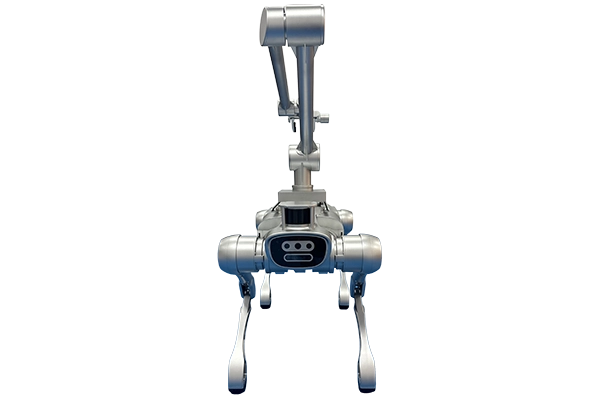
In the rapidly advancing fields of modern defense and urban security, unmanned ground vehicles are transforming tactical operations. Developing a high-fidelity quadruped security robot prototype is a critical milestone before committing to mass production tooling.
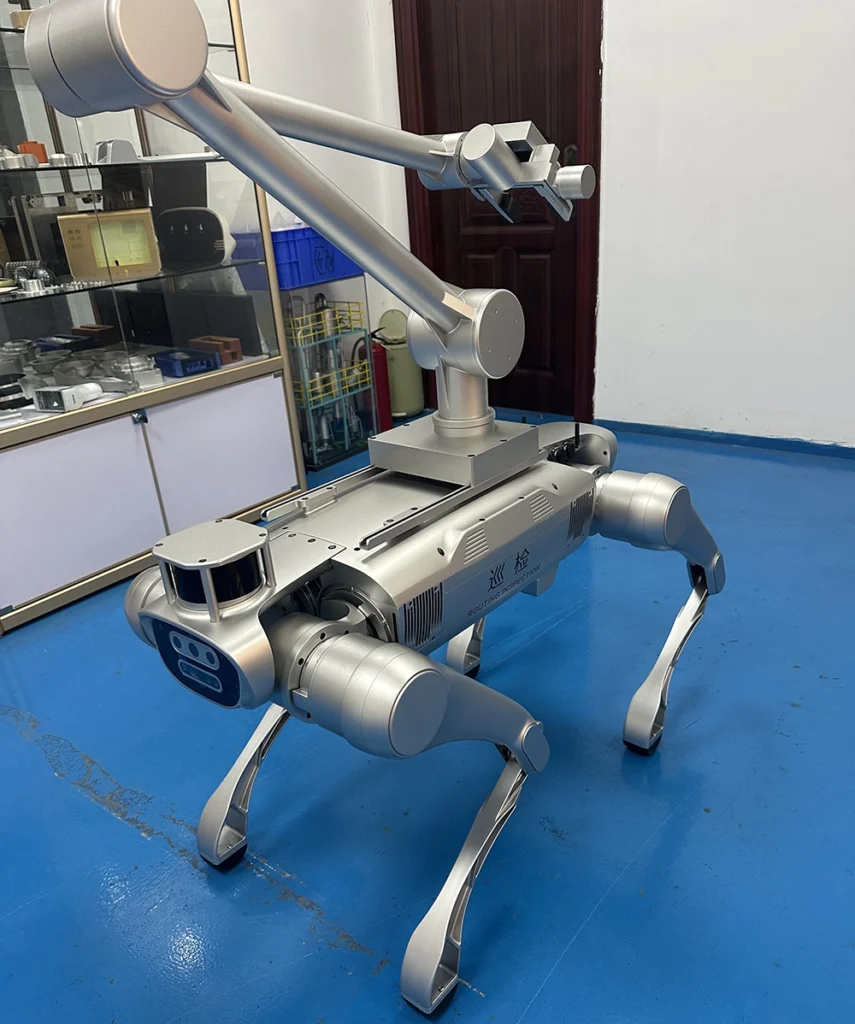
This specific model serves as a highly accurate appearance and spatial verification prototype, designed specifically for police and military defense applications. It is not a fully motorized, functional combat unit, but rather a structural mockup used to validate spatial constraints and exterior aesthetics.
In this comprehensive guide, our engineering team details the exact specifications, manufacturing difficulties, and fabrication processes required to bring this complex robotic model to life. For hardware development teams, understanding these prototyping methodologies is essential for reducing trial-and-error costs and accelerating time-to-market.
Core Applications for the Custom Security Robot Appearance Model
Before investing in expensive injection molds or die-casting tooling, robotics companies must validate their designs in the physical world.
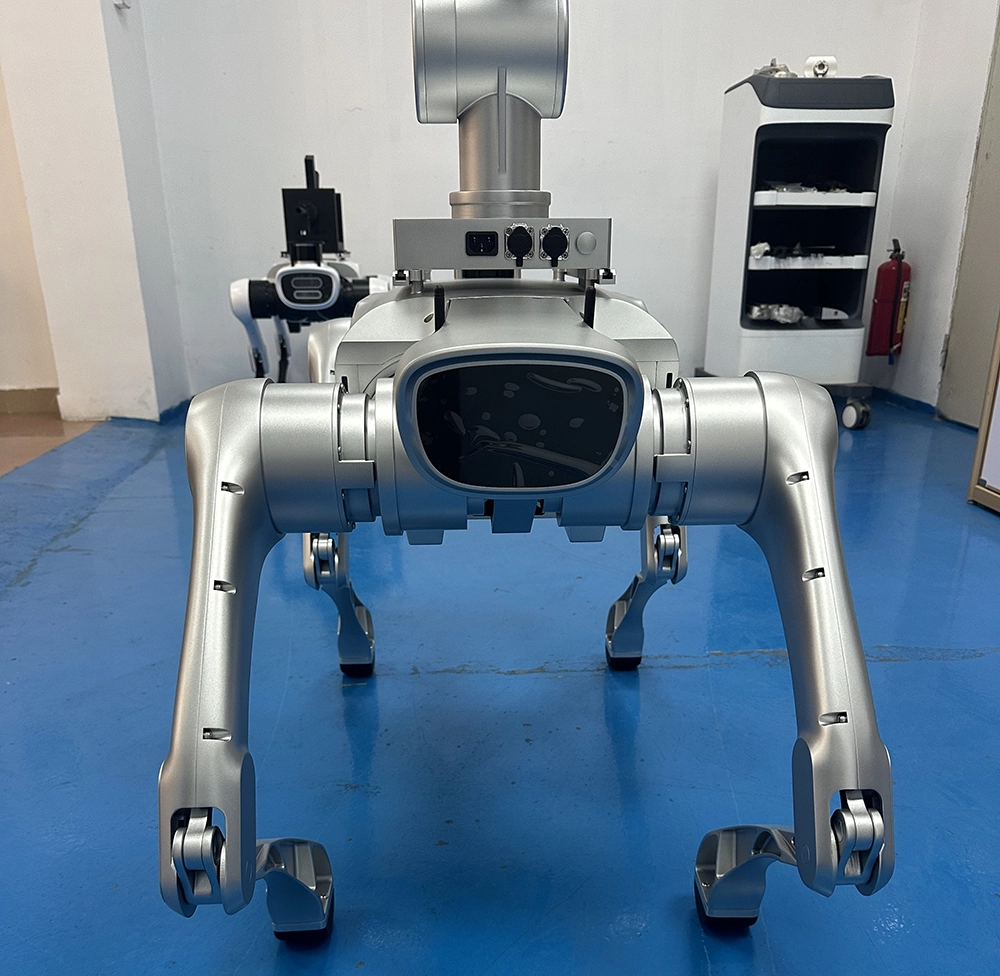
A high-quality custom security robot appearance model allows engineers to physically assess the visual impact, mechanical layout, and payload capacity of the unit. The police-branded model shown above is engineered for specific tactical scenarios.
- Law Enforcement and Riot Control: The prominent police decals and warning lights demonstrate its primary use case in urban security, crowd monitoring, and high-risk area patrols.
- Perimeter and Border Defense: The bionic four-legged structure is designed to navigate stairs, rubble, and uneven terrain, which is the core advantage of autonomous patrol quadruped manufacturing.
- Payload Integration Testing: The broad, flat upper deck is specifically designed to test the mounting locations for dual-camera gimbals, LiDAR sensors, and acoustic warning devices.
Analyzing the Dimensional Specifications
To accurately test physical interference and kinematic envelopes, the prototype must strictly adhere to the actual 1:1 scale of the intended final product.
Based on standard law enforcement robotics requirements, we engineered this model with the following approximate spatial dimensions:
- Total Length: 850mm (providing ample space for multiple top-mounted sensor arrays).
- Total Width: 400mm (ensuring the robotic limbs do not collide with the main chassis during the walking gait).
- Total Height: 550mm (excluding the top payload), providing sufficient ground clearance to navigate standard urban obstacles.
Evaluating the Manufacturing Complexity
Producing a prototype with this level of commercial-grade realism introduces extreme manufacturing challenges. Our engineers face several distinct hurdles when fabricating a bionic police robot dog casing.
First, managing tolerance stacking across multiple materials is incredibly difficult. The model integrates rigid metal joints, large plastic body panels, and transparent acrylic sensor windows. Even a 0.2mm deviation in any single part will result in severe assembly gaps.
Second, the simulated joints require precision machining. While this model does not house active servo motors, the leg joints must fit perfectly to support the weight of the heavy chassis without sagging or collapsing during trade show exhibitions.
Finally, achieving a flawless surface finish demands rigorous quality control. Industrial buyers expect a prototype to look exactly like the final manufactured product, requiring advanced polishing and painting techniques to hide any underlying machining marks.
Deep Dive: Core Technologies in Prototype Fabrication
To overcome these complexities and deliver a flawless physical model, we deploy a hybrid manufacturing strategy. We utilize different technologies for the structural core and the cosmetic exterior.
Aluminum Robot Dog Chassis Prototyping
The legs and main load-bearing joints must exude a realistic metallic strength while supporting the entire assembly.
For the aluminum robot dog chassis prototyping phase, we utilize high-precision 5-axis CNC machining. We mill these critical components from solid blocks of aerospace-grade 6061-T6 aluminum alloy.
This machining process perfectly captures the sharp chamfers, recessed screw holes, and mechanical details of the robotic joints. Following the CNC process, we apply a fine sandblasting and silver anodizing treatment to achieve the premium, wear-resistant metallic finish shown in the photos.
Defense Robot Housing Fabrication via Industrial SLA
Machining the large, sweeping curves of the main white body out of metal or plastic blocks would be prohibitively expensive and inefficient.
Instead, we turn to industrial Stereolithography (SLA) 3D printing for the defense robot housing fabrication. We utilize a tough, ABS-like photopolymer resin that provides excellent dimensional stability for large-format parts.
- SLA printing allows us to form the complex front fascia, side cooling vents, and internal mounting clips in a single, continuous operation.
- The resulting resin parts are lightweight but rigid enough to securely hold the heavy top-mounted payload accessories.
- This process yields highly accurate CAD validation data that our clients later use to design their steel injection molds.
Advanced Post-Processing and Cosmetic Assembly
A prototype is only as good as its final finish. Our craftsmen spend hours meticulously hand-sanding the SLA-printed body panels to remove any microscopic layer lines.
We then apply automotive-grade polyurethane primers and a specialized matte white topcoat. This specific paint formulation prevents yellowing and provides a highly durable, scratch-resistant surface suitable for rigorous handling.
The intricate details, including the “POLICE” lettering, warning stripes, and the official law enforcement emblem, are applied using precision water-transfer printing and silkscreen techniques.
Finally, the tinted acrylic windows for the front LiDAR array are CNC-routed and chemically bonded to the main shell, resulting in a seamless, watertight appearance.
Partner with Zhongrongda for Your Next Robotics Project
Transitioning an advanced robotic concept from a digital CAD file to a highly realistic physical model requires deep manufacturing expertise.
A premium quadruped security robot prototype serves as your ultimate pitching tool for investors and your primary validation method for engineering teams. By combining precision CNC machining with advanced rapid prototyping, we eliminate design flaws early in your development cycle.
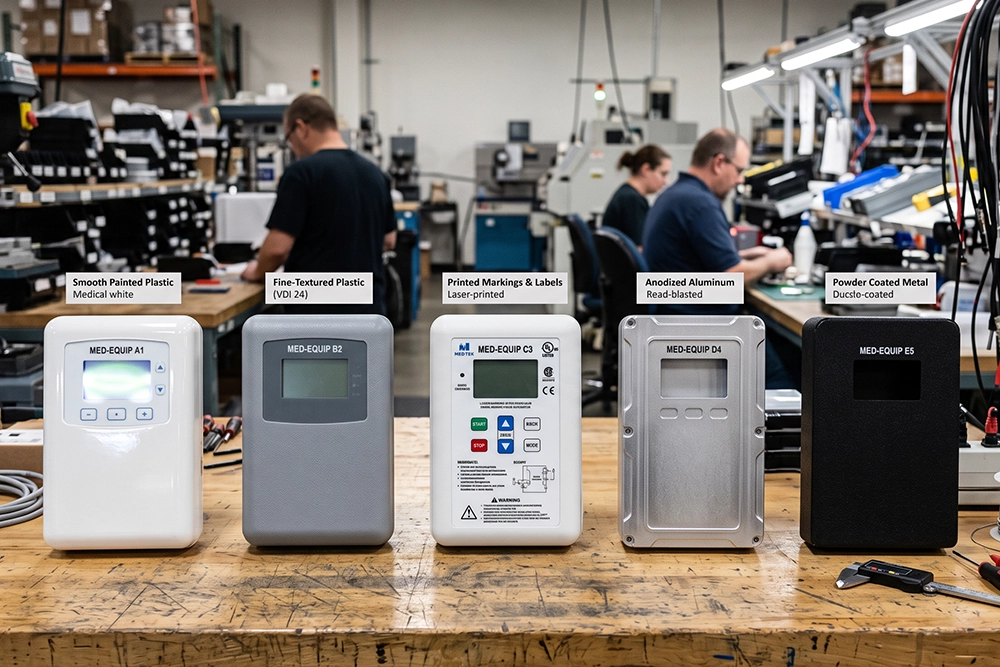
Whether you are developing autonomous patrol dogs, medical diagnostic equipment, or rugged military enclosures, our team is equipped to handle your most complex hardware challenges. Send us your 3D models today for a comprehensive manufacturability review.
Ready to accelerate your hardware development? Contact us today: Email: info@zrdmfg.com Phone: +86 13972955806