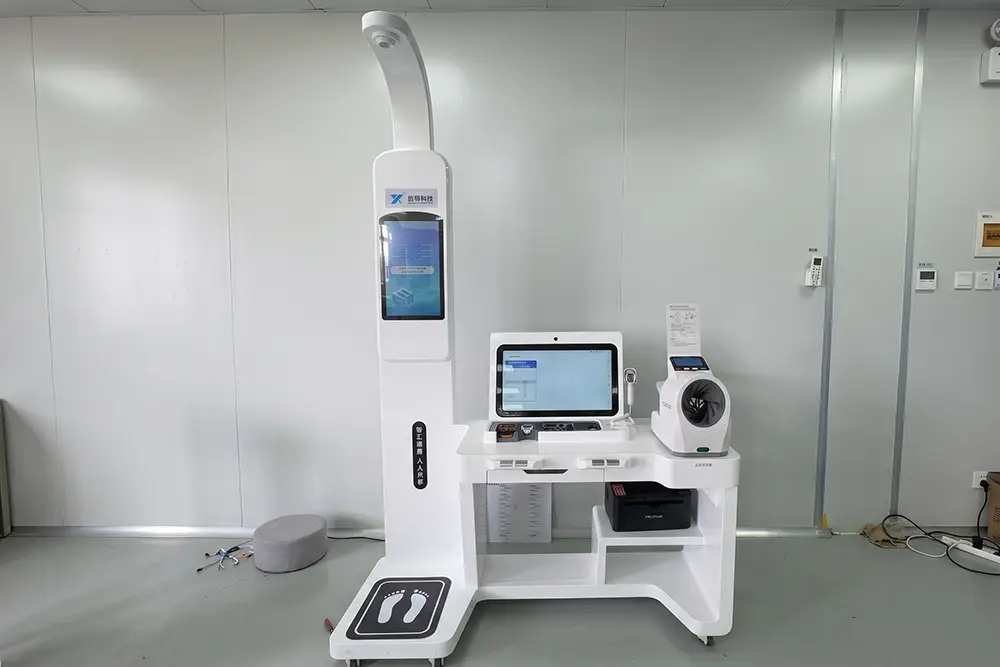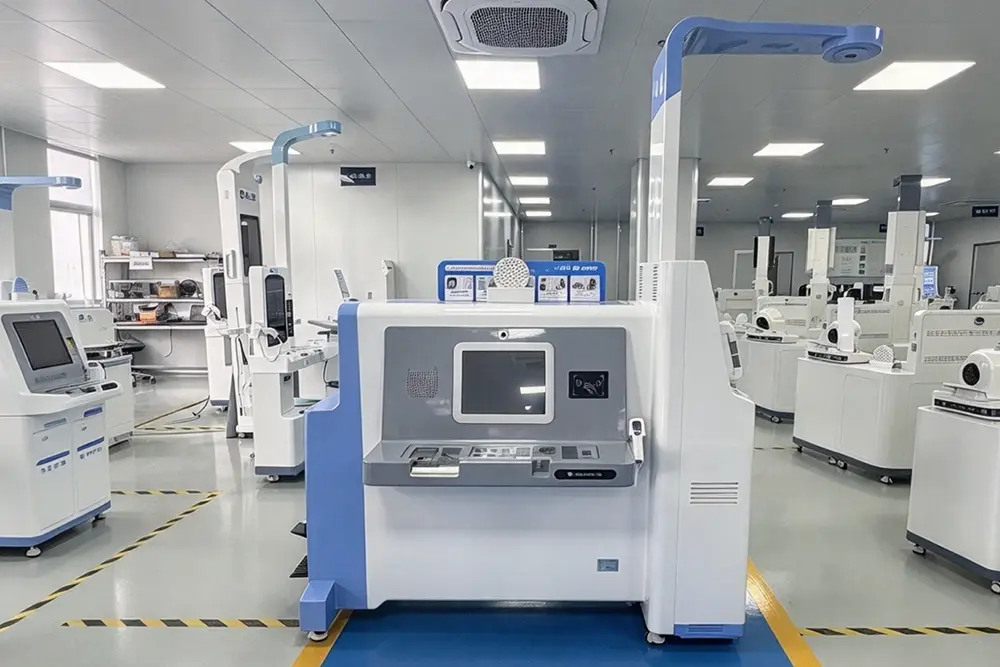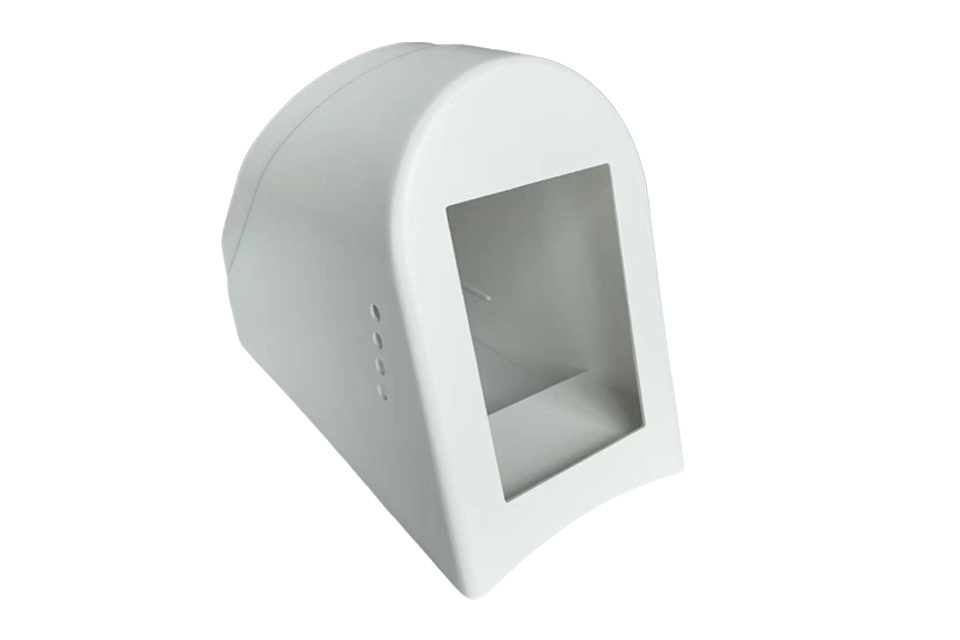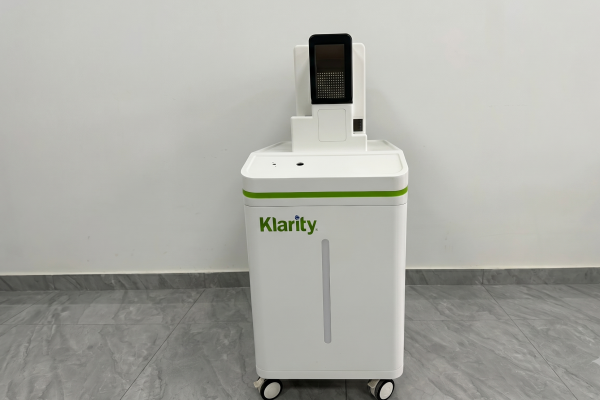
When a medical equipment manufacturer approached our team at Zhongrongda, they needed a custom medical equipment cart enclosure for a new therapy system.
The challenge was not simply producing a large enclosure.
The enclosure had to combine structural strength, medical-grade appearance, waterproof performance, cable management, and precise installation interfaces within a compact footprint.
The final dimensions were:
• Length: 470 mm
• Width: 700 mm
• Height: 1150 mm
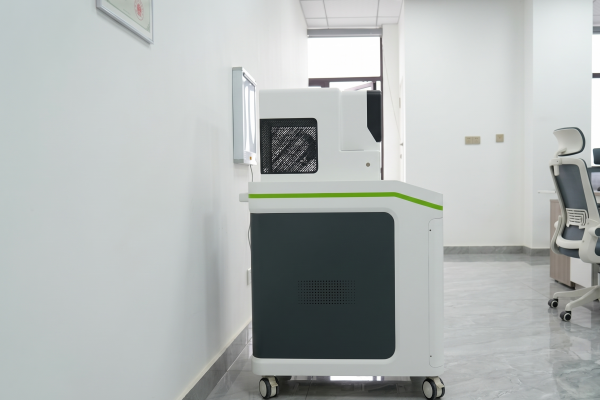
The enclosure also included a display support structure, internal equipment compartment, cable routing channels, and integrated mobility requirements.
This project became an excellent example of our Medical Device Enclosure, Rapid Prototyping, and CNC Machining capabilities.
Medical Equipment Cart Enclosure Manufacturing Challenges
Many enclosure suppliers can fabricate basic sheet metal cabinets.
However, medical equipment enclosures present significantly higher requirements.
The customer had previously experienced issues with:
• Visible welding marks
• Uneven corner radii
• Poor paint consistency
• Water ingress around installation interfaces
• Misalignment between support brackets and enclosure panels
Our engineering team identified four major manufacturing challenges.
Challenge 1 – Large Integrated Bending with Consistent Corner Radius
The enclosure body utilized multiple large-radius corner transitions.
During sheet metal forming, springback often causes:
• Radius inconsistency
• Panel distortion
• Assembly mismatch
Many suppliers compensate manually, resulting in inconsistent dimensions.
At Zhongrongda, we performed digital bend simulation before tooling.
Process Parameters:
• CNC bending accuracy: ±0.10 mm
• Radius deviation control: within ±0.30 mm
• Material: 6063-T5 aluminum sheet
After two prototype iterations, the enclosure maintained uniform corner geometry throughout the entire structure.
Challenge 2 – Seamless Welding and Medical Appearance Requirements
The customer required a clean, clinical appearance.
Traditional welding methods often leave:
• Weld marks
• Surface deformation
• Visible grinding traces
To address this issue, we adopted laser welding combined with controlled finishing processes.
Process Parameters:
• Laser weld penetration depth: 1.2–1.5 mm
• Surface flatness after finishing: ≤0.20 mm
• Visual inspection coverage: 100%
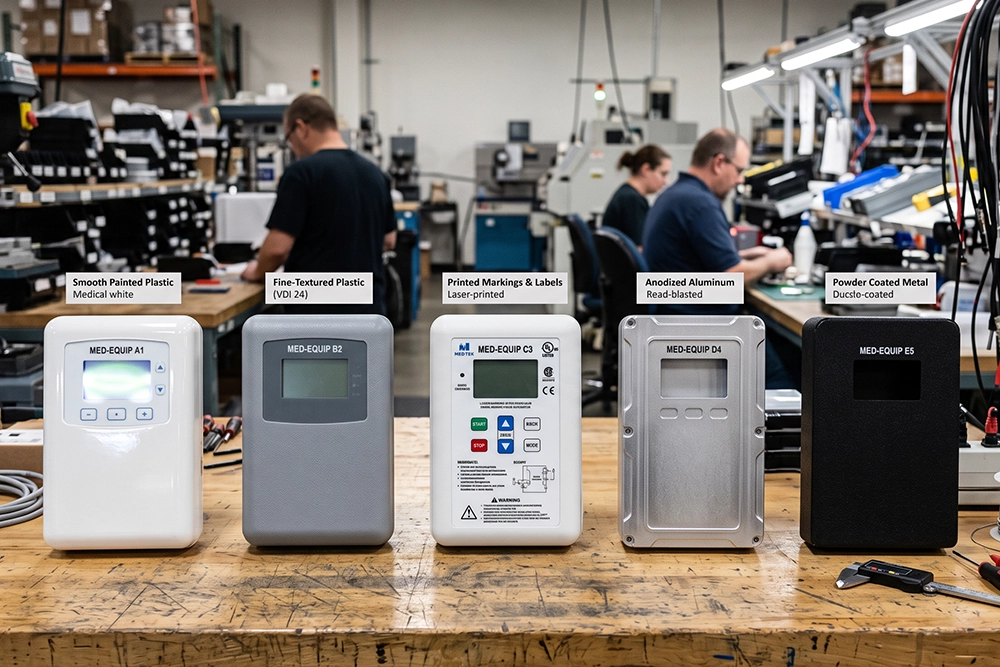
The result was a nearly invisible weld line after powder coating.
This significantly improved the visual quality of the medical device cart housing.
Challenge 3 – Precision Alignment Between Display Support and Main Body
The upper display support structure had to connect accurately to the enclosure body.
Misalignment could create:
• Installation difficulties
• Structural weakness
• Uneven visual appearance
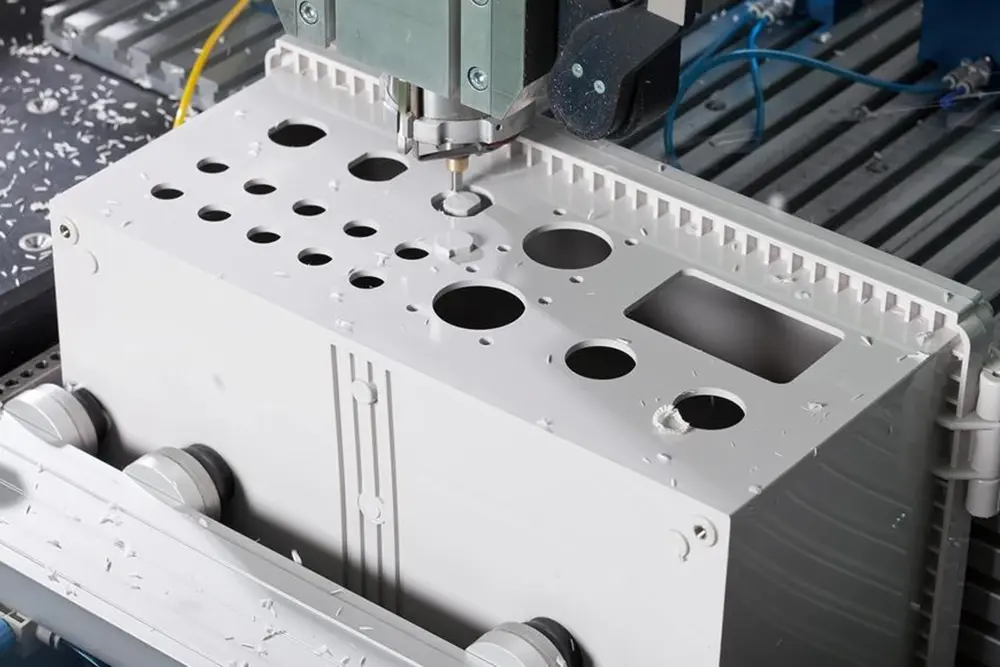
We utilized 5-axis CNC machining for critical interfaces.
Process Parameters:
• Hole positioning accuracy: ±0.05 mm
• Assembly tolerance: ±0.10 mm
• CNC inspection rate: 100%
By controlling every interface dimension, the display support aligned perfectly with the enclosure body during final assembly.
This level of precision is commonly required in Medical Device Enclosure projects.
Challenge 4 – Waterproof and Dustproof Requirements
Medical equipment often operates in environments requiring frequent cleaning and disinfection.
The customer requested enhanced sealing performance around:
• Access panels
• Cable routing holes
• Installation interfaces
• Equipment compartments
Our solution included:
• Hidden sealing structures
• Precision-cut gasket grooves
• Controlled assembly compression
Testing Results:
• Water spray resistance test passed
• Dust ingress test passed
• Repeated cleaning simulation: 1,000 cycles
• No sealing degradation observed
Materials and Manufacturing Process
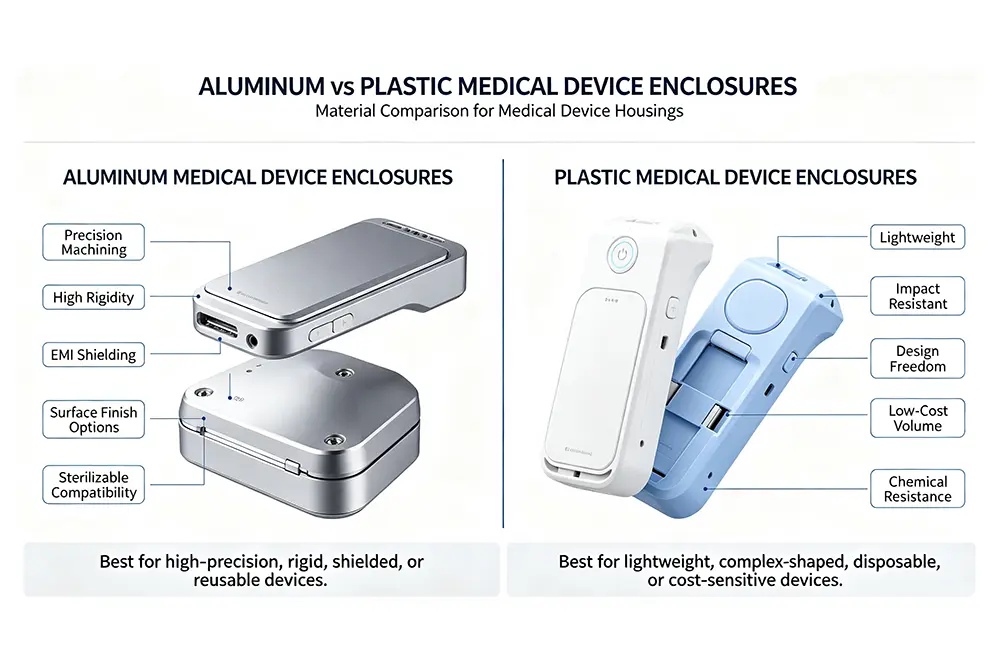
The enclosure combined multiple materials to balance appearance, durability, and manufacturing efficiency.
Primary Materials:
• 6063-T5 aluminum alloy sheet metal
• ABS engineering plastic
• Internal reinforcement sheet metal structure
Key Manufacturing Processes:
• Precision sheet metal fabrication
• CNC bending
• Laser cutting
• Seamless welding
• 5-axis CNC machining
• Matte electrostatic powder coating
• Precision assembly
For customers requiring early-stage validation, our Rapid Prototyping team can manufacture prototype enclosures before full production.
Quality Control for Medical Equipment Cart Enclosures
Every enclosure undergoes strict inspection procedures.
Our quality control workflow includes:
- Incoming material inspection
- CNC dimensional verification
- Welding inspection
- Surface finishing inspection
- Assembly inspection
- Final visual inspection
Quality Standards:
• ISO 9001:2015 procedures
• 100% visual inspection
• 100% critical dimension verification
• Surface appearance grading
We also review material performance references such as ABS plastic properties and applications when selecting engineering plastics for enclosure projects.
Final Results
After completing manufacturing and assembly, the customer achieved:
• Prototype delivery within 15 working days
• Hole position accuracy within ±0.05 mm
• Assembly fit rate above 99%
• Visual acceptance rate above 98.8%
• Consistent powder coating appearance across all components
The customer subsequently requested evaluation for additional enclosure projects.
For companies developing custom medical systems, early engineering involvement can significantly reduce project risk.
This is why many customers engage our Medical Device Enclosure team before finalizing enclosure architecture.
For projects involving consumer wellness products, our Beauty Device Enclosures team can also provide integrated housing solutions.
Conclusion
Manufacturing a medical equipment cart enclosure requires more than basic sheet metal fabrication.
Success depends on controlling:
• Structural accuracy
• Welding quality
• Surface consistency
• Sealing performance
• Assembly precision
At Zhongrongda, we solved these challenges through precision engineering, controlled fabrication processes, and strict quality verification.
If you are developing a medical device, therapy system, diagnostic platform, or healthcare workstation, our engineering team can evaluate manufacturability before production begins.
Bottom CTA
Need a Custom Medical Equipment Cart Enclosure?
Our engineering team can assist with enclosure design review, rapid prototyping, CNC machining, sheet metal fabrication, and low-volume production.
Email: info@zrdmfg.com
Phone: +86 13972955806
Website: https://zrdmfg.com
See Our Factory Manufacturing
CapabilitiesWatch our factory introduction video:
🎥 https://youtube.com/shorts/5W_VEYYTip4?feature=share
Send us your drawings, concepts, or 3D files for a manufacturability review and quotation.