Introduction
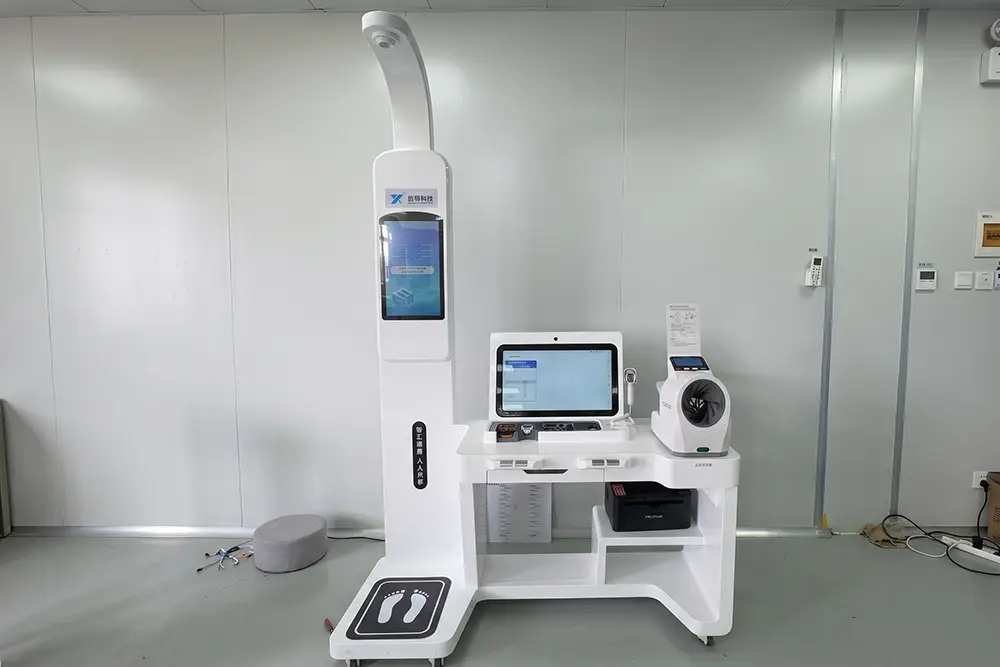
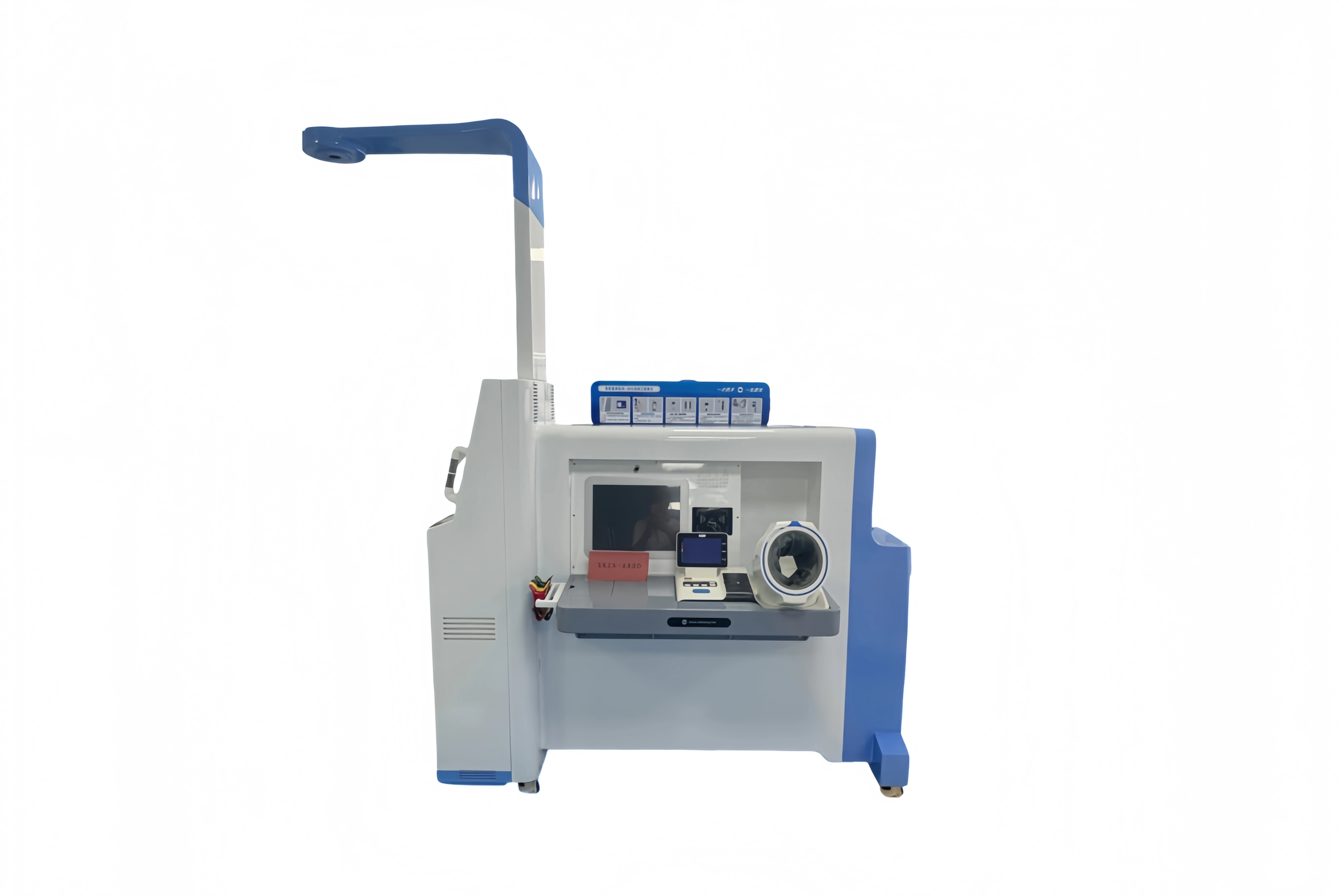
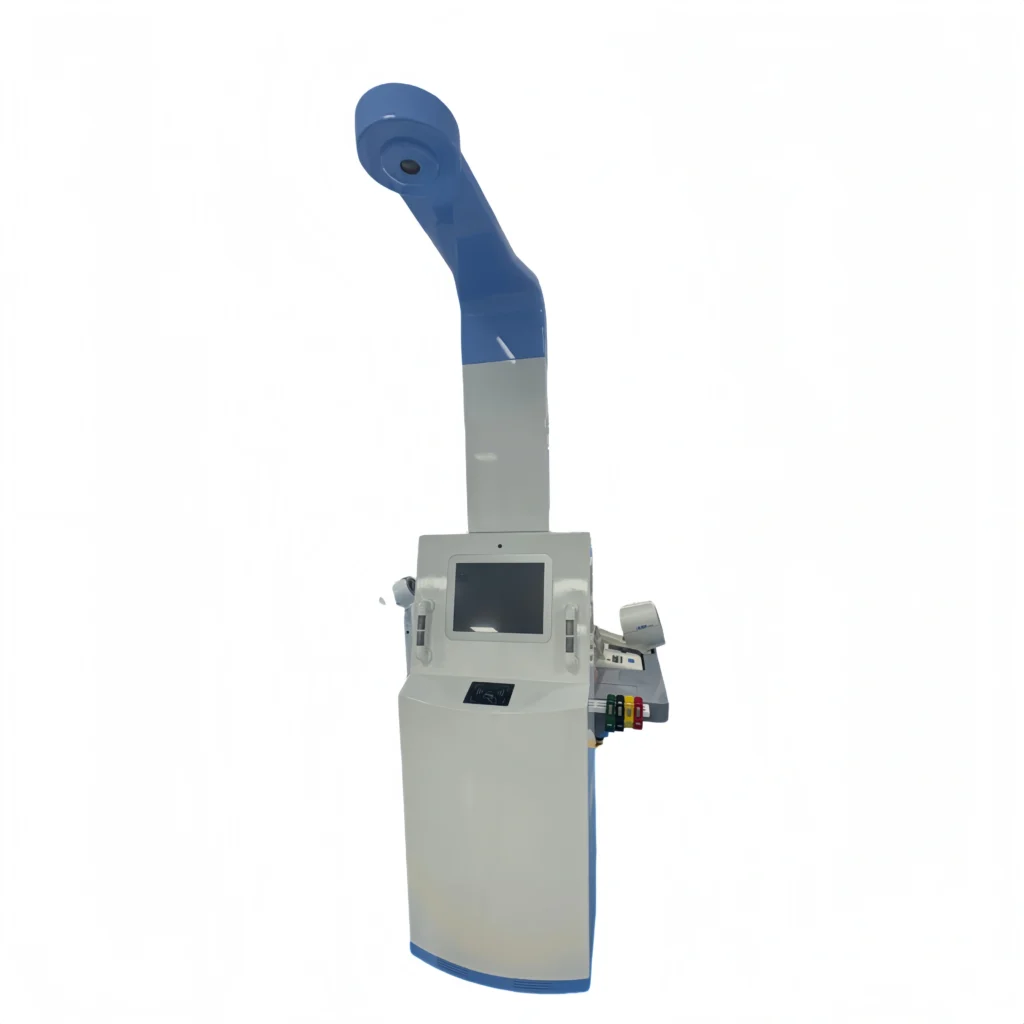
The health checkup machine prototype enclosure is the physical interface between residents and a complete set of self-service diagnostic functions. The A800 multifunctional health checkup machine is designed for community health service centers, township clinics, and health kiosks in China. It identifies residents, guides them through multiple physiological measurements, and uploads the collected data to an electronic health record. That workflow places demanding requirements on the enclosure: the structure must carry sensors and displays, the openings must align with each module, and the exterior must look trustworthy in a public healthcare setting.
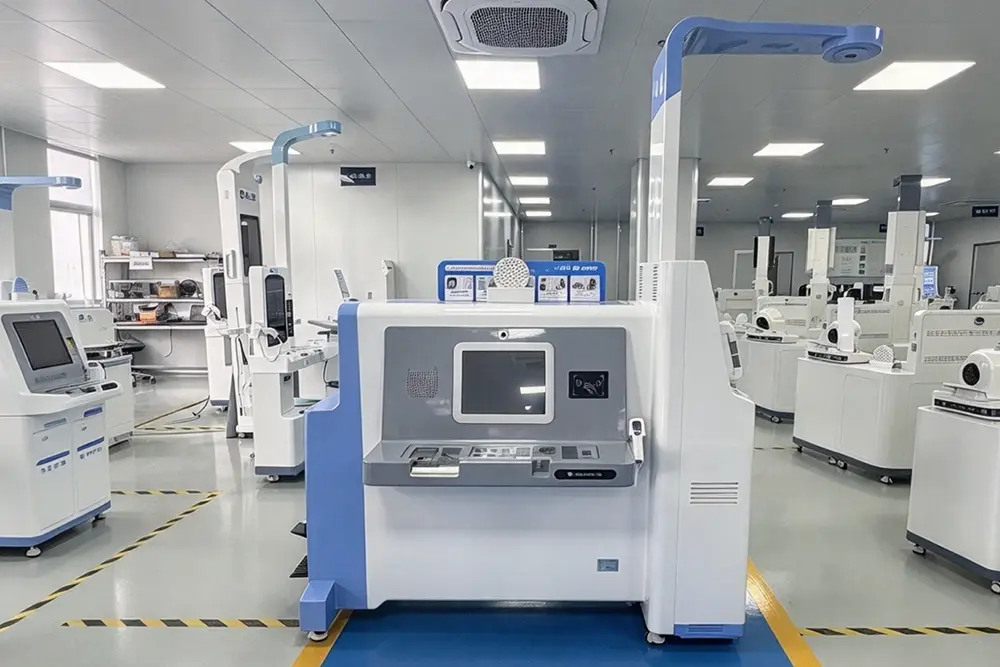
Hubei Zhongrongda Intelligent Technology Co., Ltd. developed this small-batch prototype using an SPCC cold-rolled sheet-metal frame, CNC-machined ABS hand-built panels, and an acrylic identity-card reader panel. Our engineering team treated the prototype as a functional validation platform, not simply a cosmetic model. We reserved maintenance space, checked moving clearances around the height-sensor arm, and verified the white-and-blue semi-matte finish before final assembly. The result is a practical enclosure ready for fit checks, user trials, and the next production decision.
Project Overview
| Project field | Specification |
|---|---|
| Product | A800 multifunctional health checkup machine |
| Industry | Medical and public-health equipment |
| Application | Community clinics, township hospitals, health kiosks |
| Customer market | China |
| Quantity | Small batch for prototype, validation, and pilot build |
| Main materials | SPCC cold-rolled steel, ABS sheet, acrylic |
| Structure | Load-bearing sheet-metal frame with separate body, column, and console shells |
| Key modules | Height sensor, blood pressure, ECG, blood glucose, blood oxygen, touchscreen, ID reader |
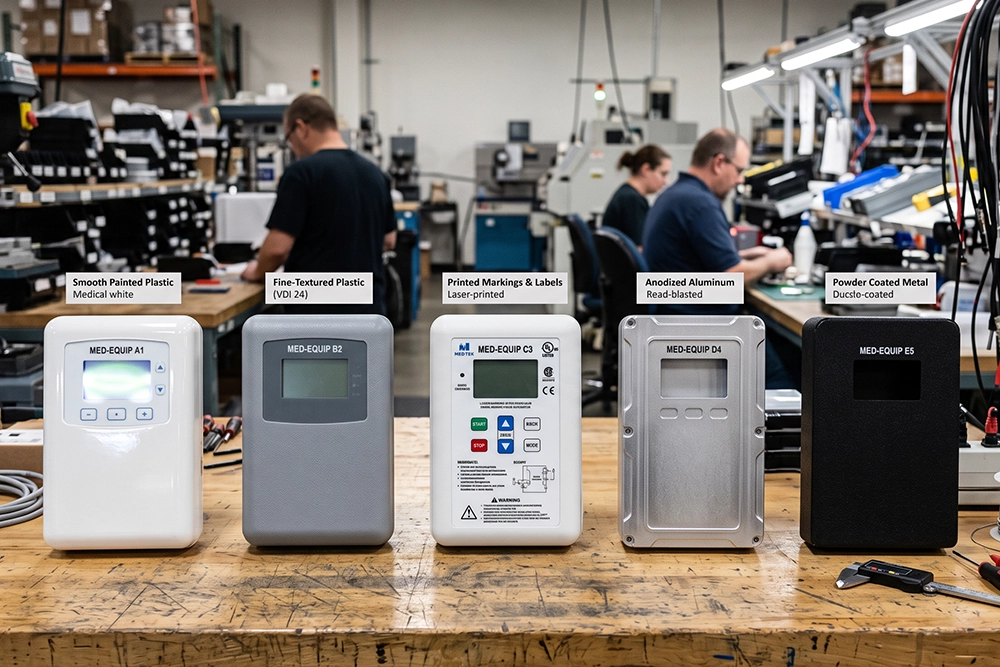
| Surface finish | White and blue semi-matte paint; optional silk-screen logo and function markings |
| Manufacturing route | Laser cutting, CNC bending, welding, ABS CNC machining, acrylic engraving, painting, assembly, inspection |
Customer Requirements
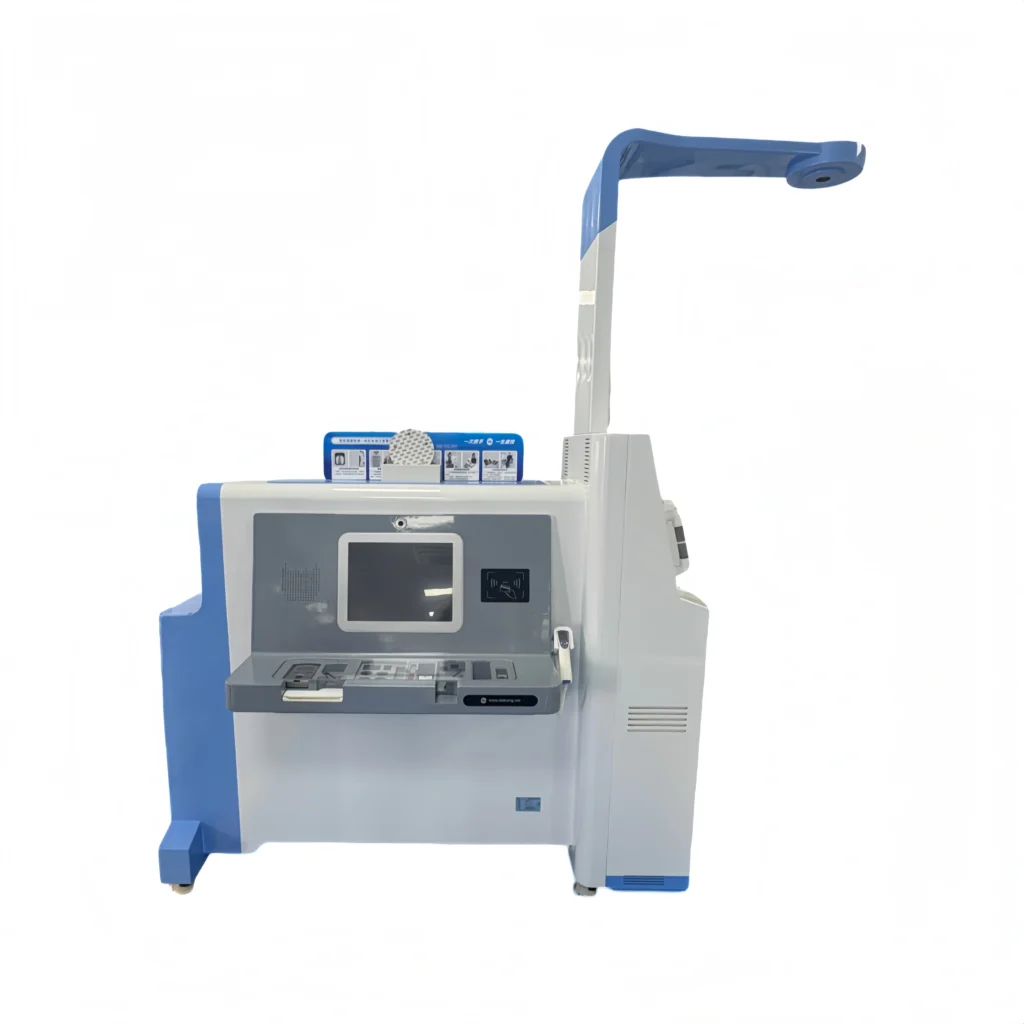
The internal frame had to carry the cantilevered height sensor, blood-pressure module, ECG and blood-glucose interfaces, pulse-oximeter components, touchscreen, and identity-card reader without deflection. The main enclosure needed a display window, an acrylic card-reader slot, component mounting pockets, a paper outlet, ventilation grilles, and cable-routing holes. Every opening had to match the customer’s internal components while leaving enough room for wiring and future maintenance.
The height-sensor column required a defined mounting location and unobstructed arm movement. Swivel casters were specified so operators could reposition the unit. Removable service doors had to provide access to circuit boards and sensors without damaging the painted shells. The body, column, and operating console were designed as separate sections to simplify transport and service.
Appearance was equally important. The customer required a large-radius form with smooth curved transitions, a white main body, and clean blue color blocking. Surfaces had to be free from dents, scratches, pits, runs, orange peel, exposed substrate, bubbles, and pinholes. The acrylic reader panel needed crisp characters, protected edges, and a flush fit with no lifting or looseness. The final shape had to follow the 3D reference exactly, with optional logo and function silk screening.
Manufacturing Challenges
The first challenge was structural: a prototype frame can look rigid but still twist when a cantilevered sensor is extended. We therefore used SPCC cold-rolled steel with formed reinforcements and welded joints, then corrected distortion before finishing. The second challenge was building a large, smooth ABS shell without injection tooling. Multiple CNC-machined hand-built parts had to be bonded, filled, and blended so that seams disappeared beneath the coating.
The third challenge was interface accuracy. Display windows, detection pockets, cable holes, ventilation openings, and the acrylic card-reader slot all had to land on the same datum structure. Small errors could cause forced assembly or interfere with sensor motion. Finally, two-color painting on a curved shell required accurate masking. Any paint bleed, uneven boundary, or heat deformation would be immediately visible in a public-facing medical device.
Our Engineering Solution
At Zhongrongda, we began with a DFM review of the 3D data and the module layout. We identified load paths for the steel skeleton, selected practical bend radii, and added strengthening features around the cantilever and console. Hole patterns were coordinated between the frame and ABS panels so fasteners could be installed without forcing the parts together. Service doors and removable panels were checked for tool access and replacement clearance.
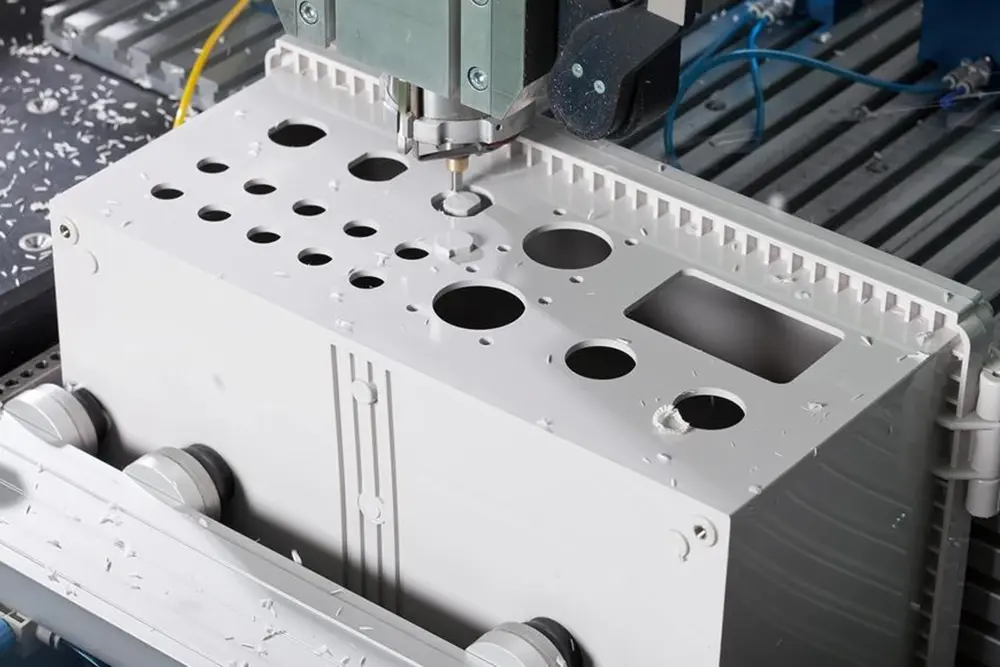
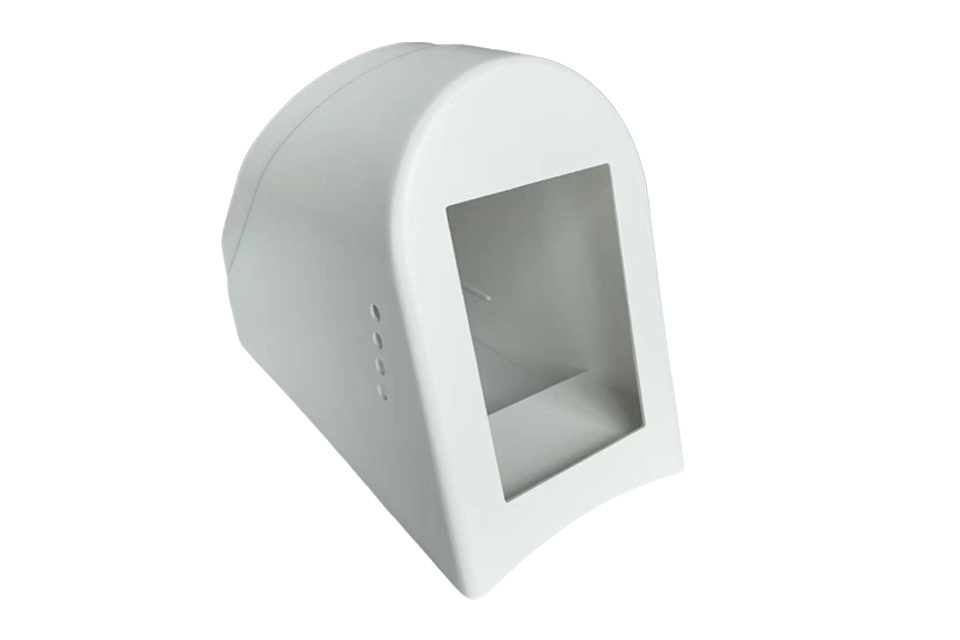
For the ABS shell, our CNC team divided the large enclosure into manageable hand-built sections. CNC milling established the outside contour, large corner radii, screen opening, detection pockets, card-reader channel, ventilation grilles, and wiring holes. The parts were bonded, filled, and progressively sanded to remove tool marks and joint lines. Several coats of ABS-specific primer were applied and sanded until the surface was dense and uniform.
The acrylic panel was processed separately. We cut the sheet, CNC-engraved the card-reading prompt, chamfered and polished the edges, and applied a scratch-protection film. It was deliberately kept out of the painting process and installed only after the shell finish was complete. This protected the lettering and ensured a clean, flush interface.
Manufacturing Process
- Laser cutting and blank preparation: SPCC sheets are cut to the developed profiles for the frame, brackets, service doors, and reinforcements.
- CNC bending: A press brake forms the frame members and stiffening ribs to the approved geometry.
- Welding and correction: Components are welded, weld spatter is removed, seams are ground, and the frame is checked and corrected for distortion.
- Pretreatment and epoxy primer: The steel is degreased and derusted, then coated with epoxy primer to improve corrosion resistance and topcoat adhesion.
- ABS CNC hand-built shell: ABS sheets are cut and milled for the body, height-sensor column, and console. Parts are bonded, filled, and sanded through multiple grades.
- Acrylic card-reader panel: The panel is cut, engraved, edge-chamfered, deburred, and protected with film.
- ABS primer and surface preparation: ABS-specific primer is sprayed in multiple coats and sanded to a smooth, paint-ready surface.
- Two-color painting: In a clean spray booth, masking protects the color boundary. White and blue semi-matte coats are applied in sequence and cured in a low-temperature oven to avoid ABS distortion.
- Final assembly: The steel frame, shells, touchscreen, detection modules, casters, service doors, and acrylic panel are assembled. The acrylic panel is fitted after painting.
- Inspection and packaging: Alignment, movement, finish, markings, fasteners, and protective packaging are checked before shipment.
Quality Control and Final Results
Our inspectors use calipers, height gauges, steel rules, visual standards, and functional fit checks to verify the prototype. Critical checks include frame squareness, hole alignment, display-window position, detection-slot registration, acrylic flushness, service-door removal, caster installation, and smooth cantilever movement. We also inspect the painted surface under controlled lighting for color bleed, runs, pinholes, orange peel, scratches, and exposed substrate.
The completed A800 prototype provides a stable platform for the customer’s health-record workflow and module validation. The load-bearing skeleton supports the sensor and diagnostic hardware, while the CNC ABS enclosure delivers the requested rounded appearance without the cost or delay of production injection molds. Separate acrylic processing keeps the reader message sharp and clean. This approach gives the customer a realistic, serviceable unit for user testing and small-batch deployment.
Why Choose Zhongrongda
Our team combines enclosure engineering, CNC prototyping, sheet-metal fabrication, acrylic processing, painting, and final assembly under one coordinated workflow. We support rapid quotation, DFM feedback, small-batch medical equipment prototypes, pilot builds, and repeat production. Customers can request NDA protection, inspection records, and documentation aligned with ISO 9001 or ISO 13485 workflows where applicable. Relevant capabilities include Medical Device Enclosure, Rapid Prototyping, Diagnostic Equipment Enclosures, and Contact.
FAQ
Can you build a prototype without injection molds?
Yes. CNC-machined ABS hand-built shells are suitable for functional prototypes, validation units, and small pilot quantities before production tooling is approved.
What is the minimum order quantity?
MOQ depends on the number of shells, frame complexity, painting setup, and inspection scope. We quote prototype and small-batch quantities after reviewing the 3D data.
Can the enclosure carry heavy diagnostic modules?
Yes. We design the SPCC skeleton around the load paths and reinforce areas supporting the height-sensor cantilever, console, and internal modules.
How do you prevent ABS deformation during painting?
We use ABS-specific primer and low-temperature oven curing. The acrylic panel is installed after painting to avoid heat and overspray damage.
Can you match our exact 3D appearance?
Our CNC machining, hand-built blending, and inspection process is based on the approved 3D reference. We confirm critical interfaces before finishing.
Can you add logos and function labels?
Yes. Silk-screen logos and function markings can be added to the body or column. Acrylic prompts can be engraved or silk-screened.
Do you provide serviceable panels?
Yes. Removable doors and separated body sections can be designed for circuit-board, sensor, and wiring maintenance.
Can you support medical equipment documentation?
We can provide inspection records and coordinate documentation with customer quality procedures, including ISO 13485 workflows where applicable.
Can the machine be moved after assembly?
Yes. The design includes swivel casters, and we verify that the structure remains stable during repositioning.
What do you need for a quotation?
Please provide 3D/2D files, module specifications, finish and color targets, quantity, inspection requirements, and any regulatory documentation needs.
CTA
Need a reliable partner for your next health checkup machine prototype enclosure? Upload your 3D files today and our engineering team will provide a free DFM review and quotation within 24 hours. Contact Zhongrongda to validate your medical kiosk structure, appearance, and assembly before production tooling.