Introduction
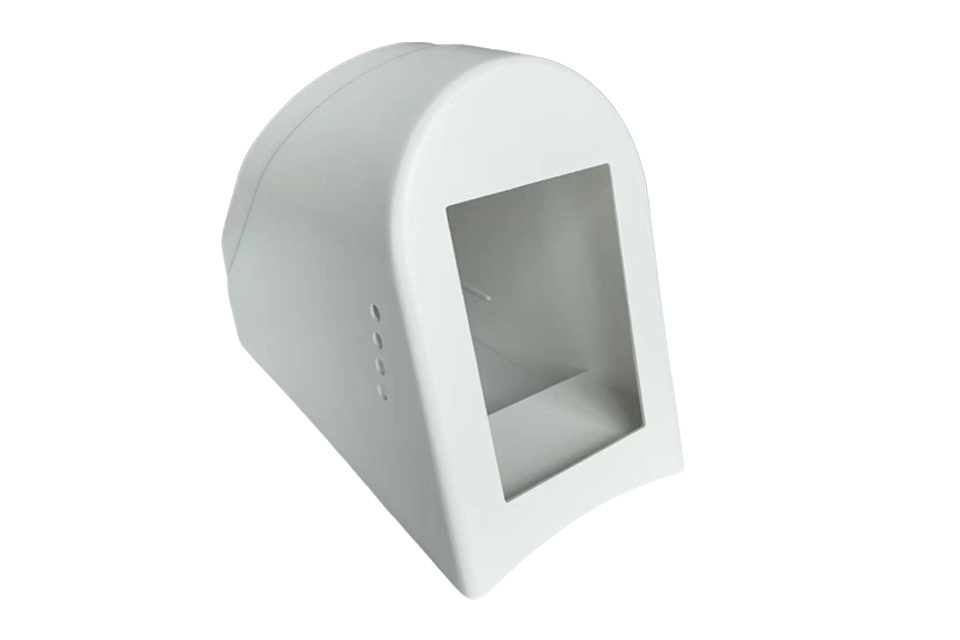
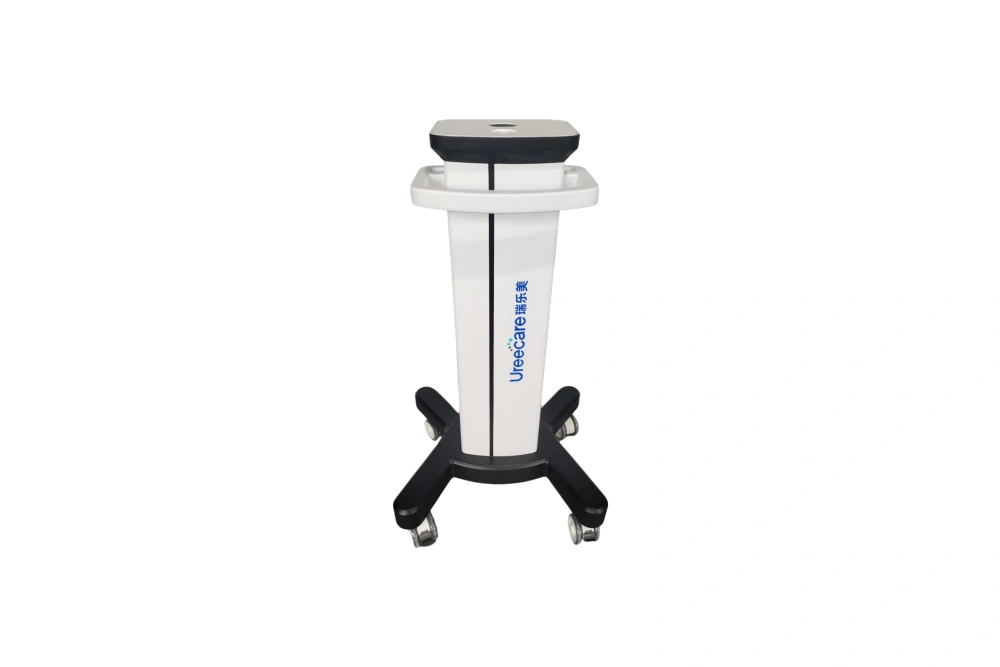
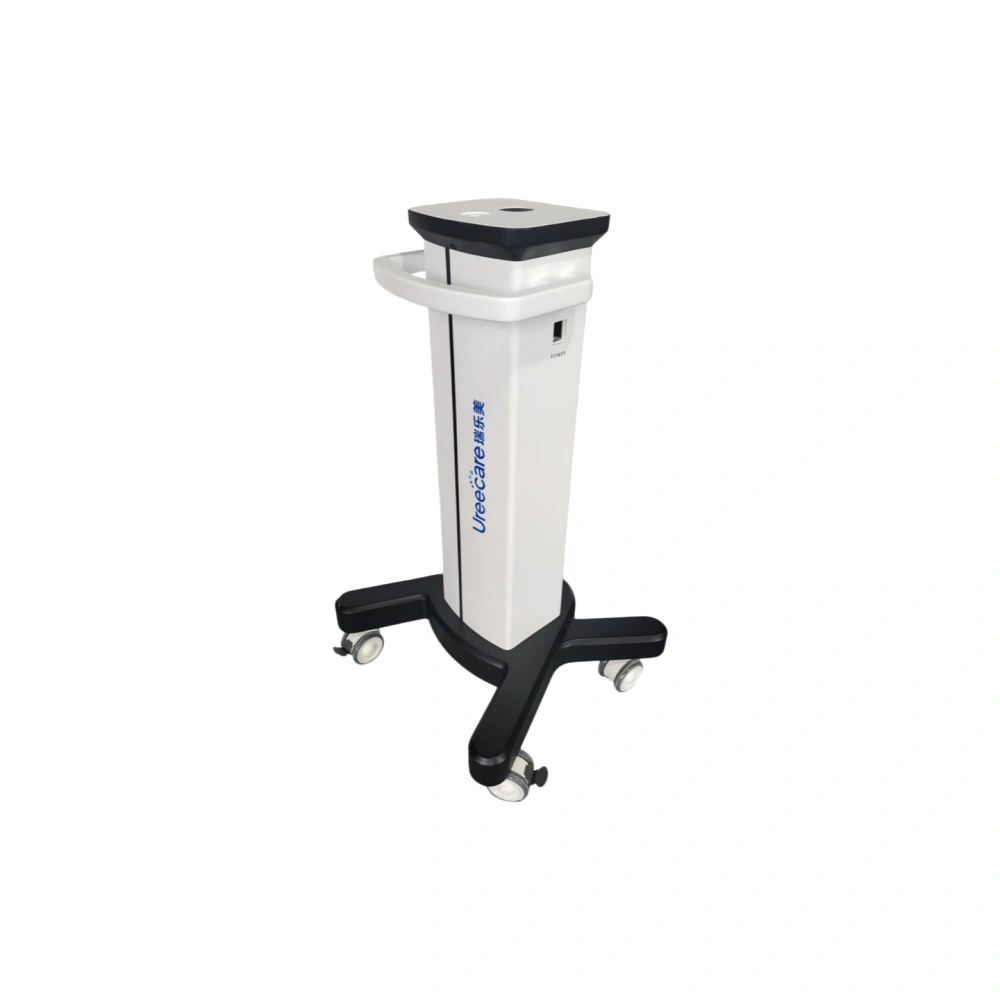
A beauty or therapy machine trolley must do more than carry equipment. It needs a rigid vertical enclosure, protected space for power supplies and circuit boards, convenient storage for handpieces, and smooth movement through a clinic or beauty salon. For a customer in Wuhan, Hubei, Zhongrongda developed a small-batch PC-ABS trolley housing that has now entered mass production. The finished system combines a matte white split shell, black top trim, a black five-star base, an upper storage rim, and medical-grade quiet casters with brakes.
Project Overview
| Project field | Specification |
|---|---|
| Product | Beauty / therapy instrument mobile trolley housing |
| Customer region | Wuhan, Hubei, China |
| Quantity | Small batch; released to mass production |
| Main shell material | PC-ABS plastic |
| Base material | Modified nylon or ABS five-star base |
| Casters | Medical quiet swivel casters with brakes |
| Overall dimensions | To be confirmed by customer |
| Critical tolerances | Uniform shell joint; top equipment holes ±0.2 mm; caster-hole coaxiality |
| Main function | Supports instrument host, stores accessories, houses power and electronics, enables mobile transport |
| Surface finish | Matte white baked paint, black trim/base, blue screen-printed logo |
| Manufacturing route | CNC thick-plate machining or vacuum forming, CNC/injection base, split-shell assembly, printing, inspection |
Customer Requirements
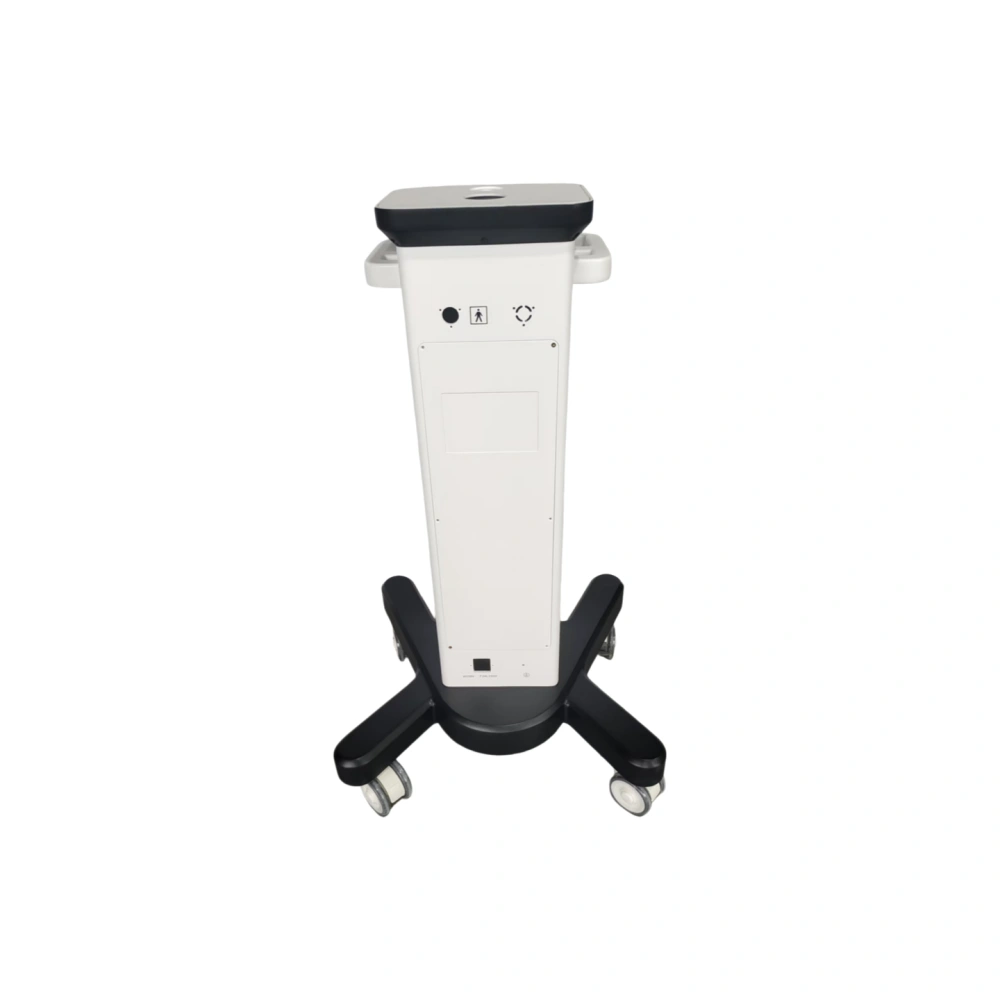
The trolley had to present a simple, professional medical-aesthetic appearance. The main shell is matte white, with black top edging, a black five-star base, and a narrow black decorative division line around the center. A continuous upper rim forms a practical tray for handpieces and consumables. The top surface requires mounting holes for the instrument host, while the lower base carries quiet, lockable casters for movement between treatment rooms.
Inside the shell, the customer needed sufficient volume for the power supply, circuit boards, connectors, and cable routing. The upper and lower covers had to separate quickly for service, with dedicated inspection access and cable channels that prevent pinching during assembly. The front face carries a blue brand logo applied by screen printing. All visible corners use smooth radiused transitions, and the exterior is finished in matte baked paint.
Manufacturing Challenges
The tall column-like housing had to resist side bending and remain rigid while the trolley was pushed. The white shell and black center line also demanded a very small, consistent joint gap; uneven seams would be obvious on a clean medical device. Stability was another key issue: the five-star base needed the correct spread and weight distribution so the fully equipped trolley would roll smoothly without tipping.
Finally, the top mounting pattern had to remain accurate through shell processing and finishing. Any drift in the host mounting holes could cause forced assembly or misalignment with controls and connectors. Caster mounting holes likewise required coaxial alignment to keep all wheels tracking evenly.
Our Engineering Solution
Zhongrongda first reviewed the 3D structure, equipment load, center of gravity, service access, and cable paths. We selected PC-ABS for the split shell and established common datums for the top mounting plate, shell joints, decorative line, and base interface. Depending on the production stage, thick PC-ABS plates can be CNC machined for fast validation, while vacuum forming supports efficient small-batch shell production.
Dedicated assembly fixtures control the upper/lower shell relationship and maintain an even seam around the black divider. The top equipment-hole pattern is CNC finished and checked with a precision fixture to ±0.2 mm. The modified nylon or ABS five-star base is machined or injection molded with controlled caster bosses; coaxial gauges verify the wheel mounting pattern. Internal ribs, bosses, and cable passages are positioned to improve vertical stiffness and protect wiring.
Manufacturing Process
- Review 2D/3D data, equipment load, service openings, and critical datums.
- CNC machine thick PC-ABS panels or vacuum form the shell over the approved mold.
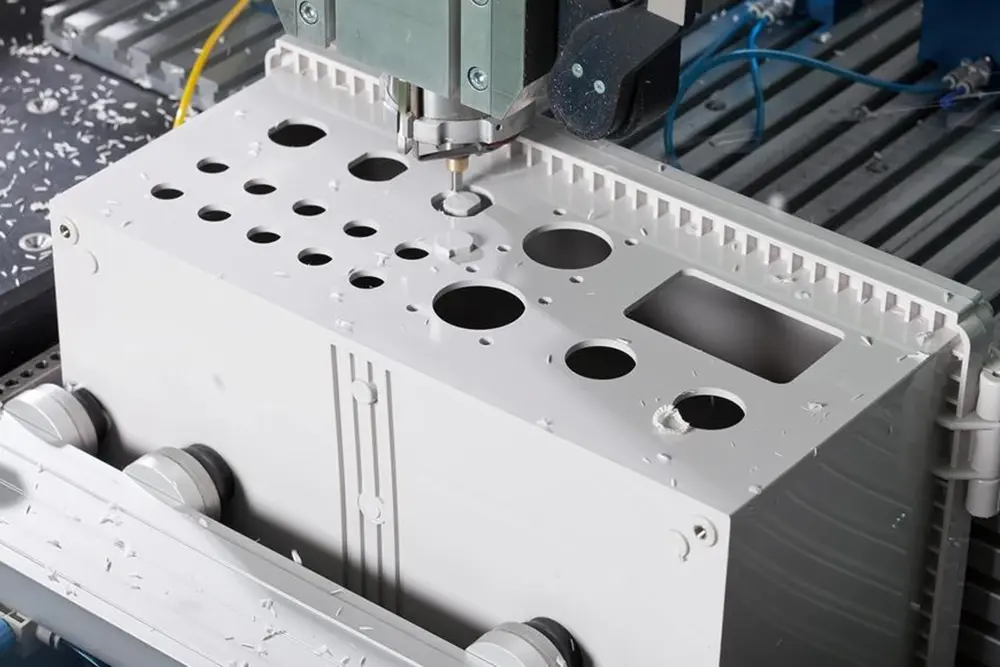
- CNC trim the upper and lower shell profiles, top host holes, inspection openings, and cable channels.
- Machine or injection mold the modified nylon/ABS five-star base and caster interfaces.
- Fit internal bosses, ribs, and access features; verify vertical rigidity and wire clearance.
- Assemble split shells with fixtures, controlling the center trim line and uniform mating gap.
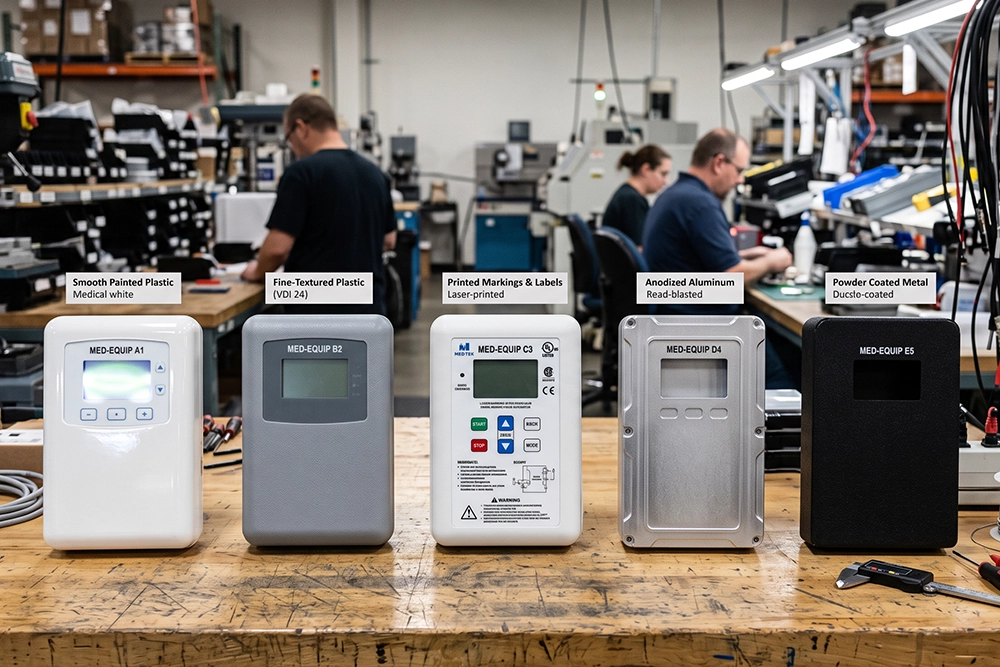
- Apply matte white baked paint, black top/base components, and blue screen-printed logo.
- Install the storage rim, host mounting hardware, and medical quiet locking casters.
- Inspect dimensions, rolling behavior, brake function, appearance, and final assembly alignment.
Quality Control and Final Results
Inspection uses calibrated calipers, height gauges, profile templates, hole gauges, and dedicated assembly fixtures. First-article checks cover the top mounting holes at ±0.2 mm, shell joint uniformity, decorative-line registration, base-to-shell alignment, and caster-hole coaxiality. Functional tests confirm that the instrument host seats without interference, the upper tray supports accessories, service covers can be removed efficiently, and cables pass through without compression.
The completed trolley rolls smoothly on medical quiet casters and remains stable during normal clinic movement. Its rigid PC-ABS enclosure protects internal power and control components, while the split-shell design supports later maintenance. The matte white, black, and blue finish gives the equipment a restrained medical-aesthetic identity. After small-batch validation, the approved design was released to mass production.
Why Choose Zhongrongda
Zhongrongda integrates plastic enclosure development, CNC machining, vacuum forming, injection molding, finishing, screen printing, fixtures, and assembly inspection. We support DFM reviews, prototypes, small batches, and repeat production for medical, beauty, and therapy equipment. NDA protection, inspection records, logo printing, and documentation aligned with ISO 9001 or ISO 13485 workflows can be arranged where applicable.
FAQ
Can you make a rigid tall plastic trolley housing?
Yes. PC-ABS wall design, internal ribs, bosses, and fixture-controlled assembly are used to improve vertical stiffness and reduce side deformation.
Can the top host mounting holes hold ±0.2 mm?
Yes. Critical holes are CNC finished and verified with dedicated gauges or fixtures against the approved datum scheme.
How do you keep the shell seam uniform?
Upper and lower covers are assembled in dedicated fixtures, with controlled locating features and inspection of the full mating perimeter.
Can you supply a stable five-star base and quiet casters?
Yes. Modified nylon or ABS bases can be machined or injection molded, and medical quiet swivel casters with brakes can be installed and tested.
Can the trolley be opened for service?
Yes. Split upper/lower shells, inspection openings, and cable channels are designed for convenient maintenance without trapping wires.
Can you print our brand logo?
Yes. Blue or other specified colors can be screen printed on the prepared matte shell.
Do you support small batches and mass production?
Yes. We can validate the design in small batches and continue with repeat mass production after approval.
What is needed for a quotation?
Please provide 2D/3D files, final dimensions, equipment weight, material and color targets, quantity, tolerance table, caster requirements, and inspection criteria.
CTA
Need a reliable partner for a beauty therapy equipment trolley housing? Send your drawings and quantity for a free DFM review and quotation. Zhongrongda can help validate stiffness, seam quality, host-hole alignment, caster stability, service access, and matte medical-device appearance before production.