Introduction
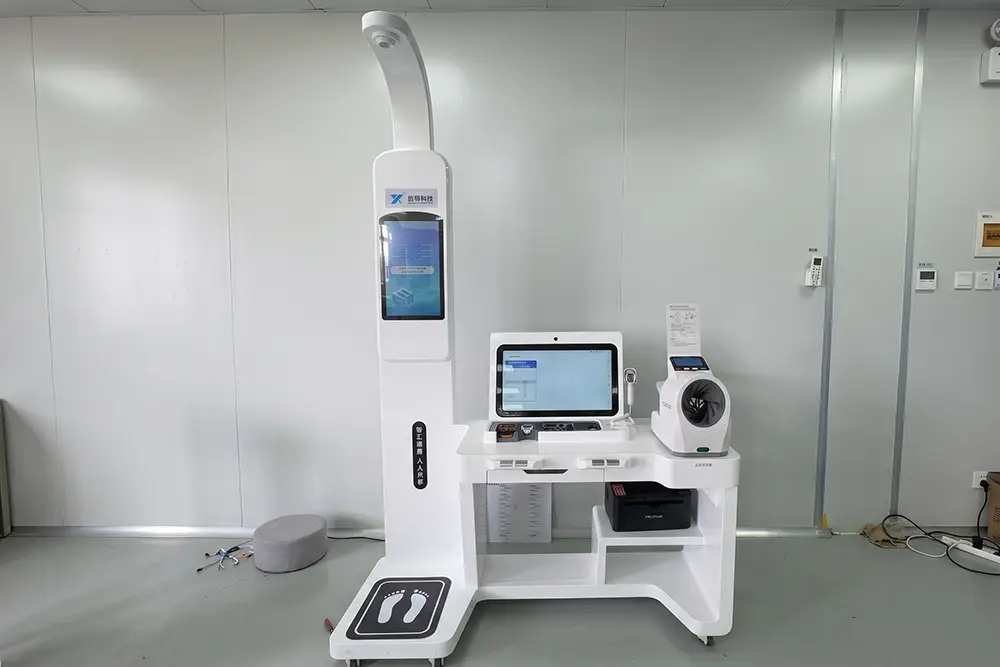
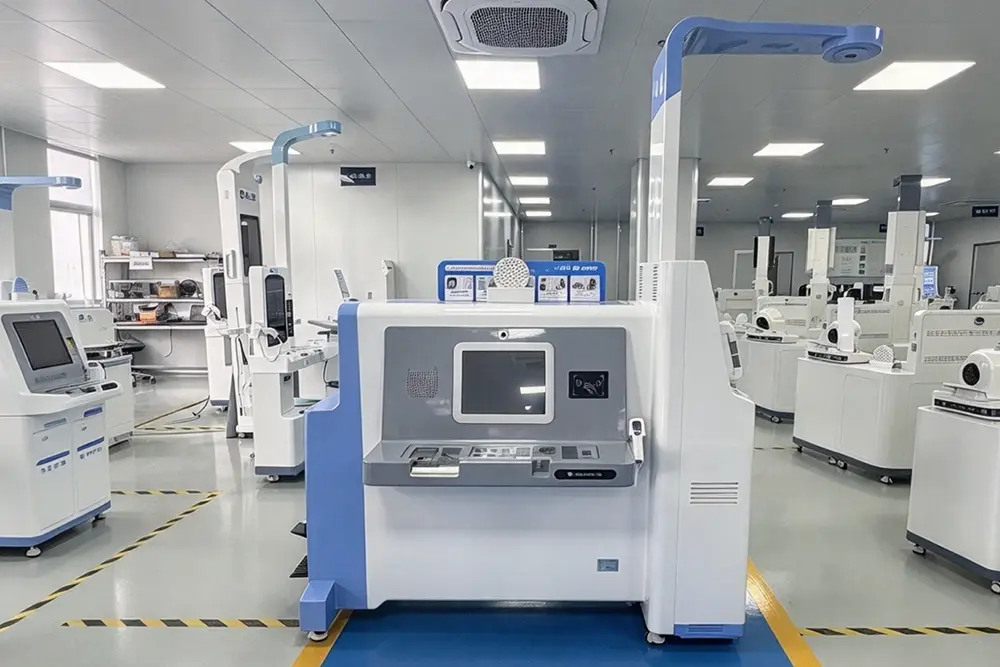
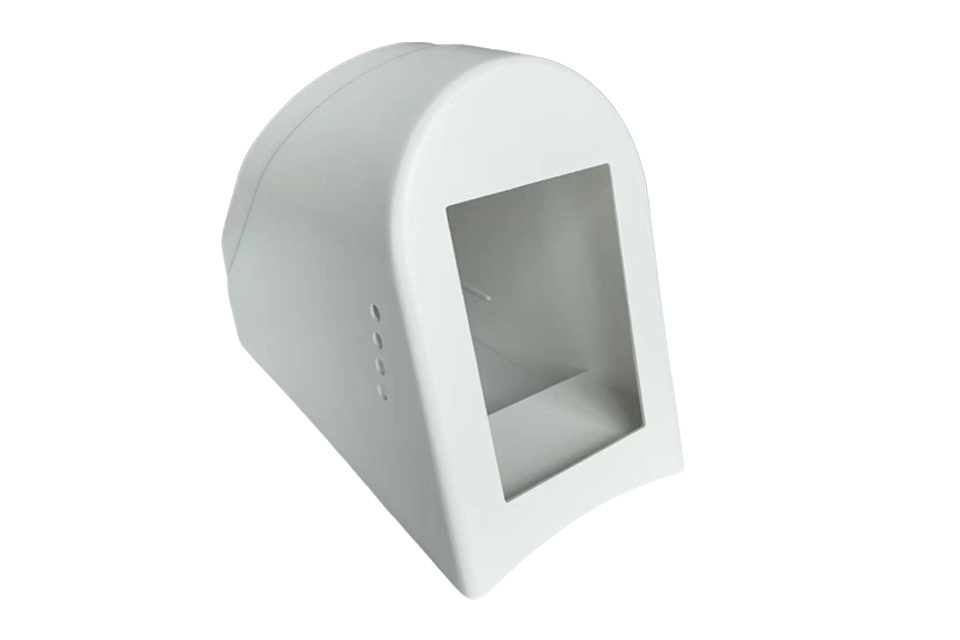
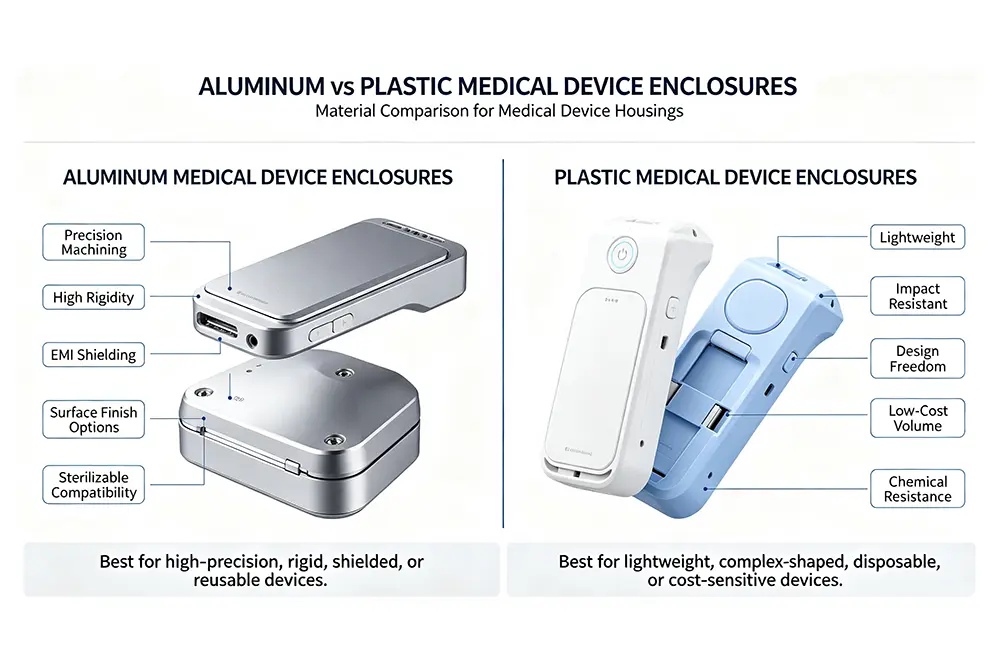
A professional Medical Device Enclosure requires much more than a protective external shell. For healthcare environments, equipment housings must combine structural strength, hygienic design, easy cleaning, precise assembly, and long-term reliability.
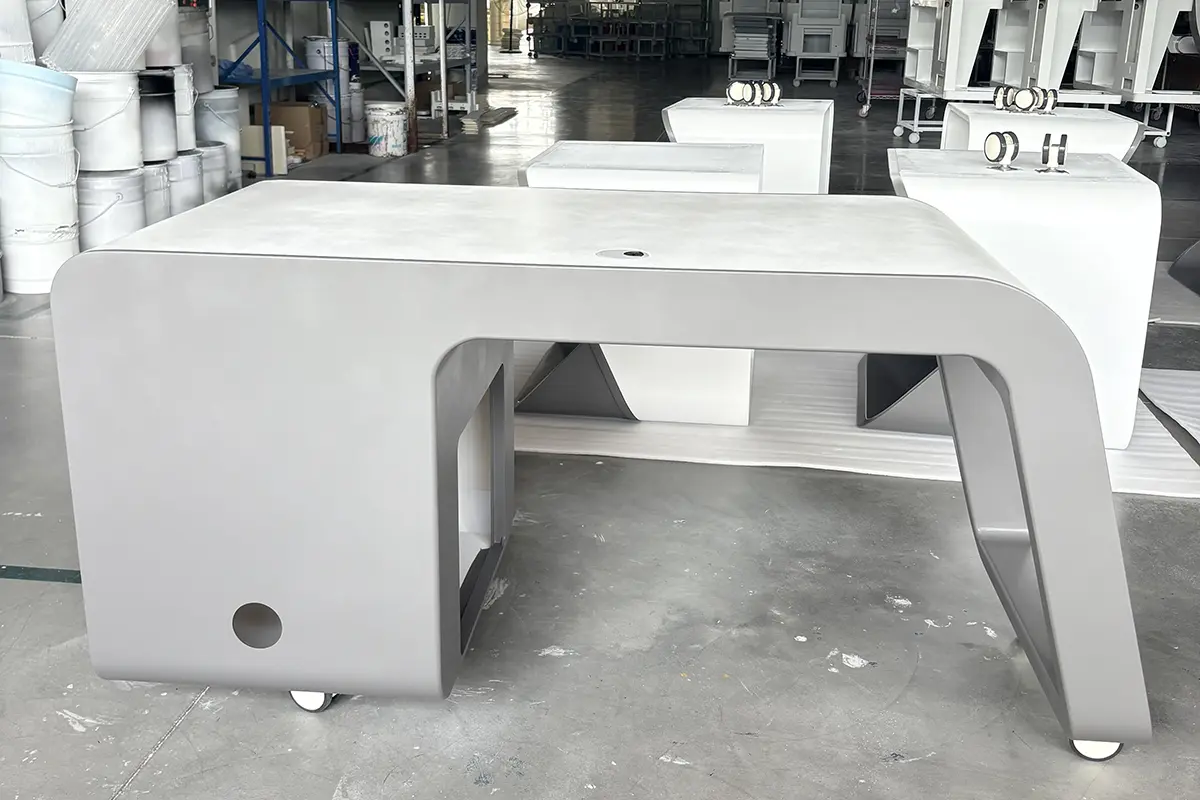
At Zhongrongda, we recently completed a custom mobile medical equipment workstation project for a European premium hospital. The project involved a large-size ABS thick sheet vacuum formed enclosure, five-axis CNC precision machining, internal cold rolled steel reinforcement, and medical-grade surface finishing.
Unlike standard equipment covers, this workstation required a seamless and smooth external structure with rounded edges, integrated cable management, and a large internal storage area for professional medical instruments and control systems. The product needed to meet strict requirements for cleanliness, safety, and daily operation efficiency.
Through our experience in CNC Machining, plastic enclosure manufacturing, and Small Batch Manufacturing, our engineering team developed a complete manufacturing solution covering design optimization, forming process control, CNC machining, reinforcement structure integration, and final inspection.
This project demonstrates how Zhongrongda combines advanced manufacturing processes and engineering expertise to produce complex medical equipment housings for global healthcare applications.
Project Overview
The customer required a customized double-person desktop mobile workstation designed for professional medical environments.
The workstation featured:
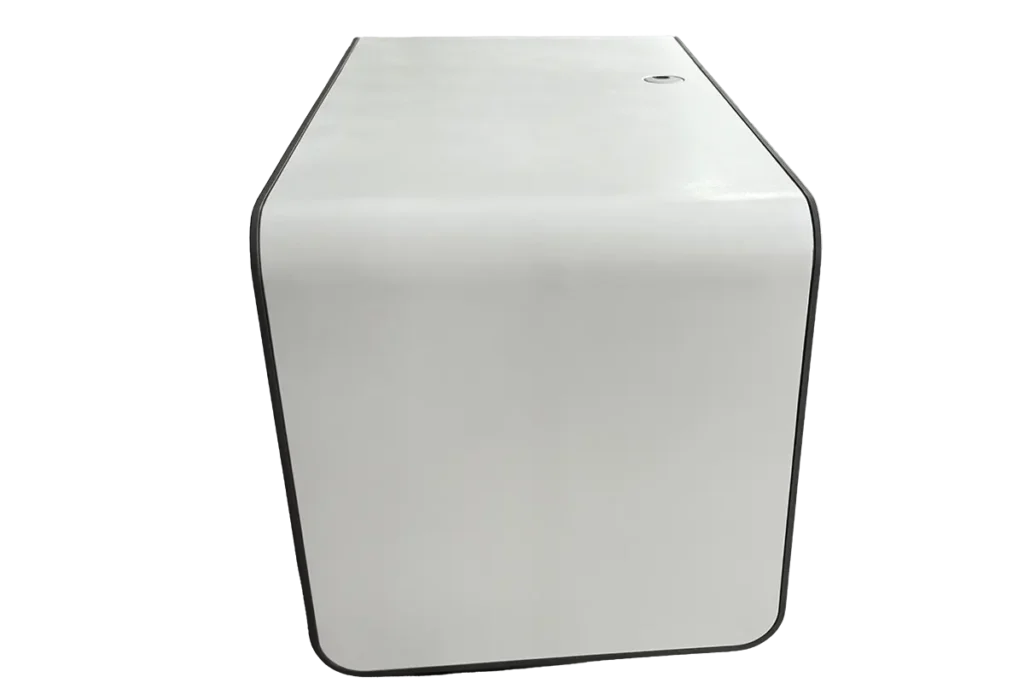
- Smooth seamless external surfaces
- Rounded anti-collision edges
- Integrated cable management holes
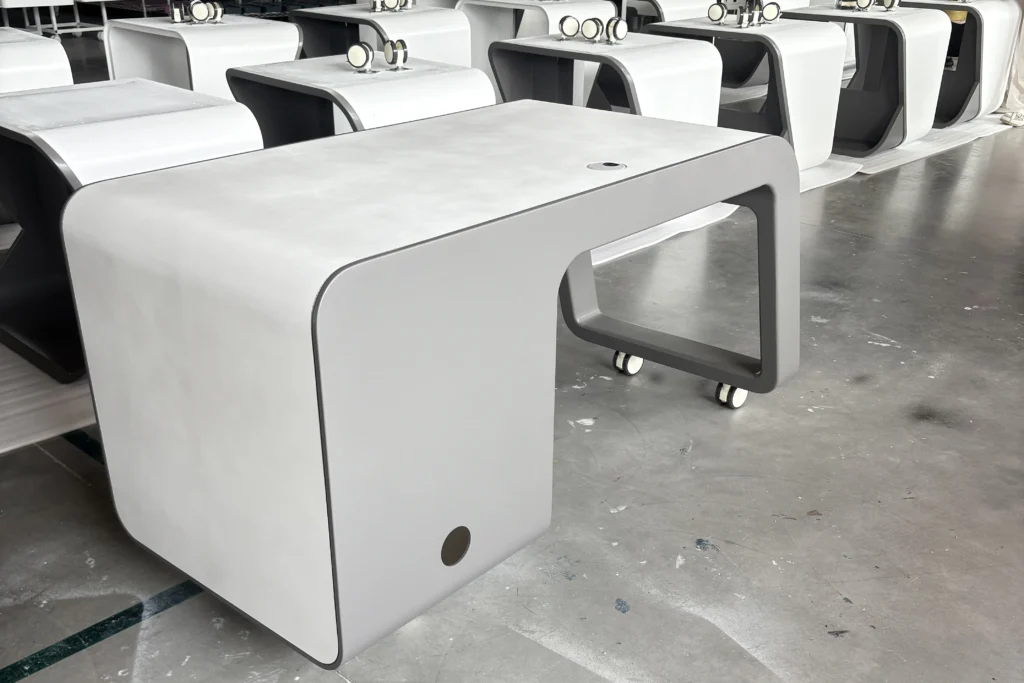
- Large open equipment storage compartment
- Internal reinforcement structure
- Easy-clean medical surface finish
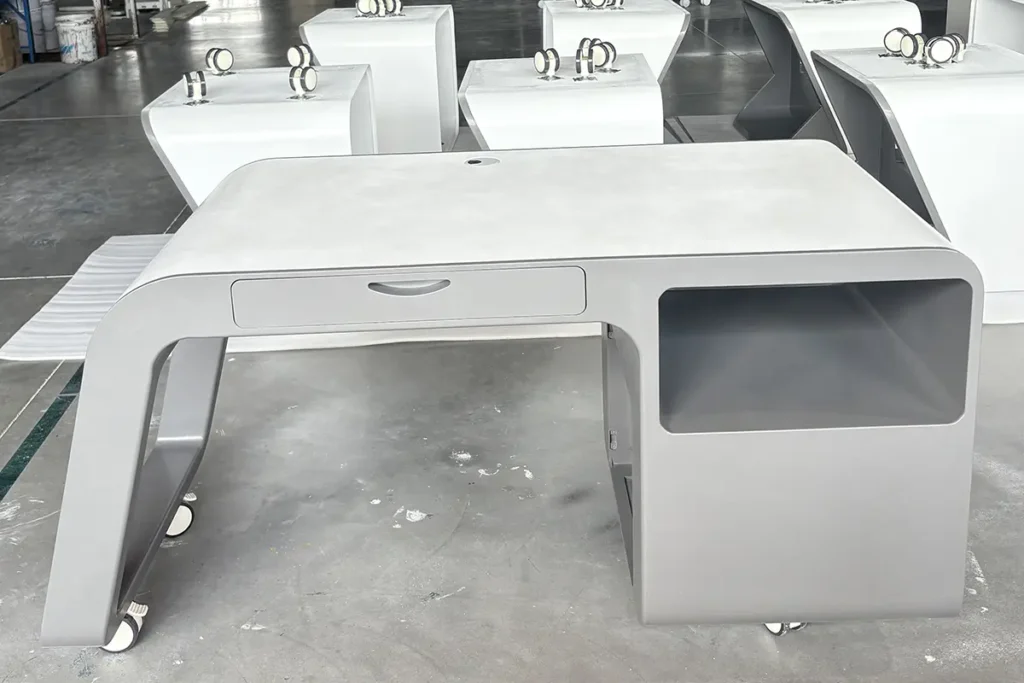
The project required a combination of plastic forming, precision machining, and structural reinforcement.
| Item | Details |
|---|---|
| Industry | Medical Equipment & Healthcare |
| Application | Mobile Medical Equipment Workstation |
| Country | European Premium Hospital Market |
| Material | 8–15mm ABS Thick Sheet + Cold Rolled Steel Reinforcement |
| Dimensions | 1400mm × 650mm × 750mm |
| Surface Finish | Dust-free Electrostatic Matte Painting |
| Tolerance | CNC machining control according to customer drawings |
| Manufacturing Process | ABS Vacuum Forming + 5 Axis CNC Machining + Sheet Metal Reinforcement |
| Quantity | Prototype and Small Batch Production |
| Lead Time | Developed according to project requirements |
The workstation was designed for environments where hygiene and operational safety are critical.
Compared with traditional assembled furniture structures, the formed ABS enclosure provided:
- Fewer gaps where dust can accumulate
- Easier cleaning
- Improved operator safety
- Better integration with medical equipment
The project belongs to the broader field of Medical & Laboratory Equipment manufacturing, where precision, reliability, and appearance quality are equally important.
Customer Requirements
The European hospital customer needed a customized workstation solution for professional medical equipment operation.
The main objective was to create a workstation that could support medical instruments while maintaining a clean, safe, and efficient working environment.
Hygienic and Easy-to-Clean Structure
Medical environments require strict cleanliness standards.
The customer requested:
- Smooth uninterrupted surfaces
- Rounded corner transitions
- Reduced dust accumulation areas
- Easy daily disinfection
Traditional metal cabinet structures often include many seams, corners, and assembly joints.
To improve hygiene performance, Zhongrongda developed a large ABS formed enclosure with integrated curved surfaces.
The rounded design also reduced collision risks during daily operation.
Integrated Equipment Storage Design
The workstation included a large open storage compartment on the lower right side.
This space was designed for:
- Computer hosts
- Medical control boxes
- Professional equipment modules
The internal structure needed enough strength to support equipment weight while maintaining a compact external appearance.
Precise Cable Management
The desktop included reserved cable routing holes.
Additional openings included:
- Top cable holes
- Side routing holes
- Equipment connection openings
These features required accurate CNC machining after the vacuum forming process.
Incorrect positioning could affect:
- Equipment installation
- Cable organization
- Final usability
High-Quality Appearance Requirements
Because the workstation would be installed in a premium hospital environment, appearance quality was a key requirement.
The customer required:
- Uniform matte finish
- Smooth surface texture
- No visible machining defects
- Consistent gray and white color appearance
The surface finishing process required careful control because ABS formed parts can reveal defects after painting.
Manufacturing Challenges
This project combined several advanced manufacturing processes.
The biggest challenge was not one individual process, but controlling the relationship between:
- Thick ABS vacuum forming
- Five-axis CNC machining
- Sheet metal reinforcement
- Surface finishing
- Final assembly
Challenge 1: Thick ABS Vacuum Forming Control
The main housing was manufactured using 8–15mm ABS thick sheet vacuum forming.
Compared with standard thin plastic forming, thick sheet vacuum forming requires much higher process control.
1. Heating Distribution and Wall Thickness Control
Large ABS sheets require precise temperature management.
If heating is uneven, the material may experience:
- Uneven stretching
- Local thickness reduction
- Surface deformation
- Structural weakness
For this workstation, the enclosure included:
- Large rounded corners
- U-shaped openings
- Deep cavity areas
- Complex curved transitions
Our engineering team needed to control heating zones carefully to achieve balanced material flow.
2. Complex Curved Surface Forming Problems
The enclosure required one-piece forming of:
- Full rounded edges
- Large curved desktop corners
- U-shaped hollow structures
- Internal cavity areas
During forming, these areas were vulnerable to:
- Wrinkles
- Corner collapse
- Material stress concentration
- Poor mold replication
Maintaining the original design shape after cooling required optimization of:
- Vacuum pressure
- Heating temperature
- Cooling time
3. Cooling Shrinkage and Warping Control
Large ABS components naturally experience shrinkage after cooling.
Because this workstation had an asymmetric structure, uneven shrinkage could cause:
- Overall warping
- Dimensional deviation
- Assembly mismatch
This directly affected the later CNC machining and steel frame installation process.
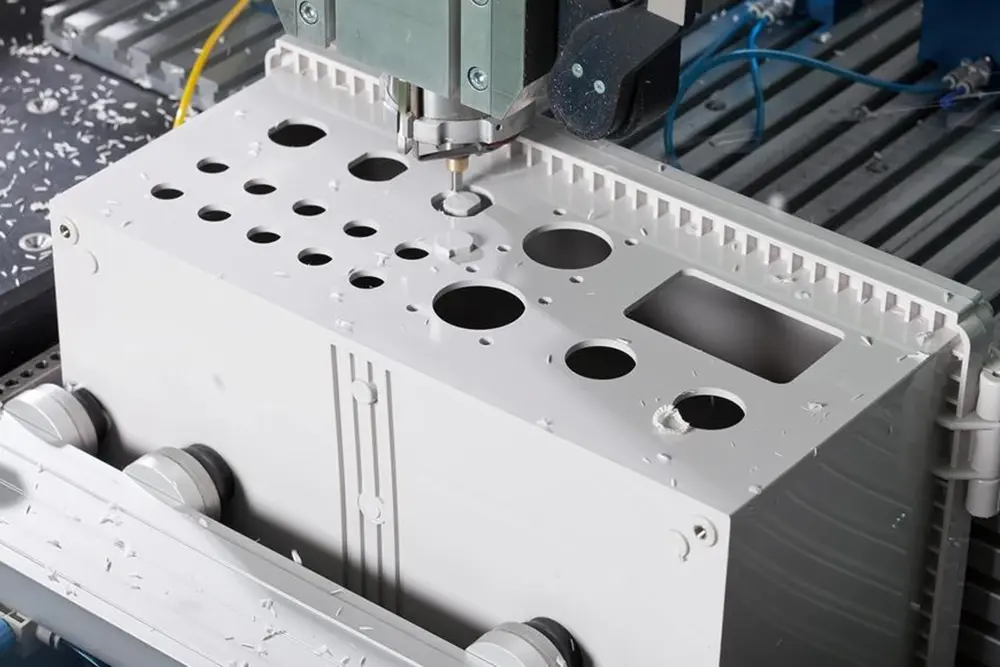
Challenge 2: Five-Axis CNC Machining After Vacuum Forming
After vacuum forming, the enclosure required CNC machining for:
- Cable holes
- Equipment openings
- Storage compartment edges
- Installation slots
However, vacuum formed parts are different from standard CNC blocks.
1. Unstable Reference Positioning
Vacuum formed ABS parts have slight dimensional variations after cooling.
The challenge was creating a stable machining reference.
Without proper positioning:
- Hole locations may shift
- Openings may not align
- Assembly accuracy may decrease
2. Thick ABS CNC Milling Issues
During CNC machining, thick ABS can experience:
- Edge chipping
- White marks caused by cutting stress
- Burr formation
The engineering team optimized machining parameters and tool selection to maintain clean edges.
Challenge 3: Internal Steel Reinforcement Matching
The hollow ABS enclosure required an internal cold rolled steel reinforcement frame.
The reinforcement structure was manufactured through:
- Laser cutting
- Precision bending
- Assembly
The main challenge was matching two different materials:
ABS:
- Flexible
- Thermal expansion
- Forming shrinkage
Steel:
- Rigid
- Fixed dimensions
Potential problems included:
- Frame too large to install
- Excessive internal gaps
- Incorrect mounting positions
The reinforcement needed accurate coordination with CNC machined mounting points.
Challenge 4: Surface Finishing and Appearance Control
The final product required dust-free electrostatic matte painting.
The process included:
- Full enclosure primer coating
- Matte surface coating
- Two-color masking and spraying
The main risks included:
- Uneven coating thickness
- Surface defects
- Paint damage during assembly
Because medical equipment requires professional appearance standards, every finishing step required careful inspection.
Our Engineering Solution
At Zhongrongda, our engineering approach focuses on solving manufacturing risks before production begins. For this medical workstation project, our team did not simply manufacture according to drawings. We performed a complete manufacturing feasibility review to ensure that the ABS forming process, CNC machining process, reinforcement structure, and final assembly could work together.
Our engineering solution was based on four key principles:
- Design for Manufacturing (DFM)
- Process optimization
- Precision machining control
- Full-process quality management
DFM Optimization Before Production
Before manufacturing, our engineering team reviewed the customer’s 3D model and technical requirements.
The main DFM considerations included:
ABS Vacuum Forming Optimization
Because the enclosure was manufactured from 8–15mm thick ABS sheet, the original design required optimization for:
- Material flow during forming
- Corner radius adjustment
- Draft angle improvement
- Stress reduction areas
Large curved surfaces were carefully analyzed to reduce:
- Wrinkles
- Material thinning
- Forming defects
This helped improve forming stability and reduced unnecessary production adjustments.
CNC Machining Process Optimization
After vacuum forming, the enclosure required secondary machining.
Unlike machining a standard plastic block, formed ABS parts have:
- Flexible structures
- Uneven wall thickness
- Variable reference surfaces
Our engineering team created customized machining references and fixtures to ensure stable positioning.
The machining strategy included:
- Optimized clamping points
- Reduced deformation during machining
- Controlled cutting depth
- Proper machining sequence
This was especially important for:
- Cable holes
- Equipment mounting openings
- Storage compartment edges
- Assembly interfaces
Why We Selected 5 Axis CNC Machining
For this project, five-axis machining provided significant advantages compared with traditional three-axis machining.
Although 3 Axis CNC Machining is suitable for simple flat components and standard features, this workstation enclosure required machining from multiple angles.
The product included:
- Large curved exterior surfaces
- Different machining directions
- Multiple angled openings
- Complex edge trimming requirements
Using traditional 3-axis machining would require:
- Multiple fixture changes
- Manual repositioning
- Additional alignment processes
This could increase:
- Positioning errors
- Labor time
- Surface inconsistencies
With 5 Axis CNC Machining, our engineering team achieved:
Better Accessibility
The cutting tool could reach difficult areas without excessive repositioning.
This improved machining efficiency for complex enclosure geometry.
Higher Position Consistency
The CNC program maintained the same coordinate reference during multiple machining operations.
This helped improve:
- Hole position accuracy
- Assembly compatibility
- Overall product consistency
Improved Surface Quality
Optimized multi-axis tool paths reduced visible machining marks and minimized secondary finishing requirements.
Fixture Design and Workholding Solution
One of the most important engineering challenges was securing the large ABS enclosure during CNC machining.
Because vacuum formed parts are not as rigid as metal components, excessive clamping force could cause:
- Surface deformation
- Permanent marks
- Dimensional changes
Our engineering team designed suitable positioning methods to:
- Support critical areas
- Reduce vibration
- Maintain machining stability
The fixture design balanced:
- Part protection
- Machining accuracy
- Production efficiency
Tool Selection and Cutting Parameter Optimization
ABS machining requires careful tool selection.
Incorrect parameters may cause:
- Melted edges
- White stress marks
- Burr formation
Our engineers optimized:
- Cutting speed
- Feed rate
- Tool geometry
- Cooling conditions
The goal was to achieve:
- Clean edges
- Smooth openings
- Stable dimensions
Dimensional Control and Assembly Coordination
Because the workstation combined ABS housing and steel reinforcement, dimensional coordination was critical.
The engineering team controlled:
- CNC opening locations
- Mounting hole positions
- Internal frame interfaces
- Assembly clearance
This prevented common problems such as:
- Misaligned screws
- Forced assembly
- Housing deformation
The final structure achieved a balanced combination of:
- Lightweight design
- Structural strength
- Medical appearance requirements
Manufacturing Process
The complete manufacturing workflow included multiple controlled stages.
1. DFM Review
Before production, Zhongrongda engineers reviewed:
- 3D CAD files
- Manufacturing feasibility
- Material selection
- Assembly requirements
Potential risks were identified before production.
This reduced modification costs and improved project efficiency.
2. Programming
Our CNC engineers prepared machining programs according to:
- Product geometry
- ABS material characteristics
- Required tolerances
The programming process included:
- Tool path optimization
- Machining sequence planning
- Collision checking
3. Material Preparation
The selected material was:
ABS thick sheet, 8–15mm thickness
Before forming, the material was inspected for:
- Surface quality
- Thickness consistency
- Material condition
4. ABS Vacuum Forming
The large ABS sheet was heated using a multi-zone temperature control system.
The heated sheet was then formed against the mold through vacuum pressure.
The process created:
- Rounded outer surfaces
- Integrated curved structures
- Large equipment cavity areas
Key parameters controlled:
- Heating temperature
- Vacuum pressure
- Cooling time
- Demolding process
5. CNC Machining
After cooling and stabilization, the formed enclosure entered CNC machining.
The five-axis CNC process completed:
- Outer trimming
- Cable holes
- Side openings
- Equipment installation slots
- Storage compartment machining
The CNC process removed excess material and prepared the enclosure for assembly.
6. Deburring
After machining:
Our technicians manually inspected and finished:
- Machined edges
- Opening areas
- Installation surfaces
The purpose was to remove:
- Burrs
- Sharp edges
- Machining residues
This ensured safer assembly and improved appearance.
7. Surface Finishing
The enclosure received:
- Primer coating
- Matte top coating
- Color separation masking
The dust-free electrostatic painting process helped achieve:
- Uniform appearance
- Better durability
- Professional medical equipment aesthetics
8. Internal Reinforcement Assembly
The cold rolled steel reinforcement frame was installed inside the ABS enclosure.
The assembly process included:
- Frame positioning
- Hole alignment verification
- Screw fixing
- Structural inspection
The internal frame improved:
- Load capacity
- Long-term stability
- Equipment support capability
9. Final Assembly
The workstation assembly included:
- Main enclosure
- Internal reinforcement
- Storage compartment components
- Cable management features
The final product was checked for:
- Functional operation
- Appearance quality
- Structural stability
10. Packaging
Because this was a large medical workstation, packaging protection was important.
The packaging process included:
- Surface protection film
- Shock-resistant protection
- Secure positioning
This reduced risks during international transportation.
Quality Inspection
Quality control is a critical part of every Zhongrongda manufacturing project.
For this medical equipment workstation, inspection was performed throughout the entire production process.
CMM Inspection
For critical dimensional features, our quality team used Coordinate Measuring Machine (CMM) inspection.
Checked items included:
- Mounting hole positions
- Critical interfaces
- CNC machined dimensions
CMM inspection helped verify consistency between production parts and customer drawings.
Height Gauge Measurement
Height gauges were used to inspect:
- Vertical dimensions
- Opening positions
- Assembly reference heights
This ensured proper alignment during final assembly.
Micrometer Inspection
Micrometers were used for precision measurement of:
- Critical thickness areas
- Machined interfaces
- Metal reinforcement components
Caliper Inspection
Digital calipers were used for:
- Overall dimensions
- Hole sizes
- Edge distances
First Article Inspection
Before small batch production, the first completed unit was fully inspected.
The inspection covered:
- Appearance
- Dimensions
- Assembly
- Functionality
Any manufacturing risks were reviewed before continuing production.
Final Inspection
Before shipment, our quality team performed final inspection including:
- Surface appearance
- Paint quality
- Structural stability
- Assembly accuracy
- Packaging condition
This ensured the workstation met customer expectations before delivery.
Final Results
Through close cooperation between the customer engineering team and Zhongrongda, this custom medical workstation project was successfully completed.
The final product achieved:
- Smooth hygienic exterior design
- Stable internal reinforcement structure
- Accurate CNC machined openings
- Professional matte surface finish
- Reliable medical equipment integration
The combination of ABS vacuum forming, CNC Machining, and precision assembly allowed the customer to obtain a customized workstation solution that traditional manufacturing methods could not easily provide.
The project demonstrated Zhongrongda’s ability to handle complex products involving:
- Large plastic enclosures
- Precision CNC machining
- Structural reinforcement
- Small batch production
For similar applications, our team can provide complete manufacturing support from prototype development to production delivery.
Video Showcase
This project was documented throughout the manufacturing process and the production video is available on our YouTube channel.
YouTube Video Placeholder
Why Choose Zhongrongda
Choosing the right manufacturing partner is essential for complex medical equipment projects.
At Zhongrongda, we provide:
Engineering Support
Our engineering team supports customers from:
- Design review
- Manufacturing optimization
- Prototype development
- Production improvement
We focus on preventing manufacturing problems before production begins.
Rapid Prototyping Capability
For new medical equipment designs, we support fast prototype development through:
- CNC machining
- Plastic prototype manufacturing
- Functional testing preparation
Related service:
Rapid Prototyping
Small Batch Manufacturing
Many medical equipment companies require flexible production before mass production.
We support:
- Prototype quantities
- Small batch orders
- Production scaling
Related service:
Small Batch Manufacturing
Quality Control System
Our manufacturing process includes:
- Incoming material inspection
- Process inspection
- Final inspection
We support quality requirements for industries including:
- Medical equipment
- Laboratory equipment
- Industrial automation
Confidential Manufacturing Support
We understand that medical equipment designs are highly confidential.
Zhongrongda supports:
- NDA agreements
- Secure project communication
- Engineering confidentiality
ISO Quality Management
Our quality system supports:
- ISO9001 quality management
- ISO13485 medical device manufacturing requirements
FAQ
1. What is the minimum order quantity for medical device enclosures?
We support flexible production quantities including prototypes, engineering samples, and small batch manufacturing. MOQ depends on product structure, material, and production requirements.
2. How long does it take to manufacture a custom medical device enclosure?
Lead time depends on complexity. Prototype projects usually require several weeks, while repeat small batch production can be optimized after process validation.
3. What tolerance can Zhongrongda achieve for CNC machined medical enclosures?
Our CNC machining capability can achieve tight dimensional control depending on material, structure, and drawing requirements.
4. What materials can be used for medical equipment housings?
We commonly manufacture enclosures using ABS, PC, PC+ABS, PMMA, and other engineering plastics.
Related:
CNC Machining Material
5. Can you provide surface finishing for medical equipment housings?
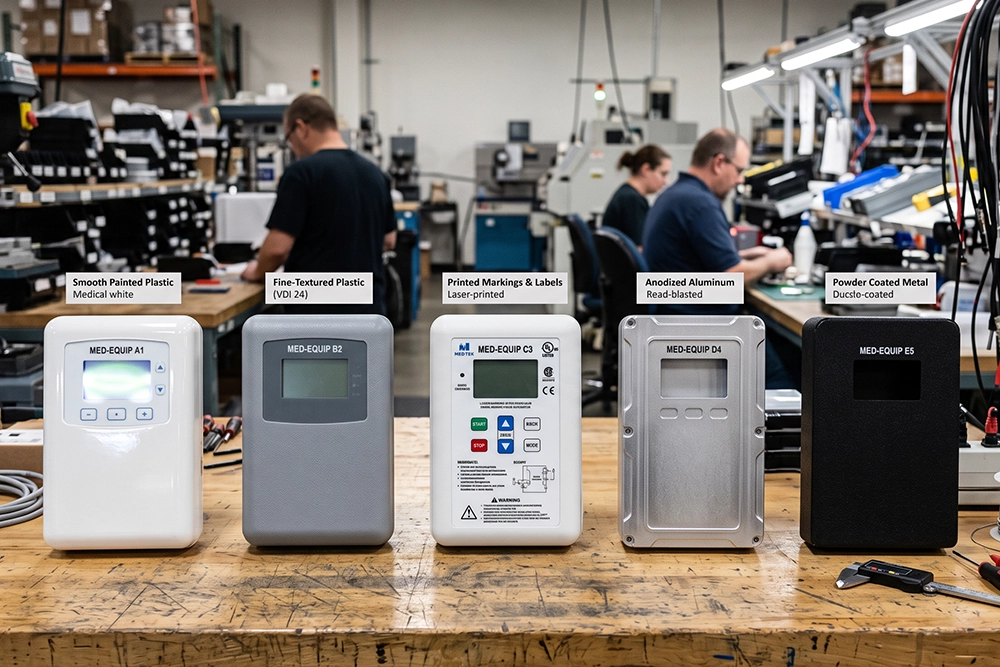
Yes. We provide finishing options including:
- Matte painting
- Gloss painting
- Sandblasting
- Surface treatment according to requirements
6. Do you sign NDA agreements for medical projects?
Yes. We support NDA agreements to protect customer designs, drawings, and technical information.
7. Can Zhongrongda support rapid prototyping before production?
Yes. We provide Rapid Prototyping services to help customers validate design, assembly, and appearance before production.
8. Do you manufacture custom Medical Device Enclosures?
Yes. We specialize in custom Medical Device Enclosure manufacturing for healthcare equipment companies.
9. Can you support small batch manufacturing?
Yes. We provide flexible Small Batch Manufacturing solutions for medical, industrial, and automation customers.
10. Can you manufacture complete equipment housings from drawings?
Yes. Our engineering team can support:
- Design review
- Prototype
- Manufacturing
- Assembly
CTA
Need a reliable CNC machining partner for your next project?
Upload your drawings today and our engineering team will provide a free DFM review and quotation within 24 hours.
Contact Zhongrongda today to discuss your next Medical Device Enclosure, CNC machining, or custom manufacturing project.