Introduction: Why Medical Equipment Requires Professional Enclosure Manufacturing
Medical devices are becoming increasingly sophisticated, requiring not only advanced electronics and precision components but also reliable external protection systems. The enclosure is a critical part of every medical product because it protects sensitive internal components, supports user safety, improves product durability, and ensures compliance with demanding healthcare environments.
Choosing the right medical device enclosure manufacturer is therefore an important decision for medical equipment companies, product designers, and procurement teams. Unlike standard industrial housings, medical device enclosures require specialized material selection, precision manufacturing processes, strict quality control, and a deep understanding of medical product development requirements.
A general-purpose industrial enclosure may provide basic protection, but it often cannot meet the requirements of medical applications, including ergonomic design, chemical resistance, cleanability, electromagnetic shielding, and consistent dimensional accuracy.
At Zhongrongda, we specialize in developing custom enclosure solutions for medical and healthcare equipment manufacturers.
“We have worked with medical equipment companies to develop custom housings for diagnostic devices, laboratory instruments, and healthcare equipment.”
Our engineering team supports customers from early product concepts and prototypes to low-volume production, helping transform product designs into reliable medical equipment housings.
With experience in Rapid Prototyping, precision manufacturing, surface finishing, and assembly services, we provide complete enclosure solutions for companies requiring dependable manufacturing partners.
Zhongrongda specializes in custom medical device enclosure manufacturing for diagnostic devices, laboratory instruments, and medical equipment.
This video showcases our process from prototype development and precision processing to surface finishing and final inspection.
We provide reliable medical housing solutions for global medical device companies, supporting projects from concept validation to low-volume production.
What Is a Medical Device Enclosure?
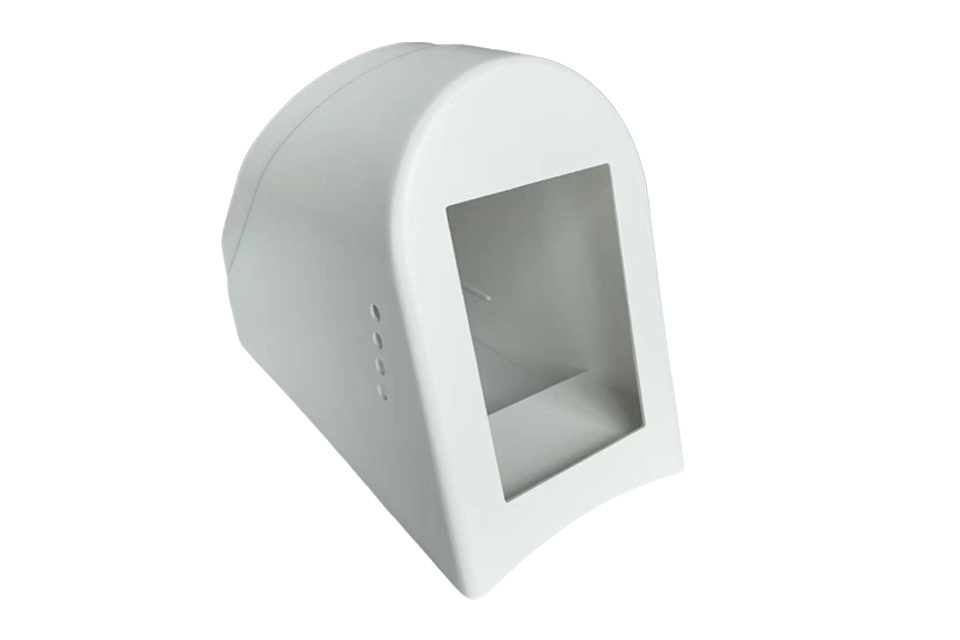
A medical device enclosure is the protective housing or casing designed specifically for medical equipment and healthcare-related products. It surrounds and protects electronic systems, sensors, mechanical components, and other internal assemblies while providing a safe and practical interface for healthcare professionals and patients.
Unlike conventional product housings, medical enclosures must consider factors such as:
- Patient safety
- Cleaning and sterilization requirements
- Material durability
- Chemical resistance
- Ergonomic operation
- Manufacturing consistency
- Long-term reliability
Medical device enclosures are widely used across different healthcare industries, including:
Diagnostic Equipment Enclosures
Diagnostic devices often contain sensitive electronic components that require stable protection and precise housing structures.
Applications include:
- Ultrasound equipment
- Blood analysis systems
- Imaging-related devices
- Portable diagnostic instruments
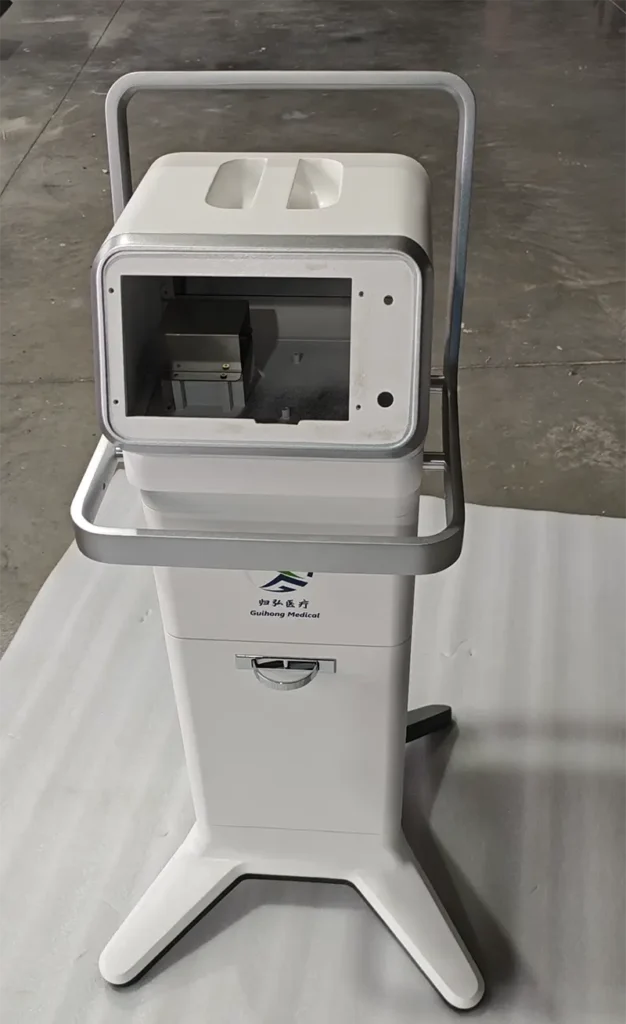
For these products, enclosure manufacturers must ensure accurate assembly dimensions and proper integration of displays, buttons, connectors, and ventilation structures.
Patient Monitoring Device Housings
Patient monitoring equipment requires lightweight, durable, and user-friendly housings.
Examples include:
- Vital sign monitors
- Portable monitoring devices
- Healthcare testing equipment
The enclosure design must support frequent operation by medical professionals while maintaining reliable protection during daily use.
Laboratory Equipment Enclosures
Laboratory instruments usually require highly precise housings because internal components often include sensors, optical systems, and electronic modules.
Typical applications include:
- Testing equipment
- Laboratory analyzers
- Research instruments
Beauty Medical Device Enclosures
The medical aesthetics industry has rapidly expanded, creating increasing demand for professional enclosure solutions.
Beauty medical devices often require:
- Premium appearance
- Smooth surface finishing
- Compact ergonomic designs
- High-quality plastic materials
Zhongrongda also provides customized solutions for Beauty Device Enclosures, supporting manufacturers developing aesthetic treatment equipment and professional beauty systems.
Why Choose a Professional Medical Enclosure Manufacturer?
Selecting an experienced medical enclosure manufacturer helps reduce development risks, improve product reliability, and shorten time-to-market.
Medical equipment companies typically evaluate suppliers based on three key factors:
1. Medical-Grade Material Selection Capability
Material selection directly affects enclosure performance, durability, and user experience.
Professional manufacturers understand how different engineering plastics perform in medical environments.
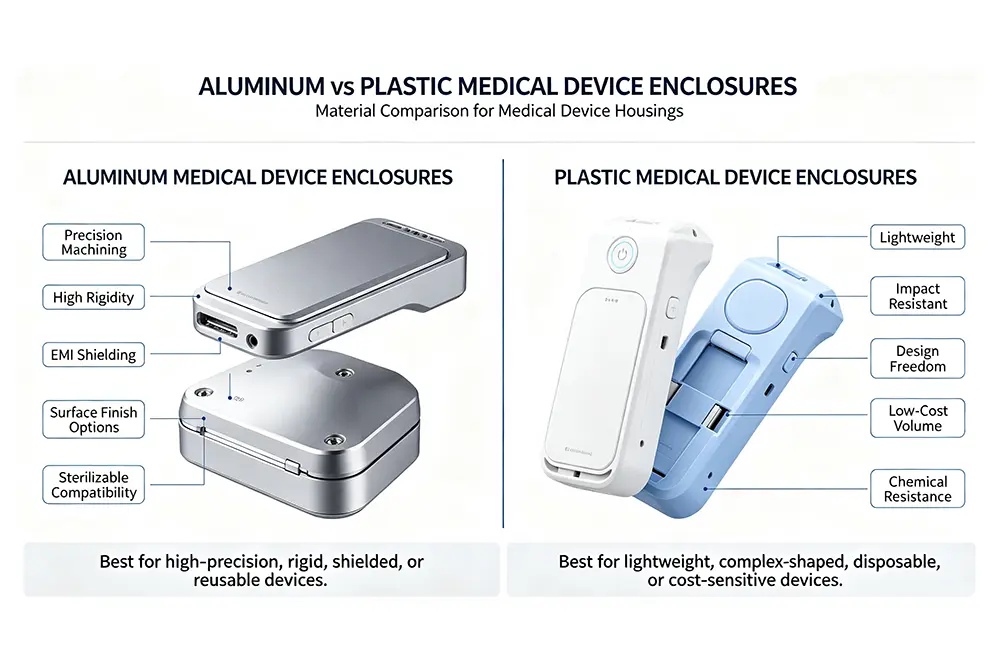
Common materials used for medical device housings include:
ABS Medical Enclosure
ABS is one of the most commonly used materials for medical equipment housings because it provides:
- Good impact resistance
- Excellent machinability
- Stable dimensional performance
- Cost efficiency
ABS is widely used for diagnostic equipment housings, laboratory instruments, and portable medical devices.
PC Medical Enclosure
Polycarbonate (PC) offers higher impact resistance and transparency compared with standard plastics.
Advantages include:
- High durability
- Good temperature resistance
- Excellent strength
- Transparent design possibilities
PC is suitable for applications requiring stronger protection and premium appearance.
PC+ABS Medical Housing
PC+ABS combines the advantages of both materials.
It provides:
- Better impact resistance than ABS
- Improved processing performance
- Enhanced surface appearance
This material is commonly selected for modern medical equipment requiring both functionality and aesthetics.
PMMA Medical Device Housing
PMMA is often selected when optical appearance and transparency are important.
Typical applications include:
- Display covers
- Decorative panels
- Light transmission components
2. Precision Manufacturing Capability
Medical device manufacturers require suppliers capable of producing accurate and consistent enclosure components.
At Zhongrongda, we provide integrated manufacturing capabilities including:
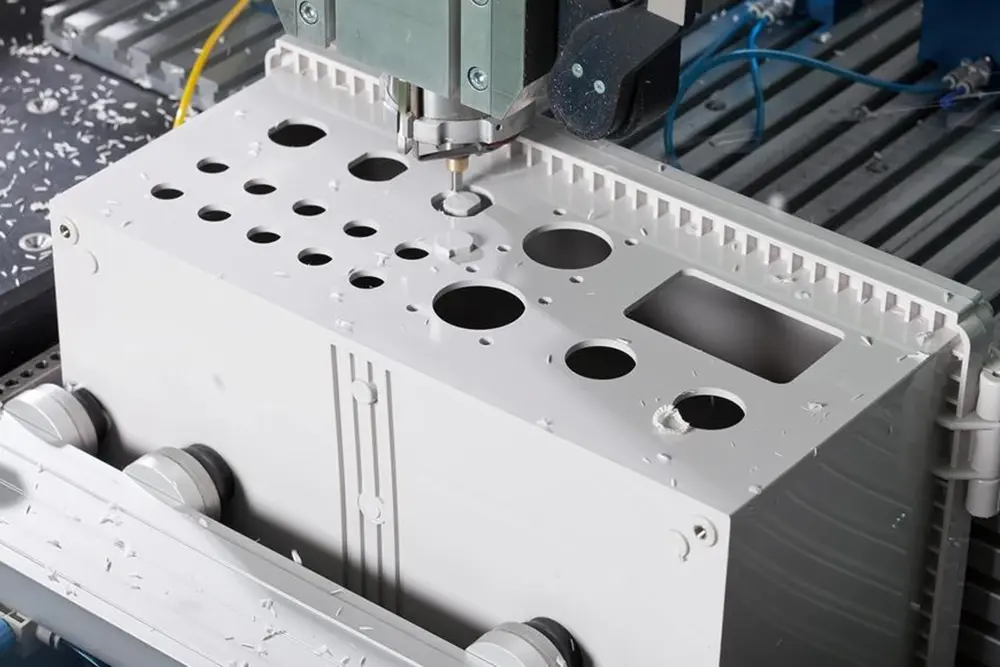
- CNC Machining
- Rapid Prototyping
- Surface finishing
- Assembly services
- Quality inspection
Our manufacturing process allows customers to validate designs quickly before moving into production.
For early-stage medical products, rapid prototype development helps engineers verify:
- Product dimensions
- Assembly structure
- Ergonomic design
- Internal component positioning
Through Rapid Prototyping, medical companies can reduce development cycles and identify potential design issues before mass manufacturing.
For precision enclosure production, our team combines engineering experience with advanced machining equipment to achieve stable quality for complex housing structures.
Custom Medical Device Enclosure Manufacturing Process
Developing a reliable medical equipment housing requires more than simply producing a plastic or metal shell. A professional medical device enclosure manufacturer must understand product requirements, manufacturing limitations, assembly needs, and quality expectations throughout the entire development cycle.
At Zhongrongda, we work closely with medical equipment companies during every stage of enclosure development, from initial design evaluation to final production.
Our typical custom medical enclosure manufacturing process includes the following steps:
1. Design Review and Engineering Analysis
Before manufacturing begins, our engineering team reviews customer drawings, 3D models, and product requirements.
During this stage, we evaluate:
- Overall enclosure structure
- Wall thickness design
- Assembly method
- Material suitability
- Manufacturing feasibility
- Potential cost optimization opportunities
For medical equipment projects, early engineering communication is essential because enclosure design directly affects product reliability and production efficiency.
Our engineers provide DFM (Design for Manufacturing) suggestions to help customers avoid common manufacturing issues such as:
- Difficult assembly structures
- Uneven wall thickness
- Weak mounting points
- Excessive production costs
By optimizing designs before production, customers can achieve faster development cycles and more stable final products.
2. Medical Device Prototype Development
Prototype development allows medical equipment companies to verify product concepts before investing in full production.
As an experienced medical device prototype manufacturer, Zhongrongda supports:
- Functional prototypes
- Appearance prototypes
- Engineering verification models
- Low-volume prototype production
Prototype housings help customers evaluate:
- Product appearance
- User experience
- Component installation
- Mechanical performance
- Market testing requirements
For many healthcare products, prototype validation is a critical stage before regulatory testing and commercialization.
Our Medical Device Enclosure prototyping services help product developers quickly transform digital designs into physical products.
3. CNC Machining and Production Manufacturing
After prototype approval, the enclosure moves into the manufacturing stage.
Depending on product requirements, different manufacturing methods may be selected.
For prototype and low-volume production, CNC machining is commonly used because it provides:
- High dimensional accuracy
- Fast production turnaround
- Excellent surface quality
- Flexible design changes
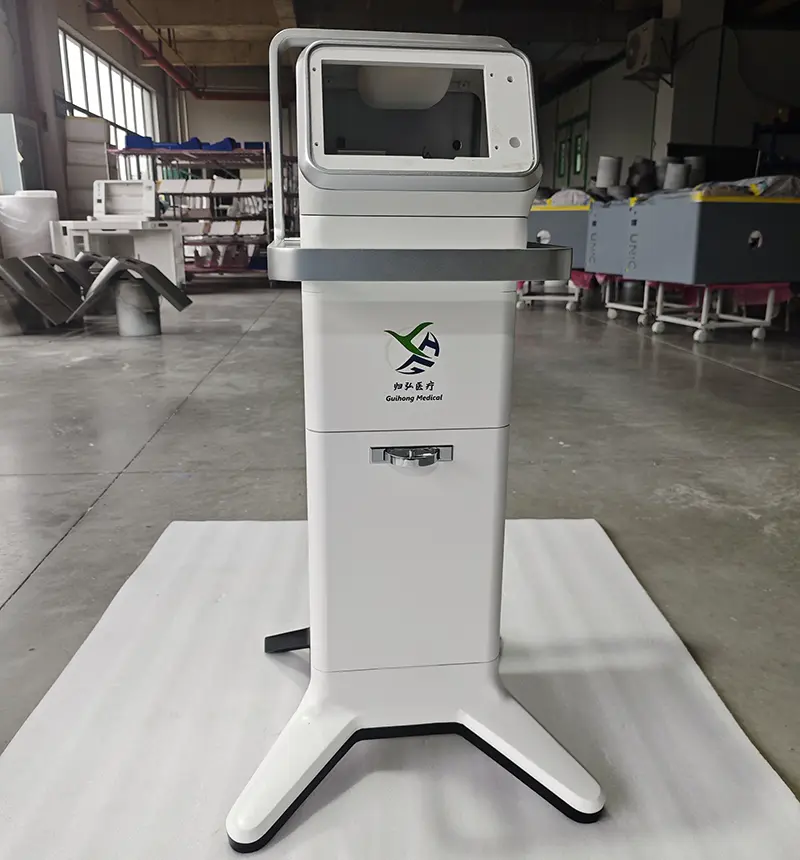
Our CNC manufacturing capabilities support complex medical housing structures, including:
- Multi-component assemblies
- Precision mounting features
- Internal support structures
- Custom interfaces
For larger production quantities, customers may also choose other manufacturing approaches depending on project requirements.
Our manufacturing team helps customers select the most suitable process based on:
- Production volume
- Material requirements
- Budget
- Product lifecycle
4. Surface Finishing and Appearance Enhancement
Medical equipment requires not only functional performance but also professional appearance.
Surface finishing processes can improve:
- Product aesthetics
- Surface durability
- User experience
- Brand appearance
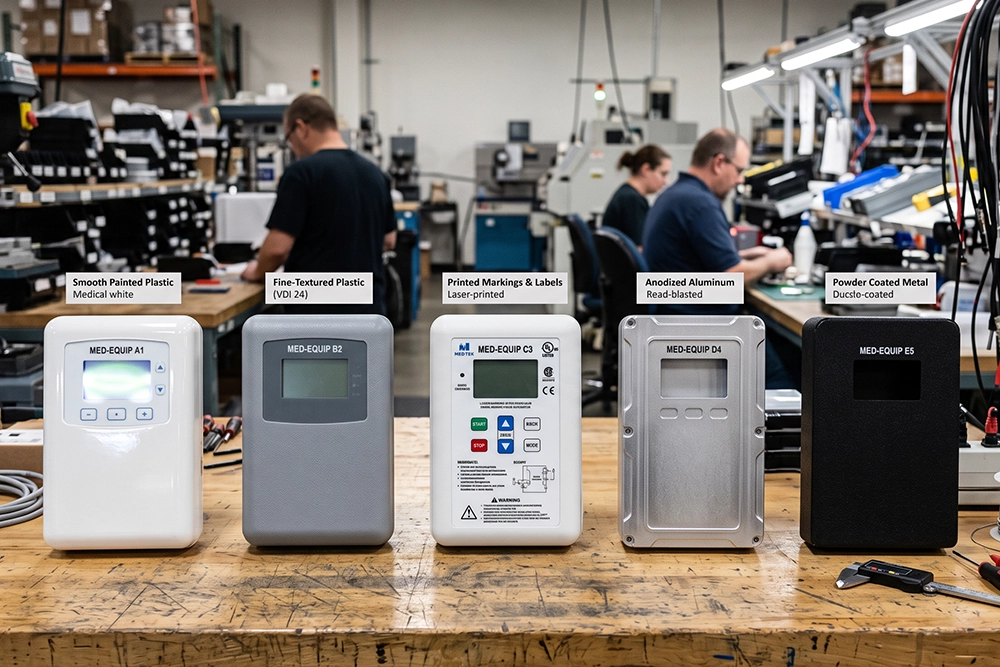
Available finishing options include:
- Sandblasting
- Polishing
- Painting
- Silk-screen printing
- Laser marking
For medical and beauty equipment, high-quality surface finishing is especially important because users often associate product appearance with reliability and professionalism.
5. Assembly and Integration Support
A complete medical enclosure solution often requires more than individual housing production.
Zhongrongda provides assembly support including:
- Component installation
- Hardware insertion
- Mechanical assembly
- Final product inspection
Our team works according to customer drawings and assembly requirements to ensure the enclosure integrates properly with internal electronic and mechanical components.
6. Quality Inspection and Verification
Quality control is a critical requirement for medical equipment manufacturing.
At Zhongrongda, we apply strict inspection procedures throughout production.
Our quality control system includes:
- Dimensional inspection
- First article inspection
- Process monitoring
- Final inspection
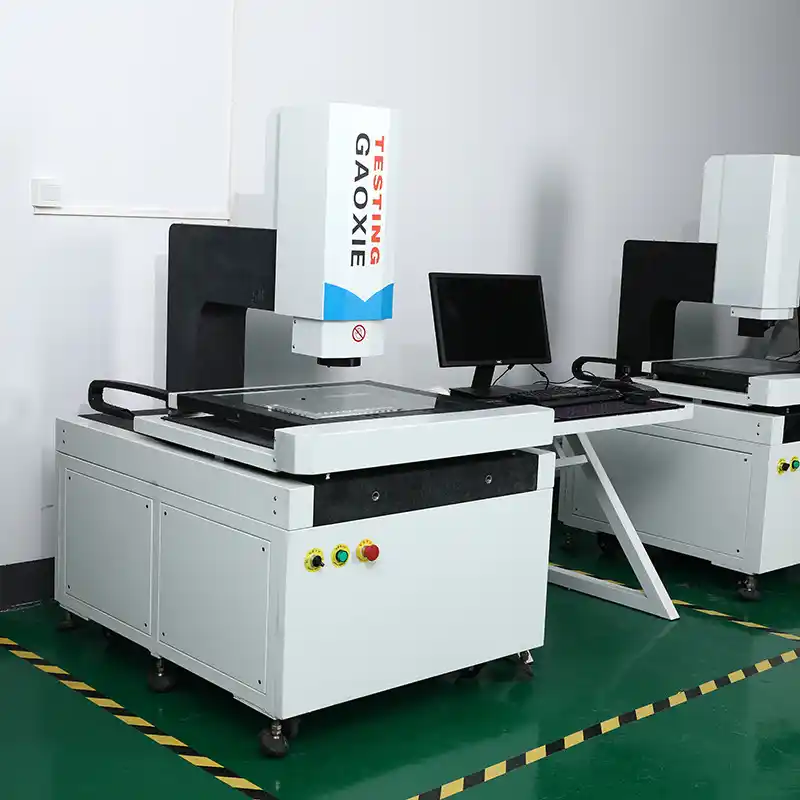
Inspection equipment includes:
- CMM measurement equipment
- Optical comparator
- Height gauges
- Micrometers
We operate under certified quality management systems including:
- ISO9001 quality management system
- ISO13485 medical device quality management system
These systems help ensure consistent manufacturing quality for medical enclosure projects.
Materials Used for Medical Device Housing
Selecting the correct material is one of the most important decisions when developing a medical device enclosure.
A professional plastic medical enclosure manufacturer must understand the performance requirements of different engineering plastics.
Common materials used for medical device housings include:
ABS Medical Enclosure
ABS is widely used in healthcare equipment because it provides an excellent balance between cost, strength, and processing performance.
Benefits:
- Good impact resistance
- Easy machining and processing
- Stable dimensions
- Good surface finishing capability
Typical applications:
- Diagnostic equipment housings
- Laboratory equipment covers
- Portable medical devices
PC Medical Device Housing
Polycarbonate provides excellent mechanical strength and impact resistance.
Advantages:
- High durability
- Good temperature resistance
- Strong structural performance
It is suitable for medical products requiring higher protection levels.
PC+ABS Medical Housing
PC+ABS is one of the most popular materials for modern medical equipment enclosures.
It combines:
ABS:
- Easy processing
- Good appearance
PC:
- Strength
- Impact resistance
This makes PC+ABS suitable for:
- Medical terminals
- Monitoring equipment
- Healthcare electronic devices
PMMA Medical Enclosures
PMMA is often selected for components requiring transparency or premium appearance.
Applications include:
- Display panels
- Transparent covers
- Optical components
Medical Equipment Applications
A reliable medical equipment enclosure manufacturer should understand different healthcare applications because every product has unique requirements.
Zhongrongda provides custom housing solutions for various medical and healthcare industries.
Diagnostic Equipment Enclosure
Diagnostic equipment often requires precise and durable housing solutions.
Typical requirements include:
- Accurate component positioning
- Protection of sensitive electronics
- Easy maintenance access
Applications:
- Diagnostic analyzers
- Testing equipment
- Portable diagnostic devices
Laboratory Equipment Enclosure
Laboratory instruments usually require high precision and stable structures.
Medical laboratory equipment housings must support:
- Sensor integration
- Electronic protection
- Long-term operation
Applications include:
- Laboratory analyzers
- Research instruments
- Testing systems
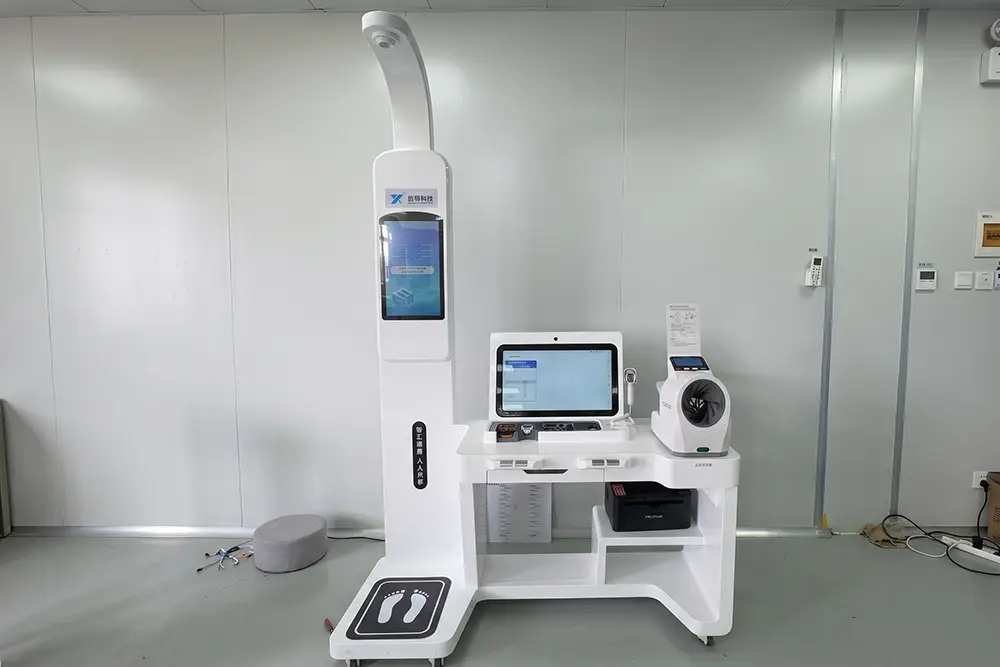
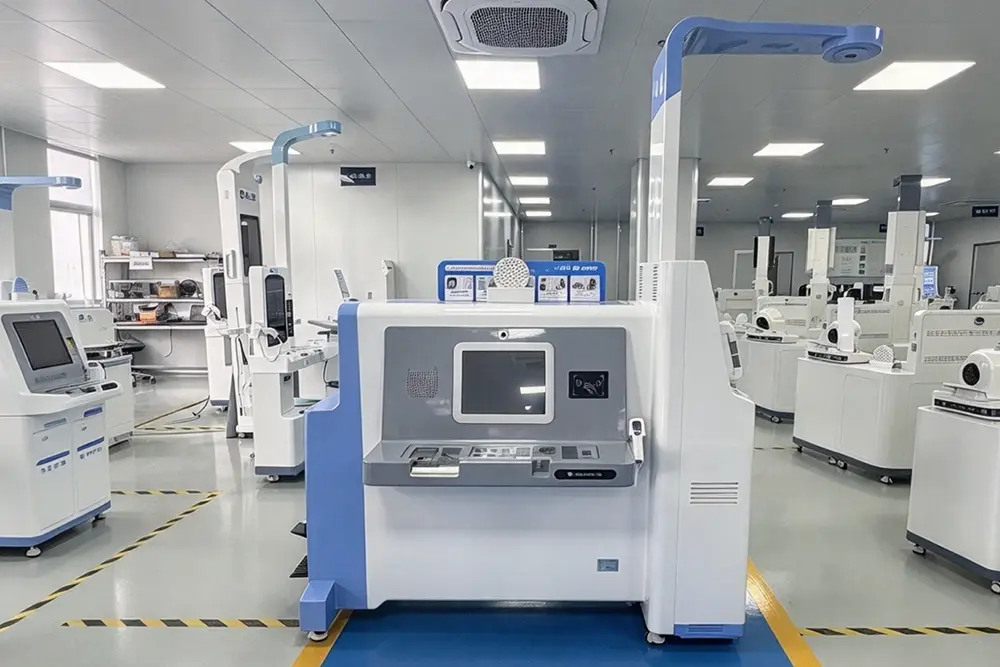
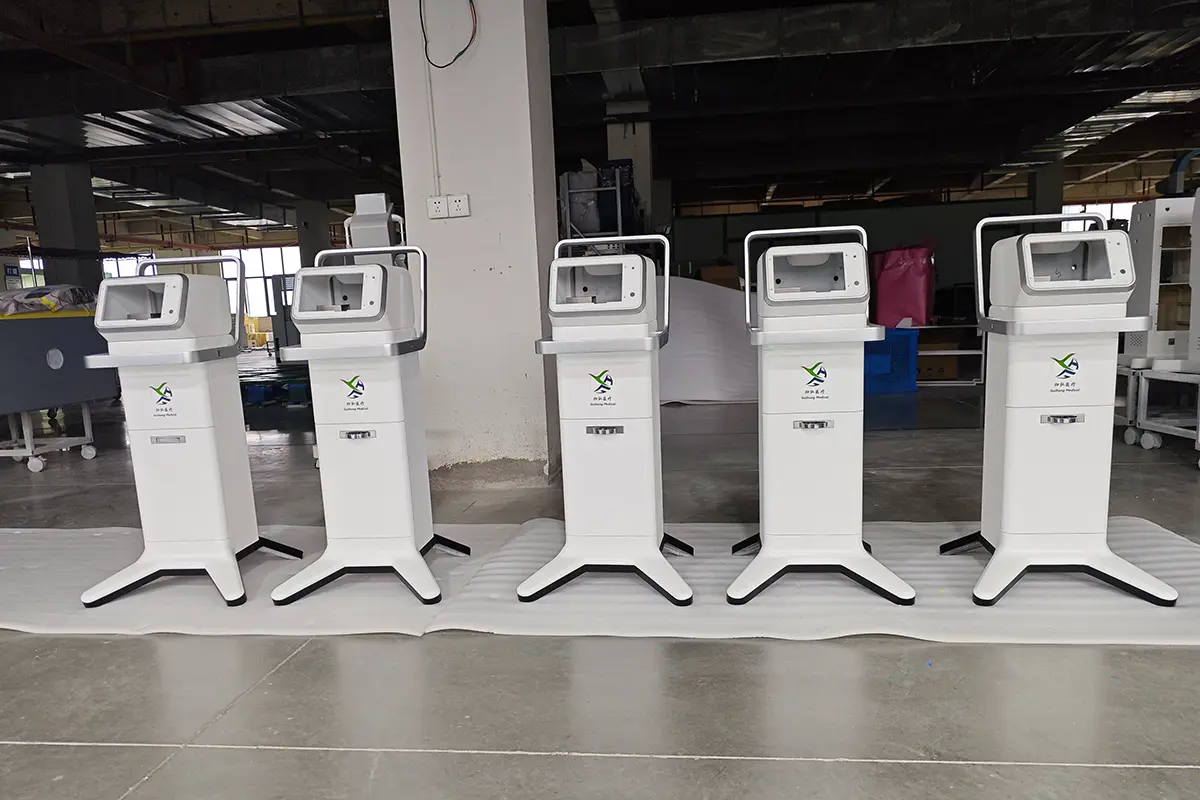
Medical Terminal Housing
Healthcare terminals require both durability and user-friendly design.
Examples include:
- Medical information terminals
- Self-service healthcare systems
- Hospital equipment interfaces
These products often require:
- Large display integration
- Ergonomic design
- Professional appearance
Why Work With Zhongrongda as Your Medical Device Enclosure Supplier?
Choosing the right medical enclosure supplier can significantly influence product quality, development speed, and manufacturing reliability.
Zhongrongda provides a complete manufacturing solution for companies developing medical and healthcare equipment.
Experienced Engineering Support
Our engineering team works with customers during:
- Product design evaluation
- Prototype development
- Manufacturing optimization
- Production improvement
We understand the challenges faced by medical equipment developers and provide practical manufacturing solutions.
Advanced Factory Capability
Our manufacturing facility includes:
- 3,000㎡ production area
- 50+ CNC machines
- Experienced manufacturing engineers
- Professional inspection equipment
We support:
- Prototype production
- Low-volume manufacturing
- Custom enclosure production
Medical Industry Quality Standards
Quality and reliability are essential for healthcare products.
Our quality systems include:
- ISO9001 certification
- ISO13485 certification
These standards demonstrate our commitment to controlled manufacturing processes and consistent product quality.
One-Stop Custom Manufacturing Solution
From concept validation to production support, Zhongrongda provides integrated services including:
- Medical Device Enclosure
- Rapid Prototyping
- CNC Machining
- Surface finishing
- Assembly
This allows customers to work with one reliable manufacturing partner instead of coordinating multiple suppliers.
Frequently Asked Questions
What materials are commonly used for medical device enclosures?
Common materials include ABS, PC, PC+ABS, PMMA, and other engineering plastics.
The best material depends on product requirements such as strength, appearance, chemical resistance, durability, and production volume.
Zhongrongda helps customers select suitable materials based on application requirements.
Can you manufacture custom medical housings from drawings?
Yes.
Zhongrongda provides custom medical housing manufacturing based on customer drawings, CAD files, or product concepts.
Our engineering team can assist with design optimization, prototype development, and production preparation.
Do you support medical device prototypes?
Yes.
We provide medical device prototype services for companies developing diagnostic equipment, laboratory instruments, healthcare devices, and beauty medical products.
Through rapid prototyping, customers can validate designs before moving into production.
Conclusion: Partner With an Experienced Medical Device Enclosure Manufacturer
Medical equipment manufacturers need more than a supplier who produces plastic or metal covers. They need a manufacturing partner who understands product development, material selection, precision requirements, and quality expectations.
As an experienced medical device enclosure manufacturer, Zhongrongda supports global medical equipment companies with custom housing solutions, prototype development, and reliable production services.
Whether you need a prototype medical enclosure, low-volume production housing, or a long-term OEM manufacturing partner, our engineering team is ready to support your next medical device project.
Contact Zhongrongda today to discuss your custom medical enclosure requirements.