Introduction
The demand for intelligent medical service equipment is growing rapidly as hospitals, community healthcare centers, and physical examination facilities continue adopting AI-based solutions to improve patient experience. As a professional manufacturing partner, Zhongrongda supports medical technology companies with high-quality AI Robot Enclosure Prototype solutions, helping them transform product concepts into functional prototypes before mass production.
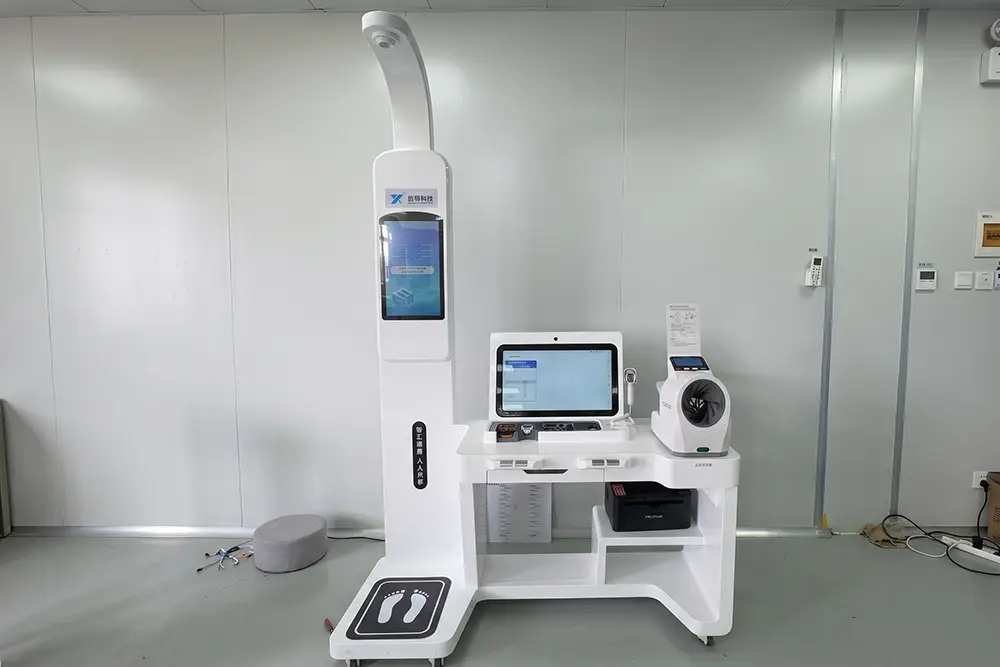
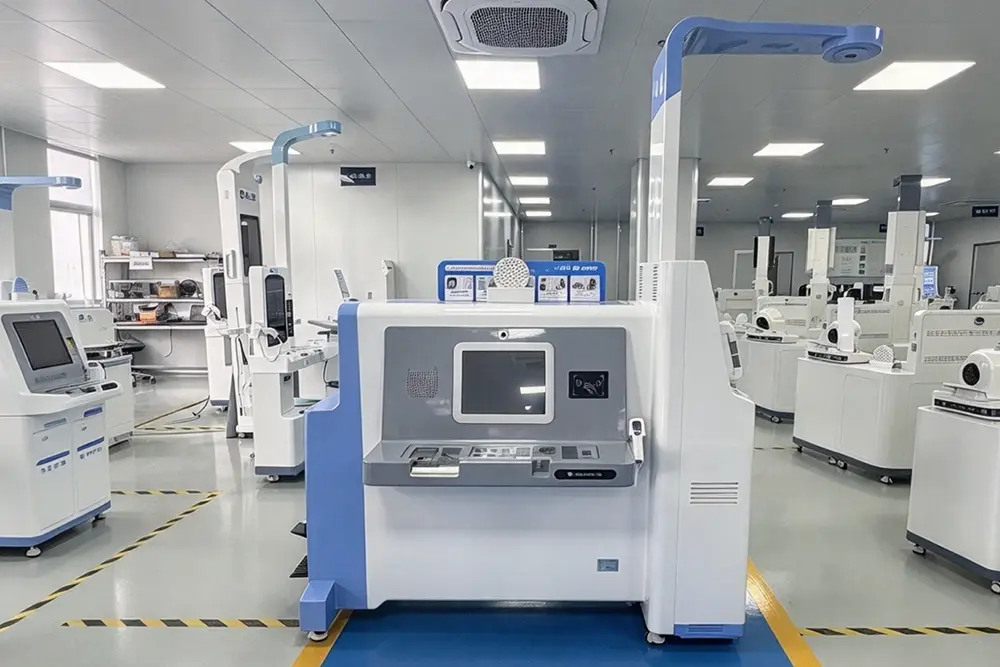
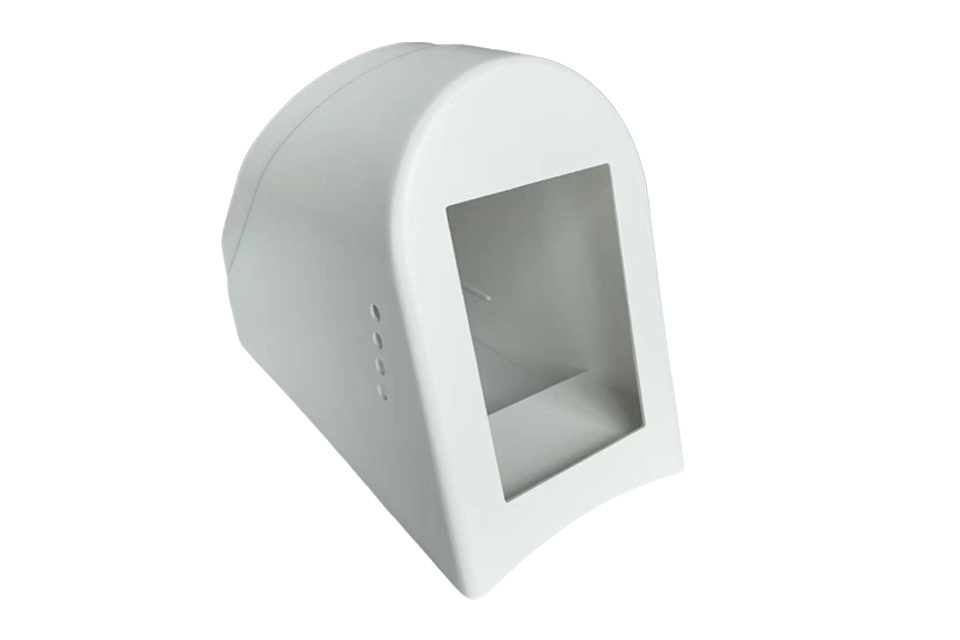
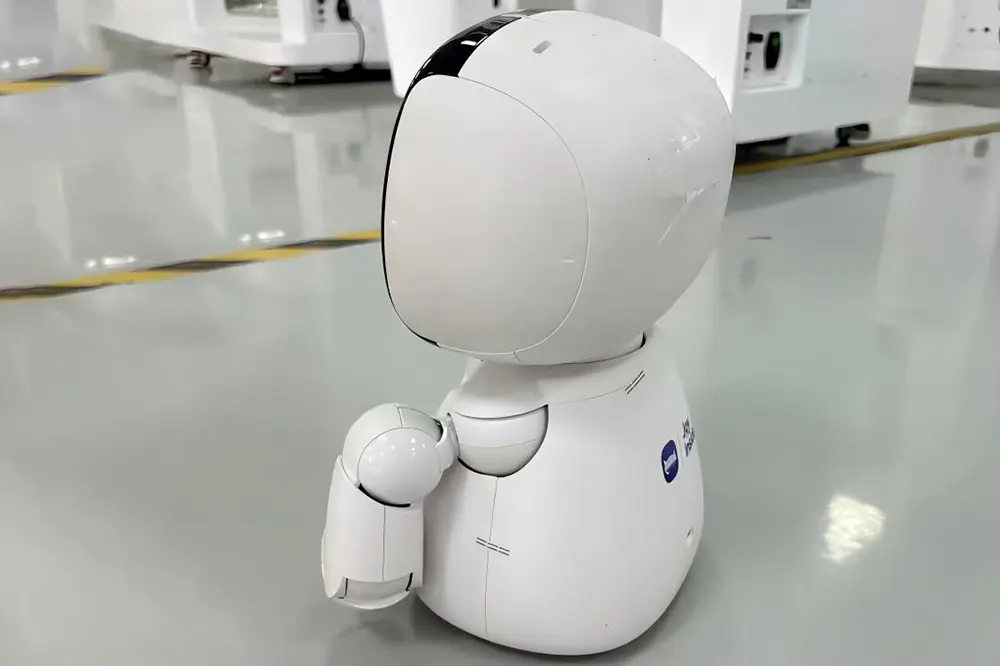
This project involved developing an ABS housing prototype for an AI medical guidance robot designed for outpatient departments, community healthcare centers, and medical examination centers in China. The robot provides intelligent services including symptom consultation, department recommendation, and medical process guidance.
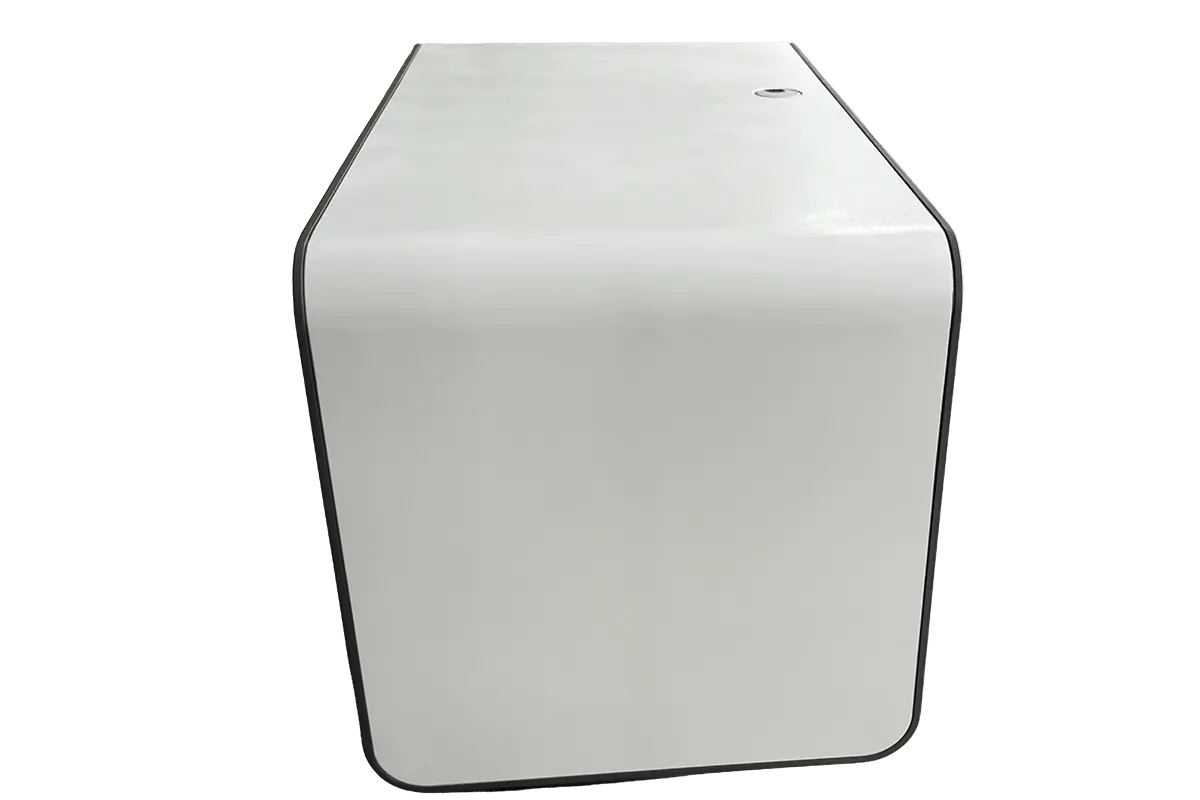
During this project, our engineering team worked closely with the customer to solve challenges related to complex curved surfaces, appearance requirements, assembly accuracy, and prototype consistency. Through five-axis CNC machining, professional handboard assembly, precision finishing, and controlled painting processes, we delivered a high-quality prototype enclosure that met both functional and visual requirements.
At Zhongrongda, we combine engineering experience, advanced manufacturing equipment, and strict quality control systems to support customers developing innovative medical devices, intelligent robots, and healthcare products.
This case study demonstrates how our team manages the complete prototype manufacturing process, from design optimization to final inspection.
Project Overview
| Item | Details |
|---|---|
| Industry | Medical Technology / AI Healthcare Equipment |
| Application | AI Intelligent Medical Guidance Robot |
| Country | China |
| Material | ABS Plastic |
| Dimensions | 170mm × 150mm × 370mm |
| Surface Finish | Sanding, Primer Coating, Smooth Painting Finish |
| Tolerance | Prototype-level precision control based on customer assembly requirements |
| Manufacturing Process | Five-axis CNC Machining, Handboard Assembly, Surface Finishing |
| Quantity | Prototype / Small Batch Production |
| Lead Time | 7-15 Working Days |
Customer Requirements
The customer was developing a new generation of AI medical service robots intended for hospitals, community healthcare centers, and medical examination facilities.
Unlike traditional industrial equipment housings, medical AI robot enclosures require not only mechanical reliability but also a clean, professional appearance suitable for healthcare environments.
The main requirements included:
1. Complex Appearance and Industrial Design Protection
The robot enclosure featured smooth curved surfaces and a modern appearance design. The customer required the prototype to accurately reproduce the original industrial design concept before moving into further product validation.
Because the enclosure contained multiple curved sections and visual transition areas, conventional three-axis machining would have increased manual polishing work and affected surface consistency.
Our engineering team recommended using five-axis CNC machining to improve machining efficiency and maintain better surface accuracy.

2. ABS Material Performance
The customer selected ABS because of its excellent balance between:
- Impact resistance
- Lightweight structure
- Surface finishing capability
- Prototype cost efficiency
ABS is widely used for medical equipment prototypes because it allows engineers to evaluate:
- Product appearance
- Ergonomic design
- Assembly structure
- Functional testing
For this project, our team optimized machining parameters specifically for ABS material to reduce surface defects such as melting marks, tool vibration marks, and uneven finishing areas.
3. Assembly Accuracy Requirements
The AI robot enclosure consisted of multiple housing sections requiring accurate alignment during assembly.
The customer needed:
- Accurate part matching
- Consistent gaps between components
- Stable internal structure
- Easy assembly and maintenance
Our engineering team reviewed the original CAD files and provided DFM recommendations before production to reduce potential assembly issues.
4. Professional Medical Product Appearance
Since the final product would be used in public medical environments, appearance quality was a critical requirement.
The customer expected:
- Smooth surface texture
- Uniform paint coverage
- No visible machining marks
- Professional medical-grade appearance
Therefore, the prototype required controlled surface preparation and painting processes similar to final product requirements.
Manufacturing Challenges
Producing an AI medical robot enclosure prototype involved several technical challenges.
Complex Curved Surface Machining
The biggest challenge was machining the large curved outer shell while maintaining design accuracy.
Traditional CNC methods require multiple setups, increasing the possibility of:
- Positioning errors
- Surface mismatch
- Visible machining marks
To overcome this challenge, our engineering team selected five-axis CNC machining.
Five-axis machining allowed the cutting tool to approach complex surfaces from optimized angles, improving:
- Surface quality
- Machining efficiency
- Dimensional consistency
This manufacturing capability is also widely applied in our other projects, including Rapid Prototyping and complex custom components.
ABS Prototype Machining Difficulty
Although ABS is a common prototype material, incorrect machining parameters can create problems including:
- Edge deformation
- Heat accumulation
- Surface scratches
- Poor finishing results
Our machinists carefully adjusted:
- Spindle speed
- Cutting feed rate
- Tool selection
- Machining sequence
This ensured the enclosure maintained both structural strength and appearance quality.
Surface Finishing Requirements
For medical AI equipment, machining alone cannot achieve the required product appearance.
The prototype required several finishing steps:
- Manual sanding
- Surface preparation
- Primer coating
- Spray painting
- Baking process
Our factory uses dedicated finishing equipment including:
- Dust-free painting room
- Water curtain spray booth
- Air spray guns
- Pressure paint supply system
- Drying oven
These facilities help maintain stable coating quality and reduce environmental contamination.
Prototype Assembly Accuracy
Because this project was a complete robot enclosure prototype, multiple parts needed to be assembled together.
Challenges included:
- Part positioning
- Screw hole alignment
- Component matching
- Structural stability
Our team designed pneumatic clamping fixtures to improve assembly efficiency and repeatability.
Our Engineering Solution
At Zhongrongda, we provide more than machining services. We work as an engineering manufacturing partner throughout the entire product development process.
For this AI medical robot enclosure project, our solution included:
DFM Optimization Before Production
Before machining started, our engineering team reviewed the customer’s 3D drawings and analyzed:
- Wall thickness
- Machining accessibility
- Assembly structure
- Surface finishing requirements
We provided manufacturing suggestions to reduce production risks and improve prototype quality.
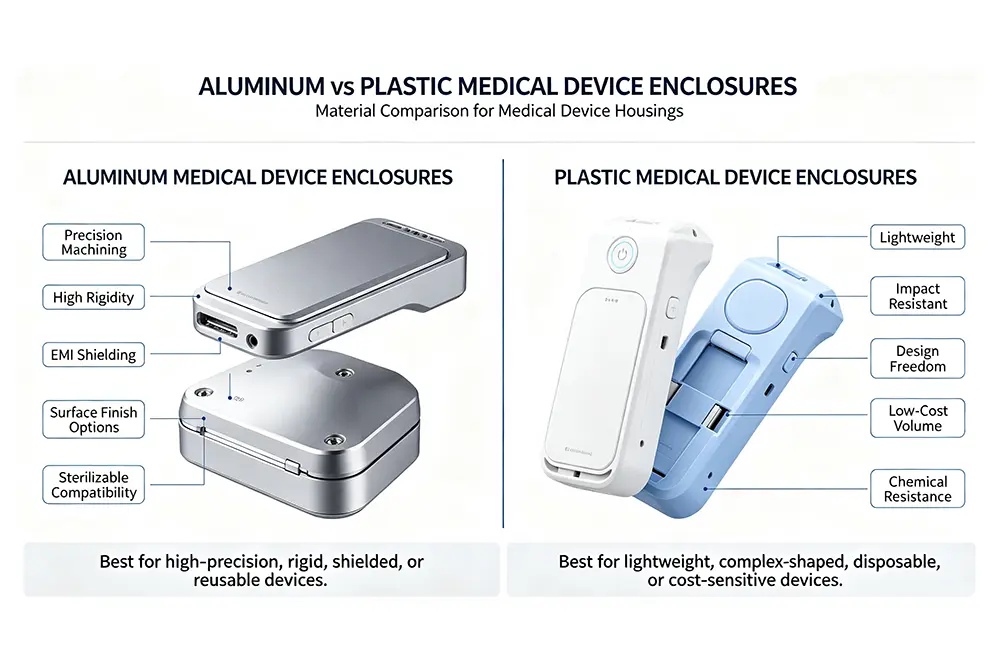
This approach is also applied in our Medical Device Enclosure development projects, where design accuracy and reliability are critical.
Five-axis CNC Machining Strategy
Based on the enclosure structure, we selected five-axis CNC machining equipment.
Advantages included:
- Reduced fixture changes
- Better machining of curved surfaces
- Improved dimensional stability
- Higher prototype consistency
The machining process allowed us to reproduce the customer’s industrial design accurately.
Custom Fixture Design
To improve production stability, our engineering team developed pneumatic pressing fixtures.
The fixtures helped:
- Maintain part positioning
- Improve assembly efficiency
- Prevent deformation during processing
- Ensure repeatable quality
Tool Selection and Machining Optimization
For ABS machining, we selected suitable cutting tools and optimized machining parameters according to material characteristics.
The process focused on:
- Reducing vibration
- Improving surface finish
- Protecting thin-wall areas
- Maintaining dimensional accuracy
Manufacturing Process
At Zhongrongda, we follow a structured manufacturing workflow to ensure every prototype project achieves the expected design, appearance, and functional requirements.
For this AI medical robot enclosure prototype, our production process included the following steps:
1. DFM Review
Before production, our engineering team carefully reviewed the customer’s 3D CAD files and product requirements.
During the DFM analysis, we evaluated:
- CNC machining feasibility
- Tool accessibility
- Part splitting method
- Surface finishing requirements
- Assembly structure
- Potential deformation risks
Based on our experience with medical equipment prototypes, we suggested optimization methods to improve machining stability and reduce unnecessary processing costs.
This early engineering communication helped the customer avoid possible issues before manufacturing.
2. CNC Programming
After confirming the manufacturing plan, our CNC engineers created machining programs according to the enclosure structure.
Because the robot housing contained multiple complex curved surfaces, we selected five-axis CNC machining technology.
The programming process focused on:
- Optimized tool paths
- Smooth cutting movements
- Reduced machining marks
- Improved surface consistency
Our experienced CNC technicians adjusted machining parameters according to ABS material characteristics to achieve better prototype quality.
3. Material Preparation
The selected material for this project was ABS plastic.
Before machining, our production team inspected the raw material to ensure:
- Material quality consistency
- Proper dimensions
- No visible defects
ABS was selected because it provides:
- Good impact resistance
- Excellent machining performance
- Easy surface finishing
- Suitable appearance after painting
For medical prototype applications, ABS provides an ideal balance between performance and development cost.
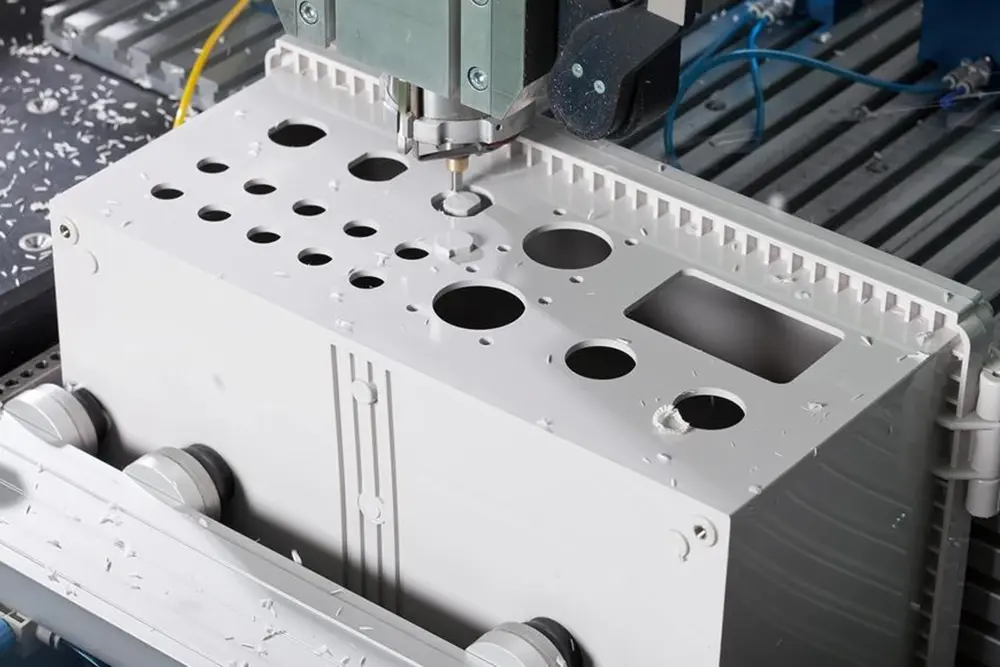
4. Five-axis CNC Machining
The main enclosure components were manufactured using five-axis CNC machining equipment.
The machining process included:
- Rough machining
- Semi-finishing
- Precision finishing
Five-axis machining allowed our team to process complex areas with fewer setups compared with traditional machining methods.
The advantages included:
- Better surface accuracy
- Reduced positioning errors
- Improved consistency between parts
This capability is also widely used in our other CNC Machining projects requiring complex structures and tight manufacturing requirements.
5. Deburring and Manual Finishing
After CNC machining, each component went through manual finishing.
Our technicians performed:
- Edge deburring
- Surface inspection
- Manual sanding
- Minor correction
This step was important because prototype housings require excellent appearance quality before painting.
Experienced technicians checked every surface to ensure machining marks were removed while maintaining original design details.
6. Surface Finishing
The appearance quality of medical AI equipment is extremely important because the products are displayed and used in professional healthcare environments.
For this project, the surface finishing process included:
Sanding Process
Multiple sanding stages were completed to achieve a smooth surface.
Primer Coating
Primer helped improve:
- Paint adhesion
- Surface uniformity
- Final appearance quality
Spray Painting
Our dust-free painting room, water curtain booth, air spray guns, and pressure paint supply system were used to achieve stable coating results.
Drying Process
After painting, components were transferred into the drying oven to ensure proper curing.
The final surface achieved a professional appearance suitable for medical environments.
7. Assembly
After individual components were completed, our technicians performed prototype assembly.
The assembly process included:
- Component positioning
- Fastener installation
- Structural adjustment
- Appearance inspection
The pneumatic pressing fixture designed by our engineering team helped improve assembly efficiency and maintain consistent positioning.
8. Final Inspection and Packaging
Before shipment, every prototype enclosure was inspected carefully.
Our quality team verified:
- Overall dimensions
- Assembly condition
- Surface quality
- Appearance consistency
After passing inspection, products were professionally packaged to prevent damage during transportation.
Quality Inspection
Quality control is a critical part of Zhongrongda’s manufacturing process.
For medical-related prototype projects, we understand that customers require reliable accuracy, repeatability, and professional documentation.
During this AI robot enclosure prototype project, our inspection process included:
CMM Inspection
For critical dimensional features, we use Coordinate Measuring Machine (CMM) inspection.
CMM inspection helps verify:
- Dimensional accuracy
- Hole position
- Assembly interface accuracy
- Critical tolerance areas
This ensures the prototype matches the customer’s CAD design.
Precision Measuring Tools
Our quality department also uses professional measurement equipment including:
- Height Gauge
- Micrometer
- Digital Caliper
These tools are used for daily inspection and dimensional verification.
First Article Inspection
Before final delivery, our team performed First Article Inspection (FAI).
The inspection covered:
- Key dimensions
- Appearance quality
- Assembly condition
- Functional requirements
FAI provides customers with confidence before moving toward future production.
Final Inspection
The final inspection included:
- Visual inspection
- Surface finish inspection
- Assembly verification
- Packaging inspection
Only approved products are released for shipment.
Final Results
Through close cooperation between the customer’s design team and Zhongrongda’s engineering team, this AI medical robot enclosure prototype was successfully completed.
The final prototype achieved:
- Accurate reproduction of the original industrial design
- High-quality ABS surface finish
- Smooth curved appearance
- Reliable assembly performance
- Professional medical equipment appearance
The completed prototype helped the customer validate:
- Product appearance
- Human-machine interaction design
- Structural concept
- Future production feasibility
By combining five-axis CNC machining, professional finishing capabilities, and engineering support, Zhongrongda successfully delivered a prototype solution suitable for further product development.
This project demonstrates our ability to support customers from initial product concepts to functional prototypes and small batch manufacturing.
For companies developing medical robots, intelligent devices, and healthcare equipment, our team provides complete manufacturing support through Rapid Prototyping, Medical Device Enclosure, and custom production services.
Video Showcase
This project was documented throughout the manufacturing process and the production video is available on our YouTube channel.
The video demonstrates:
- CNC machining process
- Prototype assembly
- Surface sanding
- Painting process
- Quality inspection
- Final packaging
YouTube Video Placeholder
Facebook Project Update
We also shared this manufacturing project on Facebook to give customers a closer look at the machining, finishing, inspection and packaging process.
Facebook Post Placeholder
https://www.facebook.com/profile.php?id=61591765621502
Why Choose Zhongrongda
Choosing the right manufacturing partner is critical for medical technology companies developing new products.
At Zhongrongda, we provide complete engineering and manufacturing support for prototype development and small batch production.
Engineering Support
Our engineering team works with customers from early design review through final production.
We help optimize:
- Product structure
- Manufacturing process
- Material selection
- Assembly requirements
Fast Quotation and DFM Review
After receiving customer drawings, our engineers analyze project requirements and provide professional manufacturing feedback.
We support:
- CAD file review
- DFM suggestions
- Cost optimization
- Production planning
Rapid Prototyping Capability
With advanced CNC equipment and experienced technicians, we support fast prototype production for:
- Medical devices
- AI robots
- Laboratory equipment
- Smart healthcare products
Learn more about our Rapid Prototyping capabilities.
Small Batch Manufacturing
After prototype validation, customers can continue with small-volume production.
Our flexible manufacturing system supports:
- Low-volume production
- Design changes
- Product iteration
- Customized requirements
Quality Management
Zhongrongda operates according to strict quality management standards.
Our certifications include:
- ISO9001 Quality Management System
- ISO13485 Medical Device Quality Management System
These systems help ensure consistent manufacturing quality for medical-related projects.
NDA Confidential Protection
We understand that many customers develop innovative medical technology products.
To protect customer designs, we support NDA confidentiality agreements.
Your:
- CAD files
- Product concepts
- Engineering information
are treated as confidential information.
FAQ
1. What is the MOQ for an AI robot enclosure prototype?
For prototype projects, Zhongrongda supports low-volume and single prototype production. We can manufacture one-piece prototypes for design verification before mass production.
2. How long does it take to manufacture an AI robot enclosure prototype?
The typical lead time depends on design complexity, finishing requirements, and quantity. Most prototype projects can be completed within 7-15 working days after design confirmation.
3. What materials can be used for robot enclosure prototypes?
We provide various material options including:
- ABS
- PC
- PC+ABS
- PMMA
- PA
For this AI medical robot enclosure project, ABS was selected because of its excellent machining and finishing performance.
4. Can Zhongrongda manufacture medical device enclosures?
Yes. Zhongrongda specializes in custom medical equipment housing and prototype manufacturing.
We support medical companies with:
- Prototype development
- Appearance models
- Functional prototypes
- Small batch production
5. What manufacturing tolerance can you achieve?
Tolerance depends on material, structure, and manufacturing requirements.
Our engineering team evaluates each project individually and selects suitable manufacturing methods to achieve required accuracy.
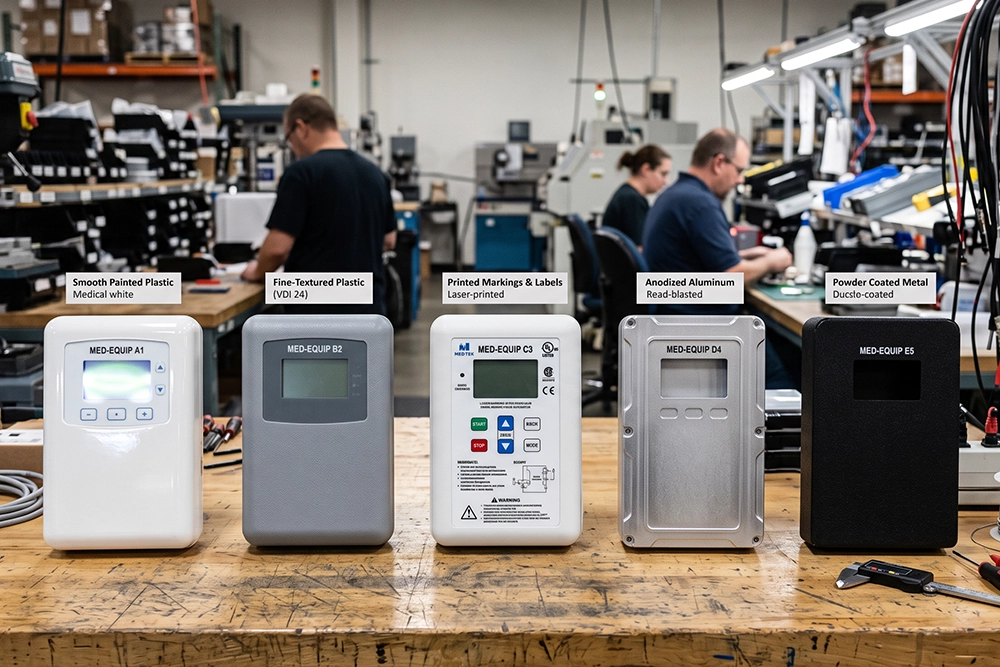
6. What surface finishes are available for ABS prototypes?
ABS prototypes can be finished with:
- Sanding
- Painting
- Texture finishing
- Printing
- Laser marking
We customize finishing solutions according to product requirements.
7. Do you support rapid prototyping before mass production?
Yes.
Rapid prototyping allows customers to verify:
- Product design
- Assembly structure
- User experience
- Manufacturing feasibility
before investing in mass production.
8. Can Zhongrongda sign an NDA?
Yes.
We support NDA agreements to protect customer’s confidential product designs and technical information.
9. Do you support small batch manufacturing?
Yes.
After prototype approval, we provide small batch manufacturing services for medical devices, robots, and industrial products.
10. Why choose Zhongrongda for medical robot enclosure manufacturing?
Zhongrongda combines:
- Engineering experience
- Five-axis CNC machining
- Professional finishing capability
- Quality inspection systems
- Flexible production support
to help customers transform concepts into reliable products.
CTA
Need a reliable CNC machining partner for your next project?
Upload your drawings today and our engineering team will provide a free DFM review and quotation within 24 hours.
Whether you need an AI Robot Enclosure Prototype, medical device housing, or small batch manufacturing solution, Zhongrongda is ready to support your next product development project.
Contact our engineering team today.