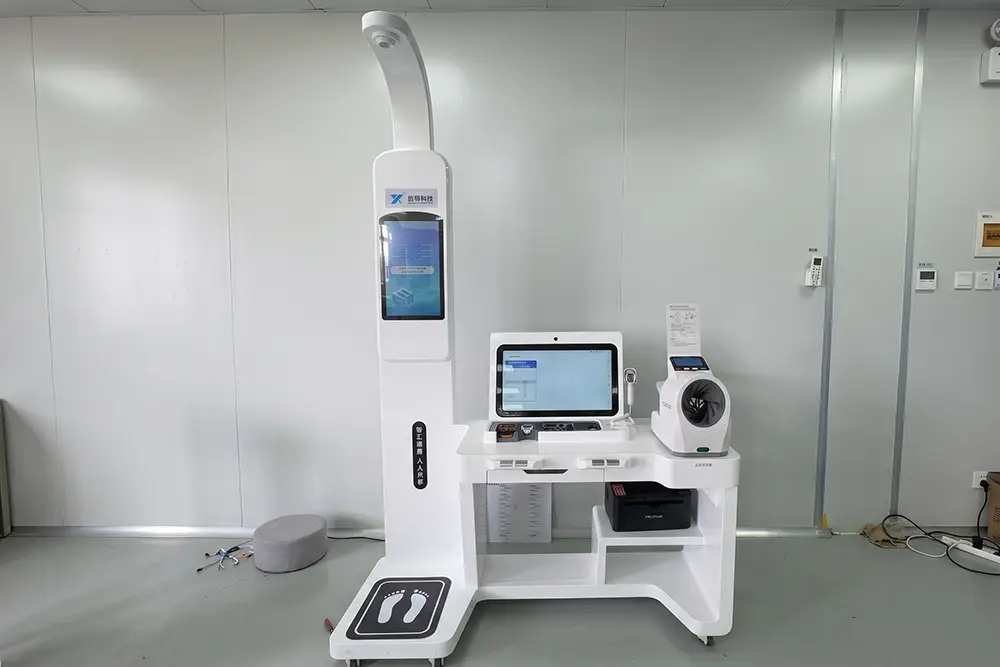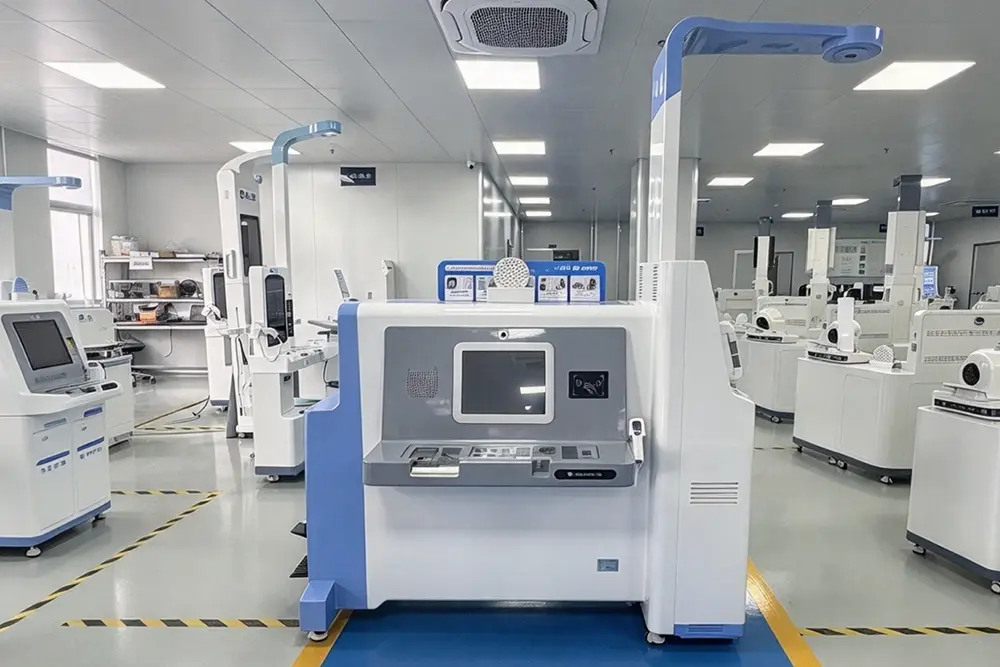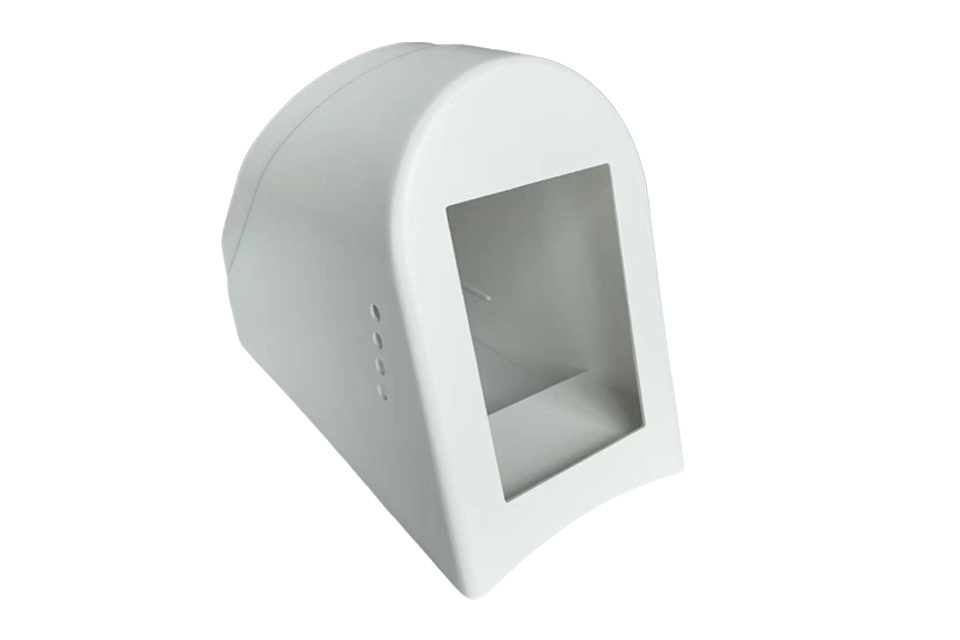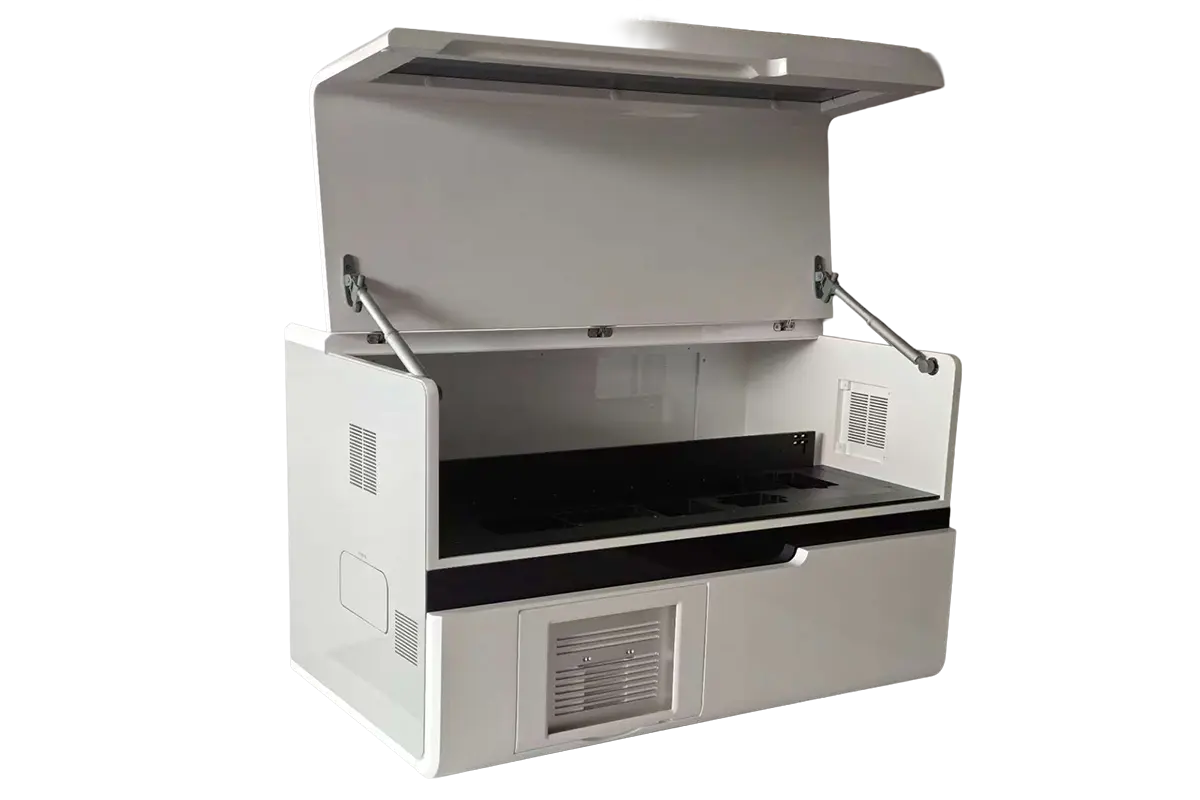
Custom medical device enclosures protect sensitive internal components, support product operation, and shape how users interact with medical equipment. Unlike standard electronic boxes, they often require application-specific dimensions, mounting structures, display openings, ventilation features, cable interfaces, and surface finishes.
For medical device companies, engineers, and purchasing teams, developing an enclosure involves more than selecting a suitable appearance. Material behavior, dimensional accuracy, assembly, manufacturability, surface quality, and inspection must all be considered before production begins.
At Zhongrongda, we manufacture custom plastic and metal enclosures for diagnostic equipment, medical instruments, laboratory equipment, and other specialized devices. Our engineering team supports prototype development, engineering verification, and low-volume production based on customer drawings, 3D models, samples, and technical requirements.
What Are Custom Medical Device Enclosures?
Custom medical device enclosures are housings designed around the structure and functional requirements of a particular medical product. Depending on the application, an enclosure may need to:
- Protect electronic and mechanical components
- Provide openings for displays, buttons, connectors, and cables
- Support internal mounting points and assembly features
- Accommodate ventilation or thermal management
- Maintain accurate alignment between separate components
- Provide a clean and professional exterior
- Carry labels, symbols, instructions, or brand graphics
- Support prototype testing and future design revisions
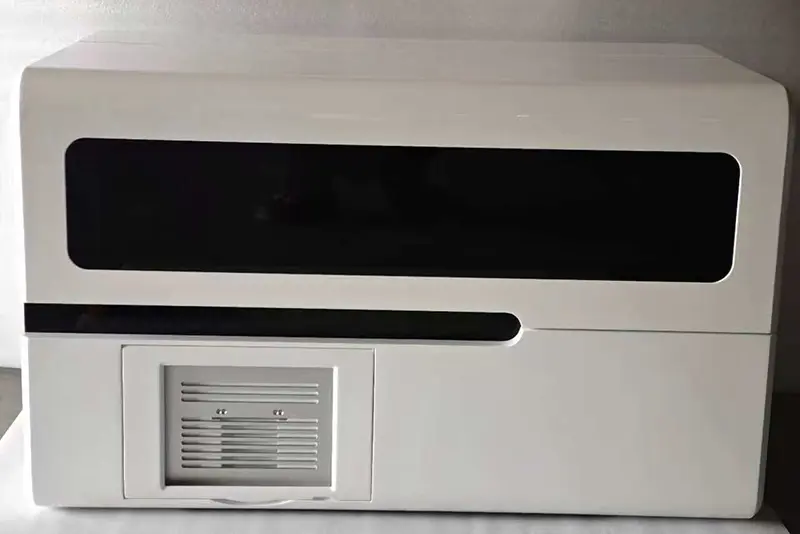
Examples include housings for diagnostic systems, laboratory instruments, monitoring equipment, treatment devices, and portable medical products.
Because every product has different internal components and operating conditions, the enclosure should be developed as part of the complete device rather than treated as an isolated cosmetic part.
Key Requirements in Medical Enclosure Design
Internal Component Layout
The positions of circuit boards, displays, power supplies, fans, sensors, connectors, and mechanical assemblies affect the overall enclosure structure.
Before manufacturing begins, designers should confirm internal clearances, fastening methods, access points, and assembly order. Interference between components can result in difficult assembly or costly modifications after the enclosure has already been produced.
Dimensional Accuracy
Accurate dimensions are particularly important around mating surfaces, mounting holes, display windows, connector openings, and internal support structures.
An enclosure can look correct externally but still fail during assembly if critical features are misaligned. For this reason, drawings should identify important dimensions and tolerances instead of applying unnecessarily tight tolerances to every feature.
Assembly and Maintenance
Screws, inserts, clips, hinges, and access panels should be positioned with both production and maintenance in mind. Technicians may need to inspect, replace, or reconnect internal components during testing and servicing.
A practical medical enclosure design allows controlled assembly without creating unnecessary steps or increasing the risk of component damage.
Surface Appearance
Surface quality influences both product presentation and user confidence. Visible machining marks, inconsistent texture, poorly aligned graphics, or gaps between enclosure sections can make an otherwise functional product appear unfinished.
The required surface standard should therefore be discussed early, especially for customer-facing equipment.
Selecting Materials for Custom Medical Device Enclosures
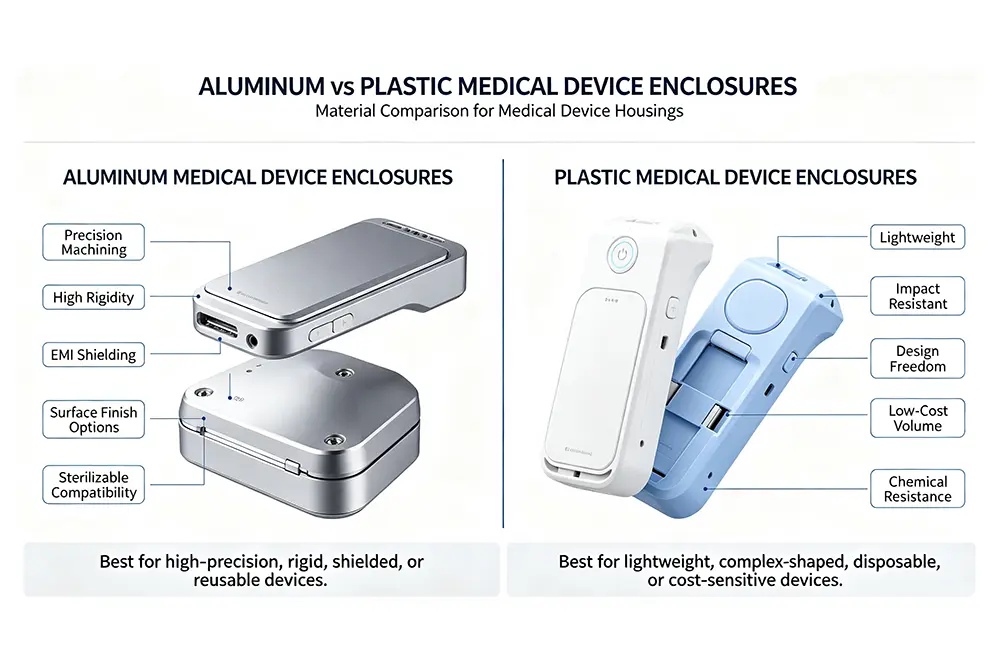
Material selection affects strength, weight, appearance, machining behavior, production cost, and service conditions. The most suitable option depends on the intended application rather than on one material being universally preferable.
Plastic Medical Device Enclosures
Engineering plastics are commonly considered when the enclosure needs a lower weight, electrical insulation, design flexibility, or a particular visual appearance.
Available plastic options include:
- ABS
- PC
- PC+ABS
- PMMA
- PVC
- PP
- PETG
- PE
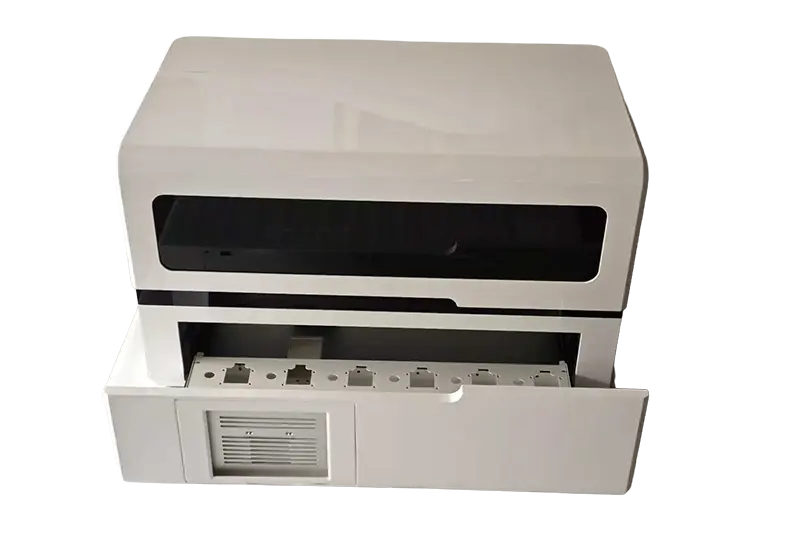
ABS is frequently considered for general enclosure prototypes because it is machinable and can support a refined exterior finish. PC may be evaluated where impact performance or transparency is important. PC+ABS combines characteristics of both materials and is used in various equipment housing applications.
PMMA may be suitable for transparent windows and visual panels. PP, PVC, PETG, and PE can also be considered when their specific material properties match the product requirements.
The final material decision should take account of operating temperature, cleaning procedures, chemical exposure, impact requirements, wall thickness, optical requirements, and regulatory considerations for the finished device.
Metal Medical Device Enclosures
Metal enclosures can provide rigidity, structural stability, heat dissipation, and a durable technical appearance.
Common options include:
- Aluminum alloy
- Stainless steel
- Brass
- Cold-rolled steel
Aluminum alloy is widely used for machined housings, frames, panels, and structural components because it combines relatively low weight with good machinability. Stainless steel may be selected where strength, corrosion resistance, or a particular surface appearance is required.
Material selection should be confirmed against the actual service environment and product specifications. The enclosure manufacturer should not independently assume that a material is suitable for medical use without reviewing the customer’s technical and compliance requirements.
Manufacturing Processes for Medical Device Enclosures
CNC Machining
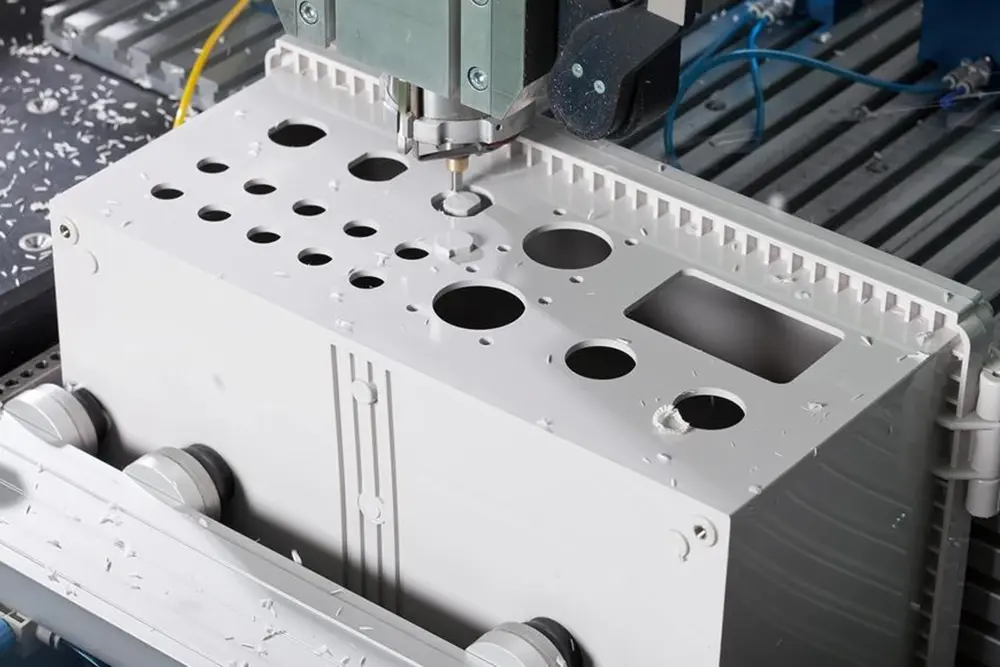
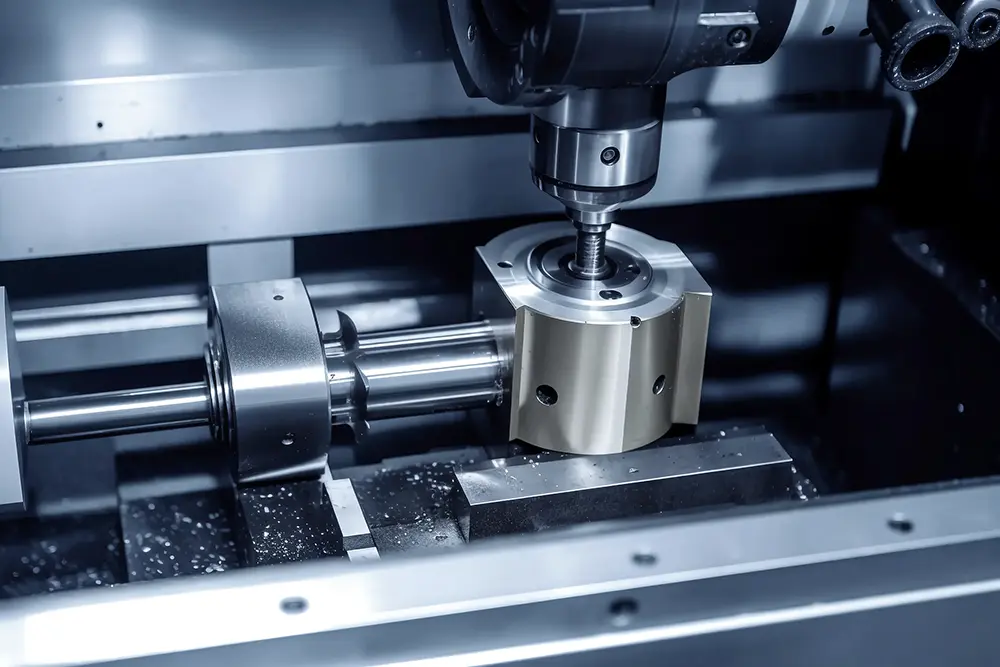
CNC machining is a practical process for producing precise plastic and metal enclosure components without investing in injection molds. It is particularly useful during prototype development, engineering verification, and low-volume manufacturing.
At Zhongrongda, our machining capabilities include:
- Three-axis CNC machining
- Four-axis CNC machining
- Five-axis CNC machining
- CNC turning
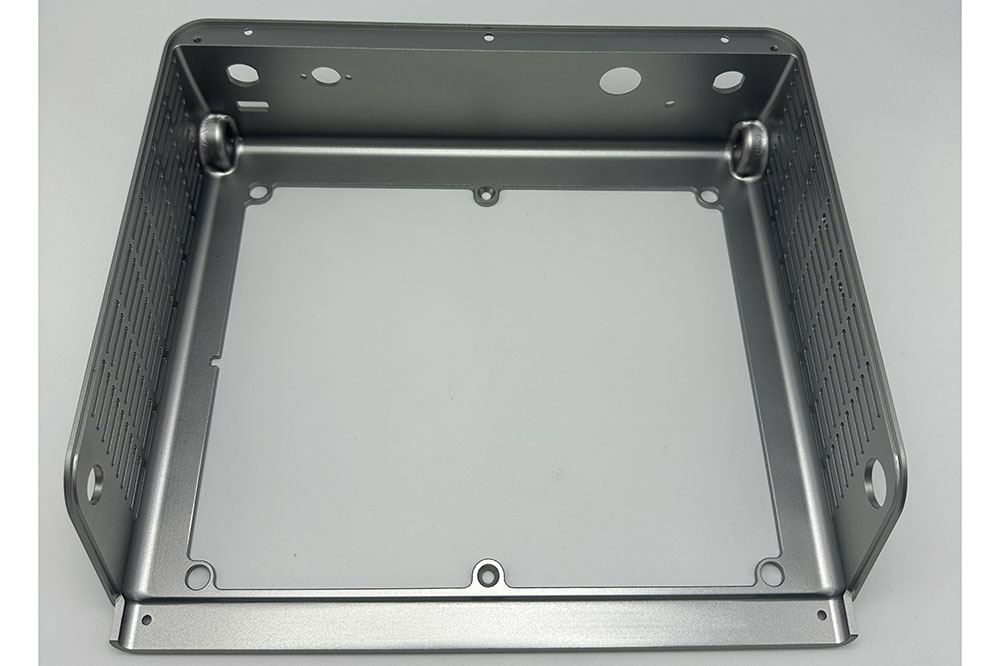
The appropriate machining method depends on the enclosure geometry, material, tolerance requirements, and production quantity.
CNC machining can produce features such as display openings, connector ports, internal cavities, mounting bosses, threaded holes, ventilation patterns, and accurately positioned interfaces.
Plastic Prototyping
Plastic prototypes allow engineering teams to evaluate the enclosure’s size, appearance, internal layout, and assembly before committing to a production method.
A physical prototype can reveal issues that may be difficult to identify from a digital model alone. These may include insufficient clearance, awkward fastener access, weak sections, misaligned openings, or unsuitable part separation.
When design revisions are expected, prototype manufacturing provides the flexibility to update CAD data and produce another version without changing expensive tooling.
Low-Volume Production
Low-volume production may be suitable for clinical evaluation equipment, specialized instruments, early market batches, customized systems, and products with limited annual demand.
CNC machining and related prototype processes can help bridge the gap between a one-off prototype and mass production. This allows customers to manufacture usable enclosure components while retaining the ability to refine the design.
Surface Finishing and Product Identification
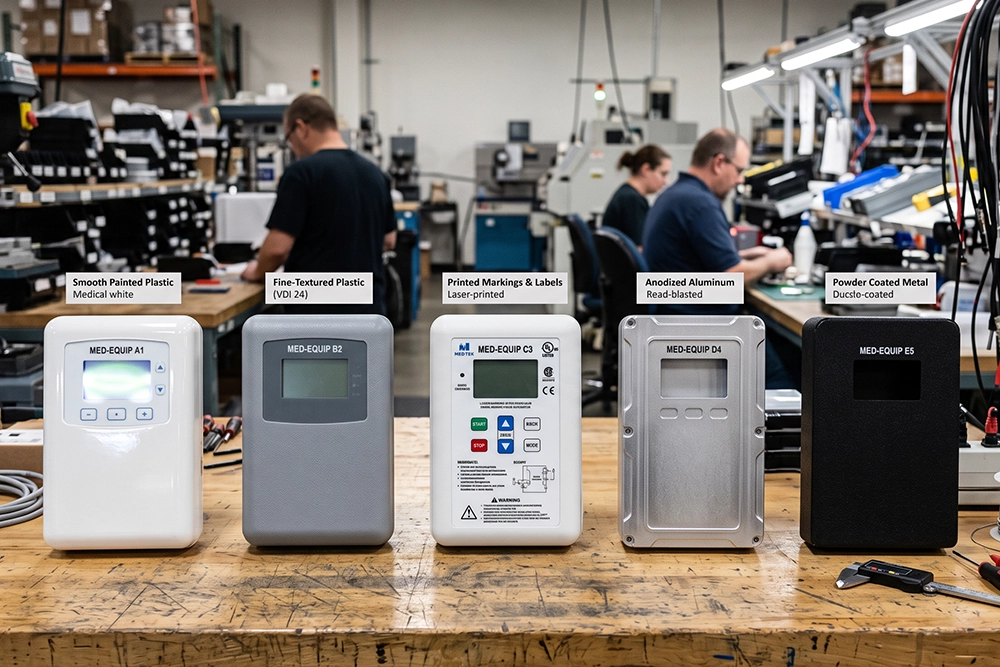
Surface finishing can improve appearance, provide a consistent texture, and prepare an enclosure for branding or operating instructions.
Available processes include:
- Sandblasting
- Polishing
- Laser marking
- Silk screen printing
Sandblasting can create a uniform matte texture on suitable metal components. Polishing may be used where a smoother surface is required. Laser marking can add durable symbols, identification information, or labels to compatible materials.
Silk screen printing is commonly used for logos, control labels, warnings, and operating information. Graphic files, colors, locations, and orientation should be confirmed before processing.
For multi-part housings, finish samples and acceptance standards are useful for managing color, gloss, texture, and graphic consistency.
Quality Control for Medical Enclosure Components
Inspection should focus on the dimensions and characteristics that affect assembly, operation, and appearance.
At Zhongrongda, available inspection equipment includes:
- Coordinate measuring machine
- Optical comparator
- Micrometers
- Height gauges
Our quality management system includes ISO 9001 and ISO 13485 certification.
Before production, customers should clearly identify critical dimensions, tolerance requirements, cosmetic surfaces, inspection expectations, and any documentation required for their project. This helps the manufacturing and inspection teams apply appropriate controls to the features that matter most.
A useful quality plan may include:
- Incoming material verification
- First-piece inspection
- Dimensional checks during manufacturing
- Surface and visual inspection
- Trial assembly where applicable
- Final inspection before shipment
The exact inspection plan should be determined by part complexity, production quantity, application, and customer requirements.
Information to Provide When Requesting a Quotation
Complete project information helps a medical device enclosure manufacturer assess manufacturability, lead time, and pricing more accurately.
Customers should provide:
- 3D CAD files
- Two-dimensional drawings
- Material requirements
- Quantity per order
- Expected annual volume
- Critical dimensions and tolerances
- Surface finish requirements
- Color and texture specifications
- Printing or marking files
- Assembly requirements
- Inspection and documentation requirements
- Target delivery schedule
STEP, STP, or other editable three-dimensional formats are generally more useful for manufacturing evaluation than images alone. Two-dimensional drawings should identify tolerances, threads, surface specifications, and other details that may not be fully defined in the model.
If the design is still under development, customers can also provide available files and explain which areas are not yet finalized.
Manufacturing Experience at Zhongrongda
In enclosure projects, our engineering team reviews more than the external shape. We consider tool access, corner geometry, wall thickness, part deformation risk, internal features, finishing allowances, and inspection methods.
This review can identify features that are difficult to machine, dimensions that need clearer tolerances, and areas where assembly may become inconvenient. When appropriate, we communicate these observations before manufacturing so the customer can evaluate possible design changes.
We work with plastics and metals and support machining, prototype development, surface finishing, marking, and inspection. This allows customers to coordinate several stages of enclosure production with one manufacturing partner.
However, the customer remains responsible for defining the device’s medical, regulatory, safety, biocompatibility, sterilization, and application-specific requirements. Manufacturing decisions should always be based on the approved technical specifications for the complete product.
Applications of Custom Medical Equipment Housings
Custom enclosure manufacturing can support products such as:
- Diagnostic equipment
- Medical instruments
- Laboratory equipment
- Monitoring systems
- Portable testing devices
- Aesthetic and treatment equipment
- Control units
- Specialized electronic equipment
The appropriate design, material, process, and quality controls vary by application. Early communication between product designers, mechanical engineers, purchasing teams, and the manufacturer helps establish realistic production requirements.
Frequently Asked Questions
1. What information is needed to manufacture a custom medical device enclosure?
A 3D CAD model is the most useful starting point. A two-dimensional drawing should also be supplied when the project includes specific tolerances, threads, finishes, markings, or inspection requirements. Quantity, material, and application information are also needed.
2. Can medical enclosure prototypes be produced without tooling?
Yes. CNC machining and plastic prototype processes can produce custom enclosure components without injection molding tools. This is suitable for design evaluation, engineering verification, and low-volume requirements.
3. Which materials can be used for medical equipment housings?
Available materials include ABS, PC, PC+ABS, PMMA, PVC, PP, PETG, PE, aluminum alloy, stainless steel, brass, and cold-rolled steel. Material suitability must be evaluated according to the device’s operating and compliance requirements.
4. Can you manufacture both plastic and metal enclosure parts?
Yes. Zhongrongda manufactures custom plastic and metal components using processes including CNC machining and plastic prototyping. The selected process depends on the design, material, tolerance, finish, and quantity.
5. Do you support low-volume medical enclosure production?
Yes. We support prototype development, engineering verification, and low-volume production. This approach is useful when customers need functional parts while maintaining flexibility for future design updates.
Discuss Your Custom Medical Device Enclosure Project
A successful enclosure project begins with clear technical information and early manufacturability review.
If you are developing a diagnostic device, medical instrument, laboratory system, or other specialized product, send Zhongrongda your drawings, 3D models, quantity requirements, and surface specifications.
Our engineering team can review the available information and discuss a suitable manufacturing approach for your custom medical device enclosure.
Website: https://www.zrdmfg.com/