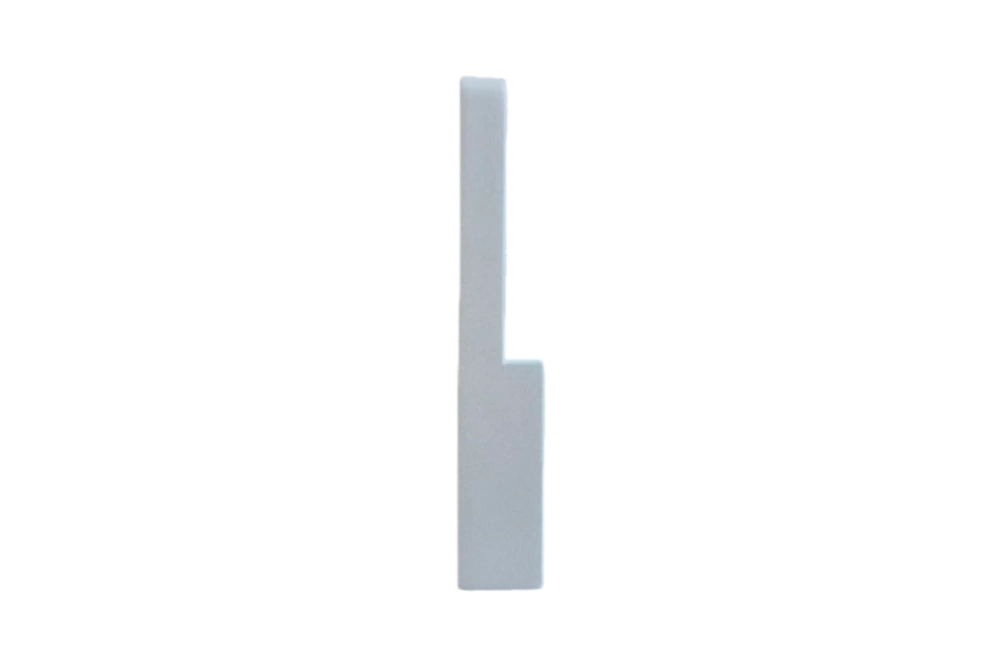
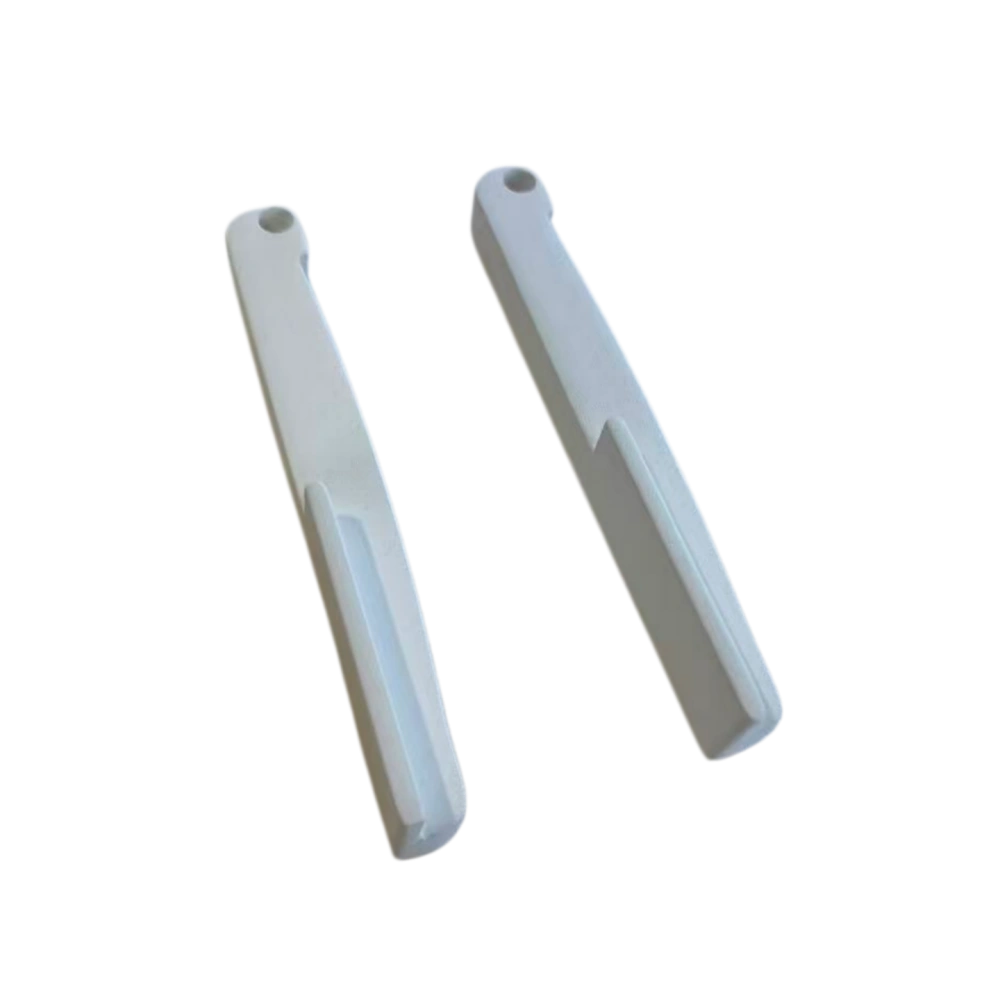
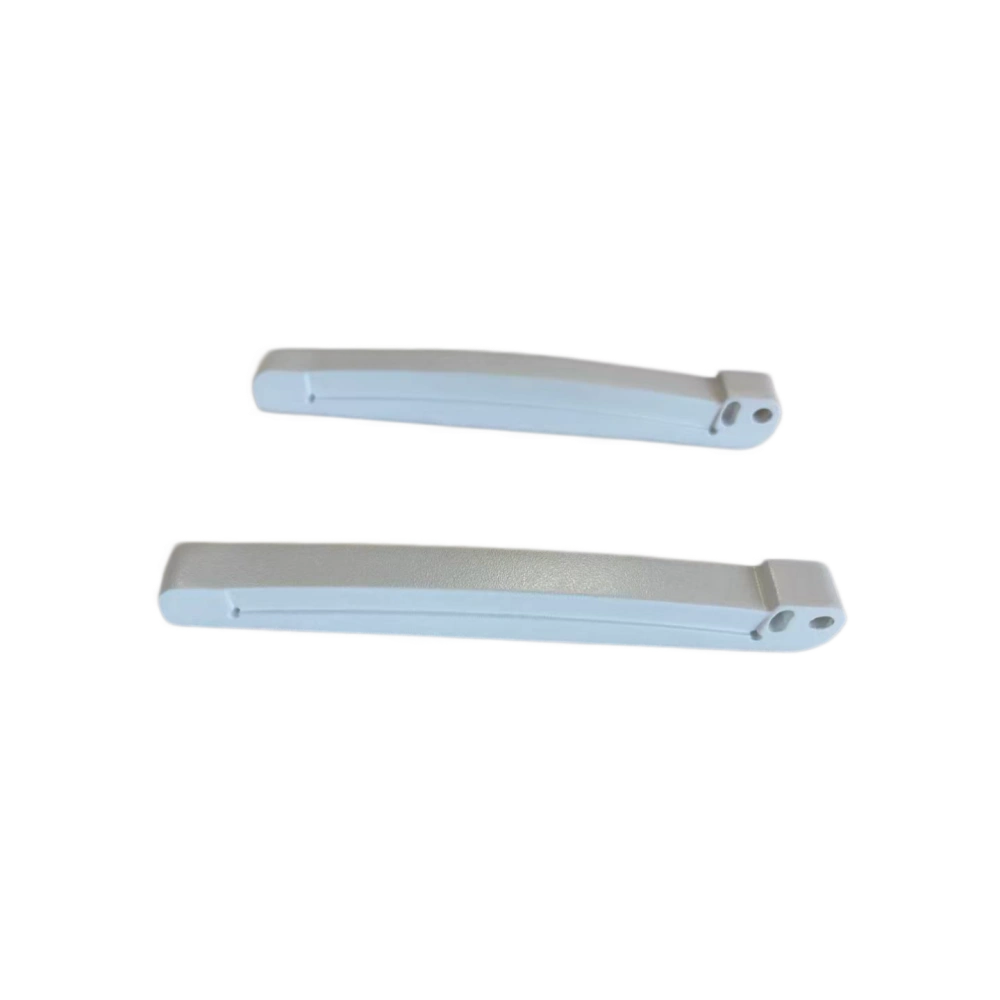
For a medical and industrial equipment project in China, our team produced a resin 3D printed linkage designed to connect moving elements within an oscillating transmission mechanism. At 168 mm long, 28 mm wide and 20 mm high, the part needed to represent the intended geometry clearly enough for prototype assembly, motion review and early functional evaluation. The project also reflects a common development need: obtaining a physical linkage quickly before committing to tooling or a larger production route.
At Zhongrongda, we use light-curing resin 3D printing for prototypes and appropriate small-batch functional parts when geometry, access to internal features and development speed matter. The workflow does not end when the printer stops. Support removal, alcohol cleaning, secondary UV curing, edge finishing and final cleaning all influence whether a resin part is ready for inspection and assembly. Because no load, service-life, sterilization or regulatory test data was supplied for this project, this case study describes the manufacturing process only; it does not classify the linkage as a validated final-use medical component. This evidence-led approach is central to our **Rapid Prototyping** work.
Project Overview
| Project Field | Confirmed Information |
| Industry | Medical / industrial equipment |
| Application | Oscillating transmission linkage for mechanism connection |
| Country | China |
| Material | Photosensitive resin |
| Dimensions | 168 x 28 x 20 mm |
| Manufacturing Process | Light-curing 3D printing and post-processing |
| Surface Finish | Support removal, sanding, edge finishing and cleaning; painting available if required |
Customer Requirements
The confirmed requirement was a linkage for motion connection in a medical or industrial equipment mechanism. Its intended use was prototype validation or an appropriate small batch, allowing the development team to install a physical part, observe movement and review the relationship between connected components. The 168 x 28 x 20 mm envelope defined the scale of the build. No numerical tolerance, production quantity, load rating or delivery target was provided, so these values are deliberately not stated.
Manufacturing Challenges
A slender linkage combines long geometry with relatively narrow cross-sections. During resin printing and post-curing, orientation and support strategy therefore matter: the part must be supported through the build while exposed surfaces and connection features remain practical to finish. Support contact points can leave local marks, uncured resin can remain on recessed areas, and incomplete cleaning can affect the surface after UV curing. Post-processing also requires restraint. Aggressive support removal or sanding may damage edges or alter mating features, while insufficient finishing can leave projections that interfere with assembly. These are process risks to manage, not claimed defects observed in the delivered part.
Our Engineering Solution for a Resin 3D Printed Linkage
Our engineering workflow begins with a DFM review of the linkage geometry and its intended motion. We consider build orientation, support accessibility and the surfaces most relevant to assembly. The part is then prepared for light-curing 3D printing on a resin 3D printer. After printing, supports are removed in a controlled sequence so that local force is not concentrated unnecessarily on the narrow body or connection areas.
Alcohol cleaning removes residual liquid resin, supported by an ultrasonic cleaning machine where appropriate. A UV curing box provides the secondary cure, after which numerical grinding equipment and fixtures support controlled sanding and edge finishing. Dedicated dust-removal and cleaning equipment helps prevent sanding residue from remaining on the finished linkage. If a project calls for color, painting and drying equipment can be added as a separate finishing route. We confirm coating requirements before that optional step rather than assuming a color or paint specification.
Manufacturing Process
- DFM review: review the CAD geometry, intended movement, support access and post-processing surfaces.
- Build preparation: orient the linkage and prepare supports for stable light-curing resin printing.
- 3D printing: form the part layer by layer on the light-curing 3D printer.
- Support removal: remove support structures carefully and identify contact areas that require finishing.
- Alcohol cleaning: clean away residual photosensitive resin, using the ultrasonic cleaning equipment as part of the available workflow.
- Secondary UV curing: place the cleaned linkage in the UV curing box to complete the defined post-cure stage.
- Sanding and edge finishing: use numerical grinding equipment and fixtures to refine support marks and accessible edges.
- Final cleaning and inspection: remove dust and residue, then examine the part before release for prototype assembly.
Quality Inspection
Inspection follows final cleaning. Our team checks the linkage for visible resin residue, remaining support projections, sanding damage, edge defects and surface contamination. The overall 168 x 28 x 20 mm geometry and assembly-relevant features can then be reviewed against the project drawing and agreed inspection scope. We do not report a specific tolerance or measurement result here because none was provided. For a load-bearing or repeated-cycle application, material selection and mechanical validation should be defined separately before final-use approval.
Final Results
The documented workflow produced the linkage through light-curing printing, support removal, alcohol cleaning, UV secondary curing, sanding, edge finishing, final cleaning and inspection. The resulting physical part was intended for mechanism review, prototype validation and suitable small-batch functional use. No customer acceptance statement, test result or production-volume outcome has been supplied, so none is attributed to the project.
Why Choose Zhongrongda for Resin Prototype Parts
At Zhongrongda, engineering support continues through printing and post-processing. Our available equipment covers resin printing, UV curing, ultrasonic cleaning, controlled grinding, fixtures, dust removal and cleaning, with painting and drying available when a defined color finish is needed. This integrated workflow is useful for product designers and mechanical engineers who need a physical linkage for assembly and movement review. It also gives purchasing teams one coordinated route from CAD review to cleaned, inspected parts. Related projects can be evaluated through our **Enclosure Solutions**, **Manufacturing** and **Case Studies** content when those subjects match the application.
FAQ
What is the MOQ for a resin 3D printed linkage?
MOQ depends on the geometry, resin, post-processing and inspection scope. Resin printing is commonly considered for one-off prototypes and small batches; Zhongrongda confirms quantity feasibility from the CAD file.
What lead time should I expect?
Lead time depends on file readiness, part orientation, build quantity, curing, finishing and any optional painting. A confirmed schedule is provided after DFM review.
Can you guarantee a tolerance from this case study?
No numerical tolerance was supplied for this project. Required tolerances should be marked on the drawing and reviewed against the printing and post-processing route.
Why use photosensitive resin for a linkage prototype?
Photosensitive resin can create detailed physical geometry for fit, movement and design review. Final suitability still depends on load, cycle life and the selected resin properties.
What post-processing is used?
The confirmed process includes support removal, alcohol cleaning, UV secondary curing, sanding, edge finishing, final cleaning and inspection.
Can the linkage be painted?
Yes. Painting and drying equipment is available when color is required. Color, gloss, coating system and masking requirements should be confirmed before production.
Is this automatically a certified medical device component?
No. The customer industry alone does not establish medical certification. Regulatory, biocompatibility, sterilization and validation requirements must be defined for the actual application.
Can resin printing support small-batch functional parts?
It can be considered when the selected resin and design meet the application’s loads and environment. Functional testing should confirm suitability before ongoing use.
What files are needed for quotation?
Provide a 3D CAD file, drawing, quantity, intended use, critical features, material preference, finish and inspection requirements. These inputs support a focused DFM review.
CTA
Need a reliable rapid prototyping partner for your next linkage or mechanism project? Upload your CAD file and drawings today. Our engineering team will review the geometry, intended use and post-processing requirements before providing a quotation. Visit Contact to start the discussion.