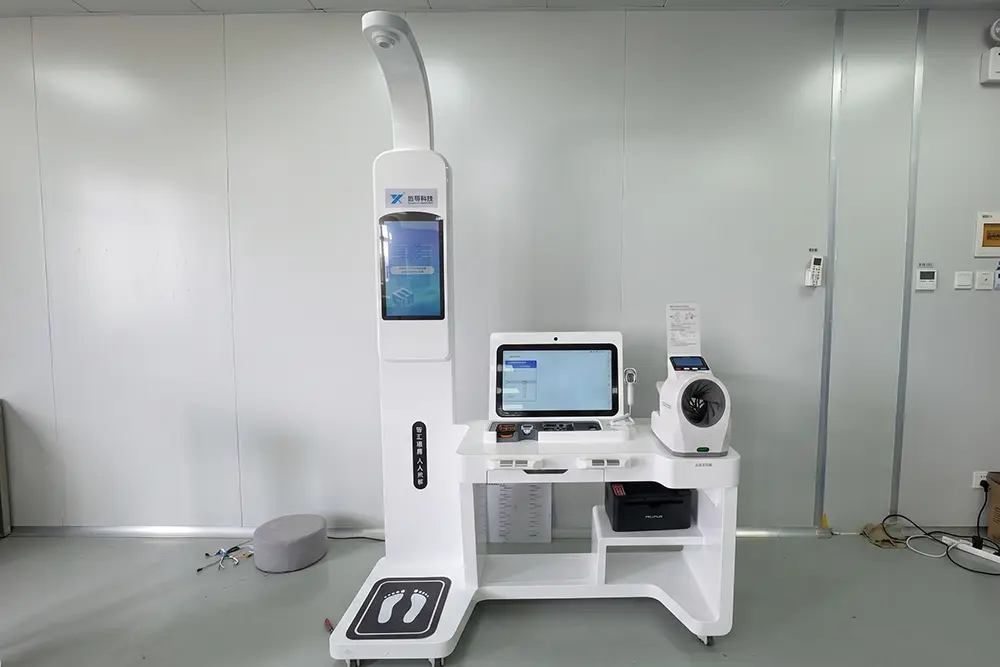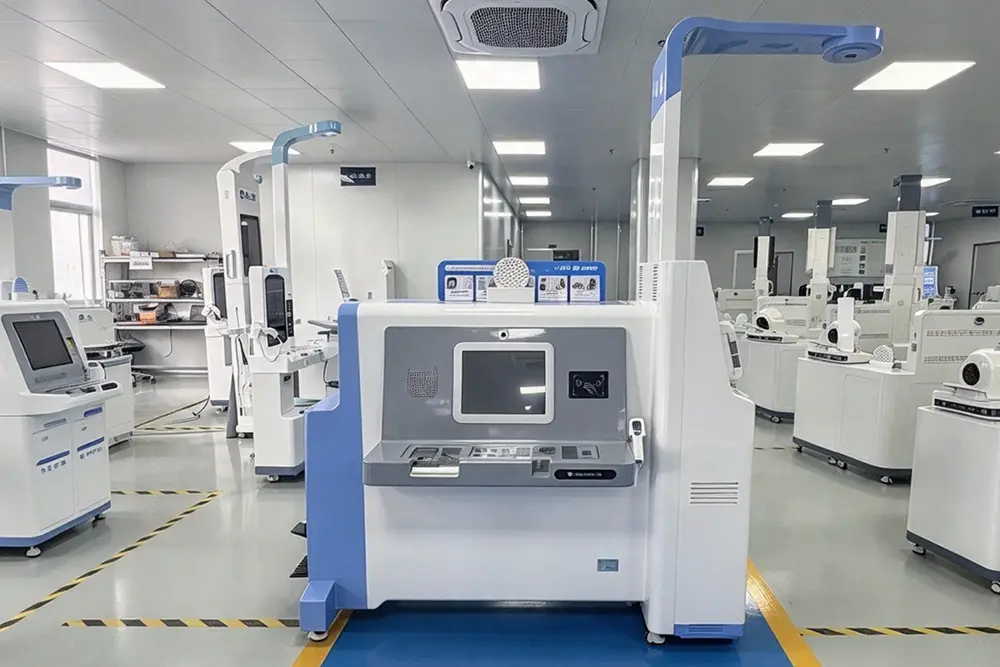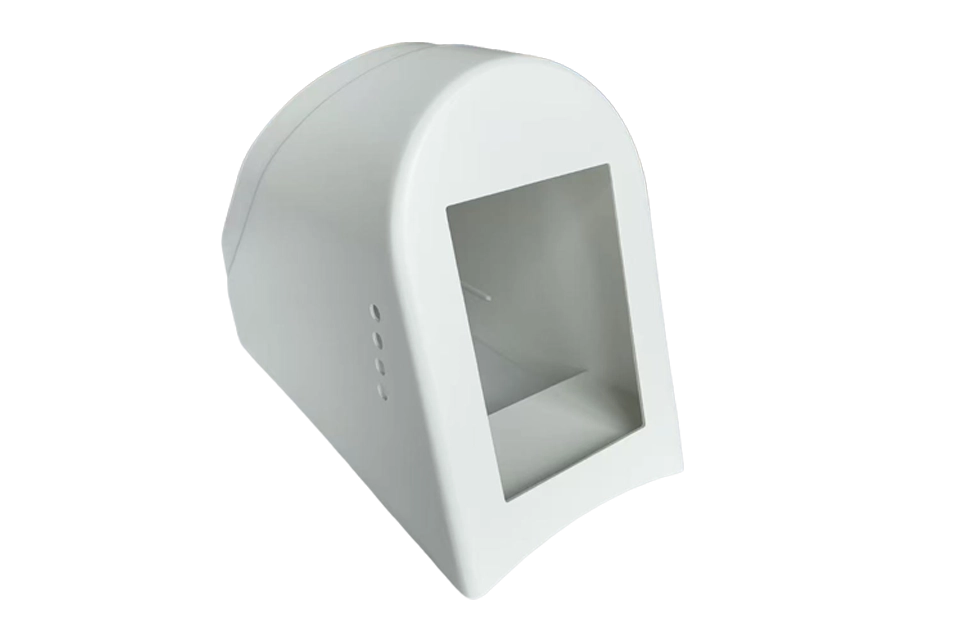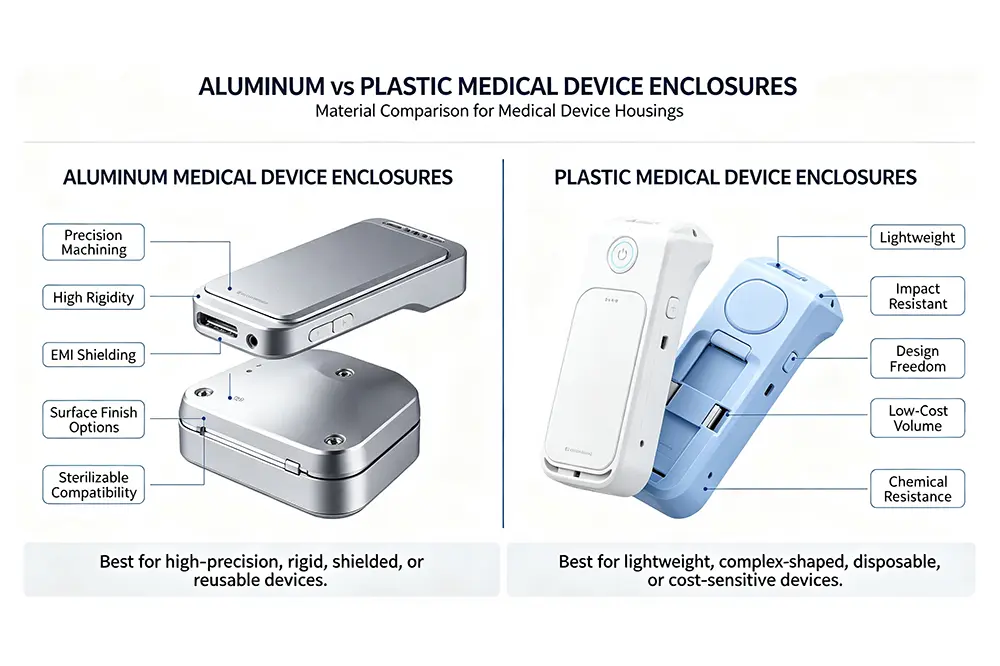
A custom medical equipment cart enclosure needs to do more than cover electronic components. It must support the equipment mechanically, provide enough internal space for power supplies and wiring, remain stable during movement, and present a clean appearance suitable for clinics and aesthetic treatment environments.
At Zhongrongda, we recently completed a small-batch production project for a vertical mobile cart enclosure designed for beauty and therapy equipment. The customer needed a lightweight but rigid housing that could accommodate the equipment power system, control electronics, wiring and service access while also providing a practical platform for the main instrument and accessories.
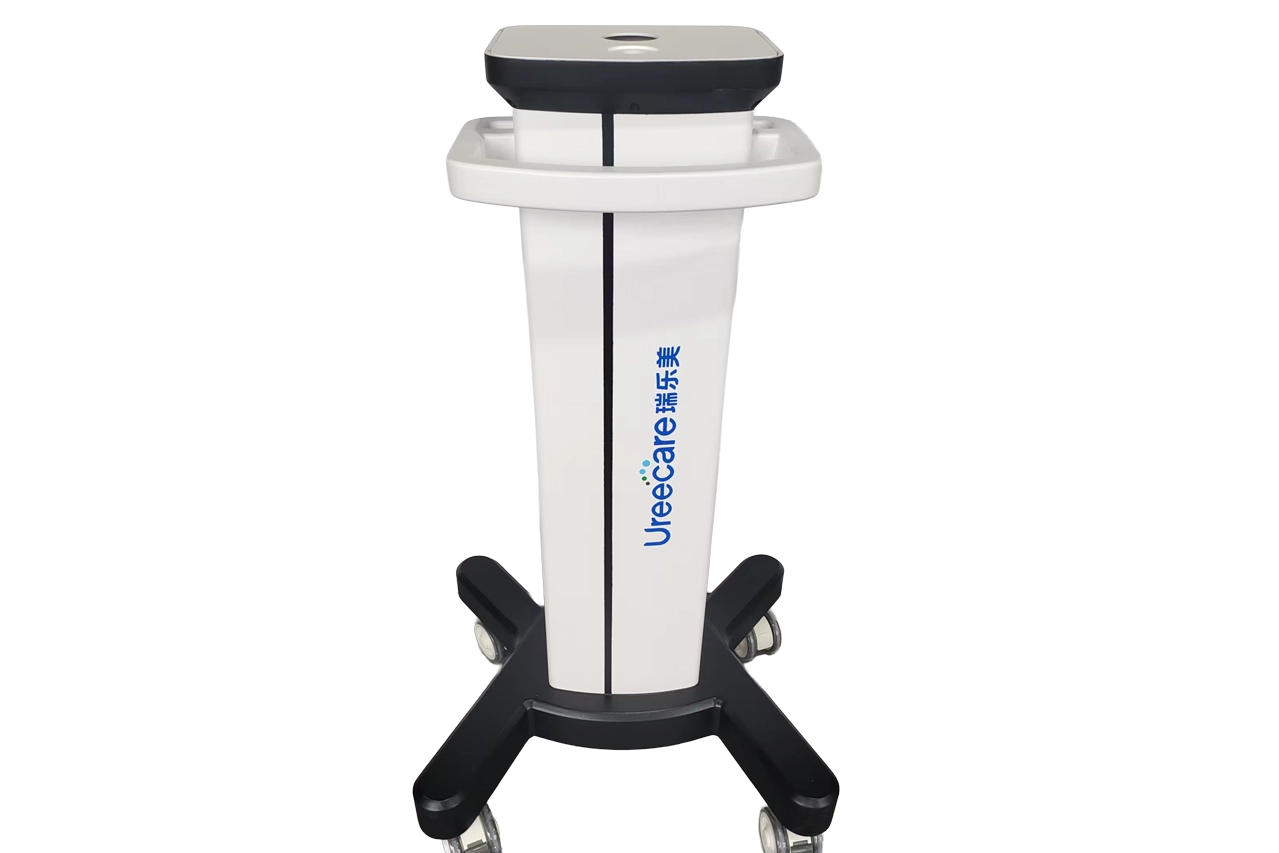
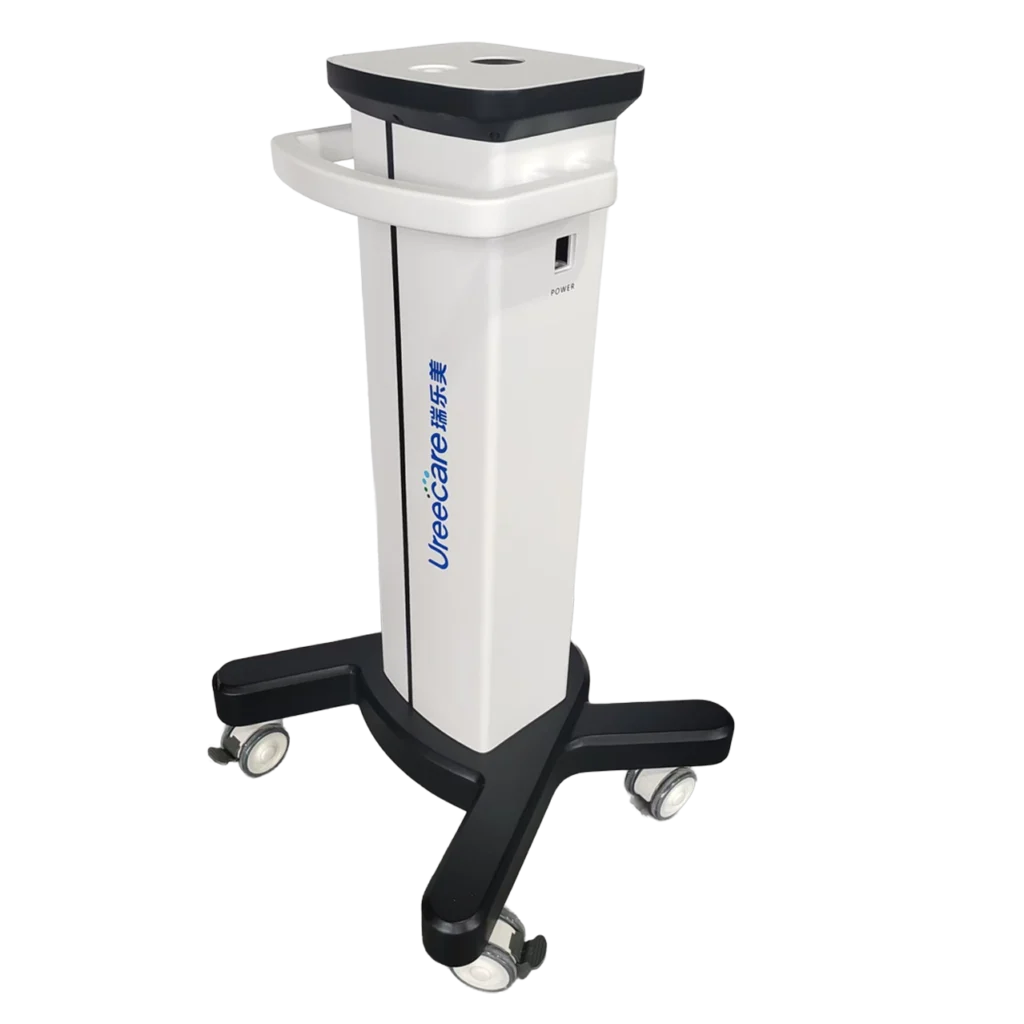
Our engineering team developed the enclosure around a PC-ABS housing, a modified nylon/ABS five-star base and medical-grade quiet locking casters. The finished unit reaches approximately 1250 mm in overall height and combines a matte white housing with black structural and decorative elements.
The project required careful attention to structural rigidity, visible parting lines, assembly clearances, caster alignment and the mounting accuracy of the top equipment interface. After engineering validation and manufacturing optimization, the project entered mass production.
For more information about our manufacturing capabilities, visit Manufacturing.
Project Overview
| Item | Project Specification |
|---|---|
| Industry | Beauty, Aesthetic & Medical Equipment |
| Application | Mobile cart for beauty / therapy equipment |
| Country | China |
| Material | PC-ABS housing + modified nylon/ABS base |
| Overall Height | Approx. 1250 mm |
| Housing Size | Upper section W320 × D300 mm; lower section W280 × D300 mm |
| Base Width | Approx. 560 mm maximum |
| Top Cover | 340 × 340 mm, Ø45 mm center opening |
| Accessory Tray | Ø420 mm outer diameter, Ø330 mm inner diameter, 40 mm high |
| Caster | Ø80 mm quiet locking medical casters |
| Surface Finish | Matte white coating + black trim |
| Branding | Blue silk-screen printed logo |
| Key Tolerance | Top equipment mounting holes ±0.2 mm |
| Manufacturing Process | CNC machining / thermoforming / CNC or injection molding / assembly |
| Quantity | Small batch initially; subsequently mass production |
| Project Status | Mass production |
Customer Requirements
The customer was developing a vertical mobile platform for an aesthetic therapy instrument. Unlike a simple equipment stand, the cart needed to function as an integrated equipment housing.
Structural requirements
The tall enclosure had to maintain sufficient vertical rigidity without excessive side-to-side deformation. The five-star base also needed to provide a stable footprint while allowing the operator to move the equipment smoothly.
The maximum base spread was approximately 560 mm, with the bottom of the base positioned about 90 mm above the floor.
Equipment mounting
The top platform was designed around a 340 × 340 mm interface with a Ø45 mm center opening. The mounting holes required approximately ±0.2 mm positional accuracy so the customer’s main instrument could be installed without forcing or secondary adjustment.
Internal installation space
The housing needed sufficient internal volume for power supplies, circuit boards and electrical wiring. We also incorporated service openings and cable-routing space so technicians could access internal components during maintenance.
Appearance
The customer wanted a modern medical-aesthetic appearance rather than an industrial-looking cabinet:
- Matte white main housing
- Black top edge
- Black five-star base
- 6 mm black center decorative line
- Rounded R12 corners
- Circular accessory tray
- Blue customer logo
- Smooth transitions between housing sections
The upper and lower housing sections also needed to be removable for service.
Manufacturing Challenges
1. Maintaining rigidity in a tall housing
A 1250 mm-high enclosure naturally presents a greater risk of flexing than a compact equipment housing. A housing that feels acceptable on a workbench may become unstable when mounted on casters and moved repeatedly.
Our engineering team therefore considered the housing geometry, internal support arrangement, connection points and base structure together rather than treating the plastic shell as an isolated component.
2. Controlling visible parting lines
The white housing was divided into upper and lower sections. The customer expected the joint to remain visually consistent around the enclosure.
The specified assembly clearance was approximately 2.5 mm, while the visible black decorative line had to remain consistent along the front of the product.
This required tighter control of part geometry and assembly positioning than would normally be necessary for a purely functional enclosure.
3. Stable five-star base
The base needed to balance three requirements:
- Stable support for the tall equipment.
- Smooth movement during operation.
- Low risk of tipping during normal pushing and repositioning.
The caster mounting holes also required proper alignment so the five wheels could operate smoothly without creating unwanted resistance.
4. Accurate top equipment interface
The top mounting interface was one of the most important functional areas. Incorrect hole positions could affect the customer’s final equipment assembly.
We therefore treated the ±0.2 mm mounting-hole requirement as a critical dimension during manufacturing and final inspection.
Our Engineering Solution
At Zhongrongda, our approach was to solve the enclosure as a complete mechanical system rather than simply manufacture individual plastic panels.
DFM optimization
During the DFM review, our engineering team examined:
- Wall and transition geometry
- Assembly split lines
- Internal service access
- Cable routing
- Mounting interfaces
- Base-to-column connection
- Caster installation
- Surface appearance
- Manufacturing feasibility
For plastic enclosure projects, this early review helps prevent problems from appearing after tooling or production has started.
You can also explore our Rapid Prototyping capabilities when early physical validation is required.
Process selection
The external housing was manufactured using CNC machining of thick plastic material and vacuum thermoforming according to the component requirements. The five-star base could be produced through CNC machining or injection molding depending on production requirements.
For this project, the manufacturing route was selected around the customer’s product structure, production quantity and appearance requirements.
Fixture and positioning control
We established controlled positioning references for critical mounting features. This helped maintain the relationship between the upper housing, top equipment interface and lower support structure.
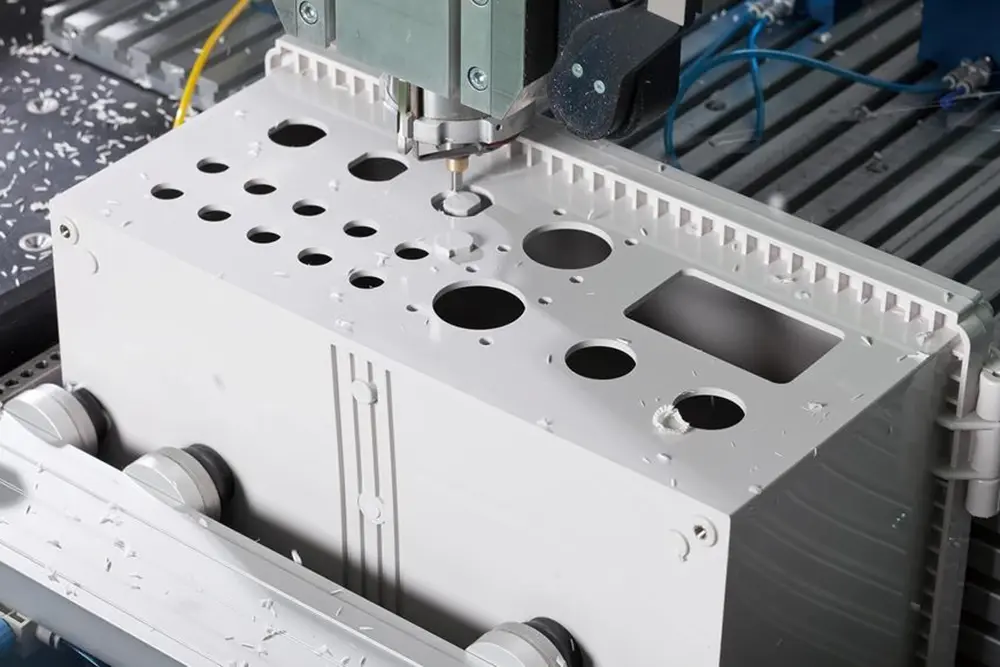
Tool selection and machining
For CNC-machined plastic components, tool selection and cutting conditions are important because excessive heat or cutting force can influence dimensional stability.
Our engineering team adjusted machining parameters according to the material and geometry, particularly around mounting holes, edges and transition areas.
Assembly verification
Before final production release, we checked the relationship between:
- Upper and lower housing
- Top mounting interface
- Decorative center line
- Accessory tray
- Five-star base
- Caster positions
This allowed us to address fit and appearance issues before completing the production run.
Manufacturing Process
1. DFM Review
We reviewed the drawings, dimensions, assembly structure, material requirements and critical interfaces.
2. Programming
CNC machining programs were prepared for the required plastic and base components. Critical dimensions received additional process attention.
3. Material Preparation
PC-ABS and other specified materials were prepared according to the approved production requirements.
4. CNC Machining
Required components were machined to achieve the specified geometry and mounting features.
5. Deburring
Edges and machined areas were carefully deburred to prevent interference during assembly and improve handling safety.
6. Surface Finishing
The external plastic housing received a matte white finish. Black trim components were incorporated into the design, while the customer logo was silk-screen printed in blue.
7. Assembly
The upper and lower housing sections were assembled with the internal components and cable-routing provisions. The accessory tray, base and casters were then installed.
8. Inspection
Critical dimensions and assembly interfaces were checked before final release.
9. Packaging
Finished units were protected for transportation with packaging appropriate for the assembled enclosure and its surface finish.
For broader information about our quality system and production capabilities, see About Us.
Quality Inspection
Quality control was particularly important because the product combined large visible plastic surfaces with functional mounting interfaces.
Our inspection process can include:
CMM Inspection
For critical geometric relationships and mounting features, CMM inspection can be used where the required accuracy and geometry justify coordinate measurement.
Height Gauge
Height measurements help verify vertical dimensions and reference relationships between components.
Micrometer
Micrometers are used where higher-resolution dimensional verification is required.
Caliper
Digital calipers are useful for checking general dimensions, openings, wall-related features and assembly interfaces.
First Article Inspection
Before production is fully released, first articles are reviewed against the approved drawings and requirements.
Final Inspection
Final inspection covers dimensional conformity, assembly fit, appearance, logo placement, caster installation and overall product condition.
For customers requiring controlled medical manufacturing, Zhongrongda operates under ISO 9001 and ISO 13485 quality management systems.
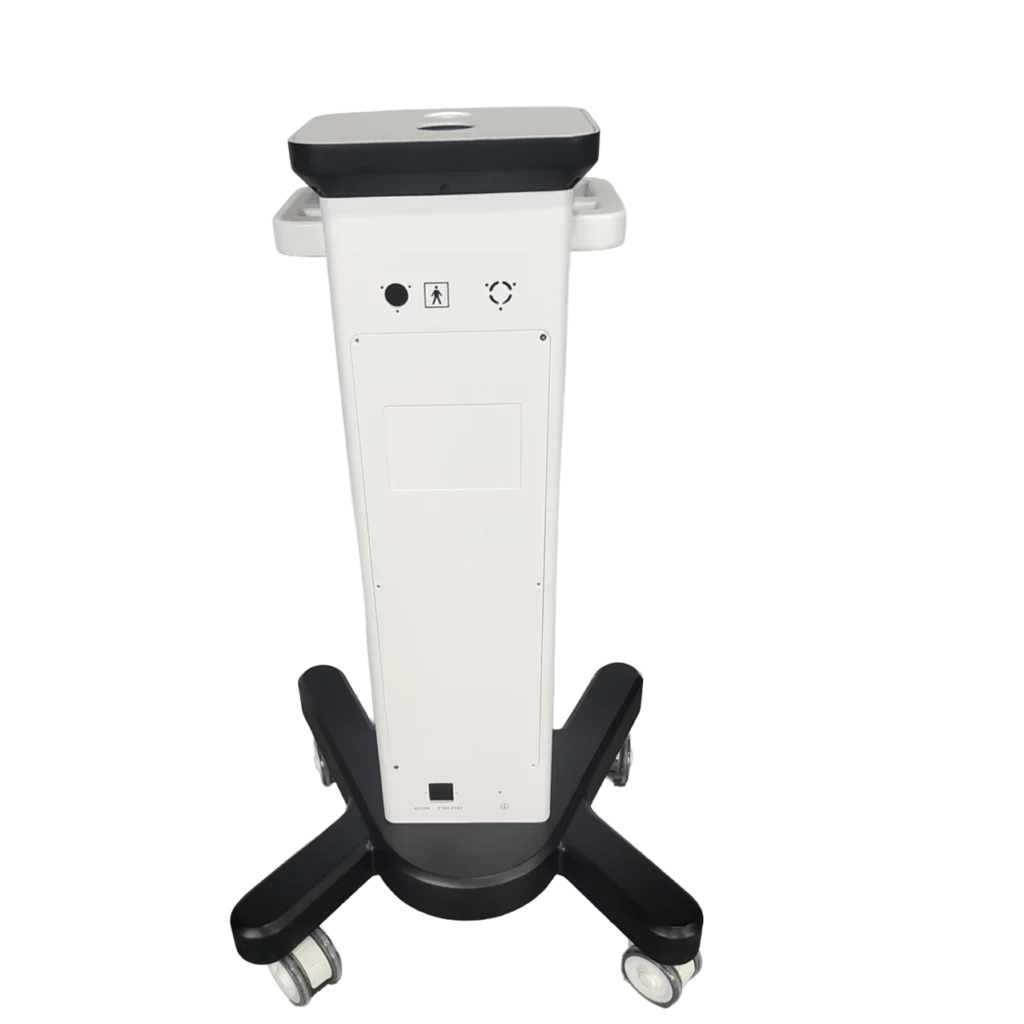
Final Results
The completed cart achieved the customer’s required combination of functionality, mobility and appearance.
The final design provides:
- A rigid vertical equipment housing
- Stable five-star mobile base
- Ø80 mm quiet locking casters
- Dedicated top mounting interface
- Internal space for power and electronics
- Service access for maintenance
- Circular accessory storage
- Matte white medical-aesthetic appearance
- Black structural and decorative details
- Blue silk-screen customer branding
Most importantly, the project progressed from engineering review and production validation into mass production.
The experience also reinforced an important point we see frequently in equipment enclosure projects: the best result comes from coordinating structural design, manufacturing process, assembly and appearance requirements from the beginning.
Why Choose Zhongrongda
For customers developing medical, aesthetic, laboratory or industrial equipment, enclosure manufacturing is rarely just a matter of producing a shell.
At Zhongrongda, we support projects from engineering review through production.
Engineering Support
Our engineering team reviews drawings, materials, critical dimensions, assembly relationships and manufacturability before production.
Fast Quotation
Send us your drawings, 3D models or preliminary specifications and we can review the project requirements for quotation.
Rapid Prototyping
We can support prototype development before customers commit to larger production quantities.
Small-Batch Manufacturing
This project demonstrates our ability to support small-batch equipment enclosure production and subsequently transition qualified products into mass production.
Quality Control
We use dimensional inspection and controlled production procedures to manage critical features and finished-product quality.
NDA Protection
For customers developing new medical or aesthetic equipment, NDA confidentiality can be arranged to protect sensitive product information.
ISO 9001 & ISO 13485
Our quality management capabilities support projects where consistent manufacturing and controlled quality processes are important.
For projects specifically focused on medical equipment housings, see our Medical Device Enclosure solutions.
FAQ
1. What is the MOQ for a custom medical equipment cart enclosure?
MOQ depends on the enclosure structure, material, manufacturing process and production stage. We can support prototype development, small-batch production and larger-volume manufacturing.
2. How long does a custom medical equipment cart enclosure take?
Lead time depends on drawing readiness, material availability, surface finishing, tooling requirements and quantity. After reviewing your drawings, our engineering team can provide a project-specific schedule.
3. What tolerance can Zhongrongda achieve?
Tolerance depends on material, geometry and manufacturing process. For this project, the top equipment mounting holes required approximately ±0.2 mm. We recommend defining critical dimensions clearly on the engineering drawing.
4. What materials can be used for medical equipment enclosures?
Depending on the application, options may include PC-ABS, ABS, engineering plastics, sheet metal and other suitable materials. Material selection should consider strength, appearance, chemical exposure, weight and manufacturing volume.
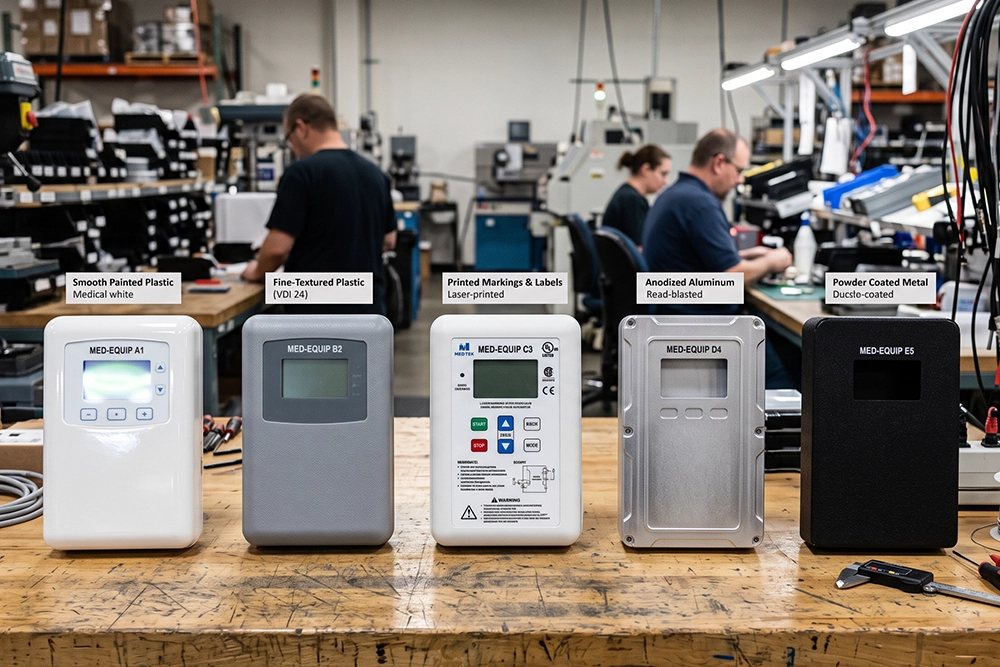
5. Can you provide different surface finishes?
Yes. Depending on the material and process, we can support painted, matte, textured and other specified finishes. Silk-screen printing can also be used for customer logos and markings.
6. Can you manufacture custom mobile medical equipment enclosures?
Yes. We can manufacture housings designed for mobile equipment, including structures incorporating casters, equipment mounting interfaces, internal cable routing and service access.
7. Can you provide rapid prototypes before production?
Yes. Prototype manufacturing can be used to validate dimensions, assembly, appearance and equipment integration before moving into larger production.
8. Can Zhongrongda support small-batch manufacturing?
Yes. We support small-batch enclosure projects and can help customers move from prototype validation to repeat production when the design is finalized.
9. Can you sign an NDA for a new medical equipment project?
Yes. NDA arrangements can be discussed for projects involving confidential drawings, product concepts, engineering information or new equipment designs.
10. Do you manufacture medical device enclosures under ISO 13485?
Zhongrongda operates under ISO 9001 and ISO 13485 quality management systems and supports customers requiring controlled manufacturing processes for medical-related equipment enclosures.
CTA
Need a reliable CNC machining partner for your next project?
Upload your drawings today and our engineering team will provide a free DFM review and quotation within 24 hours.
Whether you need a prototype, small batch or production-ready custom medical equipment cart enclosure, our team can help evaluate the material, structure, manufacturing process and critical dimensions before production.
Contact our engineering team today.