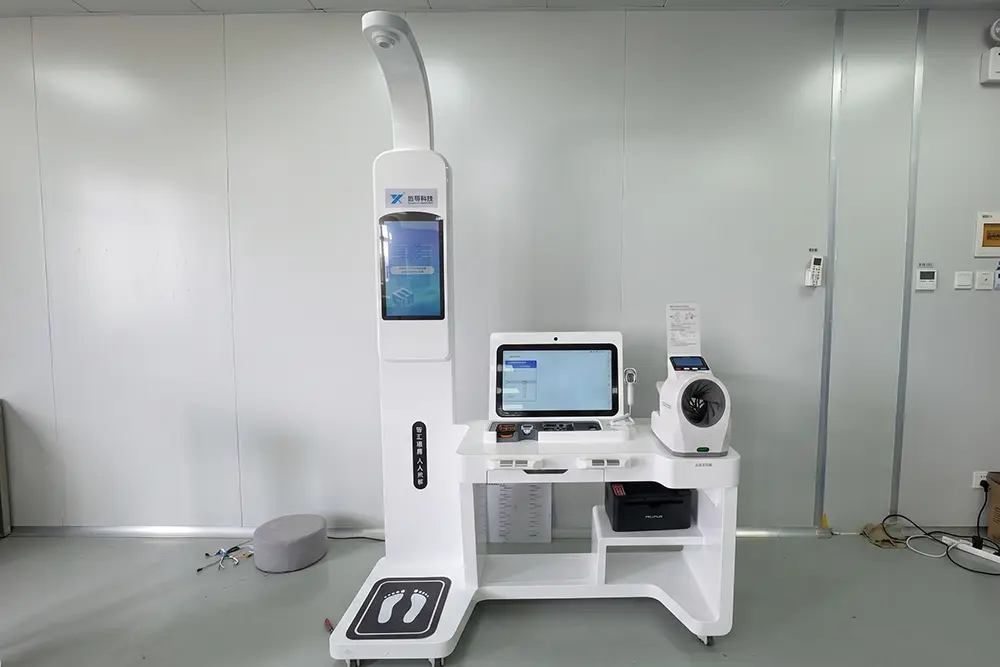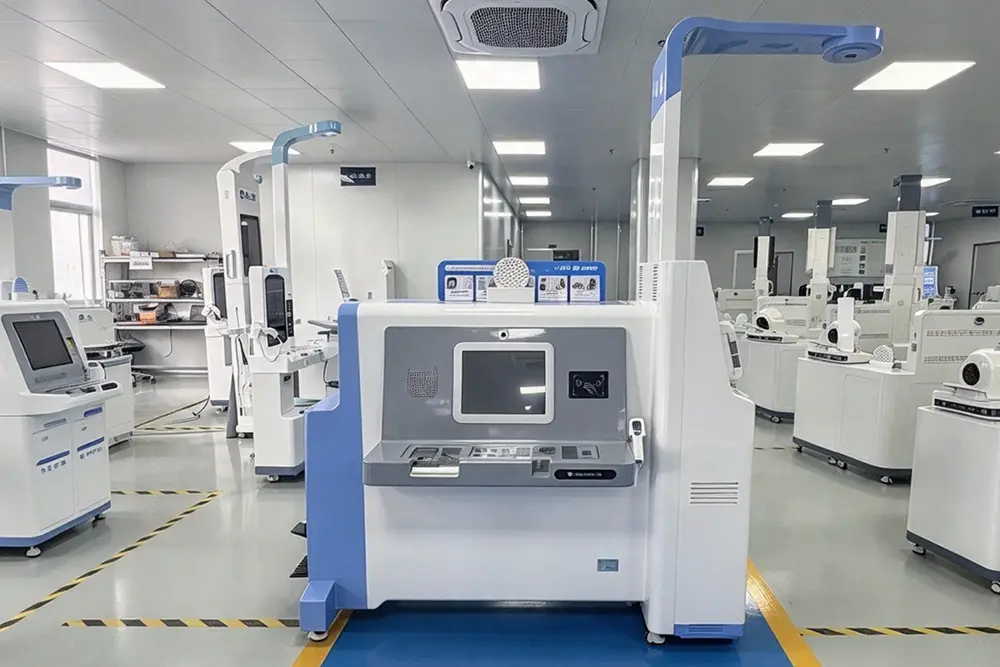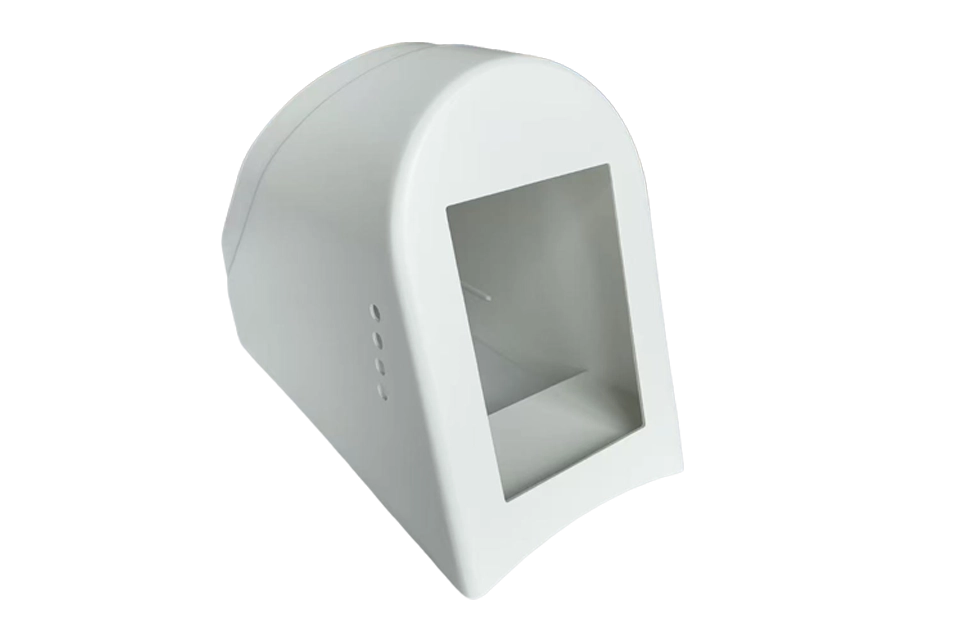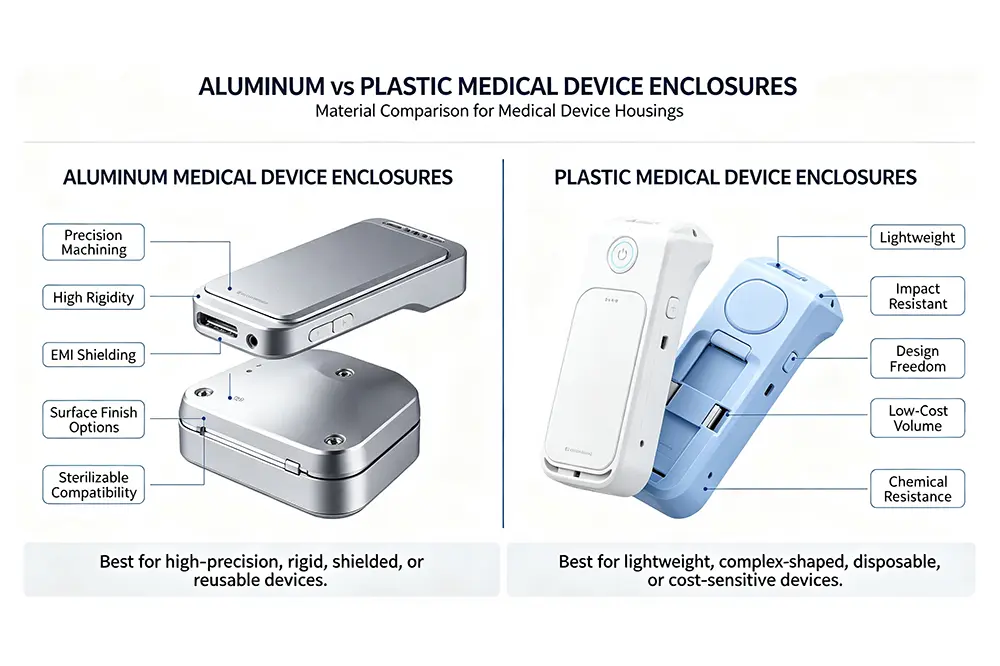
A medical device cart enclosure must do more than cover the electronics inside a mobile medical system. It needs to support the display, protect internal components, provide convenient service access, maintain a clean medical appearance, and remain stable when the equipment is moved through a clinical environment.
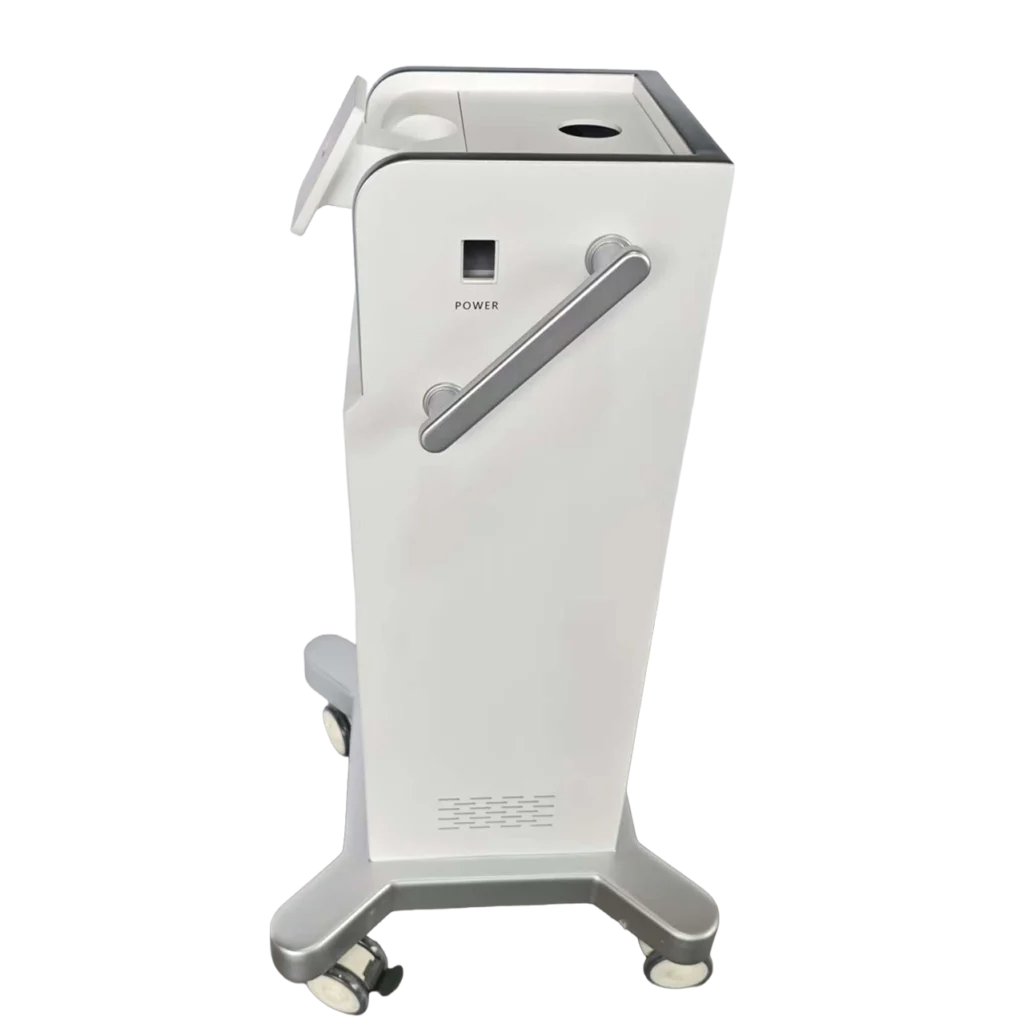
At Zhongrongda, we recently completed the manufacturing of a vertical rehabilitation therapy equipment cart enclosure for a customer in Wuhan, China. The project was developed as a small-batch manufacturing program and has now moved into mass production.
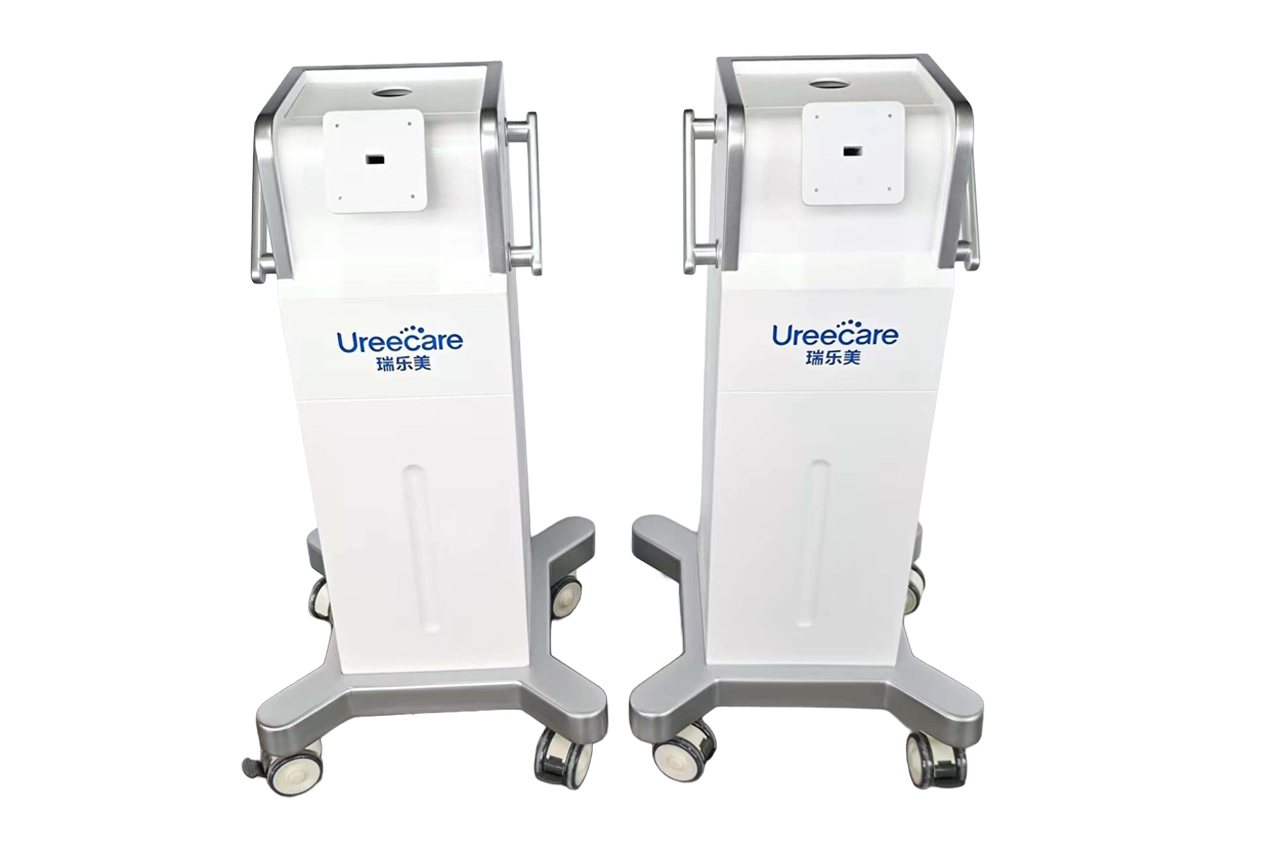
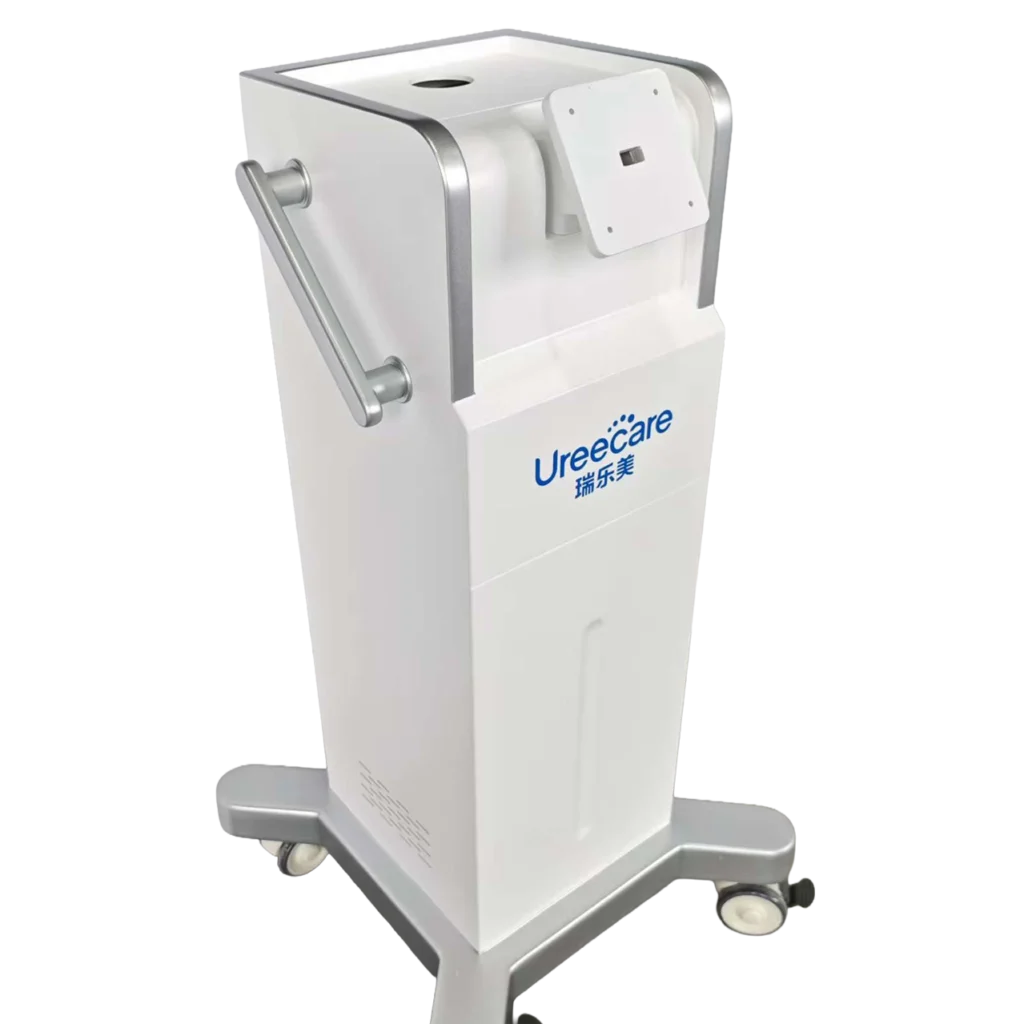
The customer needed a tall, mobile enclosure that could integrate a display mounting panel, aluminum handrails, a sheet-metal base, and medical-grade silent casters into one stable structure. The enclosure also needed a practical internal layout for power supplies, control boards, and cable routing while maintaining consistent exterior gaps and a clean medical appearance.
Our engineering team treated the project as a complete enclosure system rather than a collection of individual parts. We reviewed the structure, interfaces, machining requirements, assembly sequence, mobility, and appearance together before production. This approach helped us solve several challenges that are common in tall medical equipment housings.
For more information about our manufacturing capabilities, see [Manufacturing] and [Medical Device Enclosure].
Project Overview
| Item | Project Specification |
|---|---|
| Industry | Medical & Rehabilitation Equipment |
| Application | Mobile rehabilitation therapy equipment |
| Country / Region | Wuhan, China |
| Material | PC-ABS, aluminum alloy, sheet metal, die-cast base components |
| Dimensions | Overall height 1500 mm; cabinet W380 × D340 mm |
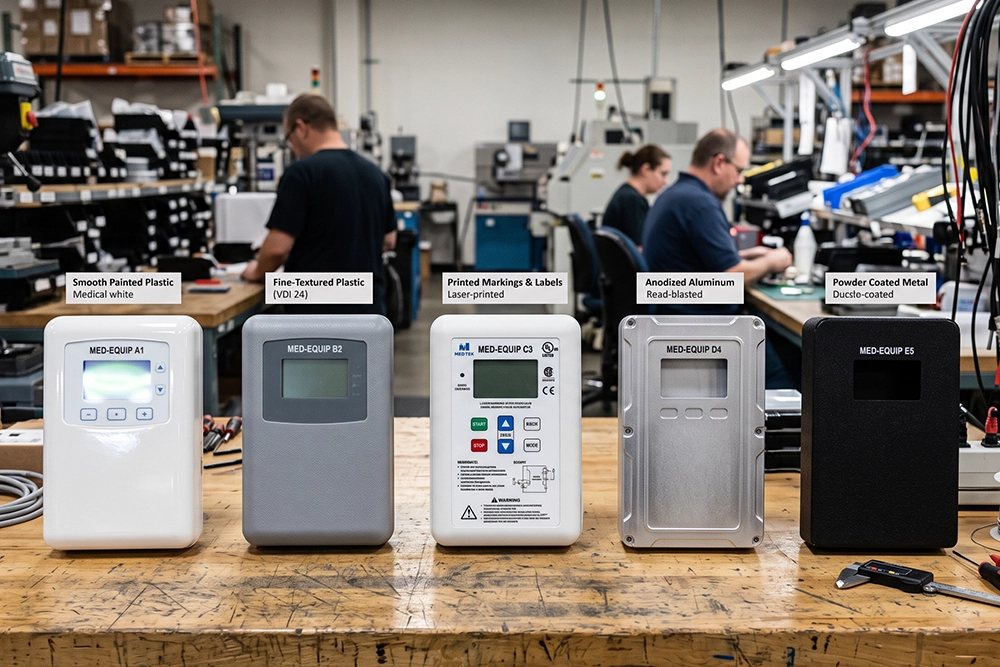
| Surface Finish | Matte painted plastic, brushed anodized aluminum, screen-printed logo |
| Tolerance | Critical display mounting holes ±0.2 mm; 3 mm assembly clearance |
| Manufacturing Process | CNC machining, vacuum forming, aluminum profile machining, anodizing, sheet-metal fabrication, welding, assembly |
| Quantity | Small batch initially; now in mass production |
| Lead Time | Managed according to prototype approval and production schedule |
The overall enclosure height is approximately 1500 mm. The cabinet body measures 380 × 340 mm, while the maximum base width reaches 580 mm. The display mounting plate is 195 × 195 mm with a 32 × 10 mm center slot.
The project also includes a 320 × 260 mm upper logo panel, a lower vertical recessed feature measuring 320 × 35 × 8 mm, Ø30 mm aluminum handrails with an 85 mm extension, Ø100 mm silent casters, and a base clearance of approximately 100 mm.
Customer Requirements
The customer required a professional medical appearance while keeping the enclosure practical for daily operation and maintenance.
The main requirements were divided into four areas: function, appearance, assembly, and surface finishing.
Functional Requirements
The top section needed to provide a stable mounting interface for the operation display. Four mounting holes required a positional tolerance of ±0.2 mm to ensure accurate alignment during final assembly.
The two sides required integrated push-and-pull handles. The bottom needed silent swivel casters with braking capability so operators could move and position the equipment easily.
A vertical concealed service cover was required on the rear of the enclosure. This provided access to internal wiring and electronics without disrupting the clean appearance of the front and side panels.
Appearance Requirements
The customer specified a matte white plastic enclosure combined with silver-gray metal components.
The overall appearance needed to communicate a clean, modern medical aesthetic. The front panel included a blue customer logo applied by screen printing.
Sharp external edges were avoided, with R16 corner radii incorporated into the enclosure design.
Assembly Requirements
The housing needed to be easy to disassemble for maintenance. We also had to reserve sufficient internal space for power supplies, circuit boards, connectors, and cable routing.
The enclosure was designed as a split structure so the individual sections could be assembled and serviced without unnecessarily dismantling the entire cart.
Manufacturing Challenges
1. Maintaining Rigidity in a Tall Enclosure
A 1500 mm-high mobile housing naturally presents greater structural challenges than a compact enclosure.
If the structure is too flexible, repeated pushing and stopping can cause unwanted movement between the housing, frame, display mount, and base.
Our engineering team therefore considered the plastic housing, aluminum frame, and lower base as a combined structural system rather than treating each component independently.
2. Maintaining Consistent Housing Gaps
The interface between the PC-ABS enclosure and aluminum frame was one of the most visible areas of the finished product.
The customer required consistent gaps around the housing. A nominal 3 mm assembly clearance was used to provide enough room for installation while maintaining a controlled visual appearance.
This required attention to part dimensions, fixture positioning, machining references, and assembly sequence.
3. Display Mounting Accuracy
The display mounting plate was another critical area.
The four fixing holes required ±0.2 mm positional accuracy. If the hole pattern shifted during machining or assembly, the display could become difficult to install or appear visually misaligned.
We therefore treated the display mounting interface as a controlled assembly datum instead of relying only on general enclosure dimensions.
4. Stability and Mobility
Because the product is a tall mobile cart, weight distribution was important.
The enclosure needed to remain stable during movement while still being easy for operators to push. The base, caster positions, internal components, and overall center of gravity were considered during the engineering review.
5. Multi-Material Integration
This project combined PC-ABS plastic, aluminum alloy, and sheet-metal components.
Each material required a different manufacturing approach and finishing process. The challenge was not simply producing each component individually, but ensuring that all materials came together accurately during final assembly.
Our Engineering Solution
At Zhongrongda, we started with a DFM review before releasing the project to production.
Our engineering team reviewed the enclosure structure, critical dimensions, mounting interfaces, assembly clearances, service access, and manufacturing sequence.
DFM Optimization
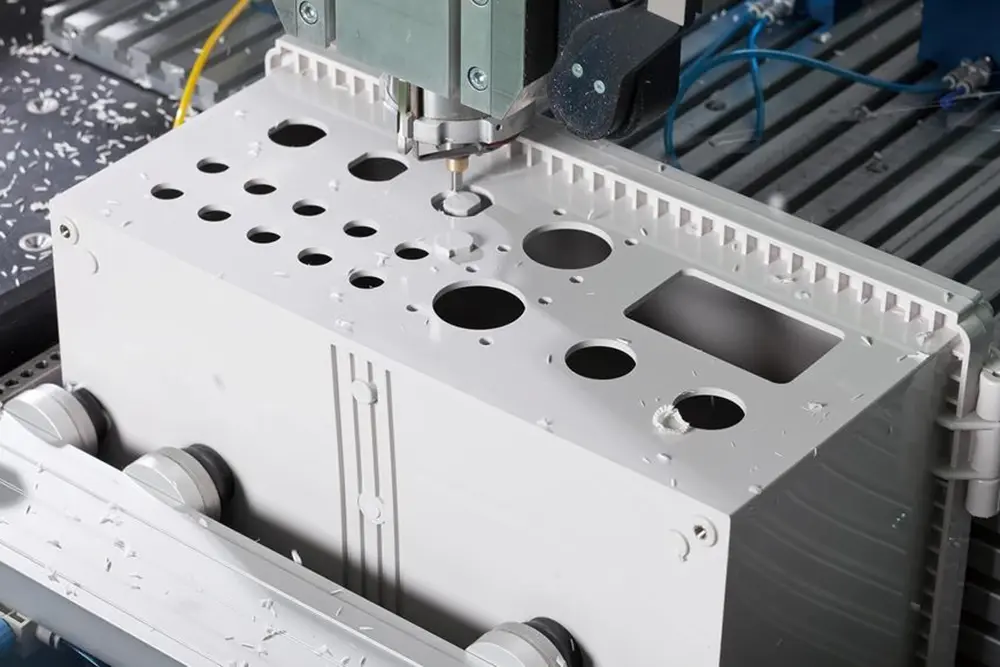
For the plastic housing, we selected a combination of CNC machining of thick plastic sections and vacuum forming according to the geometry of individual components.
The aluminum frame and handrails were produced from aluminum profiles with subsequent machining and anodizing.
The lower structural base was fabricated through sheet-metal bending and welding.
This mixed manufacturing approach allowed us to match the process to the geometry and function of each component rather than forcing the entire enclosure into one manufacturing method.
Fixture and Reference Control
For critical mounting interfaces, we established controlled reference surfaces during machining and inspection.
The display mounting holes were inspected against the required ±0.2 mm positional requirement. Assembly fixtures also helped maintain the relationship between the plastic enclosure and supporting frame.
Tool Selection and Machining Control
Machining parameters and tooling were selected according to the material and geometry of each part.
For visible plastic surfaces, we paid particular attention to tool marks and edge quality because surface defects would remain visible after painting.
After machining, edges were carefully deburred before surface finishing and assembly.
Assembly Control
The enclosure was assembled in stages rather than treating the final assembly as a single operation.
The base and frame were established first, followed by the plastic housing, display mounting section, handrails, service cover, and casters.
This sequence helped control the visible gaps and reduced the risk of forcing components into position during final assembly.
Manufacturing Process
Our production workflow followed a controlled sequence:
- DFM Review – Engineering reviewed drawings, interfaces, tolerances, and assembly requirements.
- Programming – CNC programs were prepared according to approved drawings and manufacturing references.
- Material Preparation – PC-ABS, aluminum profiles, and sheet-metal materials were prepared for their respective processes.
- CNC Machining – Critical plastic and aluminum components were machined according to the drawing requirements.
- Deburring – Machined parts were cleaned and edges were processed to remove burrs and sharp edges.
- Surface Finishing – Plastic components received matte painting; aluminum components received brushed anodizing.
- Assembly – The split enclosure, frame, base, display mounting section, handrails, service cover, and casters were assembled.
- Inspection – Critical dimensions, hole positions, gaps, appearance, and assembly functions were checked.
- Packaging – Completed units were protected for transportation before delivery.
Our broader [Rapid Prototyping] capability also supports projects that require early physical samples before production approval.
Quality Inspection
Quality control focused on the interfaces that directly affected assembly and product performance.
For dimensional verification, our inspection process can include:
- CMM inspection for critical geometric relationships
- Height gauge inspection for reference dimensions
- Micrometer measurement for precision features
- Caliper measurement for general dimensions
- First Article Inspection for initial production parts
- Final Inspection before shipment
For this project, particular attention was given to the display mounting hole pattern, enclosure dimensions, visible assembly gaps, caster mounting interfaces, and overall appearance.
The inspection process was not limited to individual components. We also evaluated the assembled enclosure because a component can meet its individual drawing dimensions while still creating an assembly problem when combined with other parts.
Final Results
The completed rehabilitation therapy equipment cart achieved the customer’s required combination of function, appearance, mobility, and serviceability.
The final enclosure combines:
- Matte white PC-ABS housing
- Silver-gray aluminum frame and handrails
- Sheet-metal structural base
- Silent medical casters with brakes
- Top display mounting interface
- Rear service access cover
- Internal cable routing space
- Customer-branded screen printing
The initial project was produced in small batches and has now progressed to mass production.
Rather than adding unverified performance claims or a fabricated customer testimonial, we consider the transition into mass production the clearest documented project outcome available from this case.
For additional real-world enclosure projects, visit [Case Studies].
Why Choose Zhongrongda for Medical Device Enclosures?
Medical equipment enclosure projects often require more than machining capacity. The manufacturer needs to understand how materials, structure, tolerances, assembly, finishing, and production requirements interact.
At Zhongrongda, our support includes:
- Engineering support from drawing review through production
- Fast quotation and DFM feedback
- Rapid prototyping for design verification
- Small-batch manufacturing
- Production quality control
- NDA confidentiality support for customer projects
- ISO9001 quality management
- ISO13485 medical-device quality management
- Multi-material enclosure manufacturing
- Support from prototype development through production
Our experience with medical equipment housings also covers different equipment formats, including [Diagnostic Equipment Enclosures], [Medical Cart & Workstation Enclosures], [Medical Robot Enclosures], and [Large Medical Equipment Enclosures].
For customers developing aesthetic and rehabilitation equipment, our [Beauty Device Enclosures] capability provides another relevant manufacturing reference.
FAQ
1. What is the MOQ for a custom medical device cart enclosure?
MOQ depends on the enclosure structure, manufacturing process, tooling requirements, material, and production stage. We support prototype quantities, small-batch production, and larger production programs.
2. How long does it take to manufacture a medical device cart enclosure?
Lead time depends on drawing complexity, material availability, surface finishing, assembly requirements, and quantity. After reviewing your drawings, our engineering team can provide a project-specific production schedule.
3. What tolerances can you achieve?
Tolerance depends on the material, process, geometry, and feature size. For critical interfaces, we establish specific dimensional requirements during DFM review. In this project, the four display mounting holes required ±0.2 mm positional accuracy.
4. What materials can be used for medical equipment cart housings?
Common options include engineering plastics such as PC-ABS, ABS and other suitable plastics, as well as aluminum and sheet metal. Multi-material construction can also be used when structural and appearance requirements differ between components.
5. What surface finishes are available?
Depending on the material, available options may include painting, matte finishes, anodizing, brushed finishes, and screen printing. The appropriate finish is selected according to appearance, application, material, and production requirements.
6. Can you manufacture prototypes before mass production?
Yes. We can support prototype development so customers can verify fit, appearance, assembly, and functional interfaces before moving into larger production.
7. Can you sign an NDA for medical device enclosure projects?
Yes. NDA arrangements can be discussed when required to protect confidential product drawings, designs, specifications, and project information.
8. Can you manufacture complete medical device cart assemblies?
We can support multi-component enclosure projects involving plastic housings, aluminum structures, sheet-metal components, mounting parts, and final assembly. The exact scope is confirmed during project review.
9. Do you support small-batch medical enclosure manufacturing?
Yes. Small-batch production is suitable for medical equipment development, product verification, pilot production, and early commercial programs before larger-volume manufacturing.
10. Can you manufacture custom medical device enclosures from customer drawings?
Yes. Customers can provide 2D drawings, 3D CAD files, specifications, or product concepts. Our engineering team can review the design for manufacturability, identify potential production issues, and recommend suitable manufacturing processes.
CTA
Need a reliable CNC machining partner for your next project?
Upload your drawings today and our engineering team will provide a free DFM review and quotation within 24 hours.
Whether you need a custom medical device cart enclosure, a prototype for design verification, or a small-batch production program, Zhongrongda can support your project from engineering review through manufacturing and assembly.
[Contact] our engineering team to discuss your next enclosure project.