Introduction
A custom ophthalmic device enclosure needs to do more than protect internal components. For optical treatment equipment, the enclosure can also influence equipment stability, component installation, cable routing, heat management, appearance, and the working environment around sensitive optical components.
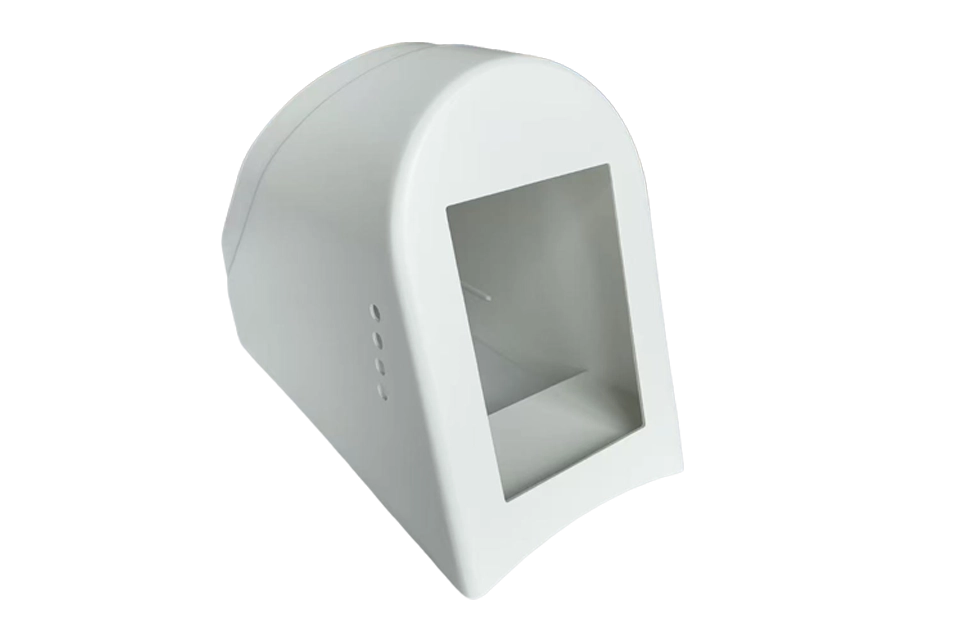
At Zhongrongda, we recently completed a small-batch enclosure project for a K420 ophthalmic treatment device used for myopia and amblyopia treatment. The equipment incorporated an integrated light-shielding hood and treatment chamber designed to block external stray light and provide a controlled optical environment during operation.
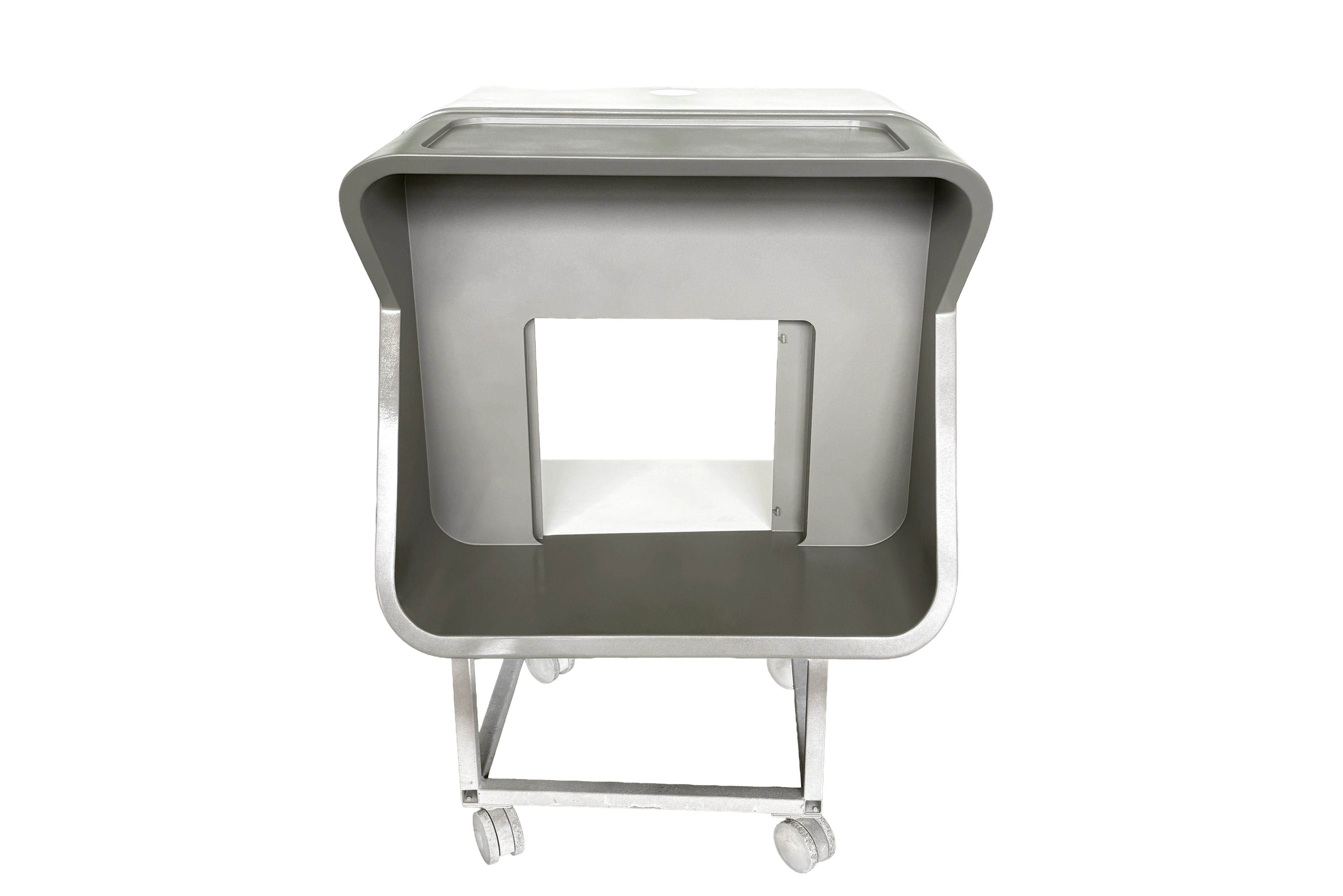
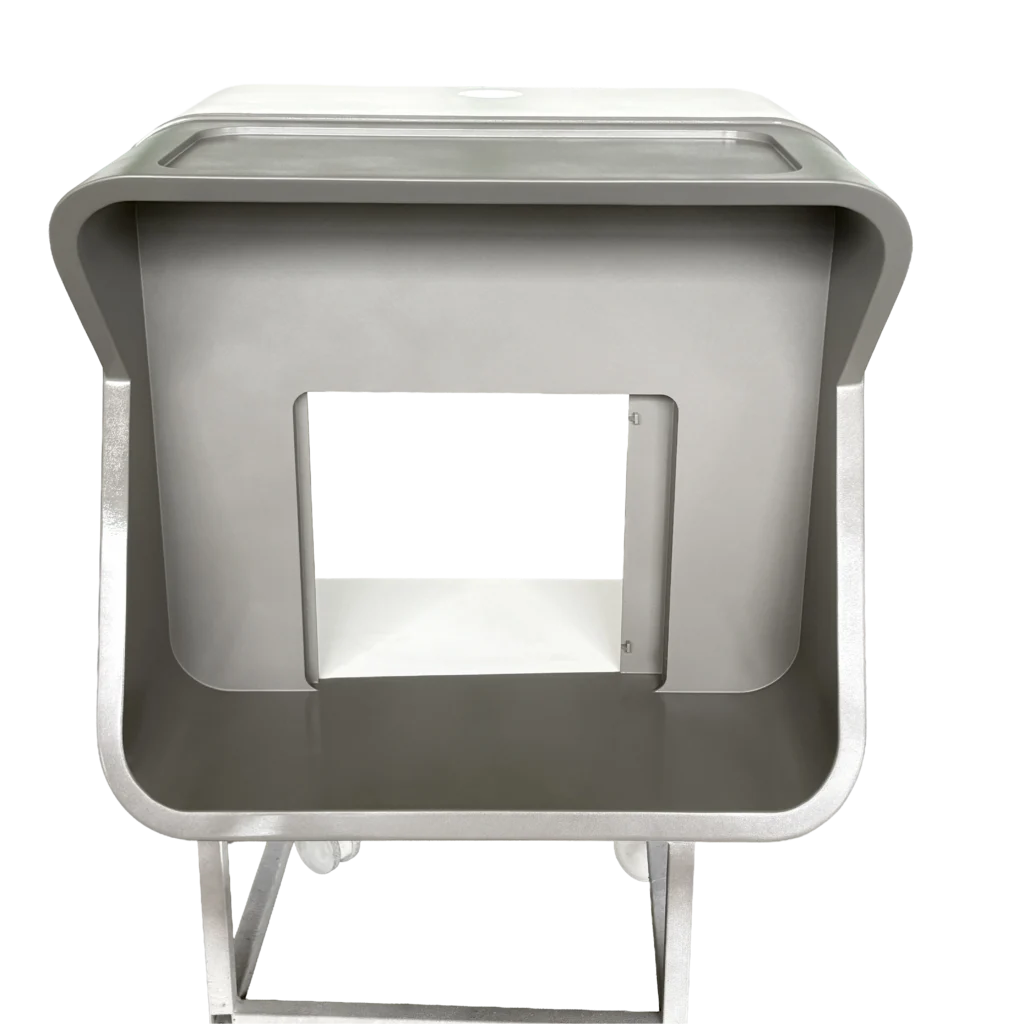
The project combined two different materials and manufacturing methods: a welded SPCC cold-rolled steel frame provided the main structural support, while CNC-machined ABS sheet was used to build the main equipment housing and light-shielding hood.
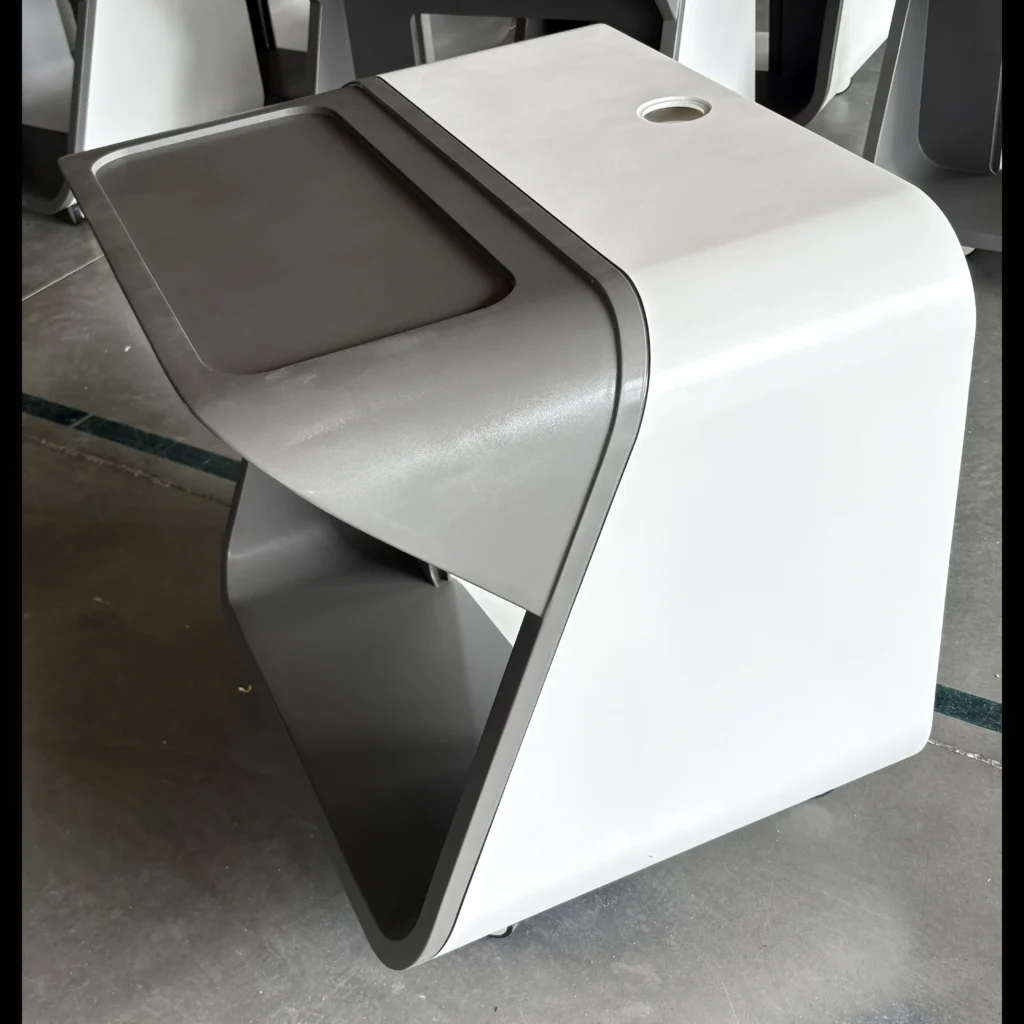
The enclosure also required large curved surfaces, rounded transitions, removable sections, optical component mounting locations, cable and tubing openings, and a two-tone white and dark-gray finish.
For our engineering team, the main challenge was not simply machining ABS panels. We had to coordinate the dimensional relationship between the steel frame and ABS housing, control deformation during welding and finishing, maintain consistent curved-surface joints, and ensure that the hood and main body fitted closely enough to control light leakage.
Project Overview
| Project | Specification |
|---|---|
| Industry | Ophthalmic / Medical Equipment |
| Application | K420 ophthalmic treatment device |
| Country | China |
| Material | ABS + SPCC cold-rolled steel |
| Overall Height | 980 mm |
| Maximum Width | 760 mm |
| Overall Depth | 620 mm |
| Top Storage Recess | 720 × 340 mm |
| Main Equipment Opening | 420 × 460 mm |
| Bottom Metal Frame | 740 × 580 mm |
| Caster Center Distance | 660 × 480 mm |
| Rear Cable Opening | Ø80 mm |
| Surface Finish | White + dark-gray semi-matte coating |
| Manufacturing Process | CNC ABS prototype assembly + SPCC sheet-metal fabrication |
| Quantity | Prototype, validation and small batch |
The project lead time was project-dependent and is not stated as a fixed number in the project records.
Customer Requirements
The customer needed a complete enclosure system capable of supporting the optical and electronic components inside the treatment equipment.
The internal SPCC frame needed sufficient structural strength to support optical lenses, light-source modules, circuit boards, and other assemblies. The frame also had to accommodate four casters so that the complete unit could be moved when required.
The ABS housing had several functional requirements. It needed to provide installation space for optical components, internal wiring, heat dissipation, and tubing. A rear Ø80 mm opening was provided for power and signal routing.
The upper section included a 720 × 340 mm recessed platform for the control panel and ophthalmic accessories, while the central 420 × 460 mm opening provided the installation interface for the main treatment unit.
A major functional requirement was the integrated light-shielding hood. The hood needed to fit closely with the main housing and maintain suitable internal space for optical components. The enclosure was designed as a removable, segmented structure so technicians could install optical components, adjust the optical path, route cables, and perform future maintenance.
Appearance requirements were equally demanding. The customer specified a white main body with dark-gray treatment and hood areas, clean color separation, large-radius curved surfaces, and a semi-matte finish.
The finished surfaces needed to be free from scratches, dents, coating defects, visible deformation, uneven joints, and inconsistent gaps. The internal hood surface also required a matte treatment to reduce unwanted reflections.
Manufacturing Challenges
1. ABS and SPCC Assembly Tolerance
The project combined a welded SPCC structural frame with CNC-machined ABS exterior components.
These two materials behave differently during manufacturing. The steel frame can experience deformation during welding and correction, while ABS components require careful handling during CNC machining, bonding, sanding, painting, and curing.
Our engineering team therefore had to consider the dimensional relationship between the metal frame and the ABS shell from the beginning rather than treating the two manufacturing processes independently.
2. Large Curved ABS Housing
The exterior design used large curved surfaces and smooth large-radius transitions.
Producing these surfaces from ABS sheet required CNC machining followed by hand-built joining and surface preparation. After bonding, the seams had to be filled and sanded so that the transitions remained visually smooth after painting.
3. Light Leakage Control
The treatment hood was not simply an aesthetic component. Its function was to block external stray light around the optical treatment area.
The joints between the hood and main housing therefore required consistent gaps and accurate positioning. Excessive gaps or deformation could affect the intended light-shielding function.
4. Two-Tone Painting
The white and dark-gray finish required careful masking on complex curved surfaces.
The separation line needed to remain clean without color bleeding, overspray, runs, or exposed substrate. Because ABS can deform under excessive heat, low-temperature oven curing was used.
5. Optical Component Mounting
The housing included mounting interfaces for optical components. Their positions needed to correspond with the internal equipment layout while avoiding interference with the enclosure structure.
Our Engineering Solution
At Zhongrongda, we approached the project as a complete enclosure manufacturing system rather than a simple plastic machining order.
DFM Review
Our engineering team reviewed the 3D enclosure structure, material combination, removable sections, optical mounting areas, cable routing, tubing openings, hood interfaces, and structural frame.
The objective was to make the ABS and SPCC components work together during final assembly.
For projects requiring similar engineering support, our Enclosure Solutions service can be integrated into the development process.
SPCC Structural Frame
The SPCC frame was manufactured through laser cutting, CNC bending, welding, weld-seam grinding, and deformation correction.
After fabrication, the steel components received oil and rust removal treatment followed by epoxy primer to improve coating adhesion and corrosion protection.
The frame provided the structural foundation for the ABS exterior housing and internal equipment.
CNC ABS Housing
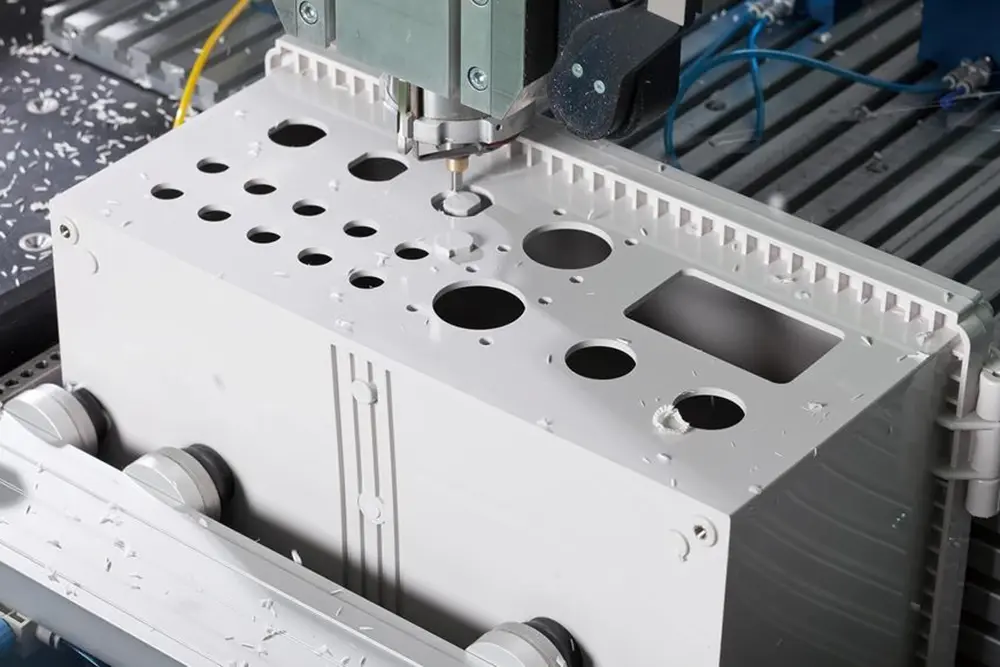
ABS sheets were cut and CNC machined to create the external housing, curved surfaces, large-radius corners, optical mounting holes, tubing openings, ventilation and cable-routing features.
After machining, the individual ABS sections were bonded and joined into the required hand-built housing structure.
The bonded areas were then filled and progressively sanded to reduce visible seams and machining marks.
This combination of CNC machining and hand-built assembly is particularly useful for prototypes and small-batch projects involving large or complex plastic housings. Our Rapid Prototyping capability can support similar development requirements.
Surface Finishing
After surface preparation, the ABS parts received an ABS-specific primer.
The complete enclosure was then finished in white and dark gray with a semi-matte appearance. Masking was used to create the required two-tone boundaries, followed by controlled low-temperature curing.
The internal treatment chamber received a matte finish to reduce unwanted surface reflection.
Manufacturing Process
The complete manufacturing workflow was:
1. DFM Review
Review the 3D model, structural interfaces, optical mounting positions, hood structure, cable routing and material combination.
2. Programming
Prepare CNC machining programs for the ABS enclosure components and cutting programs for SPCC sheet-metal parts.
3. Material Preparation
Prepare ABS sheets and SPCC cold-rolled steel according to the component requirements.
4. CNC Machining
Machine ABS external profiles, curved surfaces, rounded corners, mounting holes, cable openings and other interfaces.
5. SPCC Fabrication
Laser cut and bend the steel components, weld the frame, grind weld seams and correct deformation.
6. Deburring and Surface Preparation
Remove machining burrs, prepare ABS surfaces, and perform steel-frame cleaning and pretreatment.
7. ABS Bonding and Assembly
Join the individual ABS sections and integrate the housing with the structural frame.
8. Surface Finishing
Apply ABS primer, surface preparation, white and dark-gray coatings, and low-temperature curing.
9. Final Assembly
Install the ABS housing onto the SPCC frame, assemble the treatment hood, adjust joints, and complete logo and equipment marking.
10. Inspection and Packaging
Check dimensions, appearance, mounting interfaces, hood fit, cable openings, surface quality, and overall assembly condition before delivery.
Quality Inspection
Quality control for this project focused on the features that directly affected structural assembly, optical equipment installation, appearance, and light-shielding performance.
The inspection scope included:
- Overall enclosure dimensions
- ABS and SPCC component alignment
- Optical component mounting locations
- Cable and tubing openings
- Hood-to-body fit
- Surface flatness and visible deformation
- Joint and gap consistency
- Paint appearance
- Two-tone color boundaries
- Coating defects
- Overall assembly stability
Depending on the drawing and inspection plan, dimensional verification can be performed using appropriate equipment such as calipers, micrometers, height gauges, or CMM inspection where required.
For prototype and production projects, first-article inspection and final inspection requirements can also be established according to the customer’s drawings and quality specifications.
The completed K420 enclosure passed the project’s structural and appearance acceptance requirements before delivery.
Final Results
The complete enclosure was successfully manufactured, assembled, painted, inspected, and delivered to the equipment manufacturer.
The final structure combined a welded SPCC frame with CNC-machined and hand-built ABS exterior components. The housing incorporated the required treatment chamber, optical mounting interfaces, cable and tubing routing, removable sections, caster support, and light-shielding hood.
The white and dark-gray semi-matte finish provided the required visual appearance, while the internal matte treatment helped reduce unwanted reflection inside the treatment area.
The finished enclosure was accepted for structure and appearance and has been put into use by the equipment manufacturer.
This project demonstrates our experience in manufacturing complex medical equipment housings where ABS plastic, sheet metal, curved surfaces, optical interfaces, removable structures, surface finishing, and small-batch production must work together as one system.
For related medical equipment projects, customers can also explore our Medical Device Enclosure and Diagnostic Equipment Enclosures capabilities.
Why Choose Zhongrongda
At Zhongrongda, enclosure manufacturing is not limited to CNC machining.
Our engineering team can coordinate plastic machining, sheet-metal fabrication, structural assembly, surface finishing, printing, and inspection within one project workflow.
For customers developing medical, laboratory, optical, or industrial equipment, we provide:
- Engineering and DFM support
- Prototype and validation-stage manufacturing
- Small-batch production
- CNC ABS enclosure manufacturing
- SPCC sheet-metal fabrication
- ABS bonding and hand-built assembly
- Custom surface finishing
- Silk-screen printing
- Dimensional and appearance inspection
- NDA and confidential project handling
Our quality management system includes ISO9001 and ISO13485-related quality management capabilities for applicable projects.
Customers can also visit our VR Factory Tour to learn more about our manufacturing environment.
FAQ
1. What is the MOQ for a custom ophthalmic device enclosure?
We support prototype, validation, and small-batch manufacturing. The appropriate quantity depends on the equipment development stage, enclosure structure, and production requirements.
2. What materials can be used for an ophthalmic equipment enclosure?
This project used ABS for the exterior housing and SPCC cold-rolled steel for the structural frame. Other material combinations can be evaluated according to structural, appearance, weight, and manufacturing requirements.
3. Can you manufacture large curved ABS housings?
Yes. CNC machining can be combined with ABS sheet fabrication, bonding, filling, sanding, and surface finishing to produce large and complex curved housings.
4. How do you control deformation in large ABS enclosures?
Deformation needs to be considered during machining, bonding, sanding, painting, and curing. For this project, controlled low-temperature oven curing was used to reduce the risk of heat-related deformation.
5. Can you manufacture the metal frame together with the plastic enclosure?
Yes. This project combined an SPCC welded structural frame with a CNC-machined ABS exterior housing. Coordinating both materials within one manufacturing workflow helps improve assembly compatibility.
6. Can the enclosure include a light-shielding chamber?
Yes. The K420 project included an integrated light-shielding hood designed to reduce external stray light around the treatment area. Hood-to-body fit and joint consistency were important manufacturing considerations.
7. Can you provide rapid prototypes before small-batch production?
Yes. Prototype and validation-stage production can be supported before moving into small-batch manufacturing. Our Rapid Prototyping workflow can be adapted to the development requirements.
8. What surface finishes are available?
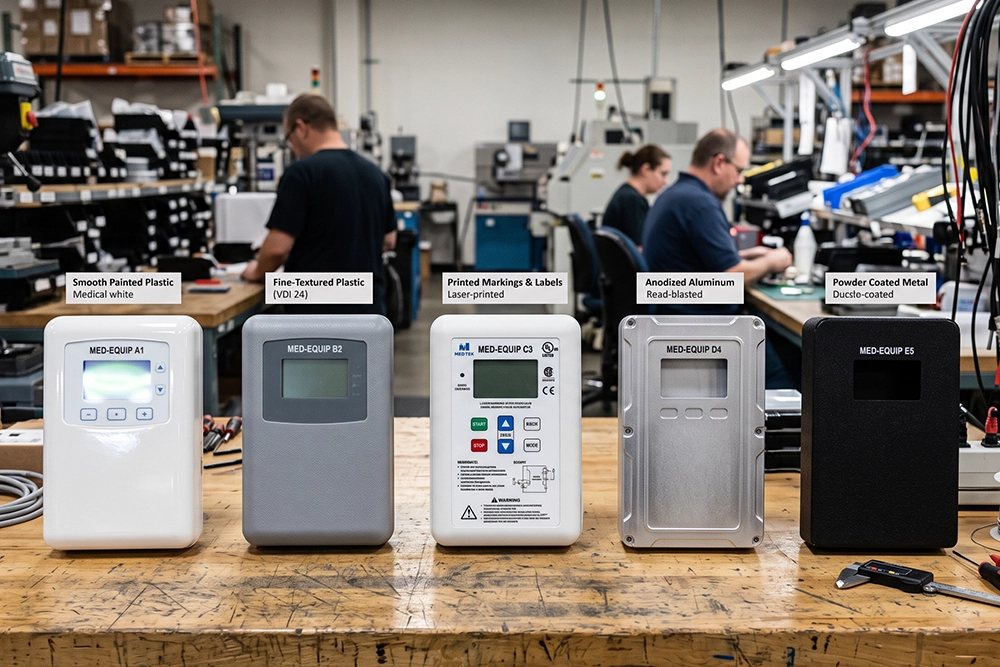
Surface finishing can include primers, painted finishes, matte or semi-matte surfaces, two-tone coatings, and silk-screen printing. The appropriate process depends on the material and appearance requirements.
9. Can you sign an NDA for a medical device enclosure project?
Yes. NDA and confidential project handling can be discussed before technical drawings and product information are shared with our engineering team.
10. Can you manufacture other medical equipment enclosures?
Yes. Our manufacturing capabilities cover different types of medical and laboratory equipment housings. Customers can review our Medical Device Enclosure, Laboratory Equipment Enclosures, Medical Cart & Workstation Enclosures, and Large Medical Equipment Enclosures services according to their application.
CTA
Need a reliable CNC machining partner for your next project?
Upload your drawings today and our engineering team will provide a free DFM review and quotation within 24 hours.
Whether you need a CNC ABS prototype, a custom ophthalmic device enclosure, a medical equipment housing, or small-batch production, we can help evaluate the material combination, enclosure structure, manufacturing process, surface finishing, and assembly requirements.
Contact our engineering team to discuss your next enclosure project.