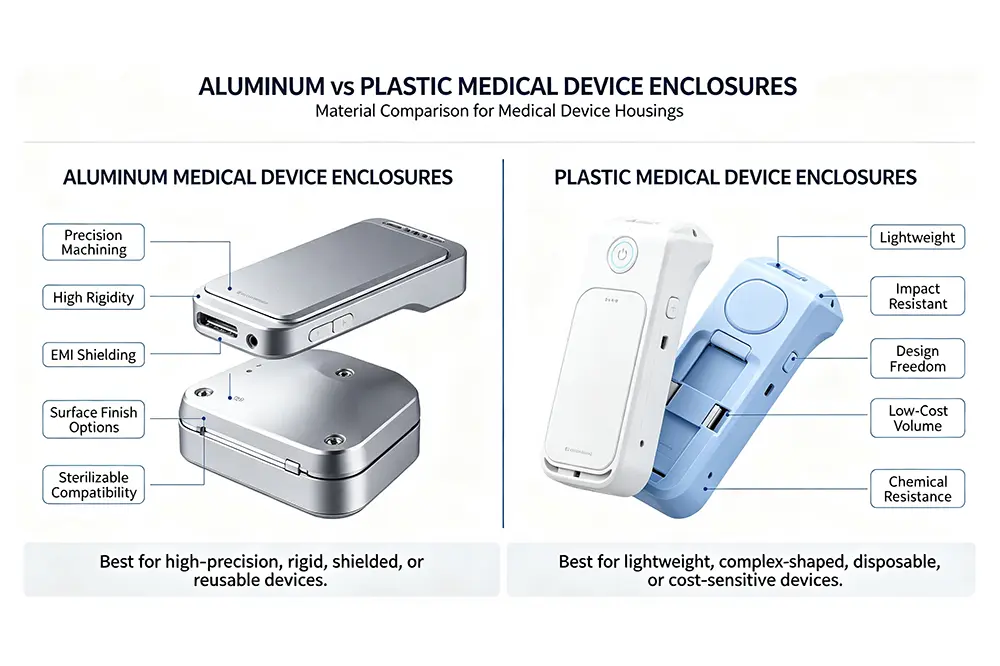
A medical equipment enclosure has to do more than provide an attractive exterior. It must protect internal electronics, support functional modules, allow efficient assembly and maintenance, and maintain a consistent appearance throughout production. In this project, our team developed a medical blood pressure workstation enclosure for a community-based health screening workstation used for blood pressure and blood oxygen testing.
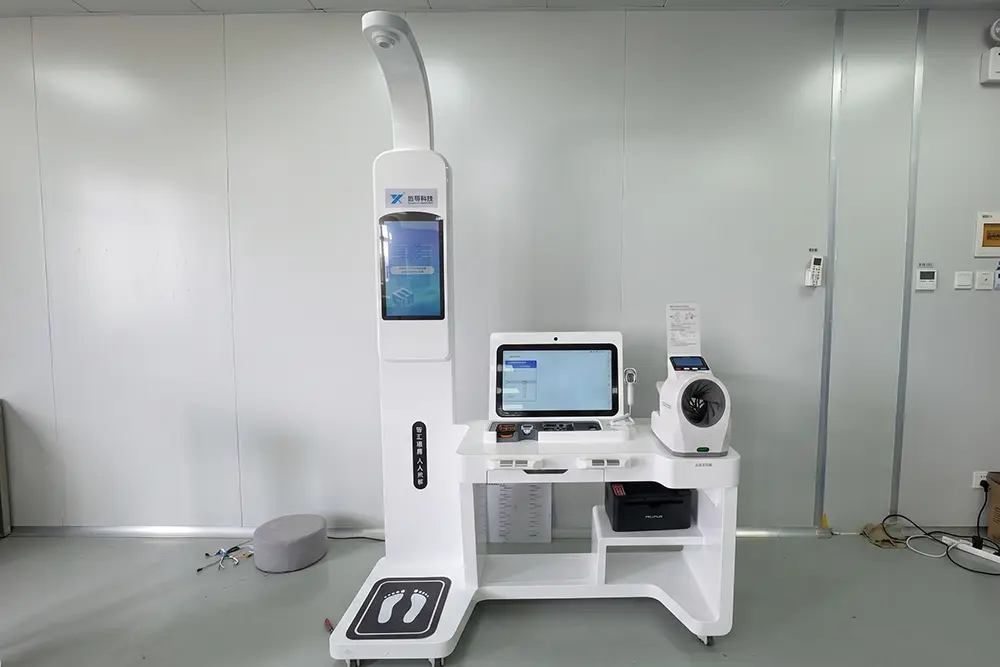
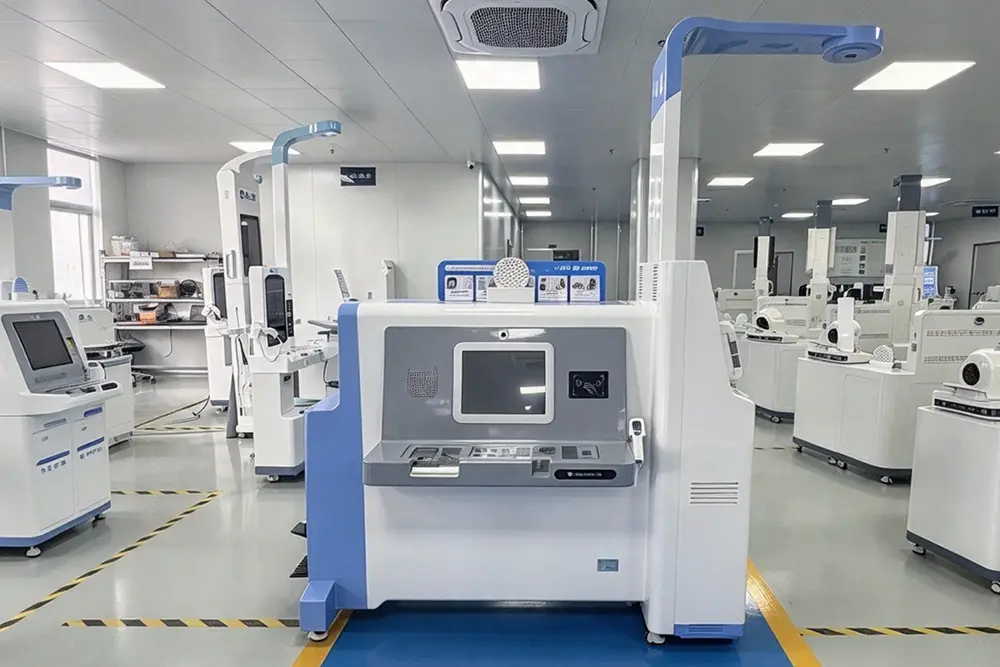
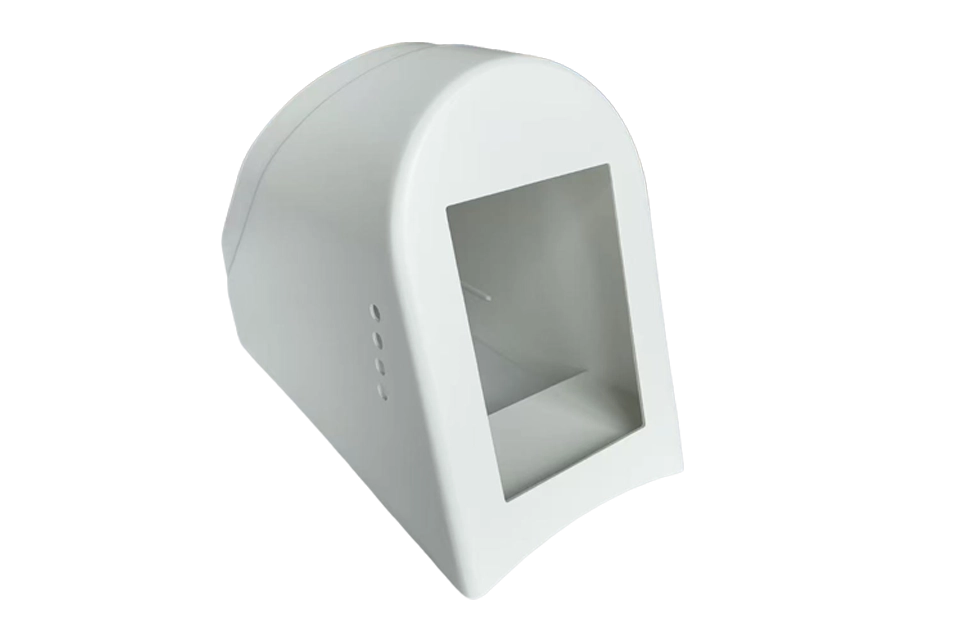
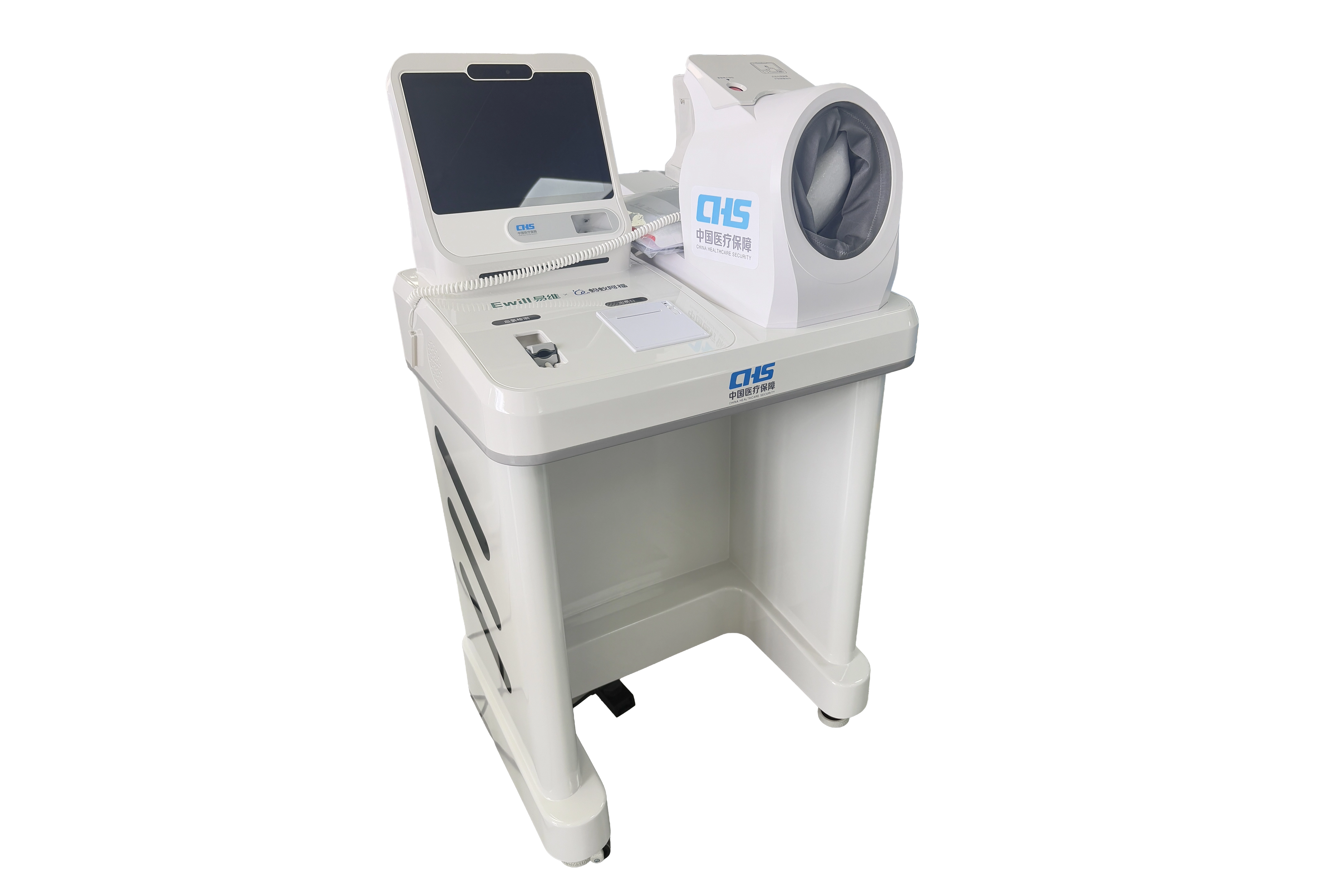
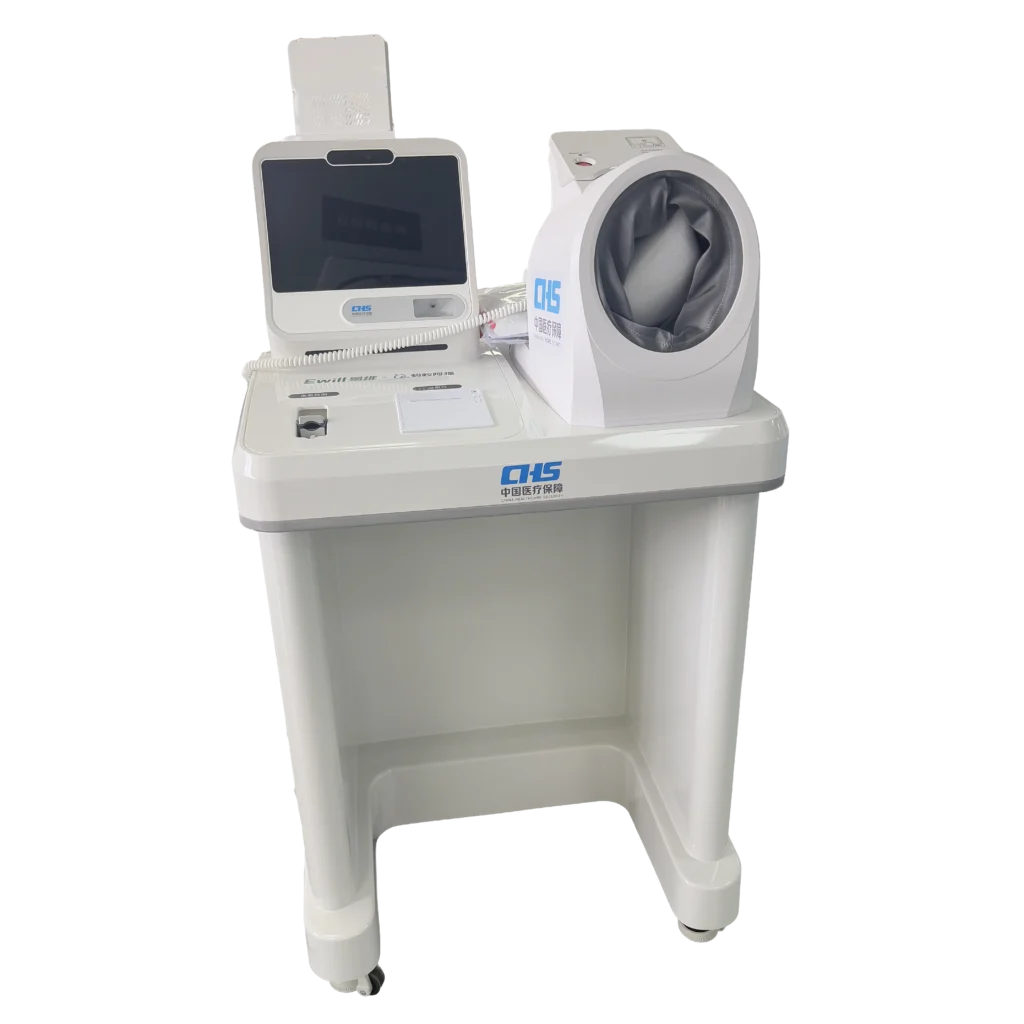
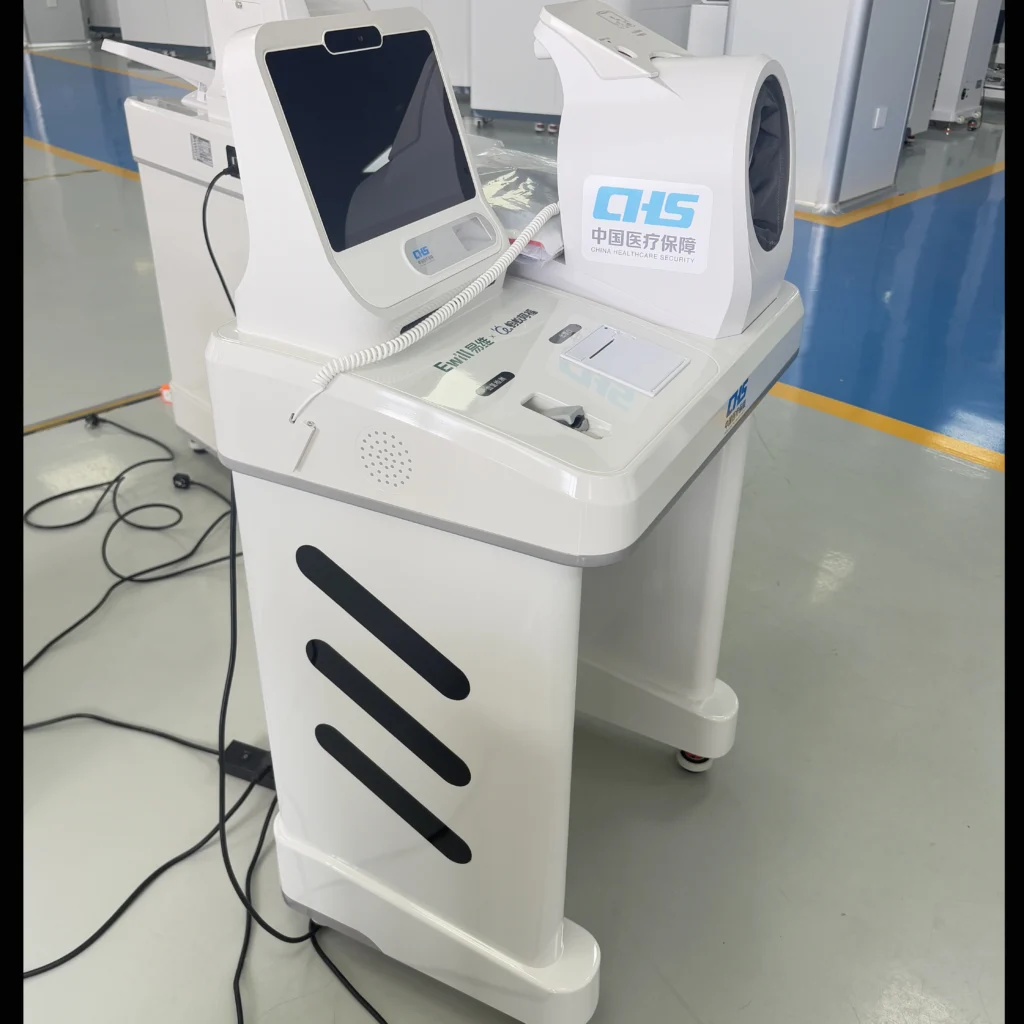
The equipment integrates a display, ID card reader, ticket printer, blood pressure measurement module, blood oxygen detection module, camera and internal control electronics. The customer required a large ABS exterior housing supported by an internal sheet metal frame, with the metal structure carrying the functional loads while the ABS components served primarily as the external enclosure.
At Zhongrongda, we manufactured the complete enclosure set, including the CNC-machined ABS housing, internal sheet metal frame, acrylic functional panels, surface finishing and final assembly. The project was produced in large volume and required close control of enclosure fit, curved surfaces, functional openings, assembly gaps and painting quality.
This project is a good example of how we approach complex custom medical equipment housings when appearance, structural support and repeatable assembly all need to work together.
Project Overview
| Item | Project Details |
|---|---|
| Industry | Medical Equipment |
| Application | Community health self-service blood pressure and blood oxygen workstation |
| Country | China |
| Main Material | ABS |
| Structural Material | SPCC sheet metal |
| Acrylic Components | Functional panels for blood oxygen, ticket outlet and camera |
| Overall Dimensions | 680 × 580 × 1240 mm |
| Worktop Dimensions | 640 × 540 × 835 mm |
| Main Cabinet | 620 × 520 × 740 mm |
| Display Housing | 365 × 125 × 390 mm |
| Blood Pressure Module Housing | 330 × 310 × 375 mm |
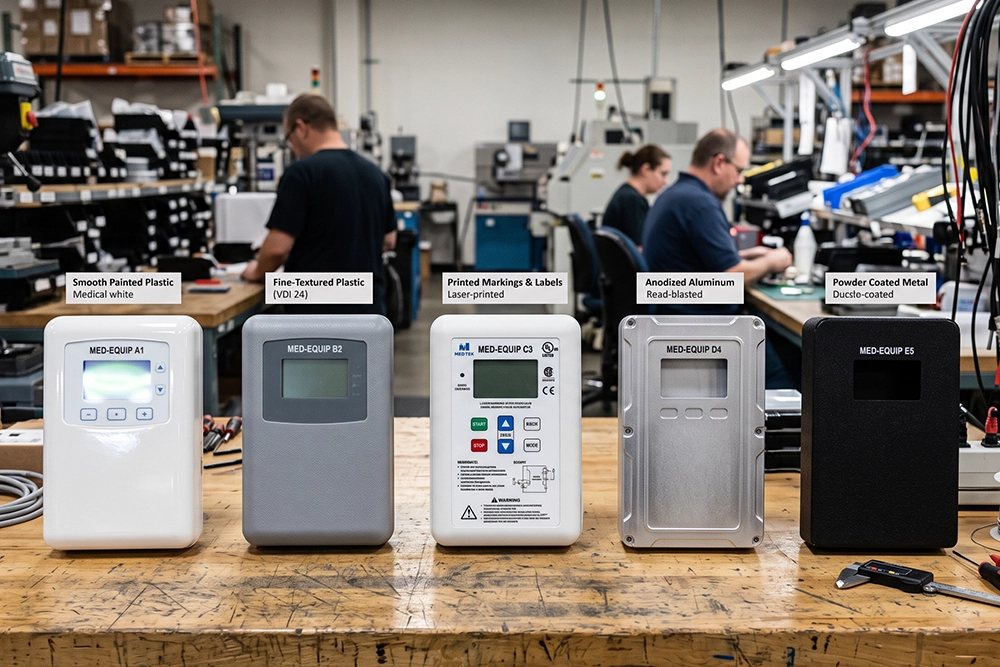
| Surface Finish | Gloss white + light gray, gloss finish |
| Key Tolerance | Project-specific ABS forming and CNC post-machining tolerances |
| Manufacturing Process | CNC ABS fabrication + hand-built assembly + sheet metal frame + painting |
| Quantity | Large-volume production |
| Lead Time | Project-specific |
Customer Requirements
The customer needed a complete enclosure system capable of integrating multiple medical and electronic functions into a compact mobile workstation.
The most important structural requirement was to separate the load-bearing function from the cosmetic enclosure. The internal SPCC sheet metal frame was designed as the primary structural support for the display, blood pressure equipment, printer, ID card reader, control board, power supply and other functional modules.
The ABS housing was not intended to carry these loads. It functioned primarily as an exterior protective and cosmetic shell.
This distinction was important for both durability and assembly reliability. We avoided using the ABS housing or plastic screw bosses to support heavy functional modules. Instead, the modules were secured to the internal metal structure, while the ABS panels were attached using appropriate plastic self-tapping screws.
The housing also required:
- Display and touchscreen openings
- ID card reader opening
- Ticket printing outlet
- Blood pressure module mounting area
- Blood oxygen detection area
- Camera opening
- Acrylic functional panels
- Side ventilation slots
- Internal cable routing space
- Mobile casters
- Removable enclosure sections for assembly and service
The exterior required a large-radius, rounded appearance with no sharp corners. The finished surface needed to be smooth, easy to wipe and suitable for routine disinfection.
Manufacturing Challenges
1. Controlling ABS and Sheet Metal Fit
The first major challenge was controlling the interface between the ABS exterior panels and the internal sheet metal structure.
If the clearance was too large, the enclosure would show visible gaps and poor alignment. If the clearance was too tight, the ABS panels could interfere with the metal frame during assembly.
For the production design, we paid particular attention to the mating areas between the worktop, vertical structure, blood pressure module housing and sheet metal frame.
2. Large ABS Panels and Multi-Part Construction
The enclosure was too large and geometrically complex to treat as a simple single-piece plastic component.
The housing was fabricated from conventional thick ABS sheet and divided into multiple sections. These pieces were CNC machined, manually joined and then repaired before finishing.
The challenge was not simply machining the individual components. The finished enclosure had to look like one continuous housing after assembly and painting.
3. Hidden Joint Lines
The ABS components contained multiple hand-built joints. Any remaining joint marks, gaps or surface irregularities could become highly visible after the gloss white paint was applied.
Our process therefore included joint filling, repeated sanding, surface leveling and ABS-specific primer application before final painting.
4. ABS Deformation During Painting
Large ABS components require careful temperature management.
Excessive heat during curing can cause deformation or dimensional changes. For this project, we used a controlled low-temperature curing process rather than exposing the large ABS panels to unnecessarily high temperatures.
5. Structural Load Management
Another important engineering consideration was preventing the ABS enclosure from carrying the weight of the internal medical and electronic modules.
The sheet metal frame carried the primary load. The ABS housing was used as the external cover.
This approach reduced the risk of stress concentration around plastic mounting points and helped protect the housing from cracking during assembly and use.
Our Engineering Solution
At Zhongrongda, our engineering team approached the project as a complete enclosure system rather than treating the ABS panels and sheet metal components as independent parts.
DFM Review
Before manufacturing, we reviewed the 3D geometry and functional openings, including the display window, printer outlet, ID card reader, acrylic panel slots, ventilation openings and mounting interfaces.
We paid particular attention to areas where the ABS housing connected to the metal frame.
The specified production controls included:
- ABS external linear dimensions up to 250 mm: ±0.5 mm
- 250–500 mm: ±1.0 mm
- 500–1000 mm: ±1.5 mm
- Critical assembly mating surfaces: ±0.8 mm
- CNC-machined hole center position: ±0.3 mm
- CNC hole length/width: ±0.25 mm
- ABS sheet nominal thickness: 4.0 mm
- Formed wall thickness: generally 3.0–4.0 mm, with local stretched areas ≥2.2 mm
- Assembly seam gap: ≤1.2 mm
- A-surface contour tolerance: ±0.8 mm
These were used as project manufacturing controls rather than applying a single generic tolerance to every feature.
CNC Machining
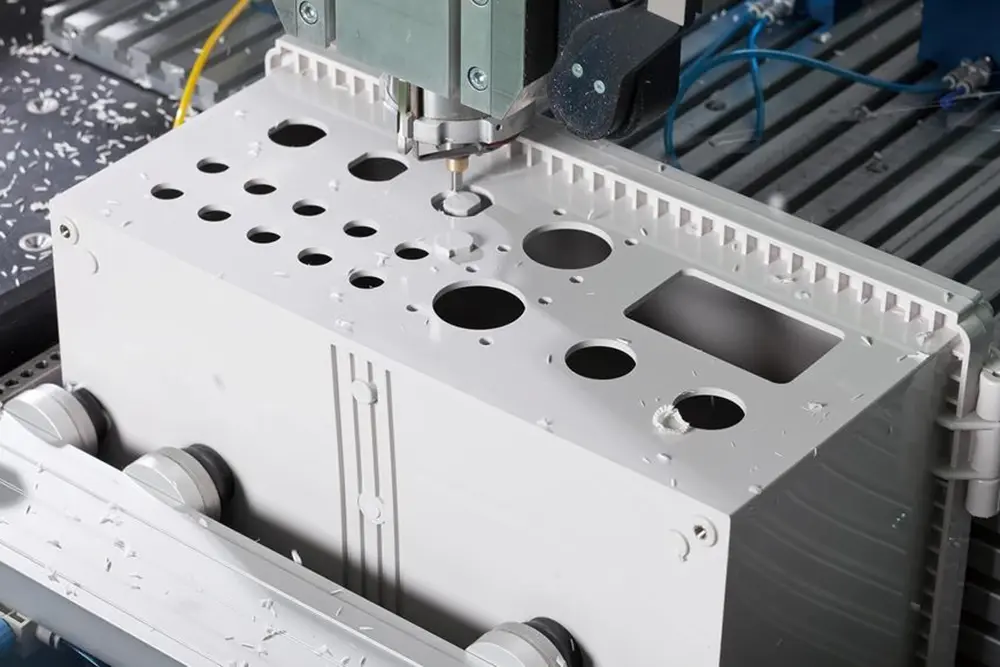
We used CNC machining to produce the ABS panel geometry, display openings, printer outlet, card reader opening, ventilation slots and other functional features.
The acrylic panels were also machined to match their corresponding openings and slots.
Surface Preparation
After CNC machining, ABS components were deburred, sanded and surface-leveled. Multiple sanding stages were used to remove machining marks and hand-built joint lines.
An ABS-specific primer was then applied and sanded to create a stable surface before the final paint layers.
Sheet Metal Structure
The SPCC frame was fabricated according to the engineering drawings through cutting, bending, hole processing and welding.
The welded frame was corrected and finished before receiving anti-rust treatment.
The frame was then used as the main load-bearing structure during final assembly.
Manufacturing Process
Our manufacturing workflow for this project included:
1. DFM Review
Review of 3D geometry, functional openings, assembly interfaces and structural requirements.
2. Programming
CNC toolpath preparation for ABS panels and acrylic components.
3. Material Preparation
Preparation and cutting of ABS sheet, SPCC sheet metal and acrylic panels.
4. CNC Machining
Precision machining of outer profiles, openings, slots and mounting features.
5. Hand-Built Assembly
Multiple ABS components were bonded and joined to create the larger enclosure sections.
6. Deburring and Surface Preparation
Removal of machining marks, burrs and joint irregularities through multiple sanding stages.
7. Surface Finishing
ABS primer followed by gloss white and light gray two-color painting. Masking was used to maintain a clean color boundary.
8. Sheet Metal Assembly
The internal frame was assembled first, creating the structural base for the equipment.
9. Final Enclosure Assembly
ABS covers, acrylic panels, casters, functional components and identification markings were installed.
10. Inspection and Packaging
Dimensional, assembly, appearance and functional-fit inspections were completed before delivery.
For customers developing a new medical product, our Rapid Prototyping capability can also be used before committing to larger production quantities.
Quality Inspection
Quality control focused on the characteristics that directly affected assembly and final appearance.
For this project, our inspection included checking:
- Overall enclosure dimensions
- Critical mating dimensions
- Functional opening positions
- Display and printer openings
- Acrylic panel fit
- Sheet metal frame alignment
- Assembly seam gaps
- Caster mounting locations
- Surface condition
- Paint uniformity
- Logo and equipment marking position
- Final assembly stability
For applicable precision projects, Zhongrongda can also use inspection equipment such as calipers, micrometers, height gauges and CMM measurement according to the drawing and inspection requirements.
For this enclosure, particular attention was placed on the project-defined mating dimensions and visual quality because the large ABS panels and multi-piece construction made assembly consistency critical.
Final Results
The complete enclosure package was successfully manufactured, including the ABS housing, internal sheet metal frame, acrylic functional panels, painting and final assembly.
The finished workstation achieved the required integration of the display, ID card reader, printer, blood pressure module, blood oxygen detection system and other functional components.
The ABS exterior was finished in gloss white with light gray detailing, while the acrylic panels were integrated into the housing with the required functional markings.
The structure, appearance and assembly were inspected and accepted. The completed enclosure was delivered to the equipment manufacturer for integration into the finished medical workstation.
No specific customer testimonial or quantified performance feedback was provided for this project, so we do not claim additional customer results beyond the completed delivery and acceptance.
The project demonstrates our experience in producing large, multi-component medical device enclosures where the structural frame, plastic housing, functional openings, surface finish and final assembly must work together as one system.
Why Choose Zhongrongda
At Zhongrongda, we support medical and equipment manufacturers from enclosure development through production.
Our capabilities include:
- Engineering and DFM support
- Custom medical enclosure manufacturing
- CNC plastic fabrication
- Sheet metal structural frames
- Rapid prototyping
- Small-batch manufacturing
- Large-volume enclosure production
- Surface finishing and painting
- Acrylic functional panels
- Final enclosure assembly
- Quality inspection
- NDA support for confidential projects
Our broader Medical Device Enclosure service focuses on developing practical enclosure solutions around the customer’s equipment architecture, rather than simply machining individual panels.
For projects involving mobile clinical equipment, our Medical Cart & Workstation Enclosures capability is particularly relevant.
Zhongrongda operates with ISO 9001 and ISO 13485 quality management certifications and supports customers requiring structured manufacturing processes for medical-related equipment projects.
FAQ
1. Can Zhongrongda manufacture ABS medical equipment enclosures?
Yes. We manufacture custom ABS equipment housings using CNC machining, hand-built panel assembly, surface preparation, painting and final assembly.
2. Can ABS and sheet metal be combined in one enclosure?
Yes. This project used an ABS exterior housing together with an SPCC sheet metal internal frame. The metal structure carried the primary equipment loads while the ABS panels served as the external enclosure.
3. What is the MOQ for a medical equipment enclosure?
MOQ depends on the enclosure design, manufacturing process and production requirements. We can support prototype development, small-batch production and larger-volume manufacturing.
4. What ABS tolerances can Zhongrongda achieve?
Tolerance depends on the material, forming or machining process, component size and functional requirements. For this project, different dimensional controls were applied to external dimensions, mating surfaces and CNC-machined openings rather than using one tolerance for every feature.
5. Can you manufacture large ABS housings?
Yes. Large ABS housings can be produced from thick ABS sheet using CNC fabrication and multi-piece hand-built assembly. Large components require additional attention to joint preparation, surface leveling and thermal control during painting.
6. Can the enclosure be designed for routine cleaning and disinfection?
Yes. Surface finish and material selection can be evaluated according to the customer’s cleaning and maintenance requirements. This project used a smooth gloss ABS paint finish designed to facilitate routine wiping.
7. Can you manufacture acrylic panels together with the enclosure?
Yes. We can manufacture and integrate acrylic panels for functional areas such as displays, indicators, camera openings, ticket outlets and control interfaces.
8. Do you support rapid prototyping before mass production?
Yes. Our Rapid Prototyping service can be used to validate enclosure geometry, assembly interfaces and functional openings before moving into larger production.
9. Can Zhongrongda sign an NDA?
Yes. NDA arrangements can be discussed when customers need to protect product drawings, industrial designs, engineering data or other confidential project information.
10. Can you manufacture medical carts and workstation housings?
Yes. We manufacture custom housings for medical carts, workstations, diagnostic equipment and other medical-related equipment. Our engineering team can evaluate the structural, dimensional, material and finishing requirements based on the customer’s drawings.
CTA
Need a reliable CNC machining partner for your next project?
Upload your drawings today and our engineering team will provide a free DFM review and quotation within 24 hours.
Whether you need an ABS medical equipment enclosure, a hybrid plastic-and-sheet-metal housing, a prototype, small batch or production-volume enclosure, we can help evaluate the structure, materials, manufacturing process, surface finishing and assembly requirements.
Contact our engineering team to discuss your next enclosure project.