Introduction
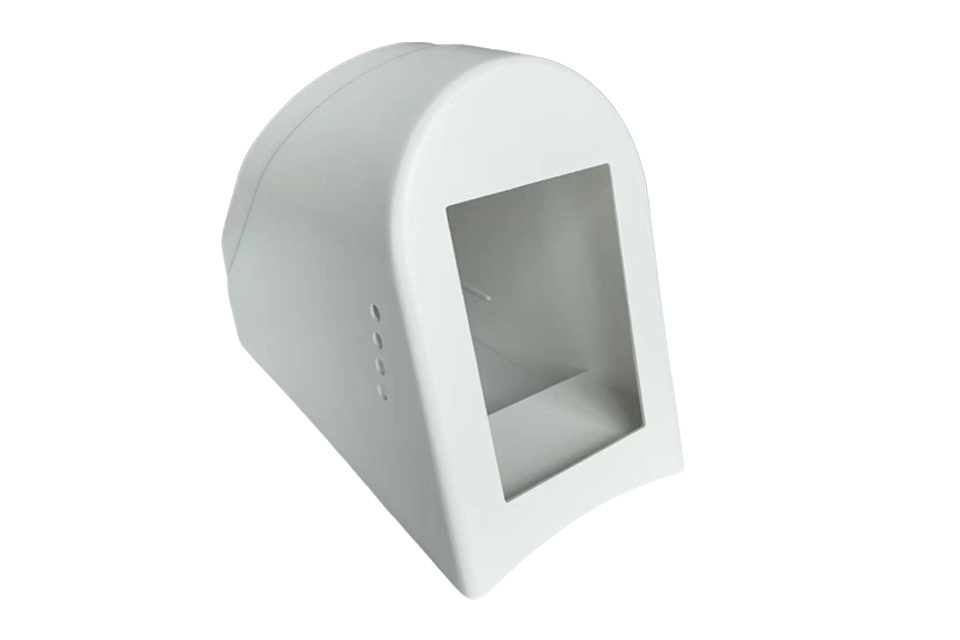
An ABS equipment enclosure is more than an outer shell. For a vertical medical or industrial device, the enclosure needs to accommodate internal electronics and components while providing protection, a clean appearance, accessible openings and a practical assembly structure.
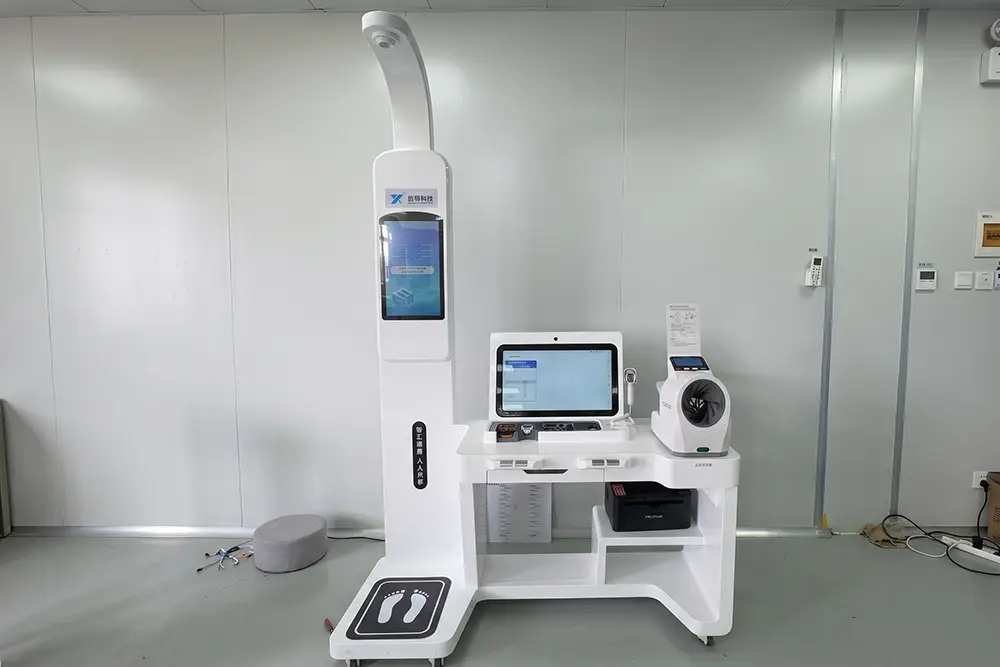
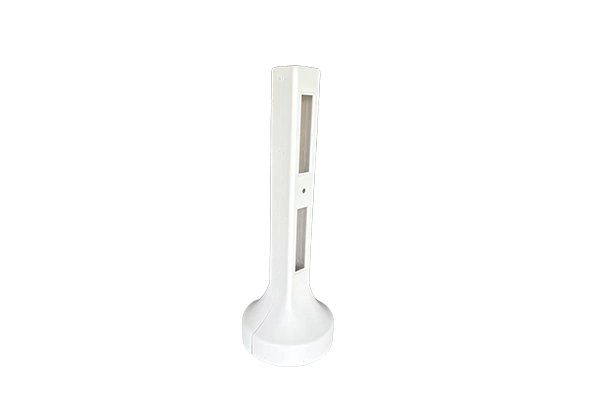
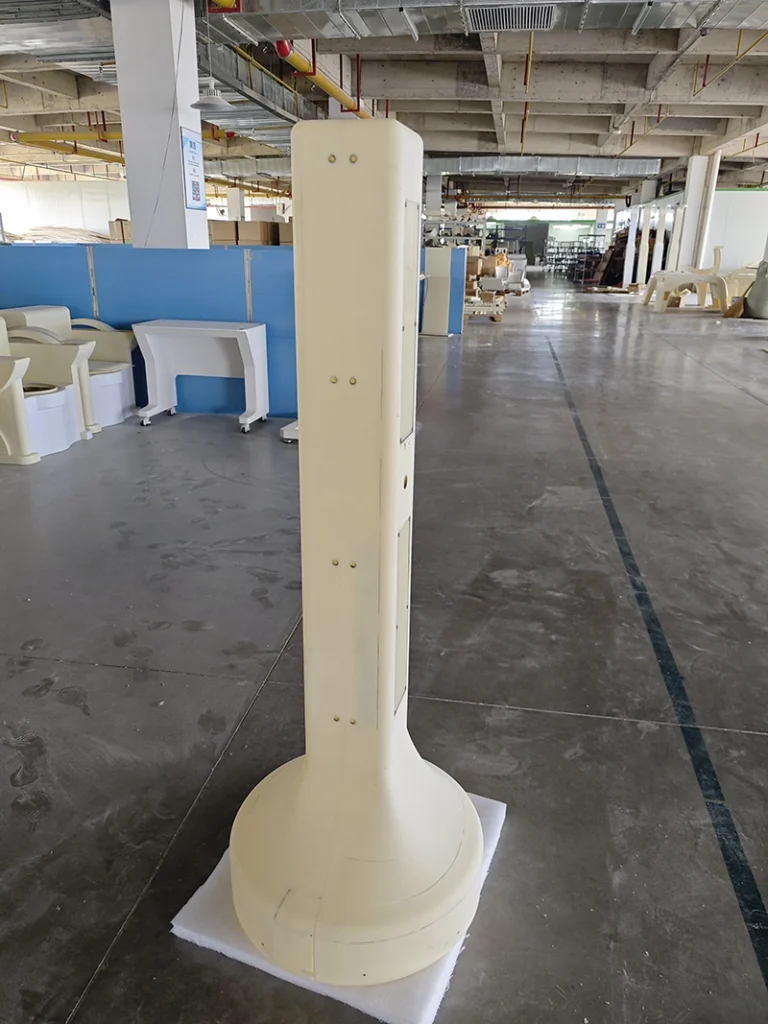
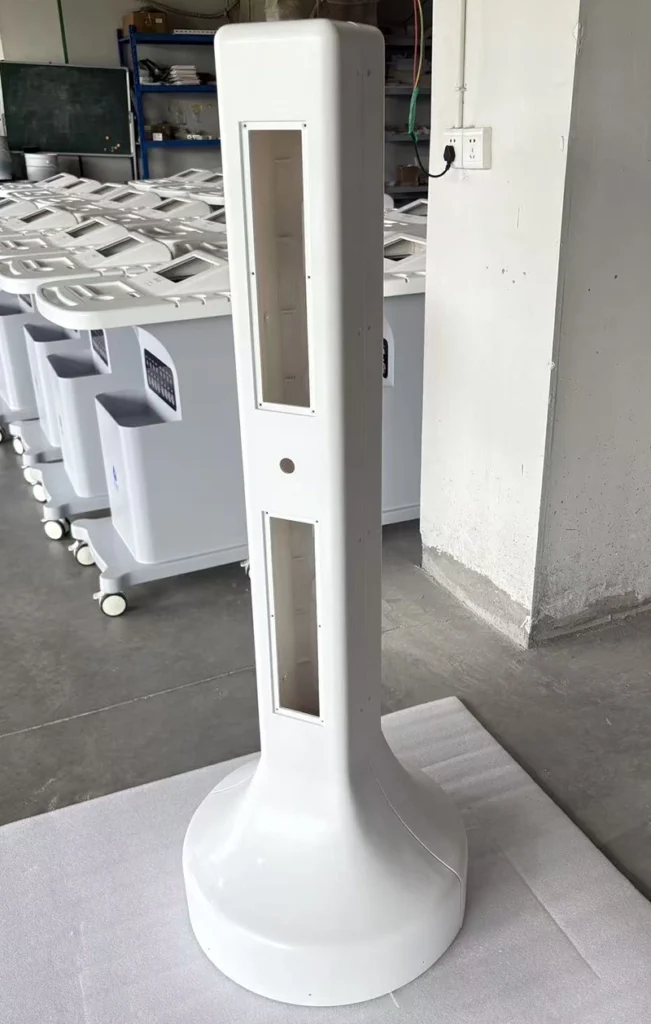
At ZRD, we recently manufactured a vertical equipment enclosure using ABS sheet material, CNC machining and prototype-style assembly. The finished enclosure measured 500 mm × 500 mm × 1,375 mm, making the overall structure substantially taller than a typical desktop enclosure. The project required several separate ABS components to be machined and then assembled into one complete housing.
Instead of trying to produce the entire housing as one machined component, our process combined ABS sheet preparation, CNC milling, opening and window machining, prototype joining, surface correction, painting and baking. This approach allowed the enclosure to be built around the actual structure of the equipment while maintaining control over the individual panels and assembly points.
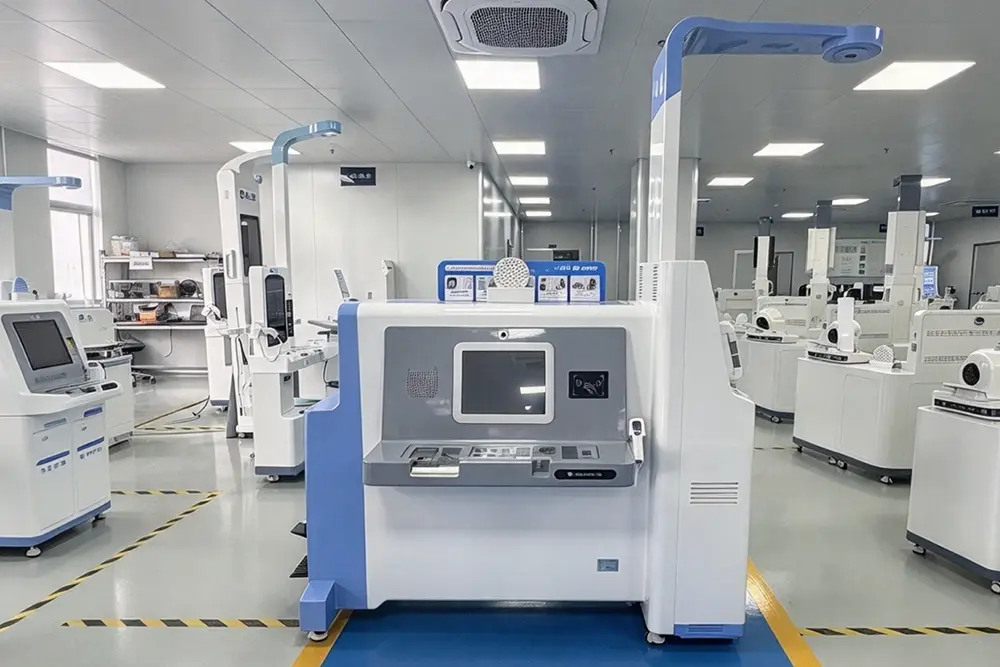
This case is representative of the type of enclosure work our engineering team handles for equipment manufacturers and product development teams that need custom housings rather than standard off-the-shelf boxes.
Project Overview
| Project Detail | Specification |
|---|---|
| Industry | Medical / Industrial Equipment |
| Application | Vertical equipment enclosure |
| Customer Country | China |
| Material | ABS |
| Dimensions | 500 × 500 × 1,375 mm |
| Surface Finish | Painted surface with baking |
| Tolerance | Not specified in the project record |
| Manufacturing Process | CNC machining + prototype joining + finishing |
| Quantity | Not specified in the project record |
| Lead Time | Not specified in the project record |
The enclosure was designed to house internal circuits and components while providing the external protection and appearance required for a complete standing equipment system.
Customer Requirements
The project required a vertical enclosure suitable for medical or industrial equipment. The housing needed to accommodate the internal electrical and electronic components while creating a finished exterior suitable for the final machine.
From a manufacturing perspective, the enclosure also needed to be divided into practical components rather than treated as one solid structure.
The main requirements included:
- A finished vertical housing measuring 500 × 500 × 1,375 mm
- ABS sheet construction
- Openings and windows machined according to the equipment design
- Multiple CNC-machined enclosure components
- Prototype-style joining and assembly
- Corrected and smoothed panel joints
- Painted exterior surfaces
- Baking after painting
- A finished appearance appropriate for medical or industrial equipment
For projects like this, enclosure manufacturing is closely connected to the way the internal equipment is assembled and serviced. Panel dimensions, openings and joining locations therefore need to be considered together rather than individually.
Where the design is still being finalized, our engineering team can also review enclosure drawings before production through our Rapid Prototyping workflow.
Manufacturing Challenges
Working With a Tall ABS Enclosure
The finished enclosure was 1,375 mm high, while the footprint was 500 × 500 mm. This created a structure made from multiple components rather than a single compact CNC-machined block.
For this type of enclosure, the relationship between individual panels becomes particularly important. A small mismatch at one joining location can become more noticeable when several panels are assembled into a tall housing.
Our approach was therefore to machine the individual ABS components separately and then bring them together through the prototype joining process.
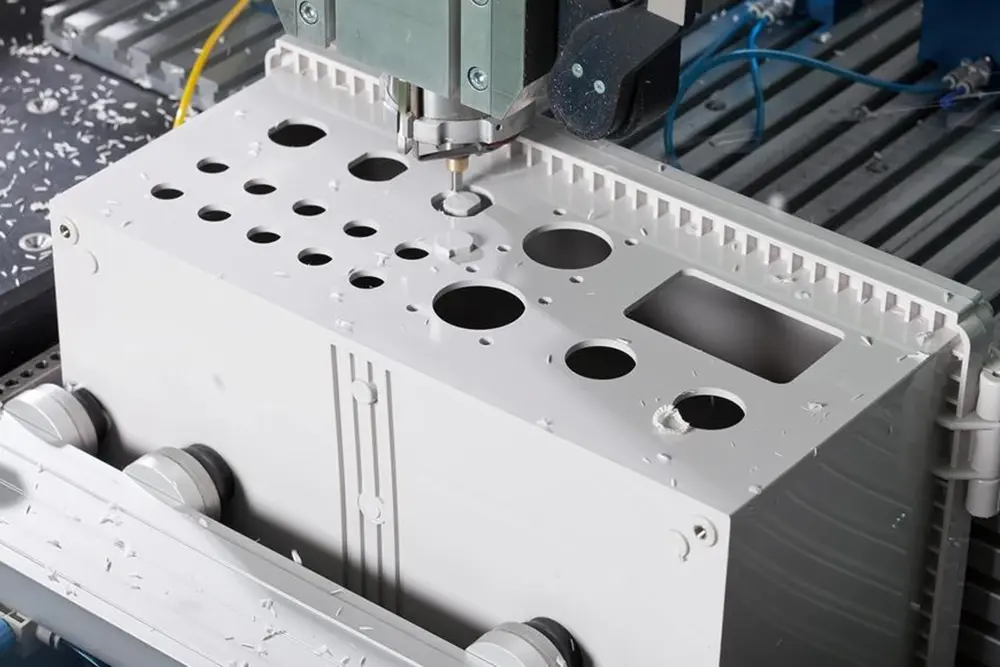
Machining Openings and Windows
The enclosure included openings and windows that needed to be integrated into the individual panels. These features were produced during CNC machining rather than simply cutting the outer panel dimensions.
For an equipment housing, openings have practical functions. They may provide access to controls, displays, connectors, ventilation areas or internal components. Their location therefore needs to correspond with the equipment structure behind the enclosure.
Joint Correction and Surface Appearance
After the individual components were joined, the enclosure required further surface correction.
The project process included gap sanding and shape correction before painting. This step is important for a painted equipment housing because the final coating does not hide poor panel alignment or uneven transitions.
The manufacturing process therefore did not stop when the CNC machining was completed. The machined components had to be prepared for the final visual finish as an assembled enclosure.
Our Engineering Solution
At ZRD, we approach enclosure projects as a combination of machining, assembly and finishing rather than treating CNC machining as an isolated operation.
For this ABS equipment enclosure, our process started with ABS sheet preparation and material cutting. Individual enclosure components were then machined on CNC equipment according to their required geometry.
The CNC stage was used for:
- Component milling
- Edge and profile machining
- Openings
- Window features
- Dimensional preparation for assembly
After machining, the components were brought together using prototype joining fixtures. The assembled housing was then checked visually and corrected through sanding and shaping before moving to surface treatment.
The actual equipment used for this project included a CNC machining center, sheet cutting saw, joining fixtures, sanding equipment, clean painting room, water curtain cabinet, air spray gun, pressure paint supply system and drying oven.
This combination of equipment allowed us to control the project through multiple manufacturing stages rather than outsourcing the enclosure between unrelated processes.
For customers developing more complex equipment housings, this same engineering approach can be applied through our broader Enclosure Solutions capabilitie
Manufacturing Process
1. DFM Review
We first review the enclosure structure and determine how the housing should be divided into manufacturable components.
The goal is to make the enclosure practical to machine, assemble, finish and inspect.
2. Programming
The individual ABS components are prepared for CNC machining based on their required profiles, openings and window features.
3. Material Preparation
ABS sheet material is cut into the required starting dimensions before CNC machining.
4. CNC Machining
The individual enclosure components are machined using a CNC machining center. Profiles, openings and other required features are produced at this stage.
5. Deburring and Preparation
Machined components are cleaned and prepared for joining and further surface treatment.
6. Prototype Joining
The separate components are assembled using prototype joining methods and fixtures to create the complete enclosure structure.
7. Surface Correction
Joints, gaps and transitions are sanded and shaped to prepare the housing for painting.
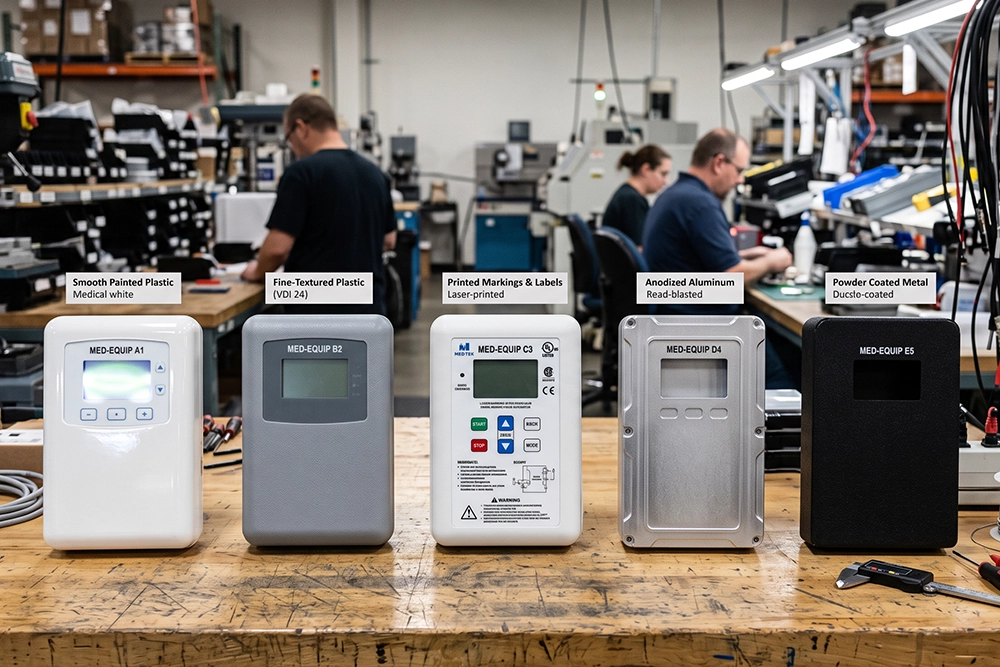
8. Surface Finishing
The prepared enclosure is painted to achieve the required exterior appearance.
9. Baking
After painting, the enclosure goes through a drying and baking process to complete the surface treatment.
10. Inspection and Packaging
The finished enclosure is checked before packaging and delivery.
This manufacturing sequence reflects the actual process used for this ABS project rather than a generic CNC machining workflow.
Quality Inspection
Quality control for an equipment enclosure does not only mean checking one dimension on one machined part.
For a multi-component housing, our inspection approach considers individual components, openings, assembly relationships and final appearance.
Our general inspection capabilities include:
- CMM inspection
- Height gauge inspection
- Micrometer measurement
- Caliper measurement
- First Article Inspection
- Final inspection
For production-ready projects, inspection requirements can be defined according to the customer’s drawings and quality documentation.
Where customers require a more structured quality process, Zhongrongda supports manufacturing for medical and industrial equipment applications and can work with defined inspection requirements before production.
Final Results
The completed project produced a 500 × 500 × 1,375 mm vertical ABS equipment enclosure using CNC-machined components combined with prototype joining, surface correction, painting and baking.
The result was a complete standing housing designed to contain internal circuits and components while providing the protective and decorative exterior required by the equipment.
One important lesson from this project is that a large equipment enclosure should not be evaluated only from the perspective of CNC machining. The manufacturing method needs to account for the entire sequence:
material preparation → machining → joining → surface correction → painting → drying → final assembly.
That is particularly important when the enclosure will become part of a finished medical or industrial machine.
For examples of other enclosure projects, visit our Case Studies.
Engineering Support
Our engineering team works with customers from enclosure drawings through manufacturing, helping evaluate the practical relationship between design, machining and assembly.
Fast Quotation
Customers can provide drawings, specifications or project information for an initial manufacturing review.
Rapid Prototyping
When a new enclosure needs to be validated before production, our Rapid Prototyping service can support the prototype development stage.
Small Batch Manufacturing
Custom equipment housings do not always require high-volume production. Our manufacturing capabilities can support prototype and small-batch enclosure requirements.
Quality Control
Inspection equipment and processes include CMM, height gauges, micrometers, calipers, First Article Inspection and final inspection.
Confidential Development
For projects involving new equipment designs, we can support NDA-based cooperation to protect customer drawings and product information.
Quality Systems
ZRD operates with ISO9001 and ISO13485 quality management requirements relevant to its manufacturing work.
FAQ
1. What material was used for this equipment enclosure?
This project used ABS sheet material. The material was cut into starting panels and then processed through CNC machining and prototype joining.
2. What were the dimensions of the ABS enclosure?
The finished enclosure measured approximately 500 mm wide × 500 mm deep × 1,375 mm high.
3. Can you manufacture custom ABS equipment housings from drawings?
Yes. Customers can provide enclosure drawings or project specifications for engineering review and quotation.
4. Can you machine openings and windows into ABS panels?
Yes. CNC machining can be used to create profiles, openings, windows and other required features according to the enclosure design.
5. Can you provide prototype ABS enclosures?
Yes. Prototype enclosure projects can combine CNC machining, joining, surface correction and finishing depending on the product structure.
6. Can you provide painted ABS enclosures?
Yes. The project documented here included surface preparation, painting and baking after the enclosure components were joined.
7. What tolerance can you achieve?
Tolerance depends on the material, feature, geometry and manufacturing process. The specific tolerance for this project was not included in the supplied project record, so we do not claim a project-specific tolerance here.
8. Do you support medical device enclosure projects?
Yes.ZRD. provides custom enclosure solutions for medical and related equipment applications, including Medical Device Enclosure projects.
9. Can you manufacture small batches?
Yes. Prototype and small-batch manufacturing can be discussed based on the enclosure structure, material, quantity and finishing requirements.
10. Can you sign an NDA before reviewing my enclosure drawings?
Yes. NDA-based cooperation can be arranged for customers who need confidentiality during product development.
CTA
Need a reliable CNC machining partner for your next project?
Send us your enclosure drawings, 3D files or project requirements.
Upload your drawings today and our engineering team will provide a free DFM review and quotation within 24 hours.
For project consultation, please visit ContactZRD.