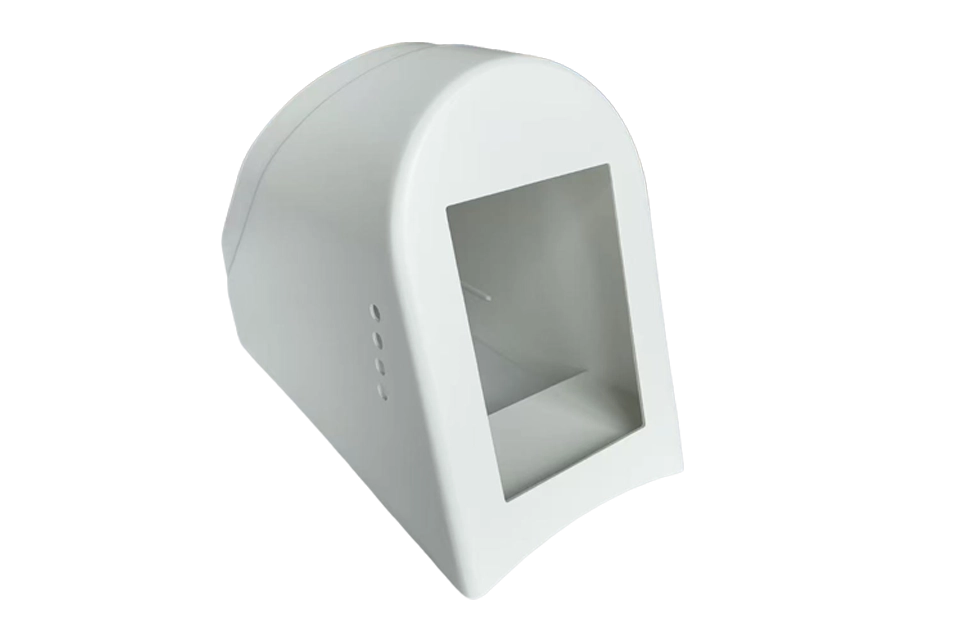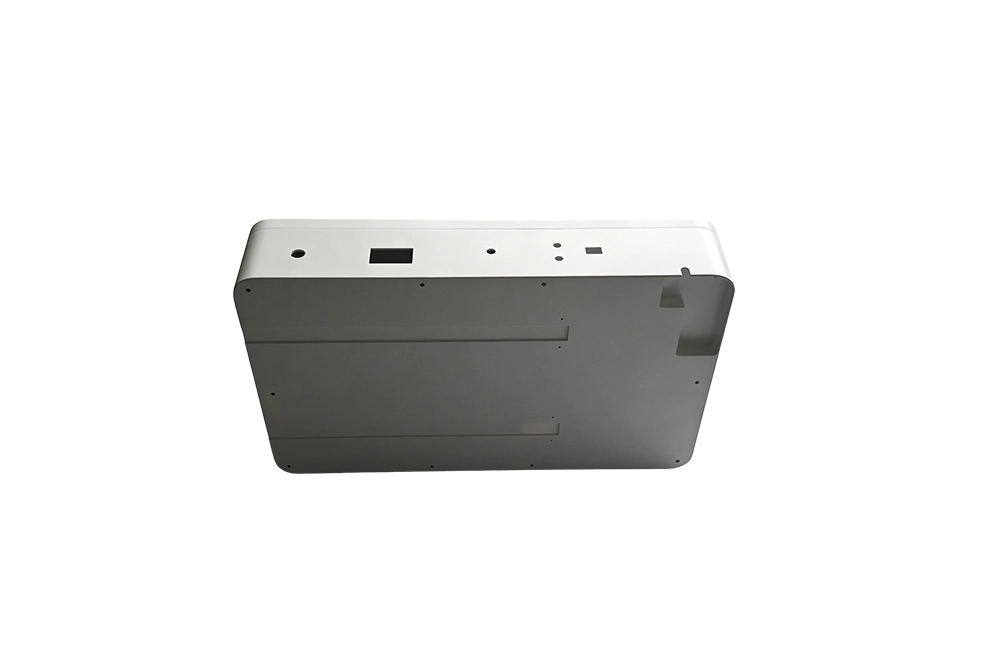
A medical irrigation device enclosure must provide more than a protective outer shell. It needs to accommodate pumps, control electronics, power components, tubing, and user interfaces while maintaining reliable assembly, service access, heat dissipation, and a clean professional appearance.
At Zhongrongda, we recently completed a small-batch custom medical irrigation device enclosure project for a medical irrigation system used in operating rooms and outpatient treatment rooms. The equipment is designed to transport and deliver medical fluids during irrigation procedures and incorporates a control board, pump assembly, tubing, and operating display module.
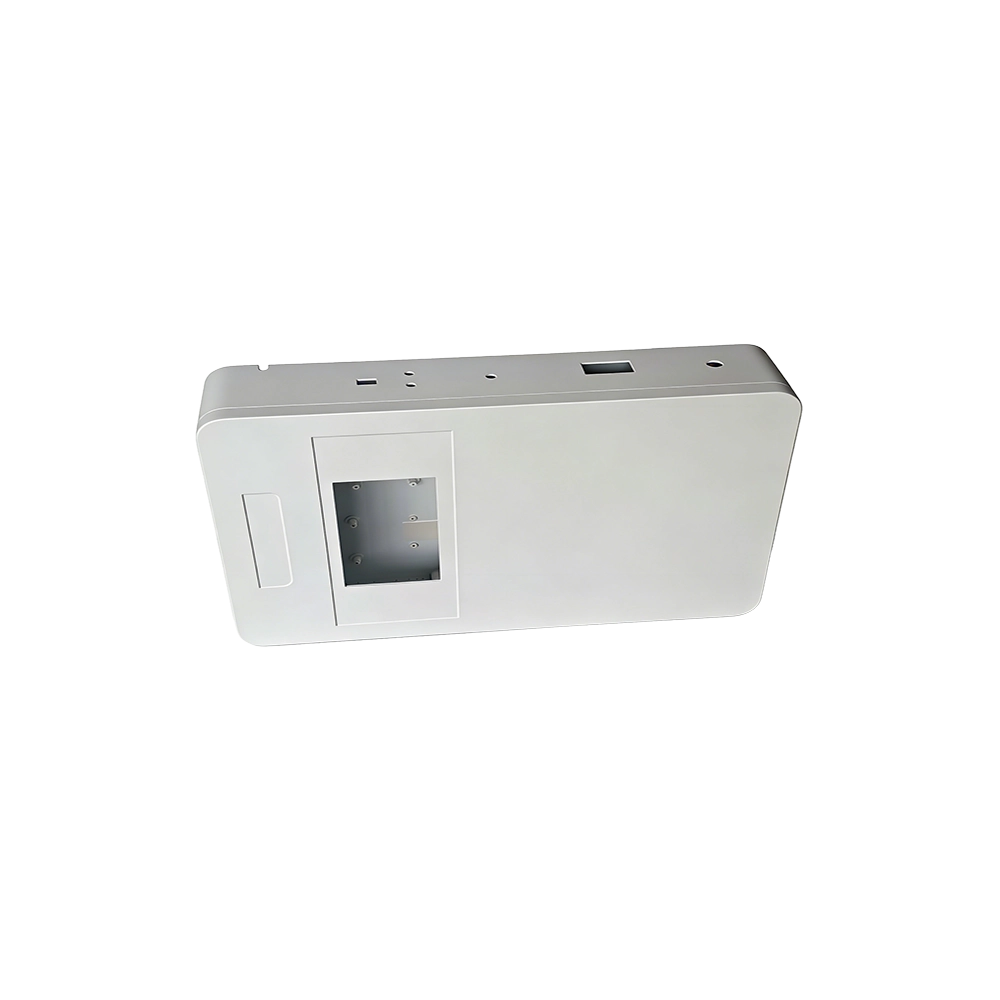
For this project, the customer required an ABS prototype housing manufactured from sheet material rather than a conventional injection-molded enclosure. The housing was divided into multiple components, CNC machined individually, and then bonded and assembled into the final structure.
Our engineering team had to balance several requirements at the same time. The enclosure needed accurate mounting posts for internal components, sufficient space for tubing and wiring, removable covers for maintenance, smooth large-radius surfaces, consistent joints, and a white fine-texture painted finish.
Because this was a prototype and small-batch validation project, the manufacturing process also needed to be practical for development without creating unnecessary tooling costs.
The completed housing was CNC machined, bonded, assembled, painted, inspected, and delivered to the equipment manufacturer for prototype validation.
Project Overview
| Project Item | Specification |
|---|---|
| Industry | Medical Equipment |
| Application | Medical Irrigation Equipment |
| Customer Region | China |
| Main Material | ABS Sheet |
| Dimensions | Based on customer 3D drawings; specific dimensions not disclosed |
| Key Tolerance | Based on functional interfaces and customer drawings; specific values not disclosed |
| Surface Finish | White fine-texture coating |
| Manufacturing Process | CNC machining + bonded prototype assembly + painting |
| Quantity | Small batch for prototyping and validation |
| Lead Time | Project-specific; exact lead time not disclosed |
| Production Stage | Prototype / Small-Batch Validation |
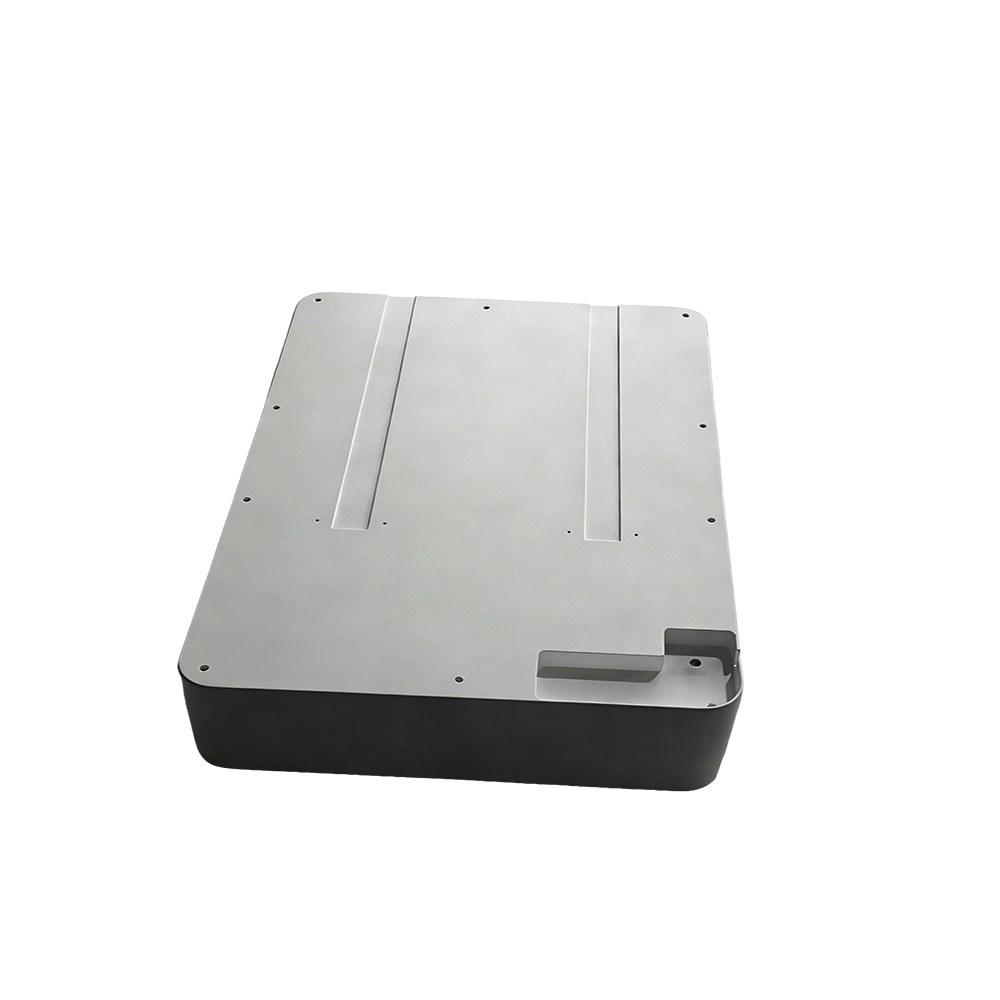
Customer Requirements
The customer’s objective was to develop a functional external housing for a medical irrigation system.
The enclosure needed to accommodate several internal components, including the pump assembly, control board, power module, and tubing system.
Rather than using the ABS housing simply as an outer cosmetic shell, the design required the enclosure itself to provide mounting and positioning features.
CNC-machined screw mounting posts and positioning bosses were incorporated into the housing so that internal components could be secured directly to the enclosure.
The housing also required multiple functional openings:
- Operating panel opening
- Medical tubing inlet and outlet openings
- Cooling vents
- Cable routing holes
- Internal component access areas
- Maintenance space
The customer also required the housing to be divided into removable sections. This allowed technicians to access internal pumps, circuit boards, tubing, and other components during maintenance or replacement.
Another important requirement was the relationship between the enclosure openings and the tubing system. The openings had to provide enough installation space without interfering with tubing assembly or removal.
From an appearance perspective, the customer required a white enclosure with large-radius corners and smooth curved transitions. Visible CNC tool marks, bonding lines, scratches, dents, and uneven joints were not acceptable.
The final surface required a fine-texture coating with consistent appearance and good adhesion.
The finished housing also needed to support screen-printed logos and functional markings.
Manufacturing Challenges
Multi-Part ABS Assembly
One of the main challenges was that the housing was not manufactured as a single piece.
The enclosure consisted of multiple CNC-machined ABS components that had to be bonded together. This created a dimensional chain across several parts.
If one component was slightly misaligned, the accumulated variation could affect the final gap, mounting-hole position, surface transition, or overall appearance.
Our engineering team therefore treated the enclosure as a complete assembly during manufacturing rather than evaluating each CNC component independently.
Bonding Strength
Bonded ABS joints were another important consideration.
The enclosure had to support internal components, so the bonding areas needed sufficient strength to withstand assembly and service loads. Poor joint preparation or excessive mechanical stress could cause the bonded area to crack or separate.
For this reason, the bonding process, joint preparation, filling, sanding, and subsequent assembly were all treated as part of the manufacturing process rather than cosmetic post-processing.
CNC-Machined Mounting Posts
The housing included CNC-machined screw mounting posts for internal component installation.
These features required careful control because excessive fastening force could damage the ABS structure or cause the mounting post to crack.
The mounting-post geometry therefore had to balance available wall thickness, component positioning, fastening requirements, and the practical limitations of CNC-machined ABS construction.
ABS Warpage During Finishing
Large ABS housing surfaces can be sensitive to heat and finishing conditions.
The customer required a painted white fine-texture surface, which meant the housing needed CNC machining, deburring, sanding, filling, primer application, top coating, and curing.
Temperature control during curing was therefore important. Our process used low-temperature oven curing to reduce the risk of secondary deformation of the ABS housing.
Surface Quality
The external appearance was a major part of the project.
The housing contained large-radius surfaces and curved transitions. These areas needed to be sanded carefully so that the final curves remained smooth rather than developing visible flat spots or uneven transitions.
The joints between the individual ABS components also needed filling and sanding to minimize visible assembly lines.
Our Engineering Solution
At Zhongrongda, we selected CNC machining of ABS sheet combined with bonded prototype assembly for this project.
This approach allowed the customer to produce functional prototype housings without committing to injection-molding tooling at the validation stage.
CNC Machining Strategy
ABS sheet was first prepared into individual blank components.
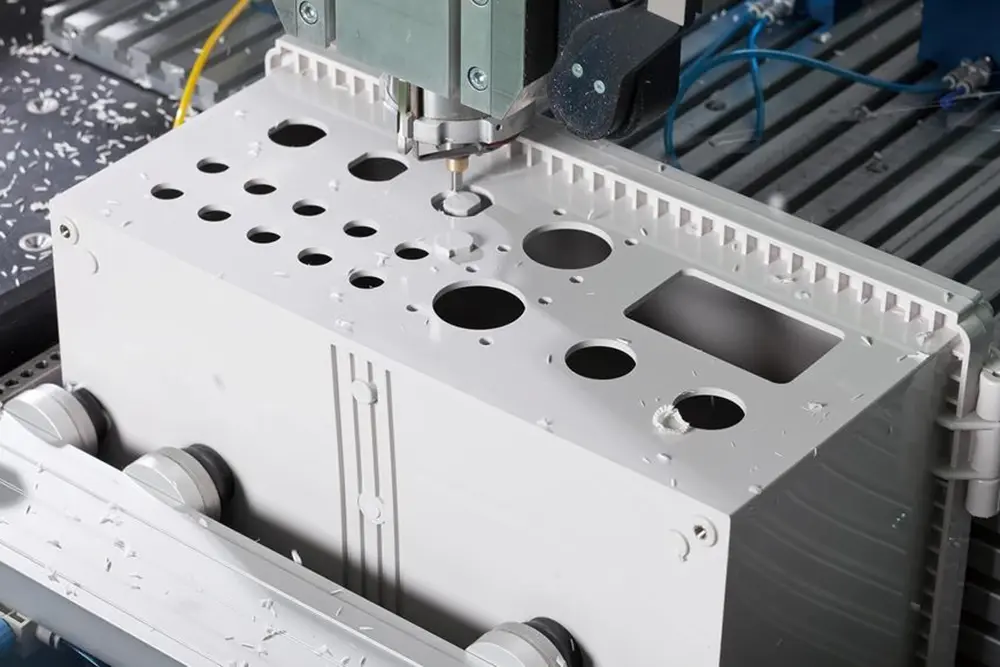
Our CNC machining process then produced the required outer geometry, curved corners, openings, grooves, mounting posts, and positioning features.
The individual components were manufactured according to their role within the final assembly rather than treated as independent cosmetic panels.
Assembly-Oriented Engineering
Because the housing was divided into multiple parts, our engineering team considered the relationship between mating surfaces and mounting features during machining.
The locations of screw posts, panel openings, tubing ports, and adjoining surfaces needed to remain aligned after bonding.
This assembly-oriented approach helped reduce problems during final installation.
Bonding and Surface Preparation
After CNC machining, the individual ABS components were bonded together.
The joints were then filled, repaired, and sanded to remove visible bonding lines.
CNC machining marks and edge burrs were also removed before primer application.
The objective was to create a continuous external surface suitable for the customer’s appearance requirements.
Finishing Process
The finished ABS housing was prepared with an ABS-specific primer before receiving the final coating.
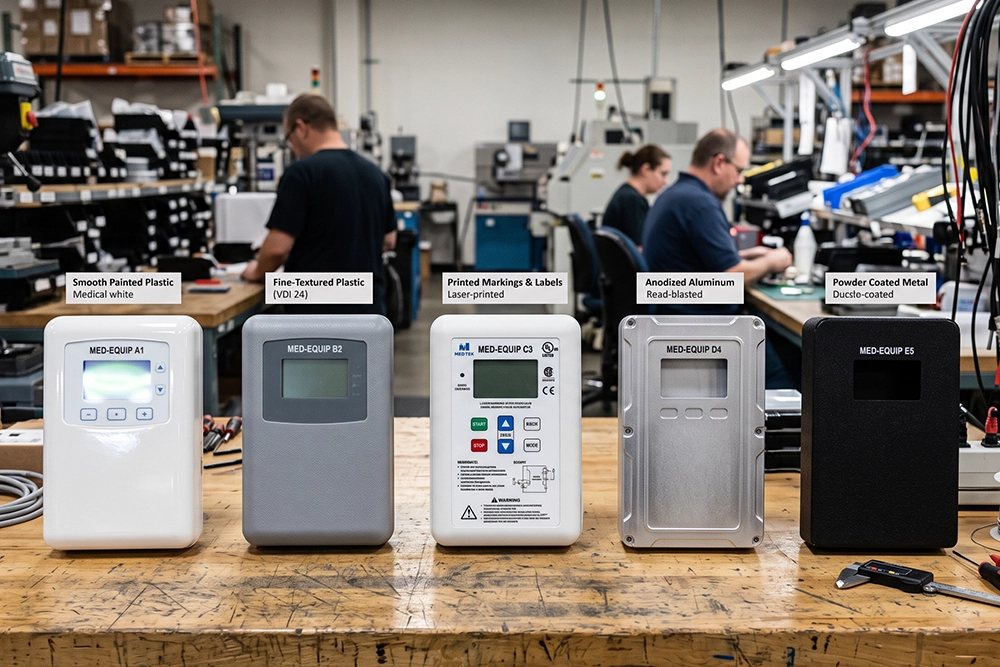
The specified finish was white with a fine-texture surface.
Painting was performed in a controlled spray environment, followed by low-temperature oven curing. After cooling, the surface was inspected and localized defects were repaired when necessary.
Manufacturing Process
The project followed this manufacturing sequence:
DFM Review → Material Preparation → CNC Programming → ABS CNC Machining → Deburring → Bonding → Filling & Sanding → Primer → Fine-Texture Painting → Assembly → Inspection → Packaging
DFM Review
The engineering team reviewed the 3D design and identified the relationship between the external housing, internal components, mounting posts, tubing, control panel, and maintenance areas.
CNC Programming
Machining programs were prepared according to the geometry of each ABS housing component.
Material Preparation
ABS sheet was prepared and cut into the required component blanks.
CNC Machining
The CNC process produced the housing’s external contours, rounded corners, openings, screw mounting posts, grooves, and other functional features.
Deburring
Machined edges and corners were cleaned to remove burrs and prepare the components for assembly.
Bonding
The individual ABS components were solvent bonded into the required housing configuration.
Filling and Sanding
Bonded joints were filled and sanded. CNC tool marks and other visible surface defects were also removed.
Surface Finishing
An ABS-specific primer was applied before the white fine-texture topcoat.
The finished housing was cured at a controlled low temperature to minimize the risk of ABS deformation.
Assembly
The housing components were aligned and secured. Internal components were installed using the CNC-machined mounting posts.
The operating panel opening and tubing inlet/outlet positions were checked during assembly to ensure that the housing did not interfere with internal installation.
Inspection
The finished housing was inspected for dimensions, hole positions, assembly alignment, surface quality, paint appearance, and overall structural condition.
Quality Inspection
Quality control focused on both functional assembly and external appearance.
Our inspection included checks of:
- Housing dimensions
- Component alignment
- Mounting-hole positions
- Screw mounting posts
- Tubing openings
- Operating panel opening
- Cooling vents
- Cable routing holes
- Assembly gaps
- Housing deformation
- Bonding areas
- Surface smoothness
- Paint consistency
- Paint adhesion
- Burrs and sharp edges
The final appearance was also checked for common defects such as scratches, dents, visible CNC marks, uneven gaps, paint particles, runs, exposed substrate, bubbles, pinholes, and orange peel.
Where specific dimensional tolerances are defined by customer drawings, inspection can be performed against those drawing requirements.
The source project information does not provide numerical tolerance values, so we do not claim unsupported measurement results.
Final Results
The complete ABS medical irrigation device housing was successfully CNC machined, bonded, assembled, painted, and inspected.
The finished enclosure provided the required mounting locations for the internal pump, control electronics, power components, and tubing system.
The removable housing structure also provided access for internal maintenance and component replacement.
The operating panel, tubing openings, cooling vents, and cable-routing features were incorporated according to the customer’s equipment requirements.
From an appearance perspective, the housing was completed with a white fine-texture coating and processed to remove visible machining and bonding marks.
The final enclosure passed the required structural and appearance acceptance process and was delivered to the equipment manufacturer for prototype validation.
This project demonstrates how CNC-machined ABS sheet can be used to produce functional medical equipment housings during the prototype and small-batch development stage.
For equipment manufacturers who need to validate enclosure structure, assembly, serviceability, and appearance before committing to injection tooling, this type of manufacturing approach can provide a practical development path.
Why Choose Zhongrongda
At Zhongrongda, we understand that prototype medical equipment housings often require a combination of engineering support, manufacturing flexibility, and appearance control.
For this project, we managed the complete process from ABS material preparation and CNC machining through bonding, surface preparation, painting, assembly, and final inspection.
Our support includes:
- Engineering and DFM support
- Fast quotation
- CNC-machined prototypes
- Small-batch manufacturing
- ABS enclosure fabrication
- Bonded prototype assembly
- Surface finishing
- Assembly support
- Quality inspection
For customers developing medical equipment, we can also support related Medical Device Enclosure, Diagnostic Equipment Enclosures, Laboratory Equipment Enclosures, and Rapid Prototyping projects according to the actual design requirements.
Where project confidentiality is required, NDA arrangements can also be supported.
Our objective is not simply to machine individual parts. We focus on producing an enclosure that works as a complete assembly and can move efficiently through prototype validation.
FAQ
1. What is the MOQ for a custom medical irrigation device enclosure?
For prototype and validation projects, small-batch quantities can be supported. The required quantity should be confirmed according to the development stage and production requirements.
2. Can you manufacture medical equipment enclosures from ABS sheet?
Yes. ABS sheet can be CNC machined into individual housing components and then bonded, filled, sanded, primed, painted, and assembled.
3. Why use CNC-machined ABS instead of injection molding?
CNC-machined ABS can be suitable for prototypes and small-batch validation because it does not require an injection mold. This allows design and assembly validation before committing to production tooling.
4. Can the ABS enclosure include internal mounting posts?
Yes. CNC machining can produce screw mounting posts, positioning bosses, grooves, openings, and other internal structural features according to the design.
5. Can you make removable medical equipment housings?
Yes. Housing components can be divided into removable sections to provide access to pumps, circuit boards, tubing, and other internal components for maintenance and replacement.
6. What surface finishes are available for ABS medical equipment housings?
Finishing options depend on the design and appearance requirements. This project used an ABS-specific primer followed by a white fine-texture coating.
7. How do you prevent ABS housings from deforming during painting?
Process temperature is an important consideration. For this project, low-temperature oven curing was used to reduce the risk of ABS deformation during finishing.
8. Can you support Rapid Prototyping for medical equipment?
Yes. CNC machining and other prototype manufacturing methods can be selected according to the product structure, material, quantity, and validation requirements.
9. Can you manufacture other Medical Device Enclosures?
Yes. Zhongrongda provides enclosure manufacturing support for medical and laboratory equipment. The appropriate material and manufacturing process are selected based on the product’s functional and design requirements.
10. Can I send 3D drawings for a quotation?
Yes. Customers can provide 3D CAD files, 2D drawings, material requirements, quantity, and finishing requirements for engineering review and quotation.
FAQ
The FAQ section above is designed to address common purchasing and engineering questions around MOQ, lead time, tolerances, ABS material, surface finishing, rapid prototyping, medical equipment housings, and small-batch production.
CTA
Need a reliable CNC machining partner for your next project?
Upload your drawings today and our engineering team will provide a free DFM review and quotation within 24 hours.
Whether you need a custom medical irrigation device enclosure, ABS medical equipment housing, prototype enclosure, or small-batch production, our team can review your design and manufacturing requirements.