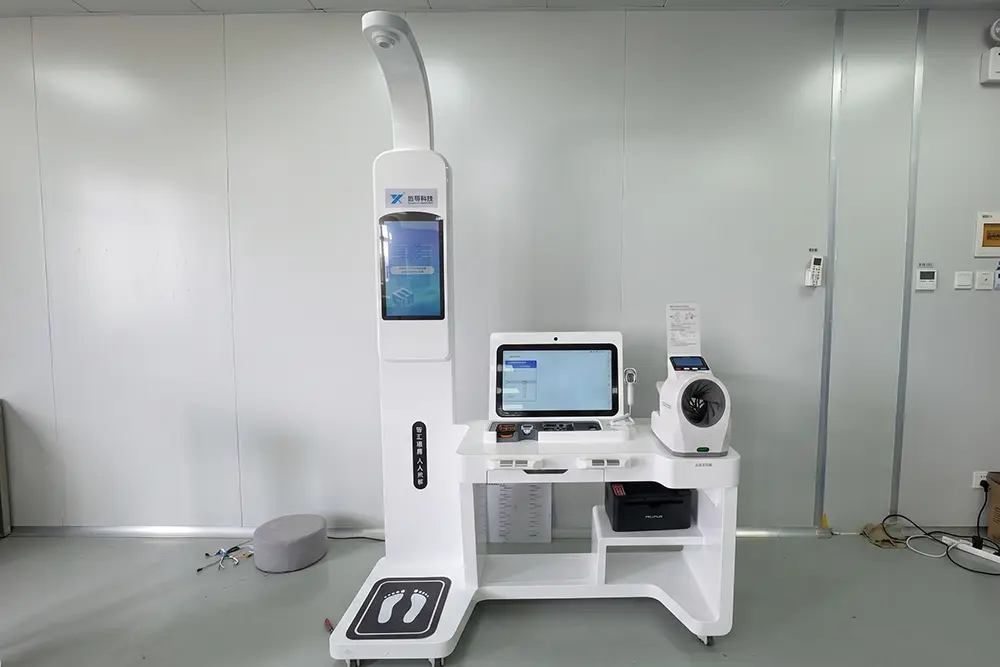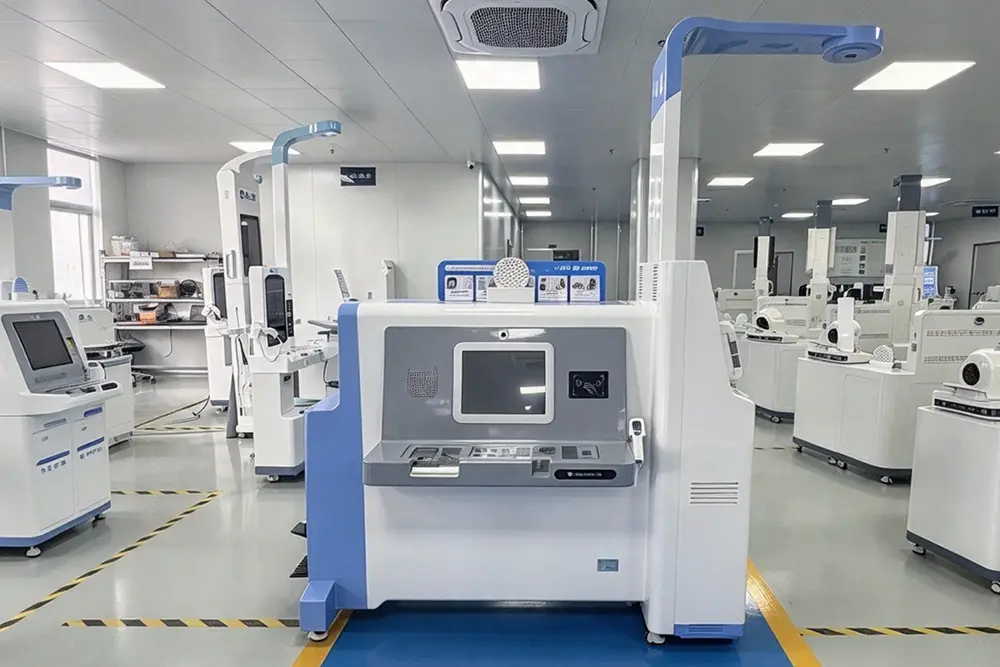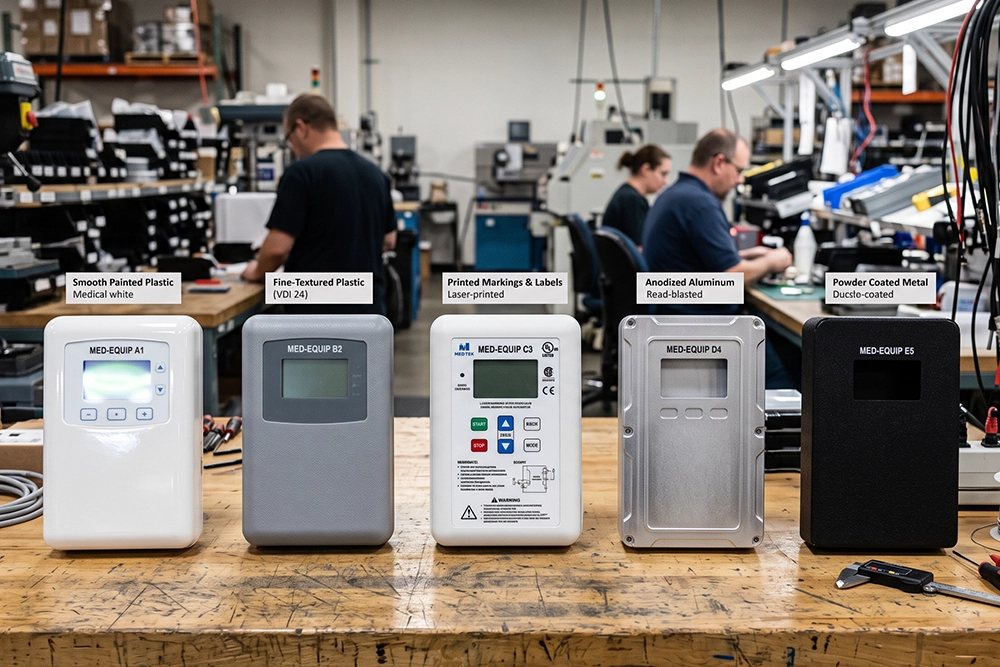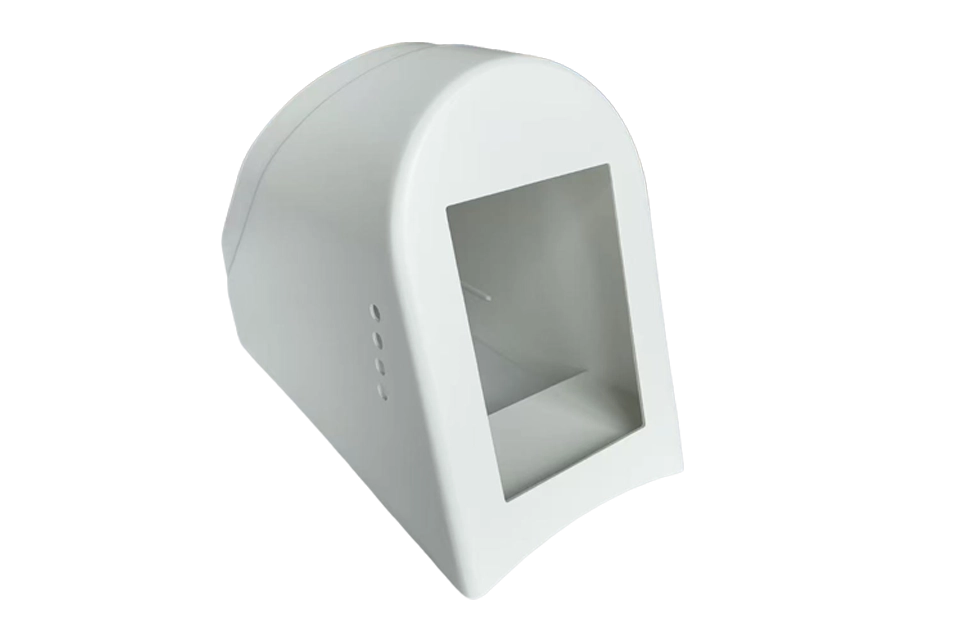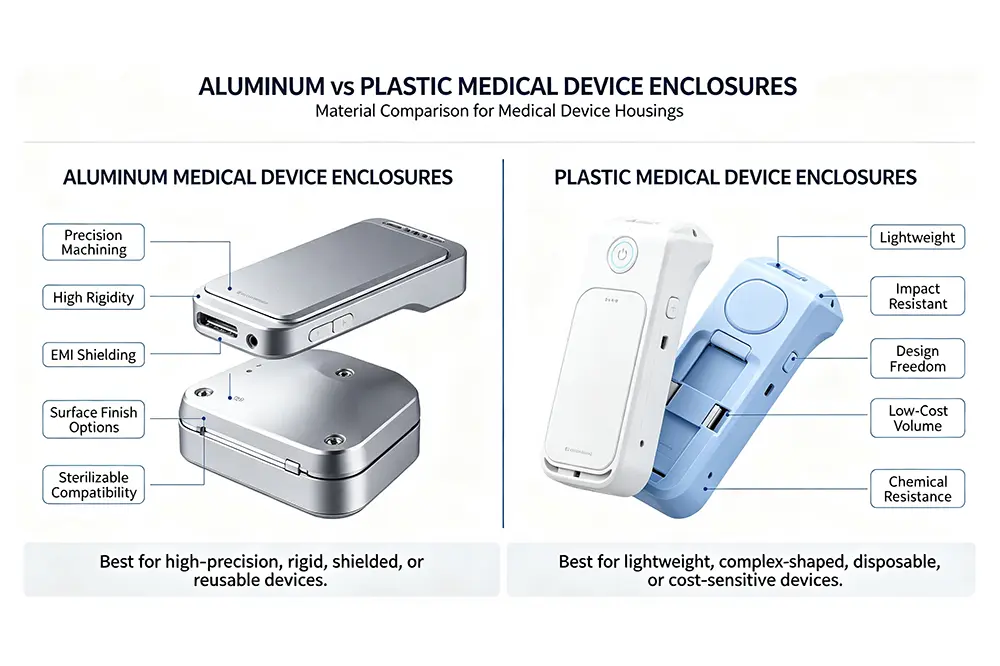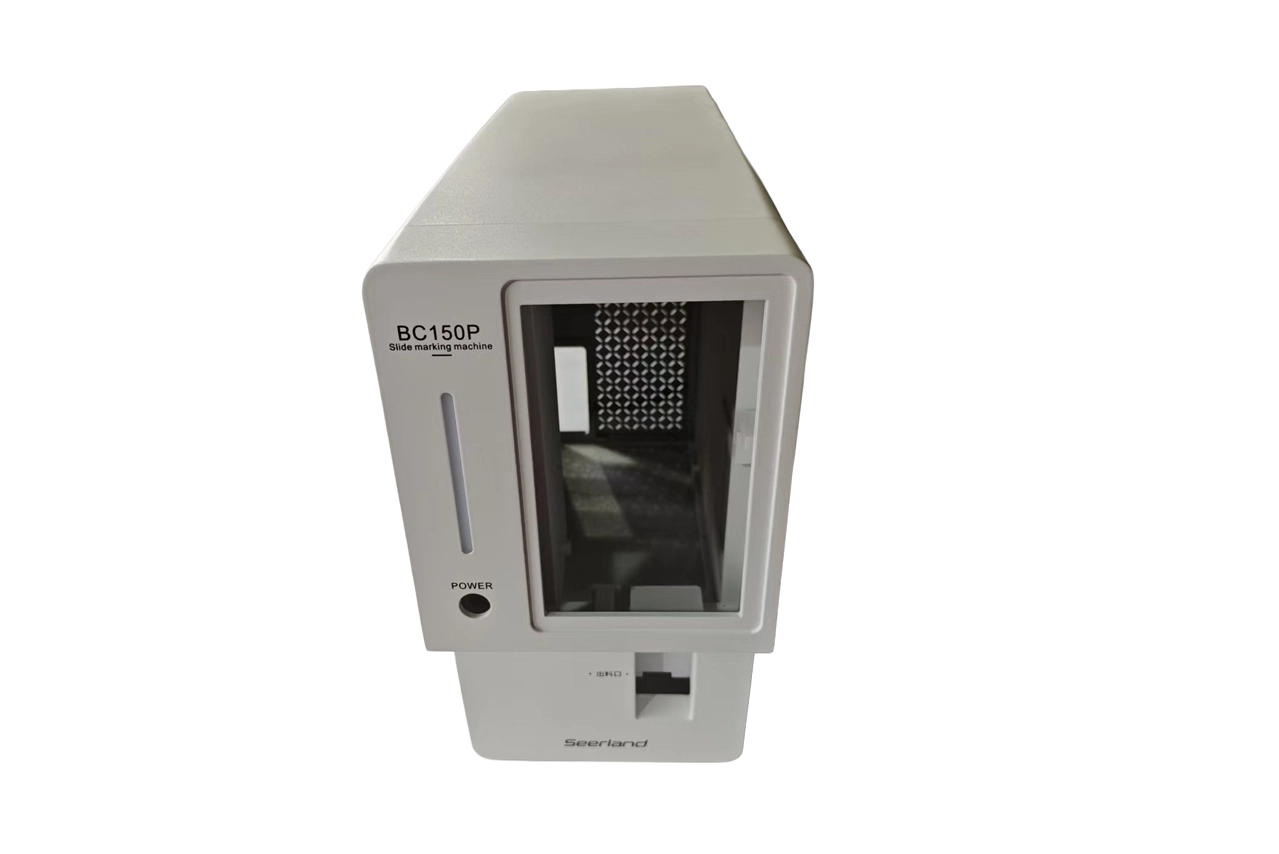
A pathology slide marker enclosure is more than a protective outer shell. It is part of the overall equipment design, providing structural support, access to internal components, protection for electronics and mechanisms, and a clean laboratory-ready appearance.
For this project, Zhongrongda manufactured a cMedical Device Enclosureustom ABS enclosure for a pathology slide marking machine, also known as a pathology slide marker, slide numbering machine, or glass slide printer.
The equipment is designed to automatically print or mark specimen identification information directly onto microscope slides used in pathology and laboratory workflows. Depending on the equipment configuration, the information can include patient identification numbers, case numbers, initials, specimen types, 1D barcodes, 2D QR codes, Chinese characters, symbols, and other identifiers.
In simple terms, a pathology slide marker works like an “ID printer” for pathology slides. It gives each microscope slide a unique identification mark so that specimens can be tracked and distinguished throughout the laboratory workflow.
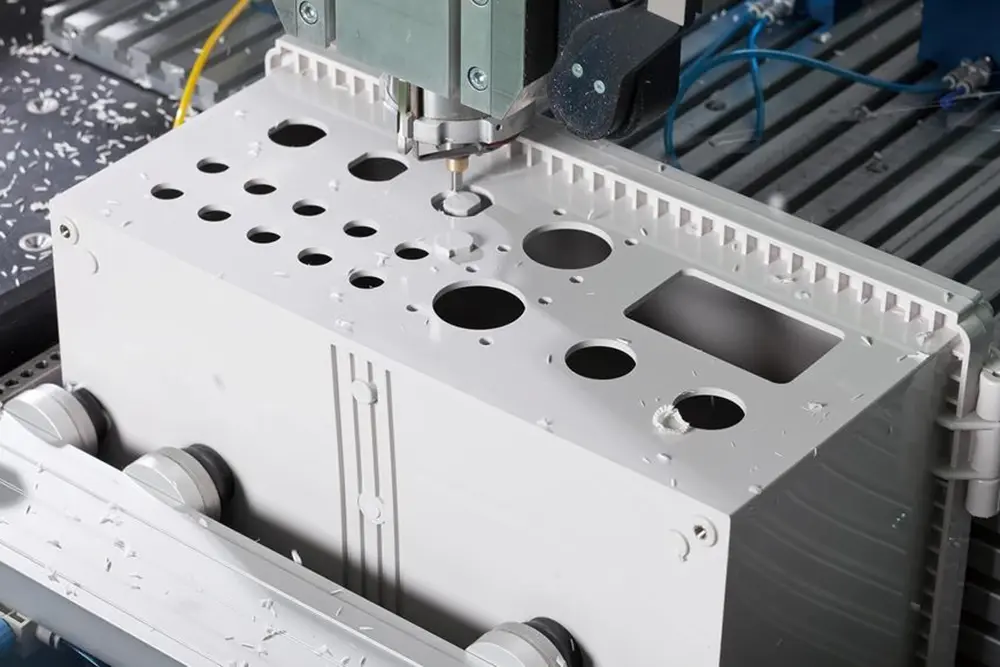
For this medical laboratory equipment project, our engineering team developed and manufactured the complete external ABS housing, including CNC-machined components, structural features, functional openings, bonding, surface finishing, silk-screen printing, assembly, and inspection.
What Is a Pathology Slide Marker?
A pathology slide marker, also called a slide marking machine, slide numbering machine, or pathology slide printer, is laboratory equipment used to identify microscope slides containing tissue or cell specimens.
Pathology laboratories process large numbers of slides during diagnostic and research workflows. Each slide needs a reliable identification method so that the physical specimen can be associated with the correct patient, case, sample, or laboratory record.
A slide marking machine can automatically apply identification information to the slide, reducing the need for manual labeling.
Typical information may include:
- Patient identification number
- Case or accession number
- Patient initials
- Specimen type
- Sample identification
- 1D barcode
- 2D QR code
- Chinese characters
- Letters and numbers
- Special symbols
The marking is designed to remain readable during subsequent laboratory processing.
This is particularly important because pathology slides may undergo deparaffinization, staining, alcohol treatment, xylene exposure, and other chemical processing steps. A suitable marking method needs to remain legible and resist being easily removed during these procedures.
What Is a Pathology Slide Marker Used For?
A pathology slide marker is primarily used to provide reliable identification for microscope slides used in medical, laboratory, and research applications.
Typical applications include:
Histopathology Slides
Pathology tissue sections need to be correctly associated with patient and case information throughout preparation, staining, examination, and storage.
Cytology Slides
Cytology laboratories can use automated slide marking to identify slides containing cell samples.
Research and Biological Samples
Research laboratories may use slide marking equipment for experimental tissue sections, biological samples, and other microscope slide applications.
Animal Tissue Research
Veterinary and biomedical research laboratories can also use slide identification systems for animal tissue samples.
The fundamental purpose is straightforward:
A pathology slide marker provides each slide with a unique identification mark to reduce the risk of sample mix-ups.
Custom Pathology Slide Marker Enclosure
For this project, the customer needed a custom enclosure for a pathology slide marking machine used in a laboratory environment.
The enclosure had to protect and support the internal equipment while providing precise interfaces for the slide handling mechanism, electronics, ventilation, controls, cables, and other components.
Instead of using a standard off-the-shelf enclosure, the customer required a custom ABS housing designed around the machine’s internal architecture.
At Zhongrongda, we manufactured the enclosure using a combination of:
- CNC machining
- ABS sheet fabrication
- Hand-built ABS bonding
- Structural reinforcement
- Filling and sanding
- Painting
- Silk-screen printing
- Assembly
- Dimensional inspection
The result was a finished medical laboratory equipment housing suitable for small-batch machine production.
Pathology Slide Marker Enclosure Project Overview
| Project | Specification |
|---|---|
| Industry | Pathology / Medical Laboratory Equipment |
| Equipment | Pathology Slide Marking Machine |
| Application | Microscope slide identification |
| Enclosure Material | ABS sheet |
| Overall Dimensions | 320 × 360 × 540 mm |
| Wall Thickness | 3.0 ±0.3 mm |
| Surface Finish | White fine-textured painted finish |
| Manufacturing | CNC machining + ABS bonding + sanding + painting + silk-screen printing |
| Production | Prototype / Small Batch |
| Enclosure Type | Custom Medical Equipment Housing |
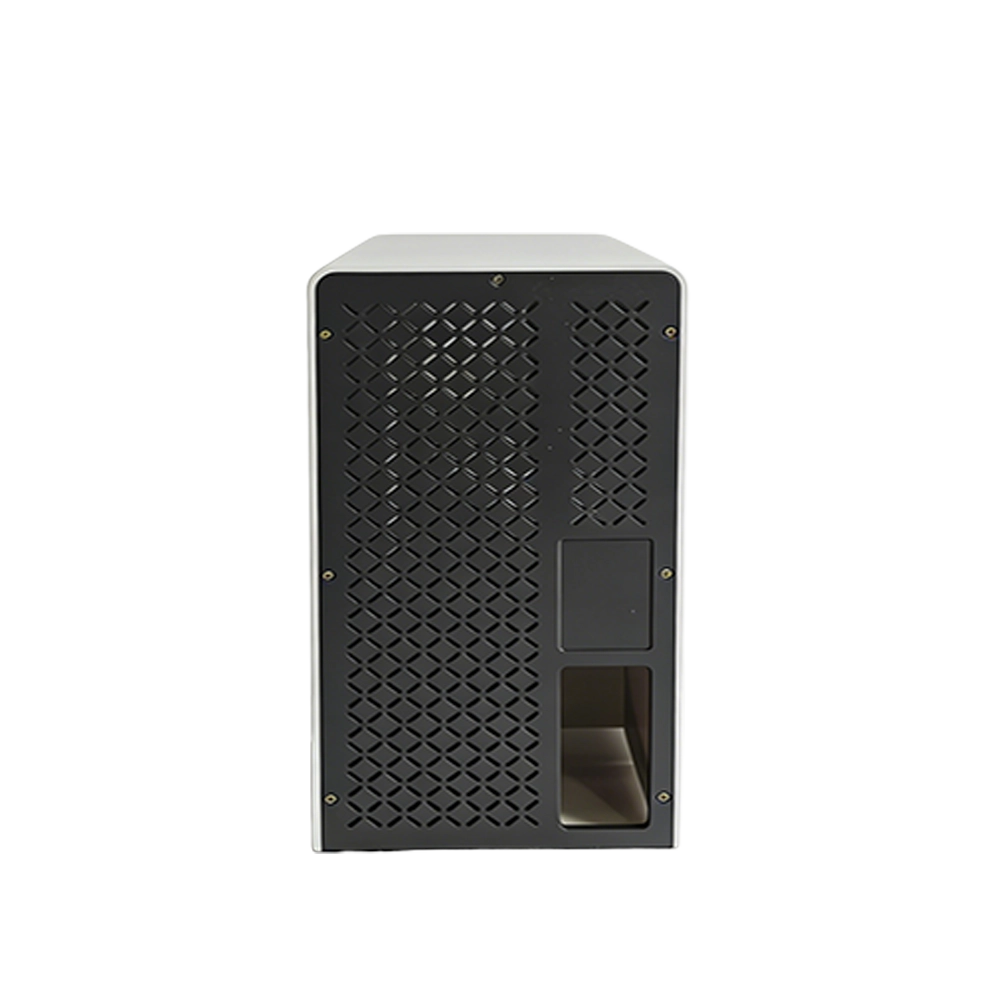
How the Pathology Slide Marking Machine Works
The basic workflow of a pathology slide marking machine is relatively straightforward.
The microscope slide is positioned inside the equipment, and the machine applies the required identification information according to the configured data.
Depending on the system design, the marking may contain:
Patient ID → Case Number → Sample Information → Barcode / QR Code → Slide Identification
The marked slide can then continue through subsequent laboratory processing.
For pathology laboratories, the value is not simply the printed information itself. The important part is maintaining a clear connection between:
Patient → Case → Specimen → Slide → Laboratory Record
Reliable physical slide identification can therefore become an important part of the overall pathology workflow.
Why Durable Slide Marking Matters
Pathology slides can be exposed to multiple chemical and processing steps after identification.
For example, slides may undergo:
- Deparaffinization
- Alcohol treatment
- Xylene exposure
- Staining
- Washing
- Other laboratory reagent processes
Because of this, conventional handwriting or unsuitable labels may not provide sufficient durability for every workflow.
A dedicated slide marking system can provide a more consistent identification method.
The marking is intended to remain readable and resist being easily removed during subsequent chemical processing.
This makes automated slide identification particularly useful in environments where a large number of slides must be processed, tracked, stored, and reviewed.
Customer Requirements for the Enclosure
The customer required the enclosure to provide a balance between appearance, structural stability, dimensional consistency, and equipment functionality.
The housing needed to accommodate:
- Internal slide marking mechanism
- Mainboard
- Power components
- Control buttons
- Ventilation
- Cable routing
- Slide magazine
- Paper outlet
- Internal structural supports
- Other machine components
The external enclosure also needed to provide a clean and professional appearance suitable for medical laboratory equipment.
The finished housing used a white fine-textured coating with silk-screened product markings and customer branding.
Manufacturing Challenges
1. Multi-Part ABS Enclosure Construction
The housing was not manufactured as a single molded component.
Instead, multiple ABS sheet components were CNC machined and subsequently bonded together.
This created a dimensional chain across multiple components.
Small variations during individual component machining or bonding could accumulate and affect:
- Overall dimensions
- Panel alignment
- Opening positions
- Visible gaps
- Internal component interfaces
Our engineering team therefore controlled the positioning of each component during bonding and maintained the overall geometry throughout the assembly process.
2. ABS Warpage Control
Large ABS components can experience dimensional changes during machining, bonding, painting, and curing.
This project involved an enclosure approximately 540 mm in height, making dimensional stability particularly important.
The project requirements included:
- Flatness ≤1.0 mm per 300 mm
- Adjacent surface perpendicularity ≤0.8 mm
- Overall diagonal warpage ≤1.2 mm
The manufacturing process therefore considered dimensional stability from machining through final finishing.
3. Functional Openings
The enclosure included several functional openings that needed to align correctly with the internal equipment.
These included:
- Slide magazine opening
- Paper outlet
- Power button opening
- Ventilation grille
- Cable routing openings
- Wiring and tubing access
- Other equipment interfaces
The position of these openings had to correspond with the internal machine structure.
Incorrect positioning could affect assembly, access, ventilation, or the operation of the slide handling mechanism.
4. Internal Structural Support
Because the project did not use a separate metal load-bearing frame for the external housing, structural ribs and mounting posts were incorporated into the ABS enclosure.
These features helped support the internal:
- Slide marking module
- Mainboard
- Power components
- Other electronic and mechanical assemblies
The structural features had to provide sufficient support without interfering with the internal mechanism.
Our Engineering and Manufacturing Solution
DFM Review
Before manufacturing, our engineering team reviewed the enclosure structure and considered:
- ABS component breakdown
- Bonding locations
- Internal ribs
- Mounting posts
- Functional openings
- Cable routing
- Ventilation
- Assembly interfaces
- Surface finishing requirements
The goal was to make the enclosure manufacturable while maintaining the customer’s dimensional and appearance requirements.
CNC Machining
ABS sheet components were CNC machined to create the individual enclosure parts.
The machining operations included:
- External profiles
- Large-radius corners
- Functional openings
- Slide magazine opening
- Paper outlet
- Power button opening
- Ventilation grille
- Cable routing openings
- Internal structural features
- Mounting locations
CNC machining provided the dimensional control required for the enclosure interfaces.
ABS Bonding
After CNC machining, the individual components were accurately positioned and bonded together.
The bonding process required careful alignment because the final enclosure geometry depended on multiple individual ABS parts.
After bonding, the joints were filled and prepared for surface finishing.
Sanding and Surface Preparation
The bonded enclosure was then carefully sanded to reduce:
- CNC machining marks
- Bonding lines
- Surface irregularities
- Edge imperfections
This step was especially important because the enclosure would receive a painted finish.
Any remaining surface defects could become more visible after painting.
Painting
The enclosure received an ABS-specific primer followed by a white fine-textured finish.
Because ABS can be affected by excessive heat, the curing process used controlled low-temperature drying.
The enclosure was inspected after cooling to identify any remaining surface defects before final finishing.
Silk-Screen Printing
After painting, the required product markings were applied using silk-screen printing.
The finished enclosure included:
- Model number BC150P
- Product name “Slide Marking Machine”
- POWER marking
- Customer logo
Applying the graphics after the main surface finishing helped protect the printed information during earlier manufacturing operations.
Pathology Slide Marker Enclosure Manufacturing Process
Our manufacturing workflow for this project included:
1. DFM Review
Review enclosure geometry, component breakdown, structural features, openings, and assembly requirements.
2. CNC Programming
Prepare machining programs for individual ABS enclosure components.
3. ABS Material Preparation
Prepare the required ABS sheet material and component sizes.
4. CNC Machining
Machine profiles, openings, corners, structural features, and mounting interfaces.
5. Deburring
Remove machining burrs and prepare component edges.
6. ABS Bonding
Accurately position and bond the individual enclosure components.
7. Filling and Sanding
Repair bonding seams and prepare the complete enclosure surface.
8. Painting
Apply primer and the specified white fine-textured finish.
9. Silk-Screen Printing
Apply model information, product identification, POWER markings, and customer branding.
10. Assembly and Inspection
Complete assembly and verify dimensions, openings, appearance, printing, and overall fit.
Quality Inspection
Quality control focused on the characteristics that directly affected equipment assembly, functionality, and appearance.
The inspection included:
- Overall enclosure dimensions
- Wall thickness
- Functional opening locations
- Screw mounting-hole alignment
- Ventilation grille
- Internal ribs
- Mounting posts
- Panel alignment
- Bonding seam quality
- Surface finish
- Paint appearance
- Silk-screen printing
- Scratches
- Dents
- Bubbles
- Pinholes
- Orange peel
- Overall assembly condition
The specified geometric requirements included flatness of ≤1.0 mm per 300 mm, adjacent surface perpendicularity of ≤0.8 mm, and overall diagonal warpage of ≤1.2 mm.
Final Result
The completed pathology slide marker enclosure successfully integrated the required external housing, functional openings, internal structural features, surface finishing, and product identification.
The enclosure was manufactured using CNC-machined ABS components followed by bonding, filling, sanding, painting, silk-screen printing, assembly, and inspection.
The final housing maintained the required dimensional and functional interfaces while providing a clean appearance suitable for medical laboratory equipment.
More importantly, the project demonstrates how CNC-machined ABS sheet can be used to manufacture custom laboratory equipment housings when the project requires complex openings, integrated structural features, painted surfaces, custom branding, and small-batch production.
Why Zhongrongda for Pathology Equipment Enclosures?
A medical laboratory equipment enclosure requires more than simply cutting plastic panels.
The manufacturing process may involve several connected stages:
Engineering → DFM → CNC Machining → Bonding → Structural Assembly → Surface Finishing → Printing → Inspection
At Zhongrongda, our engineering team can coordinate these processes as one enclosure manufacturing workflow.
We support:
- Custom medical equipment enclosures
- Pathology equipment enclosures
- Laboratory equipment housings
- ABS medical equipment housings
- CNC-machined plastic enclosures
- Rapid prototyping
- Small-batch manufacturing
- ABS bonding and fabrication
- Surface finishing
- Silk-screen printing
- Assembly
- Dimensional inspection
- DFM engineering support
Our quality management system includes ISO 9001 and ISO 13485 capabilities for applicable projects.
For product designers, mechanical engineers, purchasing managers, and medical equipment manufacturers, this allows multiple enclosure manufacturing requirements to be coordinated through a single supplier.
Pathology Slide Marker Enclosure FAQ
What is a pathology slide marker?
A pathology slide marker is laboratory equipment used to automatically print or mark identification information on microscope slides used for pathology, cytology, research, and other laboratory applications.
What is another name for a pathology slide marker?
Depending on the market and application, it may also be called a slide marking machine, slide numbering machine, pathology slide printer, or glass slide printer.
What information can a slide marking machine print?
Depending on the machine configuration, it can print or mark information such as patient IDs, case numbers, initials, specimen types, 1D barcodes, 2D QR codes, letters, numbers, Chinese characters, and symbols.
Why does pathology slide marking need to be durable?
Pathology slides may undergo deparaffinization, staining, alcohol treatment, xylene exposure, and other chemical processes. The identification therefore needs to remain readable throughout the laboratory workflow.
Where are pathology slide markers used?
For laboratory equipment applications, Zhongrongda also manufactures custom housings for automated analyzers and other specialized laboratory systems.
What material was used for this pathology slide marker enclosure?
This project used ABS sheet for the external housing. The ABS components were CNC machined and then bonded into the finished enclosure.
What are the dimensions of this enclosure?
The finished enclosure was approximately 320 × 360 × 540 mm, with a specified wall thickness of 3.0 ±0.3 mm.
Can you manufacture custom pathology equipment enclosures?
Yes. Zhongrongda manufactures custom medical and laboratory equipment enclosures based on customer drawings, 3D models, prototypes, or engineering requirements.
Can you manufacture small quantities?
Yes. Zhongrongda supports prototype and small-batch medical equipment enclosure manufacturing, depending on project requirements.
Can you add ventilation, cable holes, and equipment openings?
Yes. CNC machining can produce custom ventilation openings, cable routing holes, tubing openings, button holes, mounting features, and other interfaces required by the internal equipment.
Can you paint and print logos on ABS enclosures?
Yes. We can provide surface preparation, painting, silk-screen printing, and other finishing processes according to the project requirements.
Can you manufacture other medical laboratory equipment enclosures?
Yes. Our capabilities extend to custom enclosures for laboratory equipment, diagnostic equipment, medical devices, medical robots, carts, workstations, and other specialized equipment.
Need a Custom Pathology or Laboratory Equipment Enclosure?
If you are developing a pathology slide marking machine, glass slide printer, laboratory analyzer, diagnostic device, or other medical laboratory equipment, Zhongrongda can help manufacture the custom enclosure around your internal components.
Send us your 2D drawings, 3D CAD files, enclosure requirements, or prototype specifications.
Our engineering team can review:
- Material selection
- Enclosure structure
- DFM requirements
- CNC machining
- Bonding
- Surface finishing
- Functional openings
- Assembly
- Prototype requirements
- Small-batch production
Contact Zhongrongda for a custom enclosure review and quotation.
CTA
Need a reliable CNC machining partner for your next project?
Upload your drawings today and our engineering team will provide a free DFM review and quotation within 24 hours.
Whether you need a CNC-machined ABS prototype, a custom medical equipment enclosure, or small-batch production, Zhongrongda can help evaluate the enclosure structure, material, machining process, bonding method, surface finishing, and assembly requirements.
Contact our engineering team to discuss your next enclosure project.